
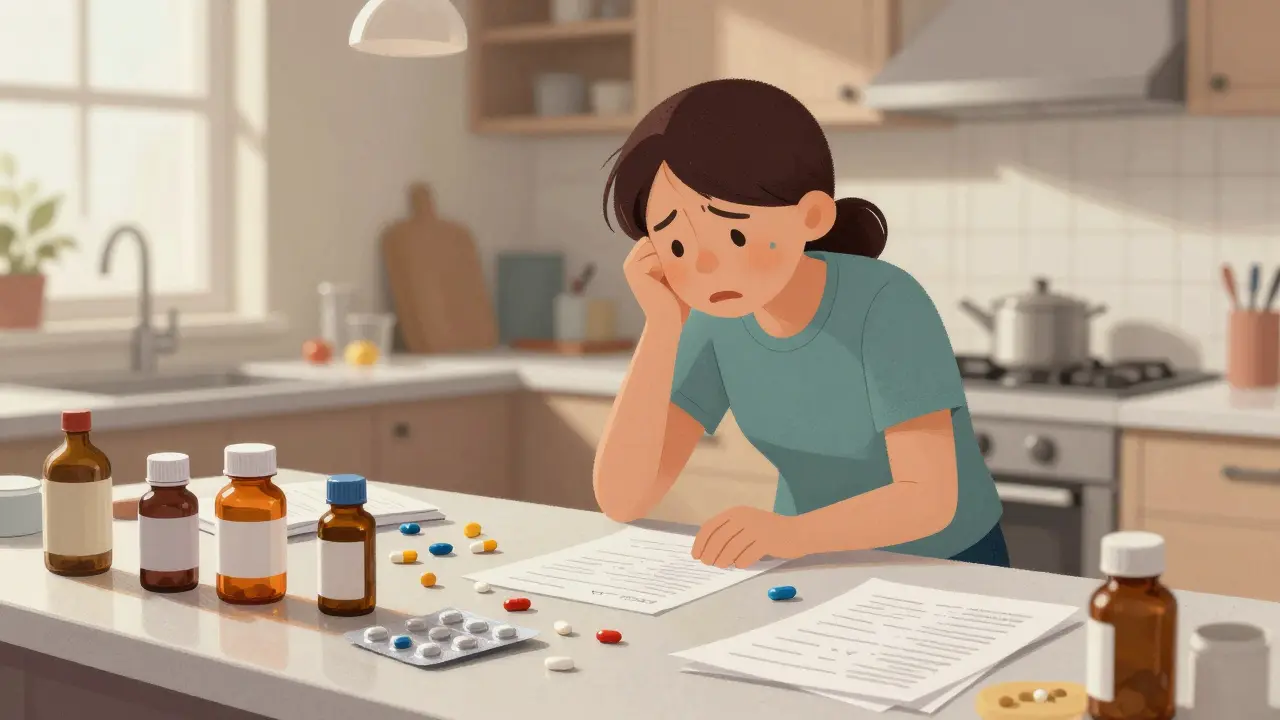
Imagine this: It’s 7:00 AM on a Tuesday. You’re rushing to get your parent ready for the day. There are three bottles on the counter, a blister pack from last week, and a new prescription that arrived yesterday. Do you give them all? Just two? What if one is only taken with food?
If you are a caregiver, this moment of panic is likely familiar. Managing senior medications is not just about handing over pills; it is a complex logistical task that requires precision. With over 40% of older adults taking five or more medications simultaneously, the risk of error skyrockets. In fact, research shows that taking five or more drugs increases the risk of adverse events by 88%. This condition, known as polypharmacy, is the leading cause of preventable hospital readmissions among seniors.
The solution isn’t magic-it’s organization. A well-structured medication list is your most powerful tool. It prevents duplicate therapies, catches dangerous interactions, and gives you peace of mind. Let’s build yours together.
Why Your Current Method Might Be Failing
Most caregivers start with good intentions but flawed systems. Maybe you keep a notebook in the kitchen drawer. Maybe you rely on memory. Or perhaps you use a digital app that feels too complicated to update daily. According to a 2022 survey by GoodRx, 63% of caregivers still rely on simple paper lists. While paper is accessible, it becomes impractical when regimens exceed seven medications.
Here is the hard truth: incomplete information causes 92% of medication errors. If your list doesn’t specify whether a pill must be taken with food, or if it misses the exact dosage strength, you are leaving room for disaster. The Institute of Medicine estimates that medication errors contribute to approximately 7,000 deaths annually in the United States. That number is staggering, but it is also largely preventable with better documentation.
You need a system that is both comprehensive and easy to maintain. The goal is not perfection; it is consistency. When every member of your care team-from the primary care physician to the visiting nurse-looks at the same accurate data, safety improves dramatically.
The Essential Elements of a Master Medication List
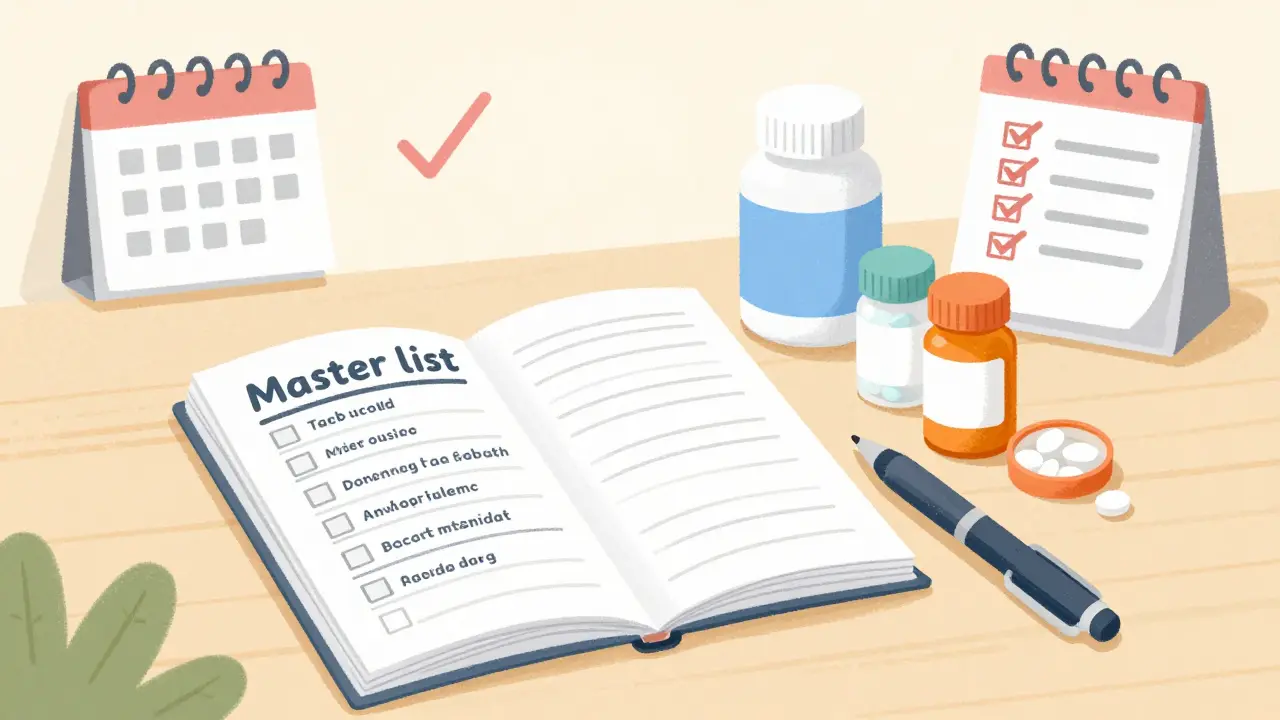
A casual note saying "Take blue pill" is not enough. To create a truly effective master list, you must include specific data points for every single substance entering your loved one’s body. This includes prescription drugs, over-the-counter (OTC) medications like ibuprofen or antacids, and dietary supplements such as vitamin D or fish oil.
Use the FDA’s recommended framework as your baseline. For each medication, document the following:
- Medication Name: Include both the brand name (e.g., Lipitor) and the generic name (e.g., atorvastatin). Doctors often prescribe generics, but patients may know the brand.
- Exact Dosage: Write "10mg," not just "one pill." Different strengths look identical.
- Frequency: Be precise. Use "twice daily" instead of "often," and specify times like "8 AM and 8 PM" rather than "morning and night."
- Purpose: Note what the drug treats (e.g., "for hypertension"). This helps during emergencies when doctors need to understand the clinical picture quickly.
- Special Instructions: Does it need to be taken with food? Should it never be crushed? These details prevent absorption issues and side effects.
- Prescribing Physician & Pharmacy: Include contact info for who prescribed it and where it was filled. This speeds up refills and clarifies authority.
- Allergies: List all known drug allergies prominently at the top. This single step prevents 1.3 million adverse reactions annually.
Dr. Michael Steinman, co-author of the American Geriatrics Society Beers Criteria, emphasizes that every list should also include a "stop date" for time-limited prescriptions. Antibiotics or steroids often have end dates; without this note, patients may continue taking them unnecessarily, increasing side effect risks.
Step-by-Step: Building Your System from Scratch
Creating this list takes time upfront, but it saves hours of confusion later. Follow this six-step process to build a robust foundation.
- Conduct a Full Inventory (2-3 hours): Gather every medication from every location. Check the bathroom cabinet, the bedroom nightstand, the car glove box, and even the fridge. Many caregivers are shocked to find expired meds or duplicates hidden away.
- Document Using the 12-Point Checklist (10 mins per med): Sit down with each bottle. Read the label carefully. Record the details listed above. If a bottle is empty and unlabeled, do not guess. Take the remaining pills to a pharmacist for identification.
- Organize Chronologically (30-60 minutes): Arrange the list by administration time. Group morning meds together, afternoon meds separately, and bedtime meds last. This visual flow matches your daily routine.
- Create Physical and Digital Copies (20 minutes): Print a clean, large-font version for the wall or refrigerator. Simultaneously, enter the data into a digital tool. Redundancy is key-if the power goes out, you have the paper list. If the house floods, you have the cloud backup.
- Establish an Update Protocol (5 minutes weekly): Set a recurring calendar reminder for Sunday evenings. Review the list against current bottles. Add new prescriptions immediately. Remove discontinued ones.
- Share with Providers (15 minutes per provider): Bring the updated list to every doctor’s appointment. Ask the provider to sign or initial any changes they make right there in the office.
Expect a learning curve. WesleyLife’s 2023 study found that caregivers make an average of 4.7 errors in the first month of implementing a new system. This is normal. Focus on getting better each week, not being perfect on day one.
Paper vs. Digital: Choosing the Right Format
There is no single "best" format, only the best fit for your lifestyle. Let’s compare the two main approaches.
| Feature | Paper-Based Lists | Digital Apps (e.g., Medisafe) |
|---|---|---|
| Setup Time | Low (write once) | Medium (data entry required) |
| Error Reduction | Moderate | High (42% reduction for complex regimens) |
| Accessibility | Always available (no battery needed) | Requires device and internet |
| Sharing Ease | Difficult (must photocopy/hand-write) | Easy (email/share link) |
| Best For | Simple regimens (<5 meds), low-tech users | Complex regimens (>5 meds), tech-comfortable caregivers |
For regimens involving more than four medications, digital tools reduce error rates by 42% compared to paper lists, according to Comfort Keepers (2023). Apps like Medisafe or MyMeds offer reminders, refill alerts, and interaction checks. However, 62% of caregivers over age 65 struggle with digital interfaces, per Pew Research Center data. If technology is a barrier, stick to paper but enhance it with color coding.
A hybrid approach often works best. Keep a laminated, color-coded paper chart on the fridge for daily use. Use a digital app in the background to track refills and share updates with distant family members. This combines immediate accessibility with long-term tracking capabilities.
Pro Tips for Maintaining Accuracy
Building the list is only half the battle. Keeping it accurate requires discipline and smart habits. Here are strategies used by professional caregivers to stay ahead of the chaos.
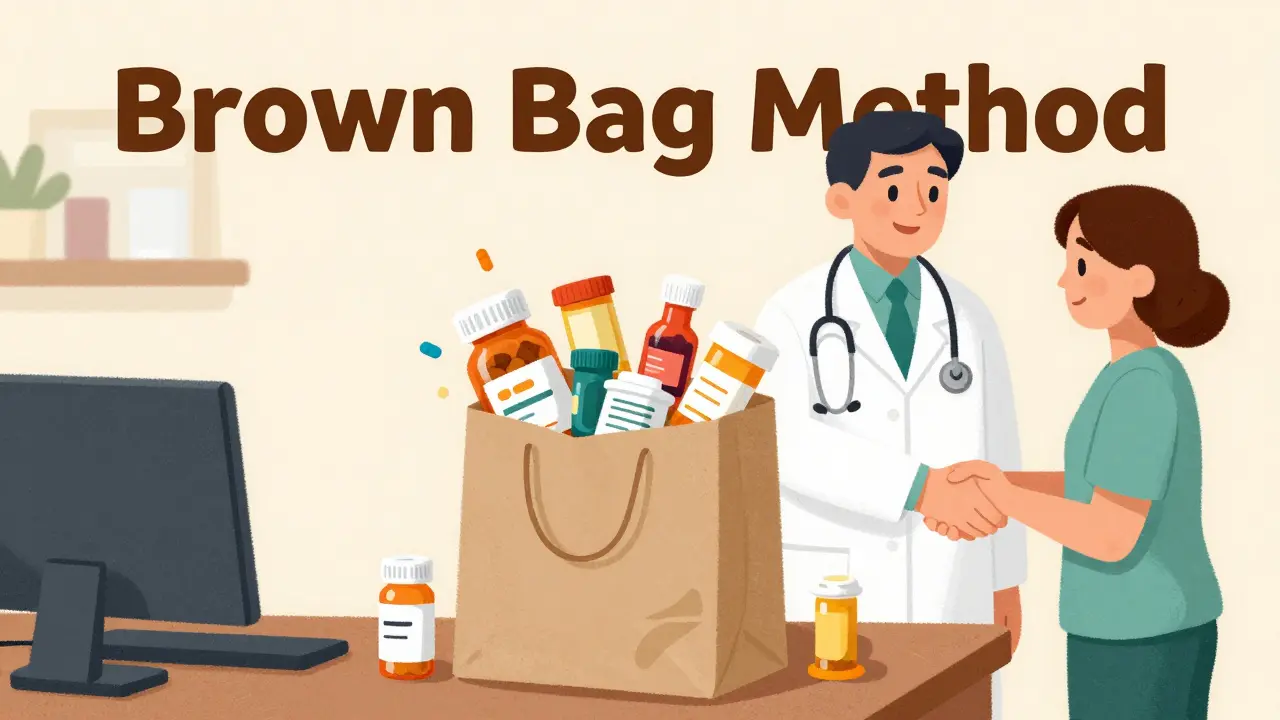
Use the "Brown Bag Method": Before every doctor’s appointment, put every single medication bottle-including vitamins and OTC drugs-into a brown paper bag. Hand the entire bag to the physician or pharmacist. This allows them to physically verify dosages and spot interactions that a written list might miss. AARP’s 2022 Caregiving Survey found that 89% of caregivers found this method "extremely helpful" for consultations.
Color-Code by Time: If using paper, use highlighters. Mark morning meds in yellow, afternoon in green, and evening in blue. Visual cues speed up recognition and reduce cognitive load, especially for caregivers dealing with dementia patients who may forget what they’ve already taken.
Designate a Medication Coordinator: If multiple specialists are involved (cardiologist, neurologist, GP), confusion reigns. Designate one provider as the "medication coordinator." This person has the responsibility of reviewing the full list at each visit to ensure new prescriptions don’t conflict with existing ones. This reduces duplicate therapies by 31%, according to Dr. Sarah Ahmed’s review in JAMA Internal Medicine.
Treat Supplements Like Prescriptions: Many caregivers overlook vitamins and herbal remedies. They are not harmless. St. John’s Wort can interact dangerously with blood thinners. Ginkgo biloba can increase bleeding risk. Document them with the same rigor as prescription drugs.
Leverage Pharmacy Sync Services: Major chains like CVS and Walgreens now offer medication synchronization. This service aligns all refill dates to the same day. More importantly, it automatically updates digital lists when prescriptions are filled, reducing manual update time by 75%. Ask your pharmacist if this is available for your plan.
Navigating Hospital Transitions
Hospital stays are the most dangerous moments for medication errors. Discharge instructions often differ from home routines. In one study, 58% of caregivers experienced confusion when discharge papers didn’t match their existing lists. Furthermore, 78% of hospital readmissions among seniors are linked to outdated medication records.
To protect your loved one during these transitions:
- Bring Your List In: Upon admission, hand your master list to the admitting nurse. Verify that it matches what they are documenting in their system.
- Ask Questions at Discharge: Do not leave the hospital until you understand every change. Ask: "Which meds did I stop? Which did I start? Why?"
- Update Within 24 Hours: As soon as you return home, reconcile the discharge list with your master list. Cross off discontinued meds and add new ones immediately. Do not wait until next week.
- Consult a Pharmacist: For regimens with five or more medications, schedule a quarterly review with a pharmacist. They can identify potentially inappropriate medications (PIMs) that may be causing side effects or adding no benefit.
This proactive approach turns a chaotic transition into a controlled handoff. It ensures continuity of care and prevents the "medication cascade" where new drugs are prescribed to treat side effects of old ones.
Frequently Asked Questions
How often should I update my medication list?
You should update your list within 24 hours of any medication change, including new prescriptions, dosage adjustments, or discontinuations. Additionally, perform a comprehensive review at least once a week, ideally on Sunday evenings, to ensure accuracy and catch any missed updates.
Should I include over-the-counter medications and supplements?
Yes, absolutely. Over-the-counter drugs like ibuprofen or antacids, and supplements like vitamin E or fish oil, can interact with prescription medications. Treating them with the same level of documentation as prescriptions prevents dangerous interactions and provides a complete health picture to your care team.
What is the "Brown Bag Method"?
The Brown Bag Method involves bringing all physical medication bottles (prescription, OTC, and supplements) in a bag to every doctor's appointment. This allows healthcare providers to visually verify dosages, check for expired drugs, and identify potential interactions that might not be apparent from a written list alone.
Is a digital app better than a paper list?
It depends on complexity and tech comfort. Digital apps are superior for complex regimens (more than 4-5 medications) as they reduce error rates by 42% and offer automated reminders. However, paper lists are more accessible for those uncomfortable with technology or for emergency situations where devices may fail. A hybrid approach is often best.
Who should have access to the medication list?
Everyone involved in the patient's care should have access. This includes the primary care physician, specialists, pharmacists, visiting nurses, and other family caregivers. Ensure there is always a current copy available in the home (e.g., on the fridge) and a digital version shared with key contacts for emergencies.