
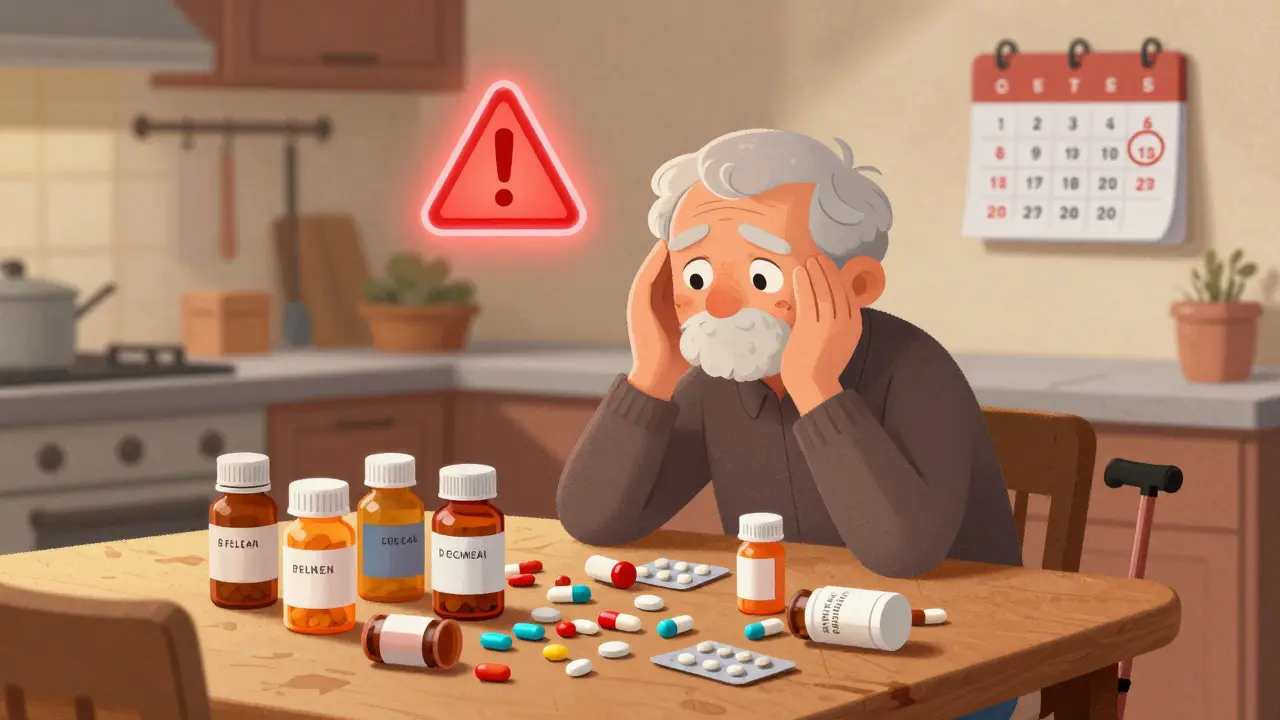
Beers Criteria Medication Checker
The Beers Criteria is a list of potentially inappropriate medications for older adults. This tool checks if a medication is on the list, helping seniors and caregivers identify drugs that might cause dangerous side effects.
When someone turns 65, their body doesn’t just age-it starts handling medications differently. What once worked safely at 40 might now cause dizziness, confusion, or even a fall. This isn’t rare. Medication side effects in older adults are one of the most common reasons for hospital visits, and many of them are preventable. The problem isn’t that older people are taking too many pills-it’s that their bodies no longer process those pills the way they used to.
Why Older Bodies React Differently to Drugs
Think of your body like a factory that runs on fuel. As you get older, that factory slows down. Liver blood flow drops by 30-40% between ages 25 and 75. Kidneys filter blood more slowly-about 0.8 mL per minute per 1.73m² less each year after 40. Fat increases while muscle decreases. By age 70, body fat can be 35-40%, up from 25% at 30. These changes mean drugs stick around longer, build up in tissues, and hit the brain harder.
Take diazepam, a common sedative. In a 30-year-old, it clears out in 24-48 hours. In a 75-year-old? It can linger for days. That’s why elderly patients often wake up groggy, stumble, or forget where they are. It’s not laziness-it’s pharmacology. The same thing happens with painkillers, blood pressure meds, and even sleep aids.
The Hidden Danger: Polypharmacy
Polypharmacy isn’t just taking five or more medications-it’s taking five or more that don’t play well together. In older adults, it’s not unusual to see someone on a blood thinner, a statin, an antidepressant, a diuretic, and an NSAID for arthritis. Each one makes sense on its own. Together? They can be dangerous.
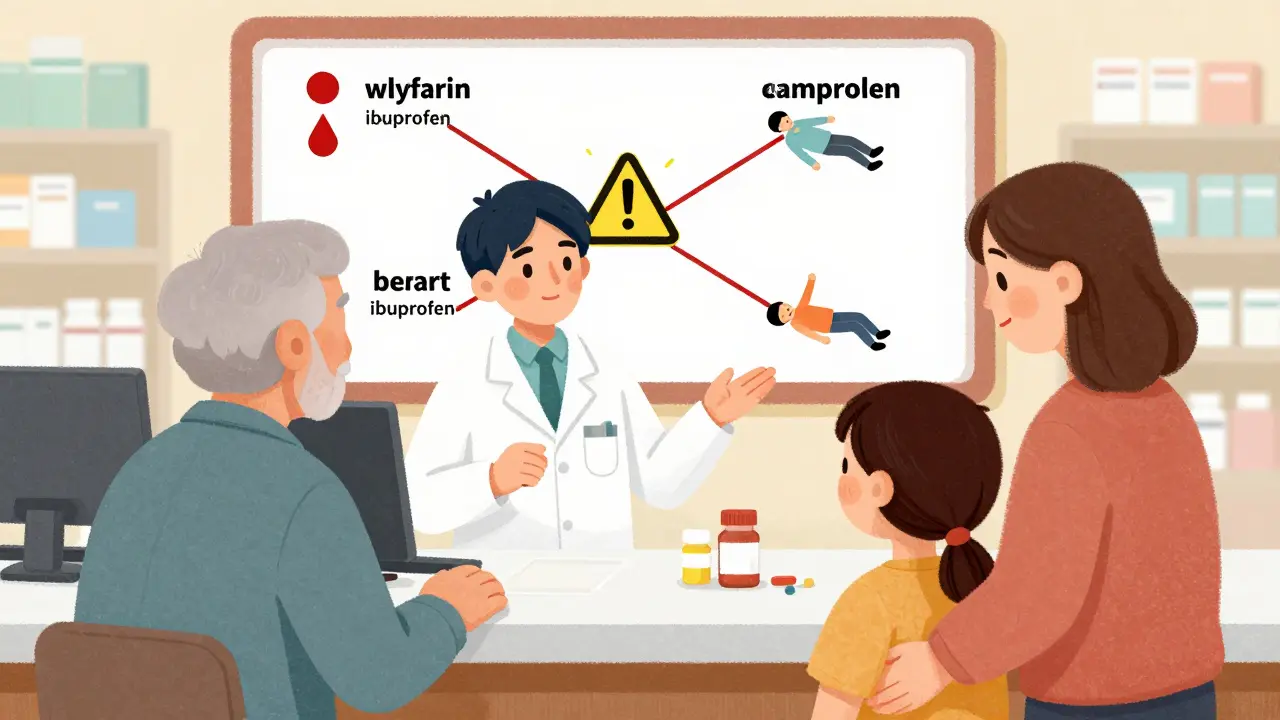
For example: combining an anticoagulant like warfarin with an NSAID like ibuprofen can raise the risk of internal bleeding by 4-5 times. Corticosteroids plus NSAIDs? That combo increases the chance of a peptic ulcer by 15 times. And don’t forget about over-the-counter stuff-many seniors take herbal supplements or antacids daily, not realizing they interfere with prescription drugs.
One study found that nearly 40% of adults over 65 take at least five medications regularly. One in five of those patients experiences an adverse reaction each year. And the scariest part? Half of those hospitalizations were preventable.
Side Effects That Aren’t What You’d Expect
Younger people usually notice side effects like nausea, rashes, or stomach pain. Older adults? They get confused, fall, lose weight, or seem “off.” These aren’t signs of dementia-they’re signs of a drug reaction.
A 2023 update from HealthinAging.org found that 20-30% of all falls in seniors are directly caused by medication. A blood pressure pill that’s too strong? It can drop pressure too far when standing, causing dizziness and a tumble. An antidepressant that increases serotonin? It might trigger hyponatremia, leading to confusion or seizures. Even a common diabetes drug like glyburide can cause dangerous low blood sugar episodes that look like dementia.
Doctors often miss these connections because they’re looking for classic symptoms. But in older patients, side effects don’t always scream “drug reaction.” They whisper. And if you’re not listening for them, you’ll miss them entirely.
The Beers Criteria: A Lifesaving Tool
Since 1991, the American Geriatrics Society has published the Beers Criteria-a list of medications that are risky for older adults. It’s updated regularly. The 2019 version added new warnings and expanded old ones.
Here are a few drugs on the list that should be avoided in most seniors:
- Pentazocine-a painkiller that causes hallucinations and confusion more than others.
- Propoxyphene-a weak painkiller with high risk of overdose and heart rhythm problems.
- Indomethacin-an NSAID with the highest rate of brain-related side effects.
- Glyburide-an older diabetes drug that causes severe low blood sugar.
- Megestrol (Megace)-used for appetite, but linked to blood clots and death in frail patients.
- Sliding-scale insulin-a reactive insulin method that leads to dangerous swings in blood sugar.
Some drugs aren’t banned outright-they’re flagged for specific situations. For example, SSRIs (like sertraline) should be avoided if someone has a history of falls or fractures. Acetylcholinesterase inhibitors (used for Alzheimer’s) can worsen heart rhythm problems in patients with syncope.
It’s not about removing all drugs-it’s about removing the wrong ones. Many seniors benefit from blood pressure control, diabetes management, or vaccines. The goal isn’t to stop treatment. It’s to make sure the treatment doesn’t cause more harm than good.
What Happens When Medications Go Wrong
Adverse drug reactions send over 100,000 older adults to the hospital each year in the U.S. alone. The cost? About $3.5 billion annually. And here’s the kicker: half of those hospital stays could have been avoided.
One common scenario: A 78-year-old woman on warfarin for atrial fibrillation starts taking ibuprofen for knee pain. Two weeks later, she’s rushed to the ER with a gastrointestinal bleed. She didn’t know the two drugs mixed dangerously. Her pharmacist didn’t know she was taking the ibuprofen-she didn’t mention it because she thought it was “just a pain reliever.”
Another: An 82-year-old man on multiple medications for heart disease, diabetes, and arthritis starts feeling confused. His family thinks it’s early dementia. His doctor runs tests, finds low sodium, and realizes his diuretic and a new SSRI were causing hyponatremia. He stopped the SSRI, adjusted the diuretic, and within days, he was back to normal.
These aren’t rare cases. They’re routine.
What Seniors and Families Can Do
Here’s what works:
- Keep a complete, updated list of every pill, patch, supplement, and herb you take. Include dosages and why you take them.
- Bring that list to every appointment-even if it’s for a cold. Don’t assume your doctor remembers everything.
- Ask: “Could any of these be causing my dizziness, confusion, or falls?” If you’ve had a recent fall, ask specifically about medications.
- Don’t assume OTC is safe. Antacids, sleep aids, and herbal supplements can interact badly with prescription drugs.
- Use one pharmacy. It helps pharmacists spot dangerous interactions before they happen.
Pharmacists are your allies. They see drug interactions that doctors miss. If your pharmacist says, “This combo might be risky,” listen.
Deprescribing: The Quiet Revolution
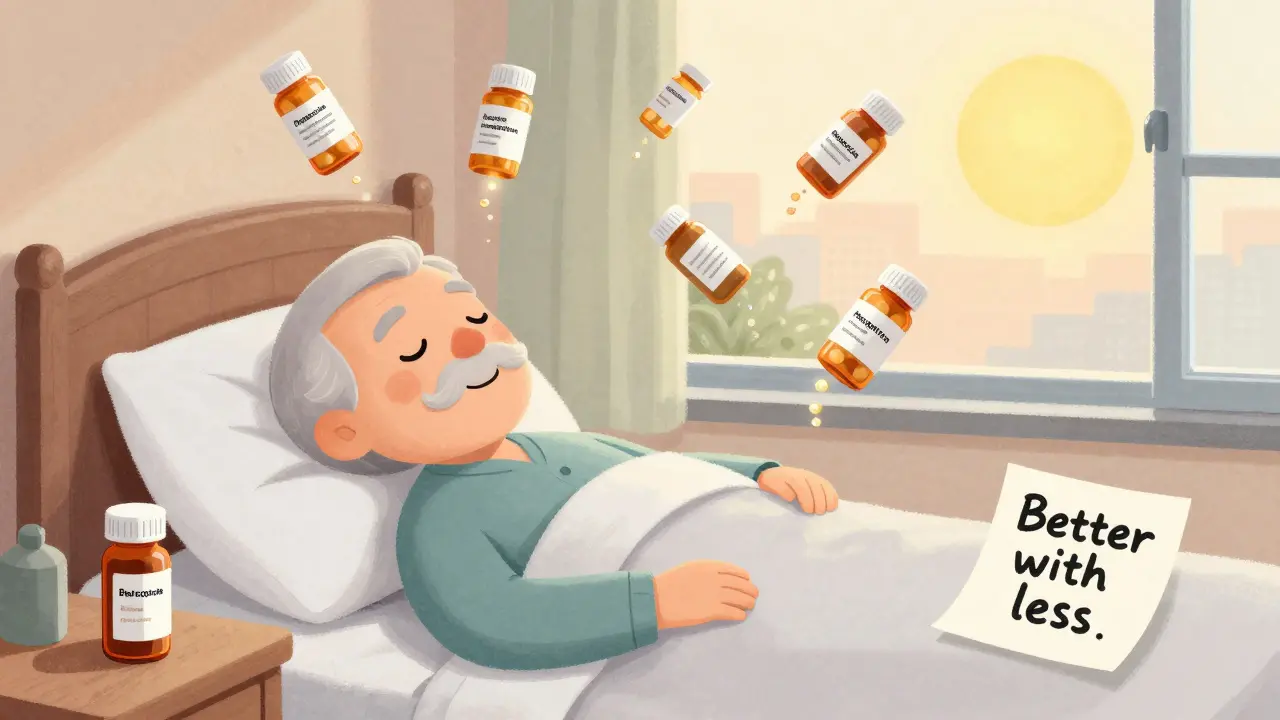
More doctors are now practicing “deprescribing”-not just adding drugs, but carefully removing ones that aren’t helping or are causing harm. It’s not about stopping treatment. It’s about simplifying it.
For example: A patient on five blood pressure pills might only need one. A senior on a sleeping pill for 10 years might sleep better with a routine change. A patient on a statin with no heart disease history might not need it anymore.
Deprescribing isn’t easy. It takes time, monitoring, and trust. But when done right, patients feel better. They have more energy, fewer falls, and less confusion.
The Future: Personalized Medicine
Researchers are now looking at how genes affect drug metabolism in older adults. Some people naturally break down certain drugs slower due to CYP450 enzyme variations. This isn’t just about age-it’s about biology. In the next decade, genetic testing could help doctors choose safer drugs for each patient.
But for now, the best tools we have are simple: awareness, communication, and a willingness to question every pill.
Final Thought
Medications save lives. But they can also end them-especially in older adults who aren’t being watched closely enough. The goal isn’t to avoid drugs. It’s to use them wisely. If you or someone you love is over 65 and on multiple medications, ask one simple question: “Could any of these be making things worse?” That question might just prevent the next fall, the next hospital stay, or the next crisis.
Why do elderly patients have more side effects from medications than younger people?
Older adults experience changes in how their bodies handle drugs. Their liver processes medications more slowly, their kidneys filter them out less efficiently, and they have more body fat and less muscle. This means drugs stay in the system longer, build up in tissues, and can over-activate the brain and nervous system. Even the same dose that was safe at 50 can become dangerous at 75.
What is the Beers Criteria, and why does it matter?
The Beers Criteria is a list of medications that are potentially inappropriate for adults over 65 because they carry high risks of side effects like confusion, falls, bleeding, or low blood pressure. It’s updated every few years by the American Geriatrics Society and is used by doctors, pharmacists, and hospitals to guide safer prescribing. It doesn’t mean these drugs are never used-it means they should be avoided unless there’s no safer alternative.
Can over-the-counter medicines cause serious side effects in seniors?
Absolutely. Common OTC drugs like ibuprofen, naproxen, and even antacids can interact dangerously with prescription medications. For example, NSAIDs combined with blood thinners can cause internal bleeding. Antihistamines in sleep aids or cold medicines can cause confusion or urinary retention. Many seniors don’t realize these are drugs too-and they’re often the hidden cause of new symptoms.
What should I do if my elderly parent is on five or more medications?
Schedule a medication review with their doctor or pharmacist. Bring a complete list of everything they take, including vitamins and supplements. Ask: Are all these still necessary? Could any be causing dizziness, confusion, or falls? Is there a simpler, safer alternative? Many seniors can safely reduce their number of pills without losing health benefits.
How can I tell if a side effect is from a medication or just aging?
Side effects from drugs often appear suddenly-within days or weeks of starting or changing a medication. If your parent started a new drug and then began falling, feeling confused, or losing appetite, the drug is likely the cause. Aging causes slow, gradual changes. Drug reactions are sudden and reversible. If symptoms improve after stopping a medication, that’s a strong sign it was the culprit.
Kenneth Zieden-Weber
So let me get this straight-we’re telling grandpa he can’t take his ibuprofen because it might make him stumble, but we’re fine with him on five other pills that do the same thing? Classic. The system’s not broken-it’s just designed to keep the prescriptions flowing while the patient’s brain turns to mush. I’ve seen it. My aunt took that glyburide for years. One day she was ‘forgetting where the bathroom was.’ Turns out it wasn’t dementia. It was a sugar crash. She stopped it. Walked better. Remembered her own name. And now? She’s on one pill. One. That’s the goal, right? Not more. Less. And yet, doctors still hand out scripts like free candy at a parade.
Chris Bird
Old people take too many pills. That’s the problem. Simple. They think if a little is good, more is better. They don’t know what they taking. Pharmacist don’t care. Doctor don’t care. Just give more. Then they fall. Then they go to hospital. Then they die. All because of pills. Too many pills. Stop giving pills. Problem solved.
David L. Thomas
The pharmacokinetic shifts in geriatric populations are profound-reduced hepatic perfusion, diminished glomerular filtration rate, altered volume of distribution due to increased adipose tissue and decreased lean mass. These aren’t just ‘slowing down’-they’re systemic recalibrations that demand a complete rethinking of dosing paradigms. We’re not treating 65-year-olds like 40-year-olds with wrinkles. We’re treating a distinct physiological phenotype. The Beers Criteria? It’s not a suggestion. It’s a clinical imperative. And deprescribing? That’s not reducing care-it’s optimizing therapeutic efficacy. We need to stop pathologizing aging and start personalizing pharmacology.
Bridgette Pulliam
My mother was on eight medications when she turned 72. I sat down with her pharmacist. We went through every single one. Turned out three were for conditions she no longer had. Two were duplicates. One was causing her dizziness. We tapered them off. Slowly. Carefully. Within a month, she was walking without her cane. She said she felt ‘like herself again.’ I didn’t know she’d stopped being herself until she started again. It’s not about fear. It’s about listening. And sometimes, less really is more.
Mike Winter
It strikes me as profoundly ironic that we invest so much in extending life, yet so little in ensuring the quality of that extension. We extend the years, but we neglect the cognition, the mobility, the autonomy. Medications are not neutral tools-they are interventions with cascading consequences. And when we fail to account for the body’s changing architecture, we are not healing-we are compounding fragility. Perhaps the real innovation isn’t in new drugs, but in the humility to stop prescribing.
Randall Walker
So… my dad took a sleeping pill for 15 years. Then started a new blood pressure med. Then fell. Twice. Went to the ER. Doctor said ‘it’s probably the combo.’ We pulled the pill. He hasn’t slept as well… but he hasn’t fallen since. And now? He’s more alert. Less confused. So… yeah. Maybe we should stop treating old people like they’re just broken machines that need more parts. Maybe… we should just stop giving them so many damn things.
Miranda Varn-Harper
While I appreciate the clinical rigor of this piece, I must respectfully challenge the underlying assumption that polypharmacy is inherently pathological. The human organism is not a machine with a single optimal configuration. Individual variation in drug metabolism, comorbidities, and functional goals necessitates a tailored, not a standardized, approach. To blanket-label medications as ‘inappropriate’ based on age alone risks medical paternalism. The goal should be informed autonomy-not reductionism.
Alexander Erb
My grandma’s pharmacist flagged a combo she didn’t even know was risky-her fish oil + warfarin + ibuprofen. She thought fish oil was ‘just a vitamin.’ Turns out it’s a blood thinner. She almost bled out. Now she only uses acetaminophen, no NSAIDs, and she checks with her pharmacist before trying anything new. Best thing? She uses one pharmacy. It’s like having a bodyguard for your meds. Seriously. If you’re over 65? Find a good pharmacist. They know way more than your doctor does about what’s in your cabinet.
Donnie DeMarco
Bro, I swear my uncle took like 17 pills a day. Said he needed ‘everything.’ One day he started acting like a confused zombie. Family thought he had Alzheimer’s. Turns out? He was on three different meds that all did the same thing to his brain. They pulled two. He got his memory back. Now he takes five. And he’s baking cookies again. Stop thinking pills = health. Sometimes pills = chaos. Less is more. Always.
Tom Bolt
They say ‘it’s not dementia-it’s a drug reaction.’ But what if it’s BOTH? What if the drugs accelerated the decline? What if we’re not fixing a problem-we’re creating one? And then we call it ‘preventable’ like it’s just a typo on a form? No. This is systemic. This is negligence dressed up as medicine. My mom’s last year? She was a ghost. I didn’t realize until she was gone that half her meds were just… there. For no reason. Just because ‘we’ve always given them.’