
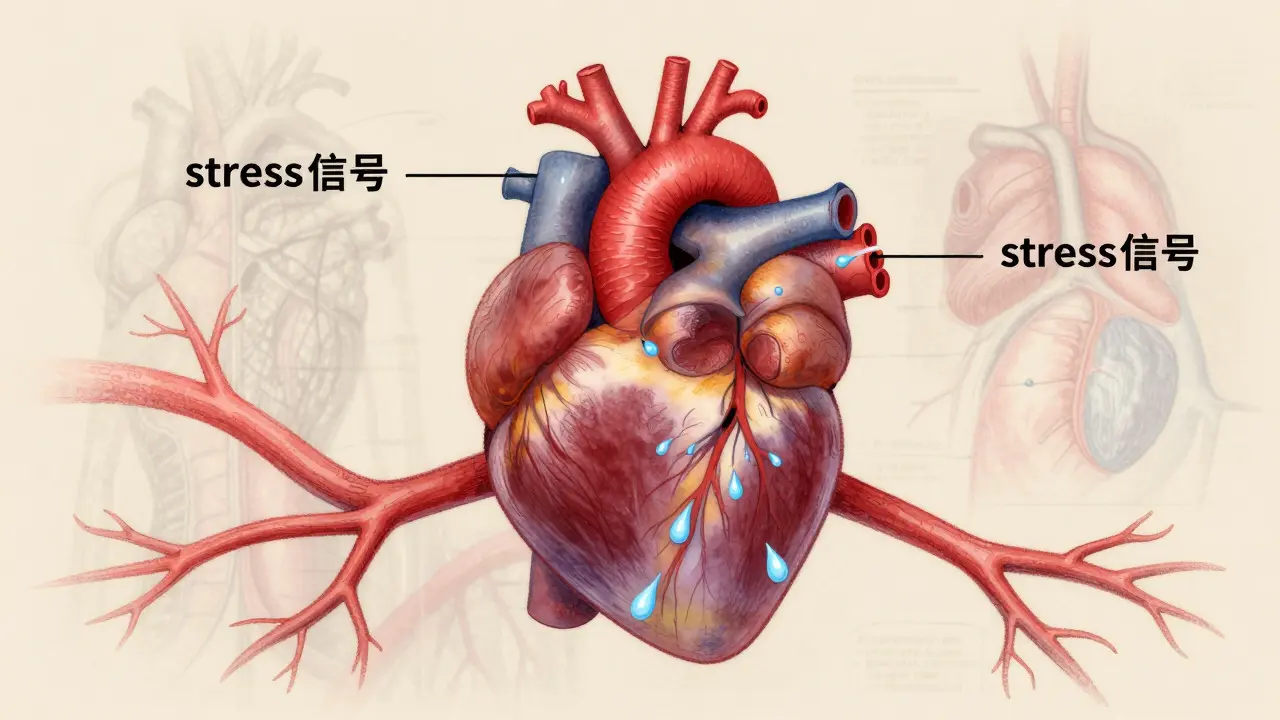
Shortness of breath is a tricky symptom. It could be the flu, it could be asthma, or it could be your heart struggling to pump blood effectively. For decades, doctors had to guess which one it was, often ordering expensive imaging tests just to be sure. Then came NT-proBNP, a specific blood test that measures a protein released by the heart when it is under stress. This single test has changed how we diagnose heart failure, turning a guessing game into a precise science.
If you are a clinician wondering when to pull the trigger on this lab order, or if you are a patient trying to understand why your doctor ordered this specific blood work, you have come to the right place. We will break down exactly when this test is useful, when it might mislead you, and how to interpret those numbers correctly in real-world scenarios.
What Is NT-proBNP and Why Does It Matter?
To understand the test, you first need to understand the biology. When your heart’s ventricles (the lower chambers) stretch because they are working too hard or filling with too much fluid, they release a hormone called B-type Natriuretic Peptide (BNP). This hormone helps your body get rid of salt and water to reduce pressure. As the body processes BNP, it breaks it down into two parts: active BNP and an inactive fragment called N-terminal pro-B-type Natriuretic Peptide (NT-proBNP).
Why do we measure the inactive part? Because it lasts longer. Active BNP disappears from the bloodstream quickly, with a half-life of only about 20 minutes. NT-proBNP sticks around for 60 to 120 minutes. This stability makes it a much more reliable marker for laboratories, especially if there is any delay between drawing the blood and running the analysis. According to data from the College of American Pathologists, the turnaround time for these tests averages around 47 minutes in hospital labs, making it fast enough for emergency decisions.
The primary job of this test is simple: rule out heart failure. If your NT-proBNP levels are low, it is extremely unlikely that heart failure is causing your symptoms. This high negative predictive value-around 98% when levels are below established cutoffs-saves patients from unnecessary hospital admissions and costly procedures like echocardiograms.
When Should You Order an NT-proBNP Test?
Not every cough or wheeze needs this test. Ordering it indiscriminately leads to confusion and wasted resources. The guidelines from the American College of Cardiology (ACC), American Heart Association (AHA), and European Society of Cardiology (ESC) all agree on one main use case: evaluating suspected heart failure.
You should consider ordering an NT-proBNP test in these specific scenarios:
- Acute Dyspnea: A patient comes into the ER gasping for air. Is it their lungs (COPD, pneumonia) or their heart? An NT-proBNP level below 300 pg/mL essentially rules out acute heart failure with 98% confidence, as noted by Dr. James Januzzi Jr. at Harvard Medical School.
- Unexplained Edema: Swelling in the legs or abdomen without an obvious cause like liver disease or venous insufficiency.
- Risk Stratification: In patients who already have known heart failure, rising levels can signal that the condition is worsening, even before symptoms become severe.
- Pre-operative Assessment: Before major surgeries, clinicians may use it to assess cardiac risk in patients with ambiguous histories.
A survey of cardiologists showed that 89% consider this test essential for diagnosing heart failure. Many report it prevents unnecessary hospital stays. For example, one clinician shared that a normal result helped them avoid a $3,000 echocardiogram for an elderly patient whose shortness of breath was actually due to a COPD exacerbation.
Understanding the Numbers: Cutoff Values and Age Adjustments
Getting the lab result back is only half the battle. Interpreting it requires context. A "normal" number for a 30-year-old is different from a "normal" number for an 80-year-old. Here is how the European Society of Cardiology (ESC) breaks down the diagnostic thresholds for ruling out acute heart failure:
| Age Group | Rule-Out Threshold (pg/mL) | Clinical Interpretation |
|---|---|---|
| Under 50 years | < 450 | Heart failure highly unlikely |
| 50 to 75 years | < 900 | Heart failure highly unlikely |
| Over 75 years | < 1,800 | Heart failure highly unlikely |
Notice how the threshold rises with age. This is because NT-proBNP levels naturally increase by 15-20% per decade, independent of heart function. If you apply a young person's cutoff to an elderly patient, you will get false positives. Conversely, if you ignore the upper limits, you might miss early signs of trouble in younger patients.

NT-proBNP vs. BNP: Which Test Is Better?
You might see both tests mentioned in medical literature. So, which one should you choose? Both measure the same underlying physiological stress, but they have distinct differences.
NT-proBNP is generally preferred in clinical practice for several reasons. First, its stability allows for more flexible sample handling. Second, meta-analyses have shown it has slightly higher diagnostic accuracy (an Area Under the Curve of 0.91 compared to 0.88 for BNP). In the United States, NT-proBNP accounts for about 68% of all natriuretic peptide orders.
However, BNP still has its place. It is less affected by kidney function than NT-proBNP. If a patient has severe renal impairment, interpreting NT-proBNP becomes trickier because the kidneys clear this protein from the blood. When the kidneys fail, NT-proBNP levels rise simply because they aren't being filtered out, not necessarily because the heart is failing. This is a crucial distinction that clinicians must keep in mind.
Pitfalls: When the Test Can Mislead You
No test is perfect. There are three major factors that can skew NT-proBNP results, leading to misdiagnosis if you rely on the number alone.
- Kidney Disease (CKD): As mentioned, reduced kidney function causes NT-proBNP to accumulate. Patients with Stage 3-4 Chronic Kidney Disease may have levels 28-40% higher than healthy individuals with similar heart function. In these cases, some experts suggest using a modified rule-out cutoff of <1,200 pg/mL instead of the standard values.
- Obesity: Fat tissue seems to metabolize natriuretic peptides faster. Studies show that for every 5 units increase in BMI, NT-proBNP levels drop by 25-30%. This means obese patients might have lower-than-expected levels despite having heart failure, potentially leading to a false sense of security.
- Atrial Fibrillation (AFib): Irregular heart rhythms can stretch the atria, releasing more peptide. An elevated level in a patient with AFib doesn't automatically mean systolic heart failure; it might just reflect the arrhythmia itself.
Dr. Allan Jaffe of Mayo Clinic warns against using the test in isolation. Always look at the whole patient. If an 82-year-old with kidney disease and atrial fibrillation has a mildly elevated NT-proBNP, don't jump to conclusions. Combine the lab result with physical exam findings, chest X-rays, and echocardiography if needed.

Practical Tips for Clinicians
Integrating NT-proBNP into your workflow doesn't require a PhD in cardiology, but it does require discipline. Here are some practical steps to ensure you are getting the most out of this tool:
- Check the Patient's History First: Note their age, BMI, and kidney function (eGFR) before looking at the result. These three factors dictate which cutoff value you should use.
- Trend Over Time: A single snapshot is useful, but trends are powerful. In stable heart failure patients, serial measurements can tell you if a treatment plan is working. A significant drop in NT-proBNP correlates with better outcomes and lower risk of cardiovascular death.
- Avoid Overuse: Medicare data shows that 18% of these tests are ordered for asymptomatic patients. This is largely unnecessary. Save the test for those with symptoms or known high-risk conditions. Starting in 2025, CMS is implementing prior authorization for low-yield testing to curb this trend.
- Use Point-of-Care Options When Available: Newer devices like the Roche Cobas h 232 can deliver results in 12 minutes with high accuracy. In busy ER settings, this speed can drastically reduce door-to-disposition times.
The Future of Natriuretic Peptide Testing
Where is this technology heading? The market for natriuretic peptide testing is growing, valued at over $1.2 billion globally. But the biggest shift isn't in the chemistry-it's in the integration. We are moving toward multi-marker panels where NT-proBNP is combined with other indicators like troponin (for muscle damage) and inflammatory markers.
Recent trials, such as the VICTORIA trial published in the New England Journal of Medicine, have reinforced the role of NT-proBNP in guiding therapy. Reducing these levels through medication was linked to a 35% lower risk of cardiovascular death. This suggests that NT-proBNP isn't just a diagnostic tool; it is becoming a therapeutic target. Doctors may soon prescribe medications specifically to bring these numbers down, treating the biomarker as a proxy for heart health.
Despite the rise of artificial intelligence and new genetic tests, NT-proBNP remains the gold standard. With nearly 30 years of outcome data supporting its use, it is unlikely to be replaced anytime soon. Instead, it will continue to evolve, becoming faster, cheaper, and more integrated into routine care.
How long does it take to get NT-proBNP results?
In most hospital laboratories, the average turnaround time is about 47 minutes. However, with newer point-of-care devices available in some emergency departments, results can be ready in as little as 12 minutes.
Does NT-proBNP need fasting?
No, fasting is not required for NT-proBNP testing. It is a standard blood draw that can be done at any time of day, regardless of whether the patient has eaten.
Can obesity affect NT-proBNP levels?
Yes, obesity can lower NT-proBNP levels. Research indicates that levels decrease by approximately 25-30% for every 5-unit increase in Body Mass Index (BMI). This can sometimes lead to false-negative results in obese patients with heart failure.
What is the difference between BNP and NT-proBNP?
Both are fragments of the same hormone released by the heart under stress. BNP is the active form with a short half-life (20 minutes), while NT-proBNP is the inactive fragment with a longer half-life (60-120 minutes). NT-proBNP is more stable and widely used for diagnosis, though BNP is less affected by kidney disease.
Is NT-proBNP testing covered by insurance?
Generally, yes. Medicare reimburses approximately $18.42 per test (as of 2023 fee schedules). However, insurers may require documentation of symptoms like dyspnea or edema to justify the test, as prior authorization is being implemented for asymptomatic screening starting in 2025.
How does kidney disease impact NT-proBNP interpretation?
Kidneys help clear NT-proBNP from the blood. In patients with Chronic Kidney Disease (CKD), levels can be artificially elevated by 28-40%. Clinicians often use higher rule-out thresholds (e.g., <1,200 pg/mL) for CKD patients to avoid false positives.
Morikeoluwa Ayodeji
Man this is exactly the kind of breakdown we need because honestly half the time I feel like doctors are just guessing when it comes to heart stuff versus lung stuff. The part about obesity lowering the levels is wild though because you would think more weight means more strain on the heart but apparently the fat tissue metabolizes the peptide faster so you get these false negatives that could be dangerous. It makes me wonder how many people with heart failure are walking around thinking they are fine just because their BMI is high and their test came back normal. We really need better guidelines for those patients because relying on standard cutoffs is basically setting them up for failure. Also the fact that kidney disease skews the numbers by like forty percent is insane because so many older patients have some level of renal impairment and if you don't adjust for that you are going to send them down a rabbit hole of unnecessary tests and stress. It is great that point-of-care devices are getting faster too because waiting an hour in the ER while you are gasping for air is not ideal and twelve minutes is a game changer for triage.
Traci Bobbitt
Actually let's be real here because everyone acts like NT-proBNP is this magical silver bullet but it is just another biomarker that gets overhyped by pharma reps who want to sell more lab kits. The article says it rules out heart failure with ninety-eight percent confidence but that assumes the patient doesn't have atrial fibrillation or kidney issues which is basically every single person over sixty years old. I read a study last year showing that even with perfect technique you still get false positives in obese patients because the adipose tissue clears the peptide too fast so you end up missing the diagnosis entirely. And don't get me started on the age adjustments because adding four hundred units to the threshold for every decade is arbitrary at best and dangerous at worst. Clinicians should stop relying on a single number and start looking at the whole clinical picture including echocardiograms from day one because waiting for blood work delays actual treatment. It is lazy medicine to rely on a proxy marker when we have imaging technology that gives us direct visualization of cardiac function.
Sansaray Jones
i mean its cool that there is a test for this but i always worry about the cost side of things especially since medicare is starting to require prior authorization for asymptomatic screening now. feels like they are trying to save money at the expense of catching things early which is kinda ironic since catching heart failure early probably saves more money in the long run than treating acute episodes later. also the part about bnp being less affected by kidney function is interesting because most places just default to nt-probnp without thinking about why. maybe we should be using both tests together instead of picking one as the gold standard.
Michelle Alavaski
The reliance on synthetic biomarkers such as NT-proBNP represents a fundamental flaw in modern diagnostic methodology, wherein clinicians substitute empirical observation with algorithmic interpretation derived from population averages that rarely reflect individual physiological realities. One must question the integrity of laboratory standards when the very stability of the analyte is compromised by pre-analytical variables such as delayed processing times or improper storage conditions which are ubiquitous in underfunded healthcare systems. Furthermore the assertion that elevated levels indicate cardiac stress ignores the possibility of exogenous toxins or environmental pollutants that may induce similar biochemical responses thereby creating a false narrative of organic pathology where none exists. The medical establishment benefits financially from this cycle of testing and retesting while the patient remains a passive subject in a grand experiment designed to validate pharmaceutical interventions rather than address root causes such as dietary deficiencies or chronic inflammation. It is prudent to view these numerical thresholds with extreme skepticism given their susceptibility to manipulation by confounding factors such as renal clearance rates which vary wildly among individuals due to genetic predispositions and lifestyle choices that are often overlooked in standardized protocols.
Veronica Agbanyim
It is morally irresponsible to ignore the socioeconomic disparities highlighted by the new CMS prior authorization rules because low-income patients are disproportionately likely to present with advanced symptoms due to lack of preventive care access. When you restrict testing based on asymptomatic criteria you are essentially penalizing those who cannot afford regular checkups and forcing them into emergency rooms where costs are highest and outcomes are poorest. The ethical imperative here is clear: diagnostics should be equitable and accessible regardless of a patient's ability to navigate bureaucratic hurdles or provide extensive documentation of symptoms. We see this pattern repeatedly in healthcare policy where efficiency metrics trump human dignity and the result is a system that fails the very people it claims to serve. Physicians need to advocate harder for their patients against these administrative barriers because a missed diagnosis of heart failure can lead to catastrophic health events that destroy families financially and emotionally.
jackie healey
Oh my goodness! This is such an incredibly helpful summary!! I have been struggling to understand why my doctor ordered this specific test instead of the other one mentioned in the literature, and this explanation about the half-life differences is crystal clear!!! It is fascinating how the inactive fragment lasts longer and thus provides a more reliable window for analysis, especially considering the average turnaround time in hospitals is nearly an hour!!! I also found the section on obesity particularly enlightening because it explains why my previous results might have been misleading given my body mass index!!! Thank you so much for breaking down the age-adjusted thresholds as well, because it is reassuring to know that higher levels are expected in older adults and do not necessarily indicate immediate danger!!! Keep up the excellent work in demystifying these complex medical concepts for the rest of us!!!
Fenton Quinn
The philosophical implication of treating a biomarker as a therapeutic target is profound. We are shifting from diagnosing disease to managing numbers, which raises questions about what constitutes health in a quantified world. If reducing NT-proBNP correlates with lower mortality, does the molecule itself cause harm, or is it merely a messenger? This distinction matters for how we frame patient expectations and treatment goals. Trends matter more than snapshots.
Lilith Stepanyan
Let's cut through the noise because the real issue here is that clinicians are using this test as a crutch to avoid learning basic physical examination skills. The article mentions ruling out heart failure with ninety-eight percent confidence but fails to acknowledge that a skilled practitioner can identify pulmonary edema with a stethoscope and a visual inspection of jugular venous pressure in under two minutes. By outsourcing diagnostic reasoning to a lab machine we are creating a generation of doctors who cannot differentiate between wheezing and crackles without a numeric validation. This is toxic to the profession because it erodes clinical intuition and replaces it with blind faith in algorithms that are prone to error in comorbid populations. The data shows rising levels signal worsening condition but it does not account for the placebo effect of reassurance provided by a thorough bedside manner which arguably improves outcomes just as effectively as diuretics in mild cases.
Anna Salamon
In many cultures outside the United States, the approach to diagnostic testing is often more conservative due to resource limitations, which actually forces clinicians to become more adept at clinical correlation before ordering expensive labs. This post highlights a very Western-centric model where rapid testing is prioritized over holistic assessment, but perhaps there is value in slowing down and integrating traditional observational techniques with modern biotechnology. For instance, in parts of Europe, the emphasis on lifestyle modification before pharmacological intervention is stronger, and NT-proBNP is used more as a monitoring tool for adherence rather than a primary diagnostic gatekeeper. Sharing these global perspectives can help US-based practitioners appreciate alternative workflows that reduce waste and improve patient engagement. Collaboration across borders in medical education could foster a more balanced use of these powerful tools.