
Chronic watery diarrhea that won’t go away? If you’ve been told you have IBS-D but nothing seems to help, you might be dealing with something else entirely: bile acid diarrhea (BAD). It’s not rare-about 1 in 4 people diagnosed with IBS-D actually have it. And here’s the kicker: it’s treatable. Unlike IBS, which often needs long-term symptom management, BAD responds well to simple, targeted fixes once it’s correctly identified.
What Exactly Is Bile Acid Diarrhea?
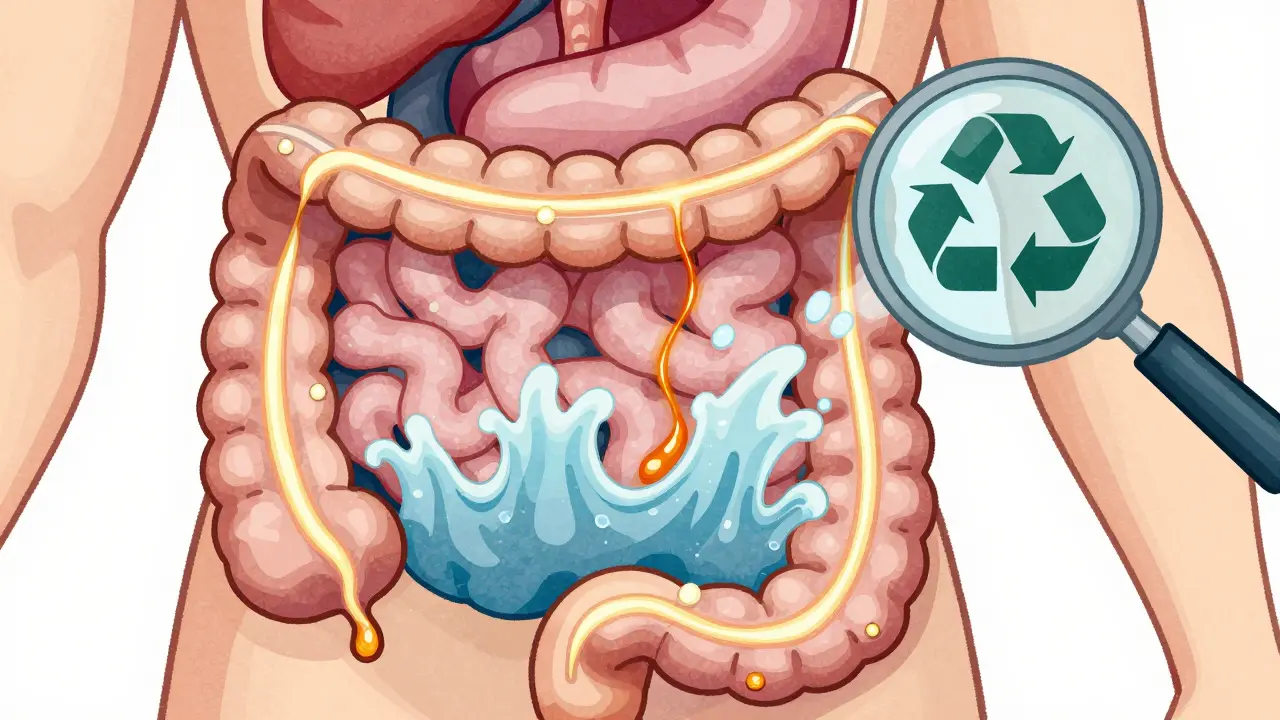
Your liver makes bile to help digest fats. Normally, 95% of bile acids are reabsorbed in the last part of your small intestine, the terminal ileum, and recycled back to the liver. In bile acid diarrhea, that system breaks down. Too much bile ends up in your colon, where it acts like a laxative-pulling water in, speeding up movement, and causing sudden, urgent, watery stools. You might notice greasy or pale stools that are hard to flush. Some people have symptoms all the time. Others only get them after meals or when they eat fatty foods. There are three types:- Type I: Caused by damage to the ileum-think Crohn’s disease, ileal surgery, or radiation damage.
- Type II: The most common. No clear structural cause. Often called idiopathic BAD. This is the one most often mistaken for IBS-D.
- Type III: Triggered by other conditions like celiac disease, chronic pancreatitis, or even gastric bypass surgery.
How Is It Diagnosed?
This is where things get tricky. Most doctors don’t test for BAD unless you’ve already tried everything else. But if you’ve had diarrhea for more than four weeks and IBS treatments failed, it’s time to ask. The gold standard test is the SeHCAT scan. You swallow a capsule with a tiny bit of radioactive selenium attached to a bile acid. A scanner tracks how much is reabsorbed after seven days. If less than 15% is retained, you have BAD. But here’s the problem: SeHCAT isn’t available in most U.S. hospitals. That’s why doctors are turning to blood tests:- C4 test: Measures 7α-hydroxy-4-cholesten-3-one. Levels above 15.3 ng/mL strongly suggest BAD.
- FGF-19 test: This hormone tells your liver to slow bile production. If your FGF-19 is below 85 pg/mL, your body isn’t regulating bile properly.
Medications: The Bile Acid Binders
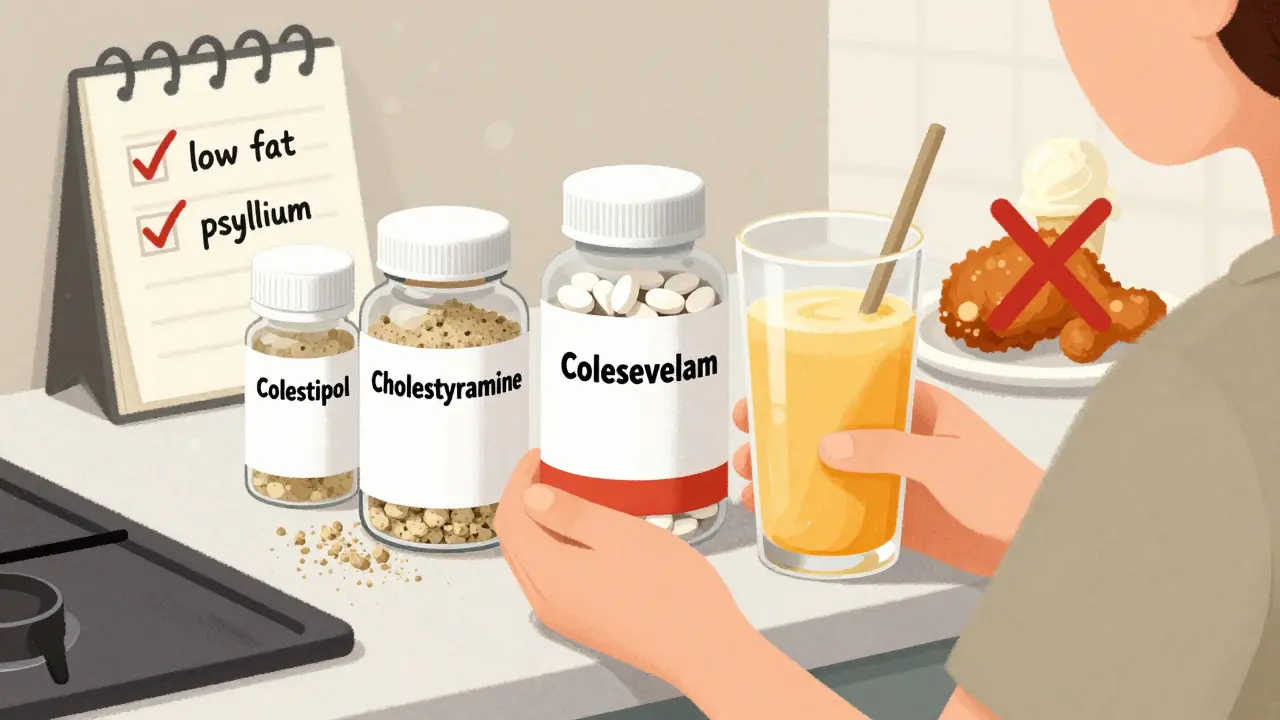
Once diagnosed, treatment is straightforward. You take a bile acid binder. These drugs work like sponges-they grab bile acids in your gut before they reach the colon and flush them out harmlessly in your stool. There are three main ones:- Cholestyramine (Questran): The oldest and cheapest. Dose: 4 grams once or twice a day. But it’s chalky, gritty, and tastes like wet plaster. Many people quit because of it. Constipation is common.
- Colestipol (Colestid): Slightly better taste, same dose range. Still powdery, but a little easier to swallow.
- Colesevelam (Welchol): The newest. Comes as a tablet or powder you mix with water. Only 5% of users report constipation, compared to 20-30% with the others. It’s also FDA-approved for cholesterol and type 2 diabetes, so it’s more widely prescribed.
Dietary Changes That Actually Work
Medication helps, but diet makes the difference between okay and great. Reduce fat intake. Fat triggers bile release. Cutting fat to under 30 grams per day can cut stool frequency by 40%. That doesn’t mean no fat-it means no fried chicken, creamy sauces, or bacon for breakfast. Choose lean proteins, skinless chicken, fish, tofu. Use olive oil sparingly. Add soluble fiber. Psyllium husk (Metamucil) is your best friend. Take 5-10 grams daily, split into two doses, mixed with water or juice. It binds bile acids naturally and firms up stool. Clinical trials show a 35% drop in daily bowel movements. Eat smaller, more frequent meals. Three big meals flood your system with bile. Five or six small meals spread the load. A Cleveland Clinic study showed this reduced post-meal urgency by 25%. Avoid triggers. Not everyone reacts the same, but common ones include:- Caffeine (coffee, tea, energy drinks)-boosts colon motility by 15-20%
- Artificial sweeteners (sorbitol, mannitol)-they draw water into the gut
- High-fat dairy (ice cream, cheese, butter)
- Spicy foods (can worsen irritation)
Real Patient Experiences
On Reddit, people with BAD describe the same patterns: greasy stools, sudden urgency, and constipation from binders. One user said, “I thought I had IBS for five years. Then I tried cholestyramine. Within three days, my life changed.” Another shared: “I switched from cholestyramine to colesevelam and added psyllium. No more midnight dashes to the bathroom. I finally sleep through the night.” Cost is a barrier. Colesevelam runs $350-$450 a month without insurance. Some patients get it covered through off-label prescriptions for cholesterol. Ask your doctor about patient assistance programs.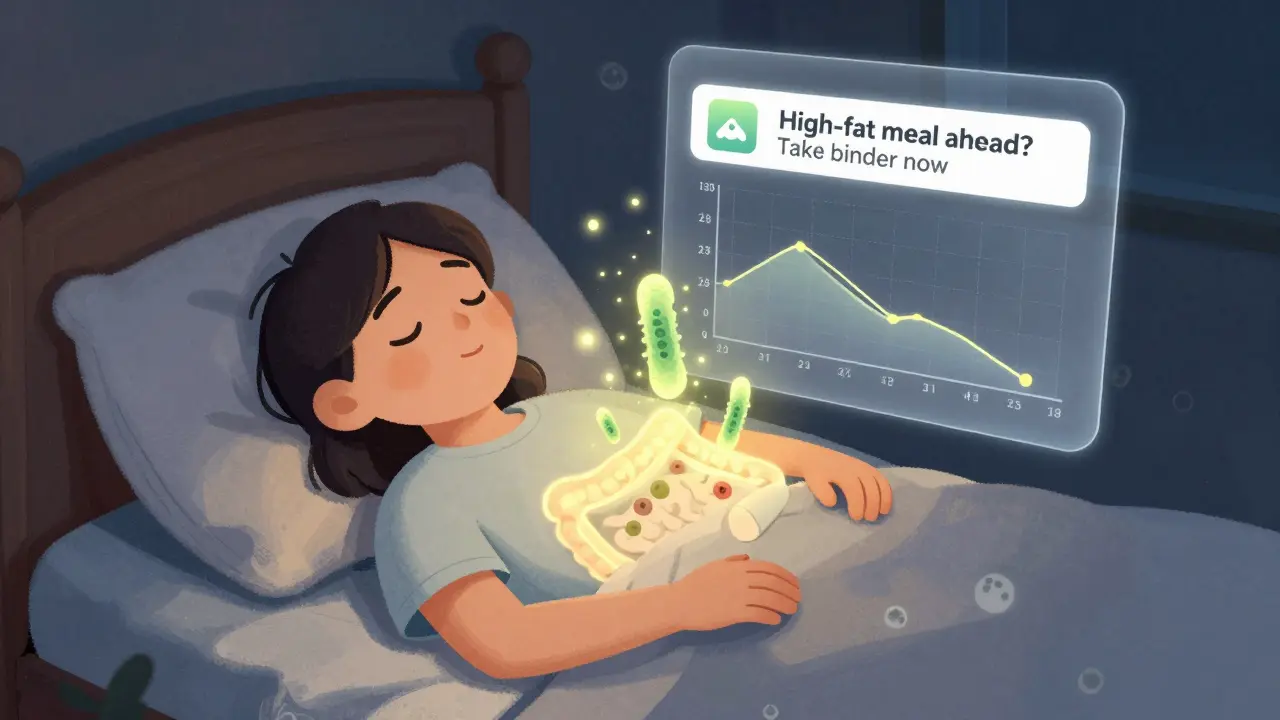
What’s Next for BAD Treatment?
The future looks promising. New drugs targeting the FGF-19 pathway are in phase 3 trials. One, called A3384, improved symptoms in 72% of patients in a recent study-far better than current binders. These drugs won’t just bind bile-they’ll stop your liver from overproducing it in the first place. There’s also emerging genetic research. Four gene variants (TGR5, ASBT, FXR, FGF19) are linked to BAD risk. In the next few years, a simple blood test might predict who’s prone to it. And tech is catching up. Apps like BAD-Score use AI to track your meals, stress, and symptoms to predict flare-ups. Imagine getting a notification: “High-fat meal ahead. Take your binder now.”When to See a Specialist
If you’ve had chronic diarrhea for more than a month, especially with IBS-D diagnosis that didn’t improve, ask your doctor for a BAD workup. Don’t wait. Most patients wait six years before getting the right diagnosis. Start with a blood test for C4 and FGF-19. If those are abnormal, try a bile acid binder for two weeks. Combine it with a low-fat, high-soluble-fiber diet. Track your symptoms. If you feel better, you’ve likely found the cause. You don’t have to live with daily urgency, embarrassment, or sleepless nights. BAD is hidden, but it’s not untreatable. With the right test and a simple plan, you can take back control.Can bile acid diarrhea be cured?
Bile acid diarrhea can’t always be permanently cured, but it can be fully controlled. Most people manage it long-term with bile acid binders and dietary changes. If the cause is Type I (like after ileal surgery), you may need lifelong treatment. Type II (idiopathic) often responds well to ongoing management, and symptoms can stay gone for years with consistent care.
Is cholestyramine the only option for binders?
No. Cholestyramine is the oldest and cheapest, but many people can’t tolerate it because of its texture and taste. Colestipol is similar but slightly better. Colesevelam (Welchol) is the most tolerable-it comes as a tablet or powder that mixes easily and causes less constipation. Many doctors now start with colesevelam because adherence is higher.
Can I take bile acid binders with other medications?
Be careful. Bile acid binders can interfere with how your body absorbs other drugs-like thyroid medicine, antibiotics, birth control, and some antidepressants. Take them at least 4 hours before or after other medications. Always check with your pharmacist or doctor before combining them.
Do I need to stay on a low-fat diet forever?
Not necessarily. Many people find they can slowly reintroduce moderate fats once symptoms are under control. But keep your intake under 40 grams per day. Some people tolerate avocado, nuts, or olive oil in small amounts. Keep a food journal to track what works for you. The goal isn’t to eliminate fat-it’s to avoid triggering large bile releases.
Why do I still have diarrhea even after taking binders?
There are a few reasons. You might not be taking enough binder, or you’re still eating trigger foods like caffeine, artificial sweeteners, or high-fat meals. You could also have another condition like small intestinal bacterial overgrowth (SIBO) or celiac disease. If symptoms persist after 2-3 weeks on binder + diet, ask your doctor about further testing.
Can stress make bile acid diarrhea worse?
Yes. Stress activates your gut’s nervous system, which can speed up colon motility and increase bile acid secretion. While stress doesn’t cause BAD, it can make symptoms worse. Managing stress with breathing exercises, walking, or mindfulness can help reduce flare-ups, especially when combined with diet and medication.
Is BAD the same as IBS-D?
No. IBS-D is a diagnosis of exclusion-it means no structural or biochemical cause is found. BAD is a specific, measurable condition caused by excess bile acids in the colon. Up to 30% of people diagnosed with IBS-D actually have BAD. Treating BAD with binders often works when IBS treatments fail. That’s why testing for BAD is critical before accepting an IBS-D label.