
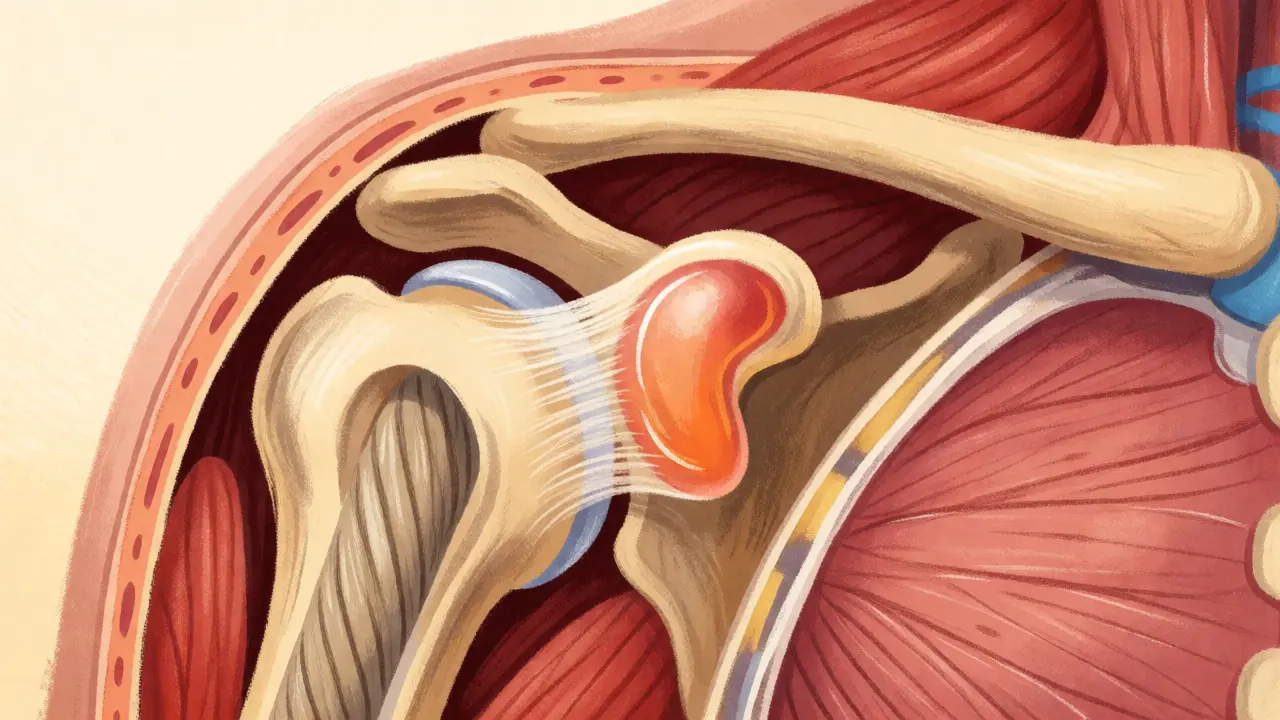
You wake up with a sharp twinge in your shoulder or a dull ache behind your knee. You’ve been typing all day, gardening, or maybe you just started running again after a long break. The internet tells you it’s inflammation, but which kind? Is it your tendon screaming for help, or is a bursa-the tiny cushion between your bone and muscle-swelling up like a balloon?
Here’s the thing: most people treat these two conditions exactly the same way. They ice it, rest it, pop an ibuprofen, and hope for the best. But treating bursitis like tendinitis (or vice versa) can actually make things worse. One might need rest; the other needs specific loading exercises. If you get this wrong, you could be stuck in pain for months instead of weeks.
The Anatomy Lesson: What Are We Actually Talking About?
To fix the problem, you have to know what’s broken. Think of your joints as complex machinery. You have bones that move against each other, muscles that pull on those bones, and tendons that act as the cables connecting muscle to bone. Sandwiched between many of these moving parts are bursae (small, fluid-filled sacs that reduce friction between tissues). There are about 160 of them in your body. Their job is simple: they act as shock absorbers and lubricants so your tendons don’t rub raw against your bones.
Tendons (thick fibrous cords that attach muscle to bone) do a different job. They transmit force. When you kick a ball, your quad muscle contracts, pulls the patellar tendon, and straightens your leg. That tendon takes a massive amount of load.
So, when we talk about Bursitis (inflammation of the bursal sac), we’re talking about the cushion getting irritated. When we talk about Tendinitis (inflammation or irritation of a tendon), we’re talking about the cable itself getting stressed. They often happen together because if one structure is inflamed, the surrounding area gets tight and protective, irritating its neighbor. But the root causes and treatments differ significantly.
Spotting the Difference: Pain Patterns Matter
How do you tell them apart at home? It’s mostly about *when* and *where* it hurts.
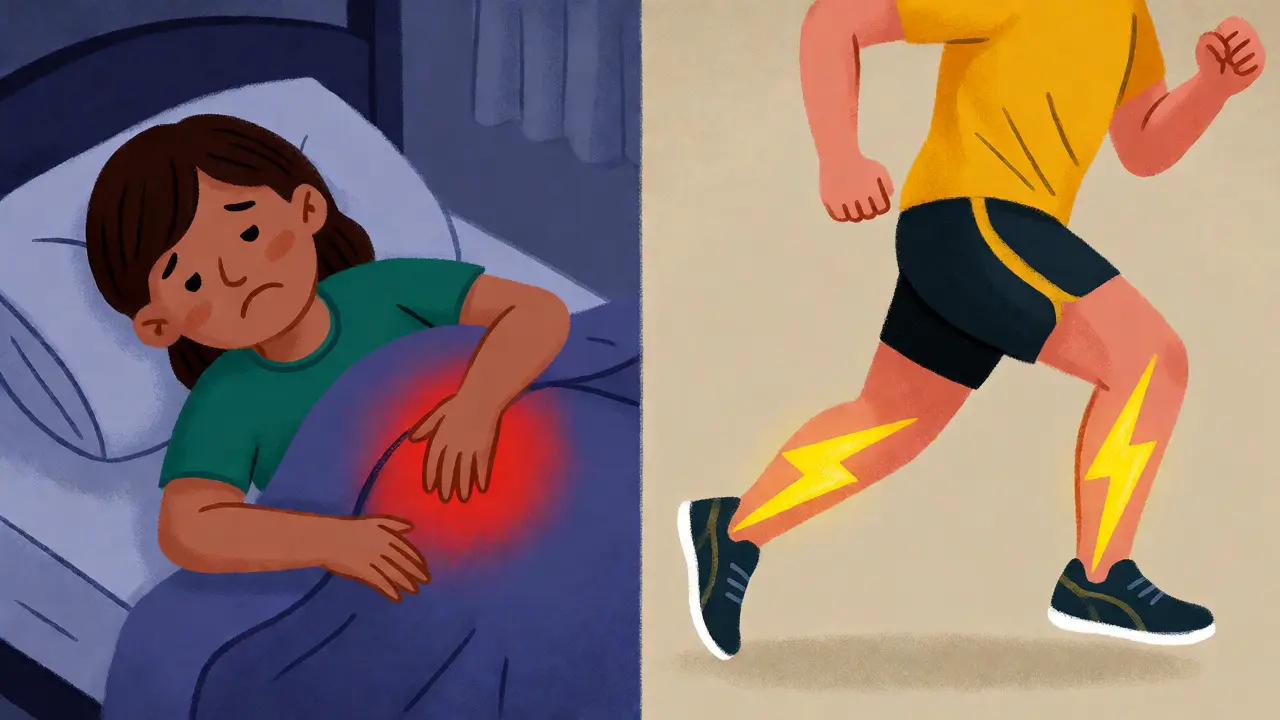
Bursitis pain tends to feel diffuse. It’s not always easy to point to one single spot with your finger. It often feels like a deep, throbbing ache around the joint. A classic sign? Night pain. If you lie on your side and your hip or shoulder starts hurting because you’re putting pressure directly on the swollen bursa, that’s a strong indicator of bursitis. It’s also common to see visible swelling or warmth over the joint area, especially in cases like olecranon bursitis (the elbow).
Tendinitis pain is more localized. You can usually trace the path of the tendon. For example, if you have Achilles tendinitis, the pain follows the cord from your heel up toward your calf. It’s often sharpest during specific movements that load the tendon-like pushing off when walking or jumping. Unlike bursitis, lying still doesn’t necessarily hurt unless you accidentally stretch or compress the tendon. In fact, many people with tendinitis find that warming up makes the pain disappear temporarily, only for it to return intensely after activity.
| Feature | Bursitis | Tendinitis |
|---|---|---|
| Pain Location | Diffuse, around the joint | Localized, along the tendon path |
| Night Pain | Common (pressure-sensitive) | Less common (movement-sensitive) |
| Swelling | Often visible/palpable lump | Rarely visible externally |
| Trigger | Pressure, direct impact, repetitive friction | Overload, sudden increase in activity |
| Warm-up Effect | Pain may persist or worsen | Pain often decreases with warm-up |
Why Misdiagnosis Delays Recovery
This isn’t just academic trivia. Getting the label right changes how you treat it. A study published in the Journal of Orthopaedic & Sports Physical Therapy found that patients who received the wrong initial treatment had symptoms lasting three times longer than those who got the right care early on.
Take corticosteroid injections, for instance. They work wonders for bursitis. If you inject a swollen bursa, you’re draining the inflammatory fluid and calming the sac. Improvement rates hit nearly 78% in the short term. But injecting a tendon? That’s risky. Steroids can weaken collagen fibers. While they might mask the pain initially, repeated injections into a tendon can lead to degeneration or even rupture. This is why Dr. Robert Simkin, a rheumatologist at Brigham and Women’s Hospital, warns that distinguishing the two determines whether an injection helps or harms.
Conversely, rest is great for acute bursitis. Let the sac calm down. But for tendinitis, total rest is often the enemy. Tendons need load to heal and remodel. If you completely immobilize a tendon for six weeks, it loses strength and becomes more prone to injury when you start moving again. This is where the concept of Tendinopathy (a broader term covering chronic tendon issues without active inflammation) comes in. Many chronic "tendinitis" cases are actually tendinosis-a degenerative process rather than an inflammatory one. Treating degeneration with anti-inflammatories alone is like putting a band-aid on a cracked foundation.
The Treatment Playbook: Step-by-Step
Regardless of which condition you have, the first week looks similar. The American College of Rheumatology gives a strong recommendation for conservative management initially.
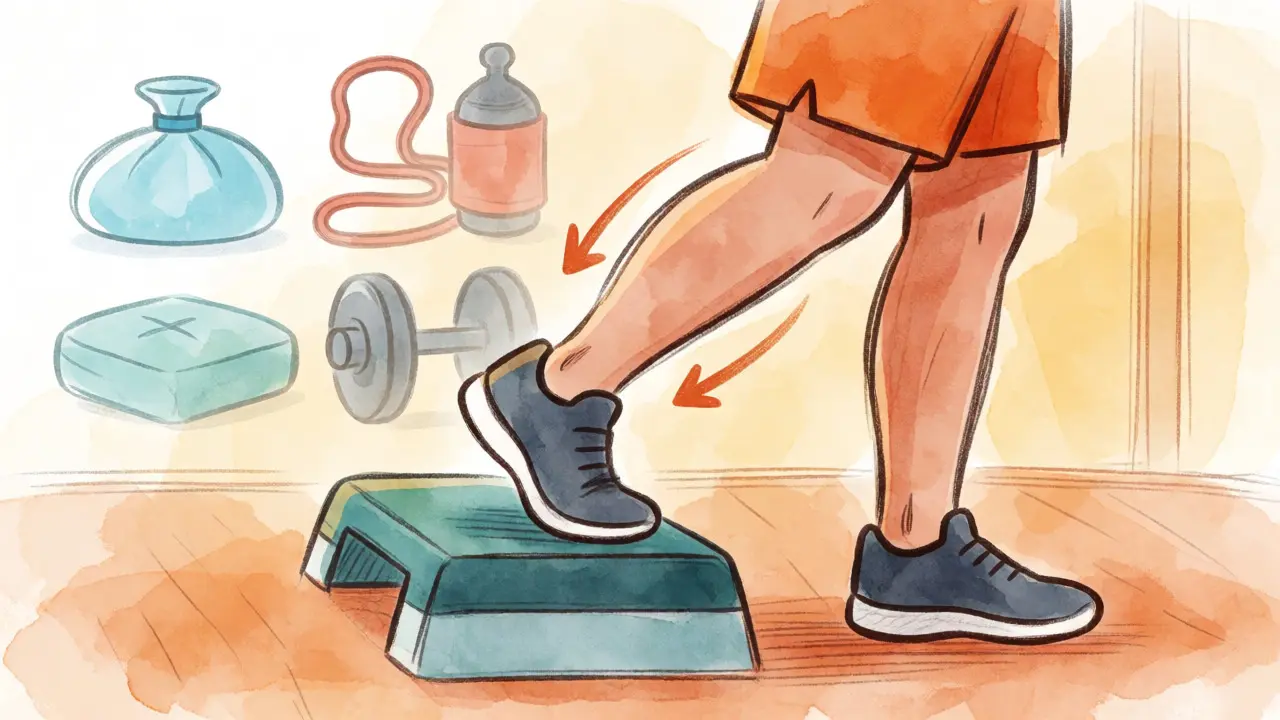
- Ice: Use it for 15-20 minutes several times a day. Frozen water bottles work great for rolling over the area.
- NSAIDs: Ibuprofen or naproxen can help, but don’t take them for more than 10-14 days without medical advice due to gut risks.
- Activity Modification: Stop doing whatever makes it scream. If gardening triggers it, stop kneeling. If running hurts, switch to swimming.
After the acute phase (usually 7-10 days), the paths diverge.
For Bursitis: Focus on reducing pressure. Use cushions, change your posture, and avoid leaning on the affected joint. Gentle range-of-motion exercises prevent stiffness, but you don’t need heavy strengthening immediately. If it persists beyond 4-6 weeks, a doctor might suggest an ultrasound-guided steroid injection. Accuracy here is key-blind injections miss the target 30% of the time, whereas ultrasound guidance hits 95%.
For Tendinitis: Enter eccentric exercise. This is the gold standard. Eccentric means lengthening the muscle under load. For Achilles tendinitis, the Alfredson protocol involves heel drops off a step-slowly lowering yourself down, then using both feet to push back up. It sounds counterintuitive to load an injured tendon, but it stimulates collagen production. Expect this to take 12-16 weeks. Patience is non-negotiable. Research shows sustained improvement at 6 months is much higher with exercise than with injections alone.
Who Gets Hit Hardest?
It’s not just athletes. Your daily life puts you at risk. Construction workers kneeling on hard floors develop prepatellar bursitis (housemaid’s knee). Office workers typing poorly develop wrist tendinitis. Musicians playing violin or guitar constantly face shoulder and finger issues.
Age matters too. Prevalence spikes after 40. Why? Our tissues lose elasticity and blood flow decreases. A tendon that handled stress fine at 25 might struggle at 45. According to data from the Framingham Osteoarthritis Study, the peak incidence occurs between ages 45 and 64. So, if you’re hitting that demographic, listen to your body earlier. Don’t wait until you’re limping.
There’s also a workplace angle. The Bureau of Labor Statistics reported hundreds of thousands of occupational cases annually, costing billions in lost productivity. If your job involves repetitive motion, ergonomic adjustments aren’t optional-they’re preventive medicine.
When to See a Doctor
You can manage mild cases at home, but red flags require professional eyes. See a specialist if:
- The pain doesn’t improve after two weeks of self-care.
- You notice significant swelling, redness, or heat (signs of infection).
- You experience sudden weakness or inability to move the joint.
- The pain wakes you up consistently at night.
Doctors will likely perform a physical exam first. Imaging isn’t always needed. In fact, Dr. Laura Robbins notes that 40% of asymptomatic adults over 50 show signs of bursitis or tendinitis on MRI. Just because it’s there on the scan doesn’t mean it’s causing your pain. Clinical correlation is king. Ultrasound is often preferred over MRI for superficial structures because it’s dynamic-you can watch the tendon glide while you move.
New Frontiers: PRP and Shockwave
If conservative care fails, newer therapies are gaining traction. Platelet-Rich Plasma (PRP) involves injecting your own concentrated platelets into the injury site to boost healing. A 2023 trial showed PRP outperformed steroids for chronic tendinitis at six months, though it costs more upfront ($850 vs $120). Extracorporeal Shockwave Therapy uses sound waves to stimulate repair, showing promise for stubborn cases like plantar fasciitis.
Wearable tech is also changing the game. Algorithms in smartwatches can now detect movement patterns associated with injury risk before pain even starts. Imagine your watch buzzing to say, “Hey, your stride asymmetry suggests your Achilles is overloaded,” before you tear anything. We’re getting closer to that reality.
Ultimately, understanding whether you’re dealing with a angry cushion (bursa) or an overstressed cable (tendon) saves you time, money, and misery. Start with ice and rest, observe the pain pattern, and choose your rehab strategy accordingly. If you’re unsure, get a proper diagnosis. Your future self will thank you for not weakening a tendon with unnecessary shots or resting a bursa into stiffness.
Can I have bursitis and tendinitis at the same time?
Yes, absolutely. In fact, they frequently coexist, particularly in the shoulder. Studies show that subacromial bursitis and rotator cuff tendinitis occur together in about 65% of shoulder pain cases. Because the structures are adjacent, inflammation in one often irritates the other. Treatment usually focuses on the primary driver of pain, but addressing both is often necessary for full recovery.
Is ice better than heat for these conditions?
For acute flare-ups (first 48-72 hours), ice is generally better to reduce inflammation and numb pain. Heat can increase blood flow and relax muscles, which might help chronic stiffness later in recovery, but it can worsen swelling in the acute phase. For bursitis, ice is almost always preferred initially. For tendinitis, some people find gentle heat helpful before stretching, but ice is safer if you're unsure.
How long does it take to recover?
Recovery timelines vary. Acute bursitis often resolves in 4-6 weeks with rest and anti-inflammatories. Tendinitis typically takes longer, often 12-16 weeks, because tendons have poor blood supply and require structured loading exercises to heal properly. Chronic cases can last months. Consistency with rehab exercises is the biggest predictor of speed.
Are steroid injections safe?
They are generally safe for bursitis but carry risks for tendons. Repeated injections into a tendon can weaken it and increase the risk of rupture. Guidelines recommend limiting steroid injections to 2-3 per year for the same area. For tendinitis, eccentric exercise is often recommended over injections for long-term results.
Does age affect susceptibility?
Yes. As we age, our tendons become less elastic and receive less blood flow, making them more prone to injury and slower to heal. Prevalence increases significantly after age 40. Older adults are also more likely to have concurrent osteoarthritis, which can complicate diagnosis and treatment.
Marc-David Mayer
Hey everyone! 👋 Just wanted to share that I dealt with this exact confusion last year. My PT explained it like a car engine: the bursa is the oil, and the tendon is the belt. If the oil leaks (bursitis), you get friction heat. If the belt frays (tendinitis), it snaps under load. 🛠️
The night pain thing was my giveaway for bursitis in my shoulder. Once I stopped sleeping on it and used a pillow wedge, it calmed down fast. For tendinitis, though? Rest made me weaker. I had to do those slow eccentric heel drops. It felt weird loading an injured area, but after 12 weeks, I was back to hiking pain-free. 🥾
Don't guess-get it checked if it lingers. Hope you all heal up quickly! 💪✨
Akeem Feiton
This whole medical establishment is just gatekeeping basic anatomy from us peasants. We pay billions in taxes and they still cant teach us how to tell a sac from a cable without a $500 copay.
Ive been saying for years that the insurance companies want us confused so they can deny claims. They treat everything as 'inflammation' because its cheaper than doing actual diagnostics. Its pathetic. Real Americans know their bodies better than some overpriced specialist who has never done manual labor in his life.
Adam Cox
Actually, the premise here is slightly flawed because it ignores the neurophysiological component of chronic pain which isn't purely structural.
If you look at recent literature, specifically regarding central sensitization, treating it solely as mechanical failure misses the point. The brain amplifies signals regardless of whether it's the bursa or tendon initially. So your 'spotting the difference' is nice, but irrelevant if the nervous system is already rewired.
Also, the claim about steroid injections weakening collagen is often overstated in lay articles. It depends heavily on dosage and frequency. Blanket statements like 'steroids are bad for tendons' ignore the nuance of acute vs chronic phases. You're oversimplifying complex biological processes for clickbait.
Kristina Rhodes
Sarah, I think you might be missing the forest for the trees with the neuro stuff. 😌 Sometimes we need simple maps before we navigate the territory.
For most people, understanding the *mechanism* helps them feel less anxious about their pain. Knowing why ice works for one and not the other gives them agency. It’s not about ignoring complexity; it’s about providing a starting point for healing. Optimism comes from clarity, not just data points. 🌿
Morgan Law
Yo, this is solid info. I’ve got that desk-job wrist thing going on. Always thought it was just 'bad typing' but knowing it’s likely tendon overload makes sense.
Switching to a vertical mouse helped a ton. Also, stretching every hour is key. Don’t wait till it hurts. Just move around. Easy win for office folks. 🖱️🧘♂️
Sarah Leitschuh
Morgan, that’s great advice. Ergonomics are huge.
I’d add that stress plays a role too. When we’re tense, our muscles tighten, pulling harder on those tendons. So mindfulness or breathing exercises can actually help physical recovery. It’s all connected. Be kind to yourself during the process. 🌈
Aaron Gragg
From a biomechanical standpoint, the distinction between bursitis and tendinitis is indeed critical for clinical outcomes, yet public understanding remains fragmented.
The article correctly identifies the divergent treatment protocols: rest and anti-inflammatories for bursal irritation versus progressive loading for tendinous pathology. However, it could benefit from elaborating on the role of proprioceptive deficits, which often accompany chronic tendinopathy and contribute to re-injury rates.
Furthermore, the mention of PRP therapy aligns with current emerging evidence suggesting that growth factor concentration may stimulate tenocyte activity more effectively than corticosteroids in non-acute phases. While cost remains a barrier, the long-term cost-effectiveness analysis should consider reduced recurrence rates.
It is also worth noting that diagnostic imaging, particularly dynamic ultrasound, allows for real-time visualization of tendon gliding and bursal fluid displacement, offering superior specificity compared to static MRI in many cases.
Clinicians must also consider systemic factors such as metabolic syndrome or diabetes, which impair tissue healing capacity irrespective of the specific anatomical structure involved.
Therefore, a holistic approach integrating mechanical assessment, lifestyle modification, and targeted therapeutic intervention yields the best prognosis.
Patient education regarding the timeline of recovery-often underestimated by patients expecting immediate resolution-is paramount for adherence to eccentric exercise protocols.
In summary, while the simplified dichotomy serves as a useful heuristic, comprehensive care requires nuanced evaluation of individual patient variables and comorbidities.
Future research should focus on personalized rehabilitation strategies based on genetic markers of inflammation and repair.
We must also address the socioeconomic disparities in access to advanced therapies like shockwave and PRP.
Ultimately, empowering patients with accurate anatomical knowledge facilitates better self-management and reduces unnecessary healthcare utilization.
This post provides a valuable foundation for that educational effort.
Curtis Surpless
lol nobody cares about prp costs. just rest it. if it hurts stop moving. end of story. science doesnt change common sense.
also ugh another article telling me i have 'inflammation'. maybe its just weak muscles. train harder. sleep more. eat protein. problem solved.
stop overcomplicating it with fancy words like 'eccentric protocol'. just lift things properly.
Harry Falk
Good read. Concise and helpful. Thanks for sharing.
Marshall Stephens
Hi all, hope everyone is doing well.
I found the section on night pain very relatable. It really helped me distinguish my own issue. Just wanted to say thanks for putting this together. It’s nice to see clear information out there.
Wishing everyone a speedy recovery.