
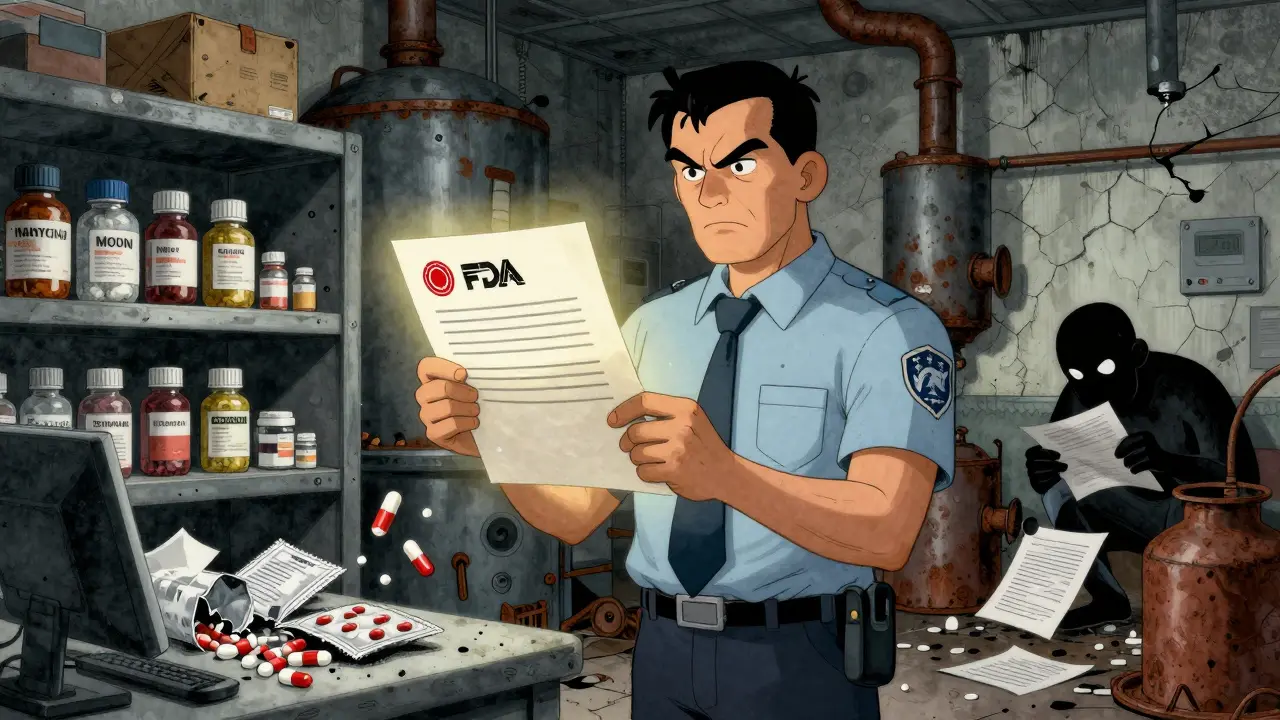
The U.S. Food and Drug Administration (FDA) doesn’t wait for a public health crisis to act. When manufacturers cut corners, mislabel products, or skip safety checks, the FDA doesn’t issue a gentle reminder-it issues a FDA warning letter. These aren’t just paperwork. They’re the first major step in a legal and operational cascade that can end with a product being pulled from shelves, a facility shut down, or even criminal charges.
Since the 1970s, warning letters have been the FDA’s go-to tool for calling out violations. But in recent years, the agency has changed how it uses them. Under Commissioner Robert Califf, the FDA has gone back to a 1990s-style enforcement model: hundreds of letters per year, not dozens. This isn’t a random crackdown. It’s a deliberate strategy to catch violations early and stop them before they hurt people.
What a Warning Letter Really Means
A warning letter from the FDA isn’t a suggestion. It’s a formal notice that the agency has found serious problems during an inspection or review. These problems might include contaminated drugs, false advertising, unapproved ingredients, or unsafe manufacturing practices. The letter lists each violation in detail-down to the specific regulation broken, like Section 502(a) of the Federal Food, Drug, and Cosmetic Act for misbranding.
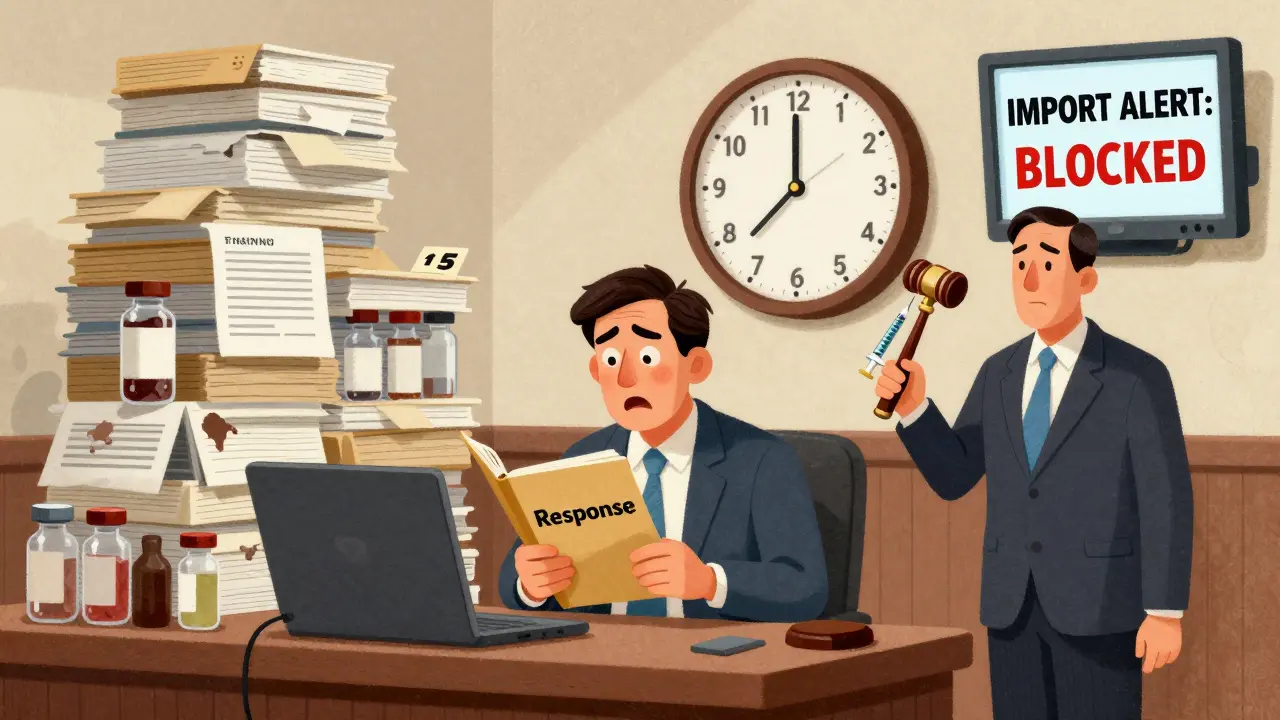
Companies get just 15 business days to respond. That’s not a suggestion-it’s a deadline. The response must include a full plan to fix every issue, with timelines, who’s responsible, and proof that the fix will stick. If the reply is vague, incomplete, or too slow? The FDA moves to the next level.
These letters are signed by the director of the Center for Drug Evaluation and Research (CDER) or the Center for Biologics Evaluation and Research (CBER), not a junior reviewer. That change, made in 2024, signals that the FDA is treating these violations as top-priority issues, not routine compliance checks.
What Happens After the Letter
The FDA doesn’t just sit and wait. After a company responds, inspectors go back. They check if the fixes were real. Did they clean the equipment? Did they retrain staff? Did they fix the software that was recording fake test results?
If the company didn’t fix things-or if they’re caught doing it again-the FDA has a full toolbox:
- Untitled Letters: For minor issues, like a website ad that’s misleading but not dangerous. These are less formal but still count as a paper trail.
- FDA Form 483: Given during inspections, this lists observations. It’s not a warning letter, but it’s often the first step toward one.
- Import Alerts: If a product from overseas is flagged, it gets detained at the border. The importer has 30 days to prove it’s safe-or the product is refused entry permanently.
- Civil Monetary Penalties: Fines start at $10,000 per violation and can hit $1 million. These are used when companies ignore warning letters or repeatedly violate rules.
- Recalls: Voluntary or mandatory. The FDA can force a company to pull a drug, supplement, or food product off the market.
- Withdrawal of Approval: For drugs, this means the product can no longer be sold. For facilities, it can mean losing their license to operate.
And in extreme cases? Criminal charges. Under Section 303(f) of the FDCA, anyone who delays, denies, or limits an FDA inspection can be fined or jailed. That includes shredding records, blocking inspectors, or redacting critical data. The FDA has made it clear: they’re watching foreign factories harder than ever.
Where the FDA Is Hitting Hardest
The enforcement isn’t random. The FDA is focusing on areas where public risk is highest.
Tobacco and vaping products have seen over 700 warning letters since 2021. Most target companies selling new nicotine products without approval-especially those marketed to teens. Flavored e-cigarettes, disposable vapes, and products with no FDA review are all on the list. The agency is treating this as a public health emergency.
Compounded drugs are another big target. In the first half of 2025 alone, the FDA issued 58 warning letters to telehealth companies and compounding pharmacies. These companies were selling drugs like semaglutide and tirzepatide-popular weight-loss medications-without approval. They claimed the drugs were “custom-made,” but they were just copies of FDA-approved drugs, sold online with no quality controls. The FDA says this puts patients at risk of contamination, wrong dosing, or dangerous side effects.
Food manufacturers are being held to new standards. In 2024, the FDA issued 149 warning letters to human food facilities and 37 to animal food facilities. These weren’t just about dirty floors anymore. They were about failing to follow the Food Safety Modernization Act (FSMA). That means companies didn’t do proper hazard analysis, didn’t implement preventive controls, or didn’t monitor their supply chains. The FDA now expects food makers to think like scientists-not just follow old hygiene rules.
How Foreign Manufacturers Are Being Targeted
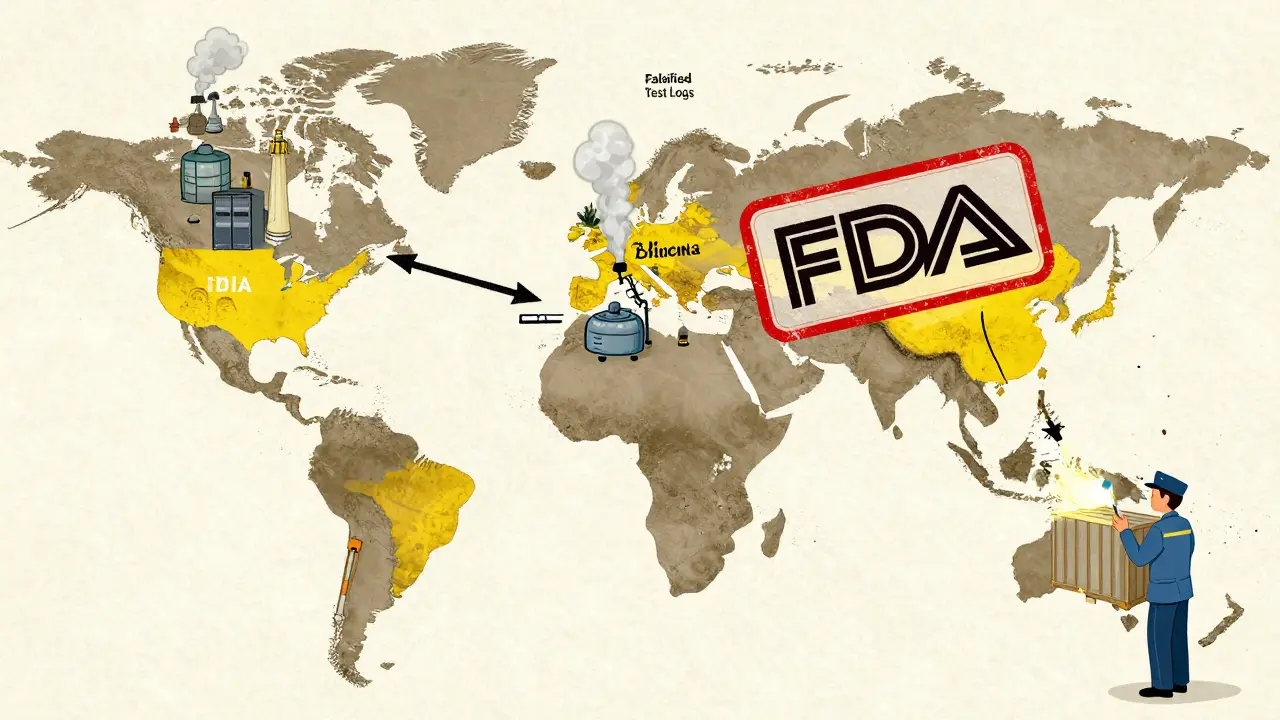
More than 80% of U.S. drugs come from overseas. The FDA knows this. So it’s ramping up unannounced inspections in countries like India, China, and the Philippines. In 2025, the agency planned a 300% increase in these surprise visits.
Why? Because companies that know an inspection is coming will clean up for a day. But if inspectors show up without notice? They see the real operation. And if a company refuses entry, delays inspectors, or hides records? That’s not just a violation-it’s a crime.
One 2025 case involved a Chinese manufacturer of insulin. Inspectors found that the company was reusing equipment without cleaning it, mixing batches from different suppliers, and falsifying test logs. The FDA issued a warning letter, then an import alert. Within weeks, the product was blocked from entering the U.S. The company hasn’t been allowed to ship to American markets since.
What Companies Should Do When They Get a Warning Letter
If you get one, don’t ignore it. Don’t hire a lawyer to send a polite email. Don’t assume it’s just a “mistake.”
Here’s what actually works:
- Assemble a team: Regulatory affairs, quality control, legal, and senior management must all be involved. This isn’t a one-person job.
- Review every violation line by line. Don’t guess. Check your records, your training logs, your equipment logs.
- Write a response that answers every point. Don’t say “we’ve improved.” Say “on March 12, we replaced the autoclave, trained all staff on new sterilization protocols, and conducted 120 validation runs with documented results.”
- Submit the response on time. Miss the 15-day window? The FDA assumes you’re not serious.
- Prepare for a follow-up. The FDA will come back. Make sure your fixes are real, not just paperwork.
Many companies think they can negotiate or delay. They can’t. The FDA’s goal isn’t to punish-it’s to protect. If you don’t fix the problem, they’ll remove your product. And they’ll make sure the public knows why.
The Bigger Picture
The FDA isn’t becoming more aggressive because it’s angry. It’s doing this because the system is breaking. Fake drugs, unsafe supplements, and unapproved weight-loss products are flooding the market. Online pharmacies are selling them. Consumers think they’re safe because they’re labeled “natural” or “FDA-approved.”
Warning letters are the FDA’s way of saying: “We see you. We’re watching. And we will act.”
The message to manufacturers is clear: compliance isn’t optional. It’s the price of doing business in the U.S. market. And if you’re not ready to meet it, someone else will be.
What happens if I ignore an FDA warning letter?
Ignoring a warning letter almost always leads to stronger enforcement. The FDA may issue a civil penalty, detain your products at the border, or force a recall. In severe cases, the agency can pursue criminal charges, especially if you obstruct an inspection. Companies that ignore these letters often lose access to the U.S. market entirely.
Can the FDA shut down a facility without a court order?
Yes, under certain conditions. If a facility repeatedly violates regulations, especially those related to drug safety or food contamination, the FDA can issue a Warning Letter followed by a Notice of Opportunity for Hearing. If the company doesn’t respond adequately, the agency can move to withdraw approval of products made there, effectively shutting down operations without needing a court. In extreme cases, the FDA can also request a court injunction to halt production.
Are warning letters public?
Yes. The FDA publishes all warning letters on its website. They are searchable by company name, product type, or date. These letters are used by investors, competitors, and consumers to assess a company’s compliance record. A single warning letter can damage a company’s reputation and stock value.
Do warning letters apply to dietary supplements?
Yes. Although the FDA has less authority over supplements than drugs, it can still issue warning letters for violations like false health claims, contamination, or unapproved new ingredients. In 2024, over 30 warning letters were issued to supplement manufacturers for claiming products could treat cancer, diabetes, or Alzheimer’s-claims that require FDA approval.
How long does it take the FDA to issue a warning letter after an inspection?
It typically takes 4 to 12 weeks after an inspection for a warning letter to be issued. The FDA reviews the Form 483, gathers legal input, and drafts the letter. If the violation is severe-like contamination or falsified data-the letter may be issued faster. Some companies receive letters within 30 days if the issue is urgent.
Manufacturers who treat FDA compliance as a checklist are setting themselves up for failure. Real compliance means building systems that prevent problems-not just fixing them after they’re caught.
tia novialiswati
This is so needed! 🙌 I’ve seen so many supplement brands get away with murder-‘natural’ doesn’t mean safe, and the FDA finally getting serious? Yes please. My aunt bought some ‘miracle’ weight-loss gummies that turned out to be laced with unlisted stimulants. Thank you for keeping us safe, FDA!
Valerie Letourneau
The precision with which the FDA is now approaching enforcement is both commendable and necessary. The institutional shift toward early intervention, particularly in the context of global supply chains, reflects a mature regulatory philosophy grounded in public health imperatives rather than reactive crisis management. A model worth emulating internationally.
Khaya Street
Honestly? Long overdue. I’ve worked in pharma compliance, and let me tell you-half the companies treat FDA guidelines like suggestions on a sticky note. The 15-day response window? Perfect. If you can’t fix it in that time, you shouldn’t be in business. Also, why are we still letting Chinese factories get away with reusing equipment? 🤦♂️
Christina VanOsdol
I’m not saying the FDA is perfect… but they’re the only thing standing between me and a vape pen laced with fentanyl. 😭 700+ warning letters to vaping companies? YES. 58 to telehealth compounding pharmacies selling semaglutide like it’s Amazon Prime? YES. And the fact that they’re now signing letters at the CENTER level? That’s not bureaucracy-that’s a WAR CRY. 🔥 I’ve seen companies fake validation logs. I’ve seen inspectors blocked. This isn’t enforcement. This is justice.
Brooke Exley
YESSSSS!! 🎉 I love how the FDA is treating compliance like a living system-not a checkbox. Real change happens when you train people, fix processes, and hold leadership accountable. So many companies think ‘we’ll just fix it later’… but later is when someone gets sick. The FDA’s doing the hard work so we don’t have to. Hats off to them! 💪
kirti juneja
As someone from India, I’ve seen firsthand how some manufacturers cut corners-cleaning equipment between batches? Nah, they just wipe it with a damp cloth and call it ‘good enough.’ The FDA’s unannounced inspections? Game-changer. It’s not about fear-it’s about dignity. Every patient deserves safe medicine, no matter where it’s made. Thank you for raising the bar.
Haley Gumm
I’m not even mad anymore. Just tired. Another supplement company got a warning letter for claiming it ‘cures Alzheimer’s.’ Again. We’ve been here. 2019. 2021. 2023. 2025. And yet… here we are. The FDA is doing their job. The problem? We keep buying the snake oil. 🙃
Gabrielle Conroy
The import alert on that insulin manufacturer? Perfect. 🙌 I work in supply chain logistics and I’ve seen how easily contaminated products slip through. One batch. One contaminated vial. One child hospitalized. The FDA doesn’t need to be loud-they just need to be consistent. And now they are. Also, the 300% increase in surprise inspections? Long-term strategy. Brilliant.
Spenser Bickett
Lmao so the FDA’s ‘aggressive’ now? Wow. What a shocker. Next they’ll start requiring hand sanitizer in the break room. 🤡 Honestly, this is just regulatory theater. Companies have been doing this for decades. You think a letter is gonna stop someone making $20M off fake semaglutide? Nah. They’ll just move to Belize and start again. This is performative. Real change? Tax the hell out of them. Jail the CEOs. But nooo, let’s send a polite email.
Christopher Wiedenhaupt
The timeline from inspection to warning letter-4 to 12 weeks-is critical. It allows for due process, legal review, and accurate documentation. Rushing this risks procedural errors that could be challenged in court. The FDA’s current approach balances urgency with rigor. This is how regulation should function: transparent, evidence-based, and methodical.