
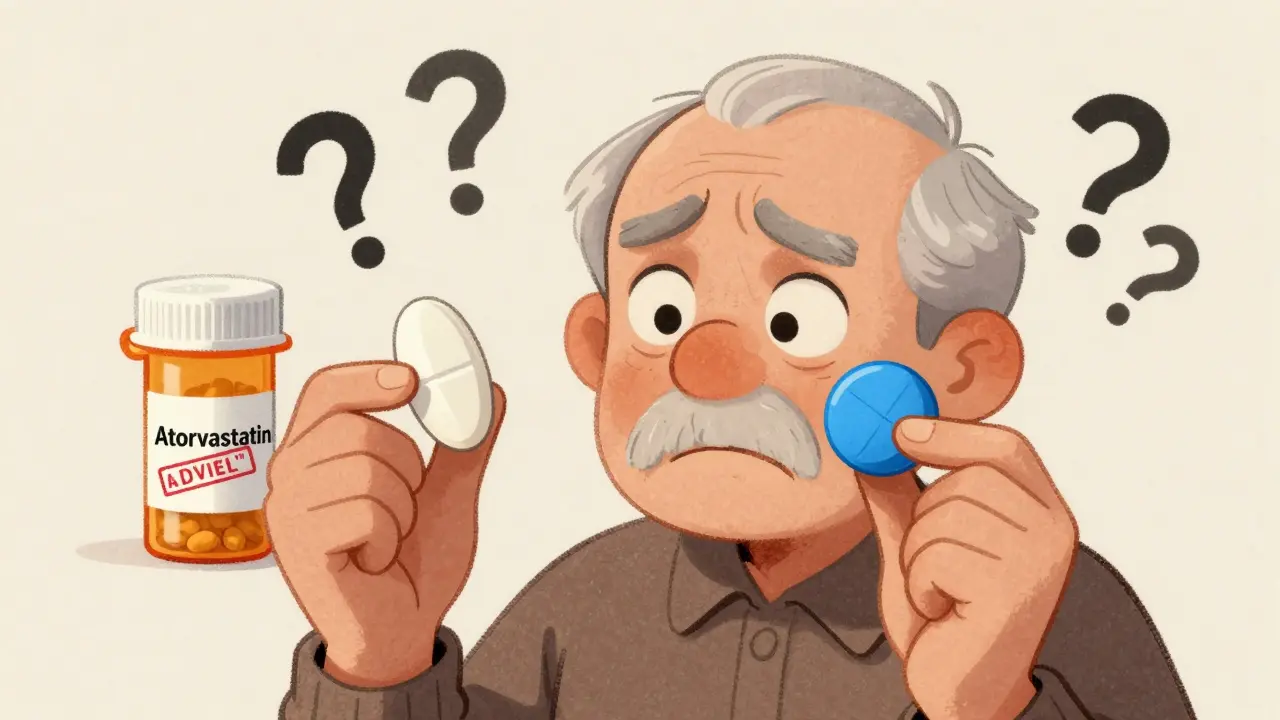
Ever opened your prescription bottle and stared at a pill that looked nothing like the one you took yesterday? You’re not alone. Millions of people in the U.S. get generic medications - over 90% of all prescriptions filled - and many of them are shocked when their pill changes color, shape, or size. It’s not a mistake. It’s the law.
Why Do Generic Pills Look Different?
Generic drugs aren’t copies of brand-name pills in every way. Under U.S. trademark law, they’re legally required to look different. The Hatch-Waxman Act of 1984 created a fast-track path for generics to enter the market, but it also said: generic pills can’t look exactly like the brand-name version. That’s to avoid confusion and protect the brand’s trademark. So even if the active ingredient is identical - say, atorvastatin for cholesterol - the generic version might be white and round while the brand is pink and oval. This isn’t about quality. The FDA requires generics to have the same active ingredient, strength, dosage form, and absorption rate as the brand. They must pass strict bioequivalence tests - meaning they work the same way in your body. But the outside? That’s up to the manufacturer. Different companies use different inactive ingredients - dyes, fillers, coatings - which change the color and texture. One company’s metformin might be a white oval. Another’s could be a pale yellow circle. Both are correct. Both are safe. But they don’t look the same.What Changes? Color, Shape, Size, and Marks
Generic pills vary in four main ways:- Color: A pill can be white, blue, yellow, or even green - no standard exists. One manufacturer might use a Pantone 14-0956 TCX (a light beige), while another uses Pantone 18-3930 TCX (a soft blue).
- Shape: Round, oval, oblong, caplet - all are common. Some pills are scored to split, others aren’t. You might get a long, thin tablet one month and a short, fat one the next.
- Size: Pills range from 3mm to over 20mm in diameter. A 10mg tablet might be 8mm wide in one version and 12mm in another.
- Marks: Letters, numbers, or symbols are stamped on pills to help identify them. Your levothyroxine might have "L4" on one refill and "93 72" on the next. Same drug. Different mark.
The Real Risk: Skipping Doses Because of Confusion
The FDA says appearance doesn’t affect how the drug works. But real people don’t always believe that - and they pay the price. A landmark 2014 study from Brigham and Women’s Hospital tracked 38,507 patients on heart medications. When their pills changed color or shape, they were 34% more likely to stop taking them. That’s not a small jump. It means 1 in 6 patients quit their meds after a visual change - not because they felt worse, but because they thought it was the wrong pill. A 2022 study in the American Journal of Managed Care found that over a third of patients refilling chronic meds saw appearance changes. For people on five or more pills, like those with diabetes, high blood pressure, and thyroid issues, it gets worse. One Reddit user wrote: "My blood pressure med went from white oval to blue round. I didn’t take it for three days. I thought I was being poisoned." The elderly are hit hardest. AARP’s 2022 survey found 37% of adults 65+ struggled to recognize their meds after a change. That’s nearly 4 in 10 seniors. And 14.7% of all patients admitted to skipping doses because they didn’t trust the new pill.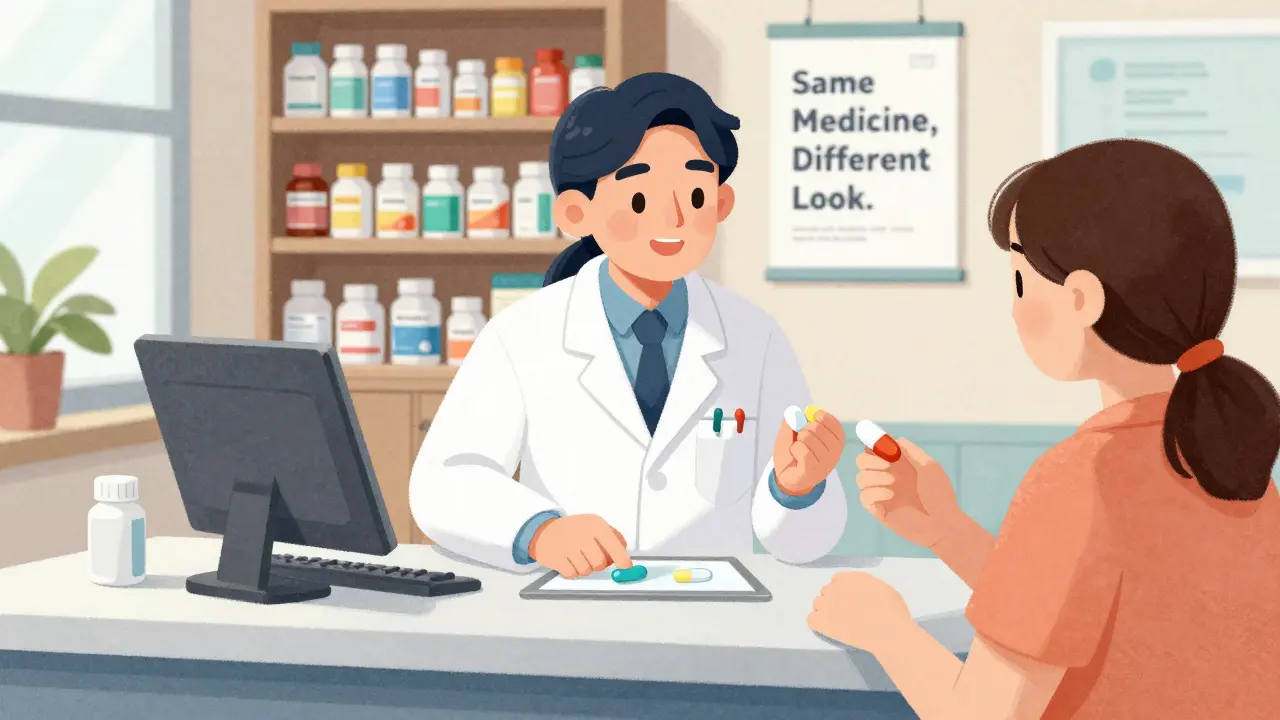
What Pharmacists Are Seeing
Pharmacists hear this every day. The American Pharmacists Association reports that nearly 1 in 5 generic refills brings a complaint about appearance. Sixty-seven percent of those complaints come from patients over 65. Many say: "I’ve been taking this for years. Why does it look like a different medicine?" Some pharmacies are trying to help. About 43% use digital tools like Surescripts to show patients past pill images when they refill. Others hand out FDA-printed medication cards with photos and descriptions. But adoption is uneven. Many patients still walk out with no explanation.What You Can Do
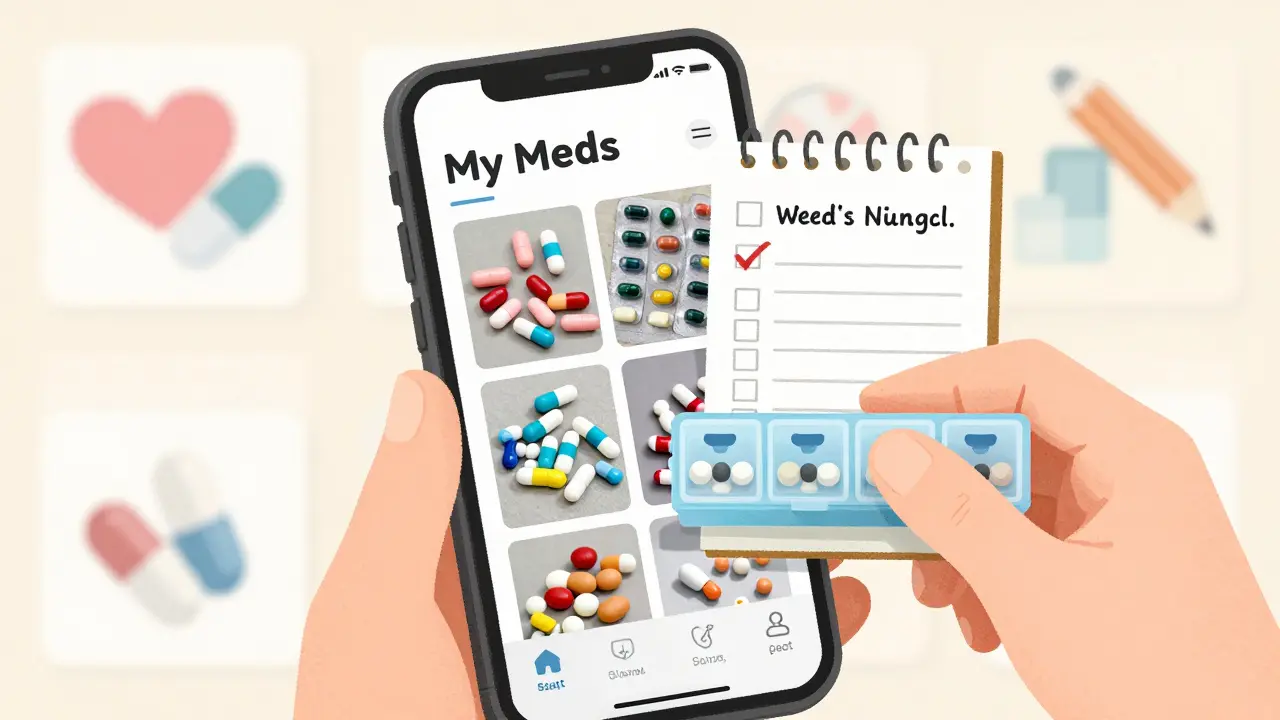
You don’t have to guess or panic. Here’s what actually works:- Take a photo. Right after you get a new prescription, snap a clear picture of the pill with your phone. Store it in a folder labeled "My Meds." Next time it changes, compare. You’ll know it’s the same drug.
- Ask your pharmacist. Don’t be shy. Say: "This pill looks different. Is it the same medicine?" They can confirm the active ingredient, strength, and manufacturer. Most will even show you the old version on their computer.
- Use a pill organizer. Keep your pills sorted by day and time. Even if the pill changes, you’ll know it’s your morning blood pressure med because it’s in the 8 a.m. slot.
- Request the same manufacturer. Some insurance plans let you ask for a specific generic maker. It’s not guaranteed - 78% of pharmacy benefit managers don’t lock in manufacturers - but it’s worth asking.
- Keep a written list. Write down: Drug name, strength, color, shape, markings. Update it every time you refill. Bring it to every doctor visit.
Why This Isn’t Getting Fixed - Yet
You might wonder: Why hasn’t the FDA made this easier? The answer is legal. Trademark law protects the look of brand-name pills. If a generic looked identical, the brand could sue. So the FDA can’t force generics to match. They can only recommend that manufacturers consider appearance for patient safety. In 2023, the FDA announced a new initiative called "Visual Medication Equivalence Standards," part of its GDUFA program. Draft guidance is expected in mid-2024. It may encourage - but still won’t require - standardization for high-risk drugs like blood thinners or thyroid meds. Meanwhile, the EU already requires similar appearance for chronic condition drugs. Their medication error rate dropped 18% after the rule. The U.S. is behind.What’s Coming Next
By 2028, Evaluate Pharma predicts 75% of new generic approvals will voluntarily match the look of the brand or previous generic versions - especially for drugs where missing a dose can be dangerous. The FDA has allocated $4.7 million in 2024 to study how appearance affects outcomes. That’s a sign things are moving - slowly. For now, the system is built on trust: trust that the drug works the same, even if it looks different. But trust is hard when your pills keep changing.Final Thought: Your Pill Is Still the Right Medicine
It’s okay to feel uneasy. Seeing a new pill can be scary. But remember: the color doesn’t change how the drug works. The shape doesn’t alter the dose. The markings are just for identification. If you’re unsure, don’t guess. Don’t skip. Call your pharmacist. Take a picture. Write it down. You’re not being paranoid - you’re being smart. Your health isn’t about what the pill looks like. It’s about what’s inside. And that hasn’t changed.Why do generic pills change color and shape every time I refill?
Generic pills change appearance because U.S. trademark law requires them to look different from brand-name drugs and from each other. Different manufacturers use different inactive ingredients - like dyes and fillers - which affect color, shape, and size. Even if the active ingredient is identical, the physical design must vary to avoid legal conflicts. This is why you might get a white oval one month and a blue round pill the next - both are the same medication.
Are generic pills less effective because they look different?
No. The FDA requires generics to be bioequivalent to the brand-name drug. That means they deliver the same amount of active ingredient into your bloodstream at the same rate. The color, shape, or size doesn’t affect how the drug works. What matters is the active ingredient, strength, and how your body absorbs it - all of which are tested and approved.
What should I do if my generic pill looks completely different?
Don’t stop taking it. First, check the label to confirm the drug name and strength match your prescription. Then, call your pharmacist. They can verify it’s the same medication and show you the manufacturer’s information. If you’re still unsure, take a photo of the new pill and compare it to one you’ve taken before. Many people keep a photo log to avoid confusion.
Can I ask for the same generic manufacturer every time?
Yes, you can ask your doctor or pharmacist to request a specific generic manufacturer. But most pharmacy benefit managers (PBMs) don’t guarantee the same maker each time - 78% of formularies switch manufacturers to save money. If consistency is important to you, ask if your insurance offers a preferred generic brand. It’s not always possible, but it’s worth asking.
Why do older adults have more trouble with changing pill appearances?
Older adults often take multiple medications daily and may rely more on visual cues to identify pills. When appearance changes, it can cause confusion, fear, or distrust - especially if they’ve been taking the same pill for years. AARP’s 2022 survey found 37% of adults 65+ had trouble recognizing their meds after a change, compared to 22% of younger adults. This increases the risk of skipping doses or taking the wrong pill.
Is there a way to track what my pills look like over time?
Yes. Take a clear photo of each pill right after you get it filled. Save the photos in a folder on your phone labeled "My Medications." Include the drug name, strength, and date. You can also write down the color, shape, and markings. Studies show this simple habit reduces medication errors by 27%, especially for seniors managing multiple drugs.
Will the FDA ever make generic pills look the same as brand-name ones?
Not unless trademark laws change. The FDA can’t require generics to match brand-name appearance because of legal protections. However, the agency is now encouraging manufacturers to voluntarily standardize appearance for high-risk drugs - like blood thinners or thyroid meds - to reduce errors. A new FDA initiative called "Visual Medication Equivalence Standards" is expected in 2024, which may lead to more consistent looks for certain medications.
Do other countries handle generic pill appearance differently?
Yes. The European Medicines Agency requires generic versions of chronic condition drugs to look as similar as possible to the brand-name version when feasible. This policy reduced medication errors by 18.3% in a 2022 EU-wide study. The U.S. doesn’t have this rule, but the FDA is now studying whether similar standards could improve safety here.
Trevor Davis
Man, I thought I was going crazy when my blood pressure pill turned from white to blue. Took three days to even touch it. Then I called my pharmacist and she laughed and said, 'Welcome to generic country.' Now I take pics of every pill. Best habit I ever picked up.
Priyanka Kumari
This is such an important topic, especially for elderly patients managing multiple medications. I work in public health in India, and while generics are the backbone of our system, the lack of standardized visual cues creates real risks. A photo log, pharmacist consultation, and pill organizer are non-negotiable tools. We need more public education on this - not just for safety, but for peace of mind.
Avneet Singh
Let’s be honest - the FDA’s hands are tied by trademark law, which is a relic of 1980s pharmaceutical lobbying. The real issue is the absence of a centralized, FDA-mandated pill identifier database with standardized visual metadata. Until we implement a QR-code-on-pill system linked to the NDC registry, we’re just band-aiding a systemic failure.
Adam Vella
It’s fascinating how a legal construct - trademark protection - has inadvertently become a public health hazard. The paradox is profound: we incentivize cost-efficiency through generics, yet penalize cognitive recognition through visual dissonance. One might argue that the body’s bioequivalence is irrelevant if the mind refuses to accept the vessel. The pill is not merely a chemical compound; it is a psychological contract between patient and cure.
Nelly Oruko
i just started taking a new generic and thought i was being poisoned 😭 took a pic and texted my mom. she’s 72 and said ‘honey, i’ve been doing this since 2010. always take a pic.’ she’s right. this isn’t paranoia. it’s survival.
vishnu priyanka
Back home in Kerala, we call these ‘pill roulette.’ One month it’s a tiny white thing, next month it’s a big green disc with ‘A12’ on it. My grandma swears the blue one works better. She’s not wrong - placebo effect is real, and if it keeps her taking it, who are we to argue? Still, a photo log? Genius. I’m stealing that.
Angel Tiestos lopez
bro i just took a pic of my levothyroxine and it’s like… the same pill but in a different outfit 😅 also i started using a pill box with labels and now i feel like a responsible adult 🫡 thanks for the tip, this post saved my sanity
Alan Lin
Let me be clear: this isn’t just inconvenient - it’s dangerous. Thirty-four percent more non-adherence? That’s not a statistic. That’s preventable hospitalizations. That’s dead people. Pharmacies that don’t show patients the previous pill image are negligent. Insurance companies that switch manufacturers to save $0.03 per pill are complicit in a public health crisis. This isn’t about aesthetics - it’s about survival. Demand better. Now.
Acacia Hendrix
The entire regulatory framework is a grotesque artifact of capitalist legalism. The Hatch-Waxman Act didn’t promote access - it commodified bioequivalence. The FDA’s ‘voluntary’ guidelines are a performative gesture. Real reform requires dismantling trademark monopolies over pharmaceutical morphology. Until then, we’re merely managing the symptoms of a broken system.
Rosalee Vanness
I’ve been a pharmacist for 22 years, and I’ve seen this exact thing happen every single day. I’ve held hands with grandmas who cried because their pill turned from yellow to purple. I’ve stayed late to print out color charts and taped them to the counter. We do our best - but we’re not trained to be pharmacists and psychologists and visual identity consultants. The system is set up to fail patients. The photo log? The written list? Those aren’t just tips - they’re lifelines. Please, if you’re reading this, do it. Your future self will thank you. And if you’re a provider - don’t just hand out the bottle. Show them. Tell them. Make it real.