
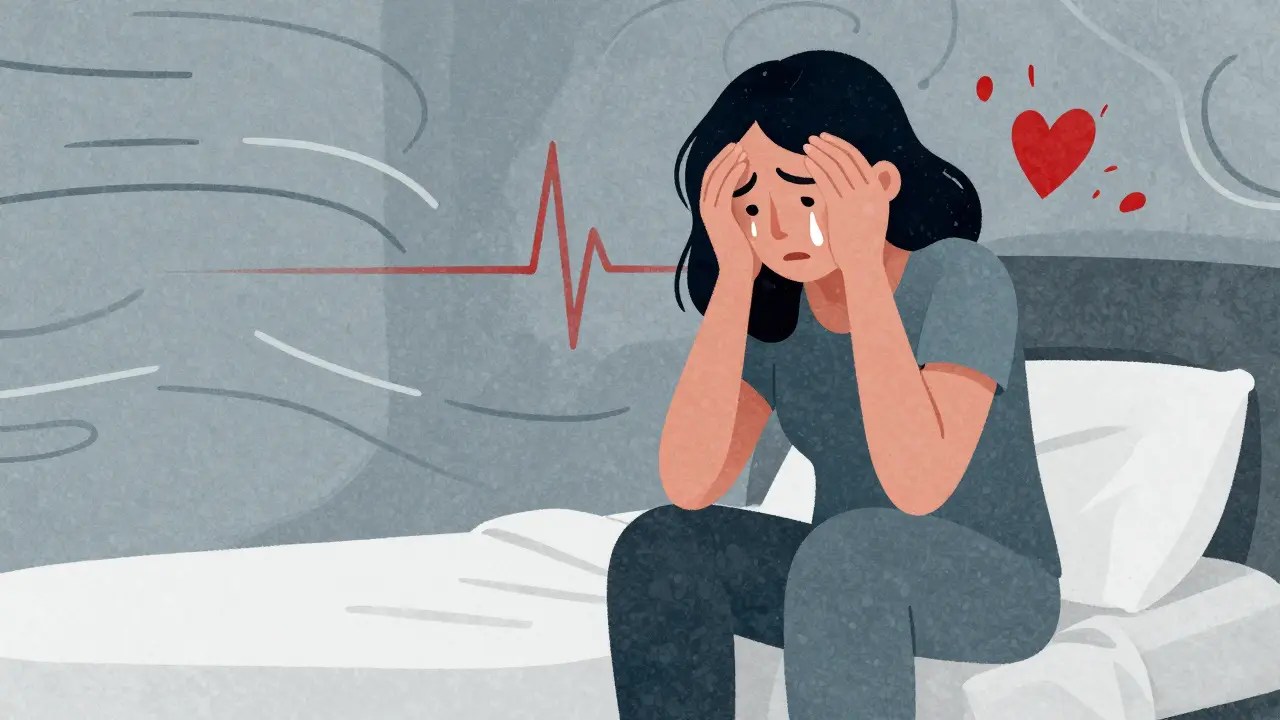
Your body feels like it is running on fast-forward. Your heart races even when you are sitting still, your hands shake, and you are losing weight despite eating normally. If this sounds familiar, you might be dealing with Graves' disease, a condition where your immune system attacks your thyroid gland. It is not just "stress" or "aging." It is a specific medical issue that affects how your body uses energy. While it can feel overwhelming, understanding what is happening inside your body and knowing your treatment options-especially medications like propylthiouracil (PTU)-can help you take back control.
What Is Graves' Disease?
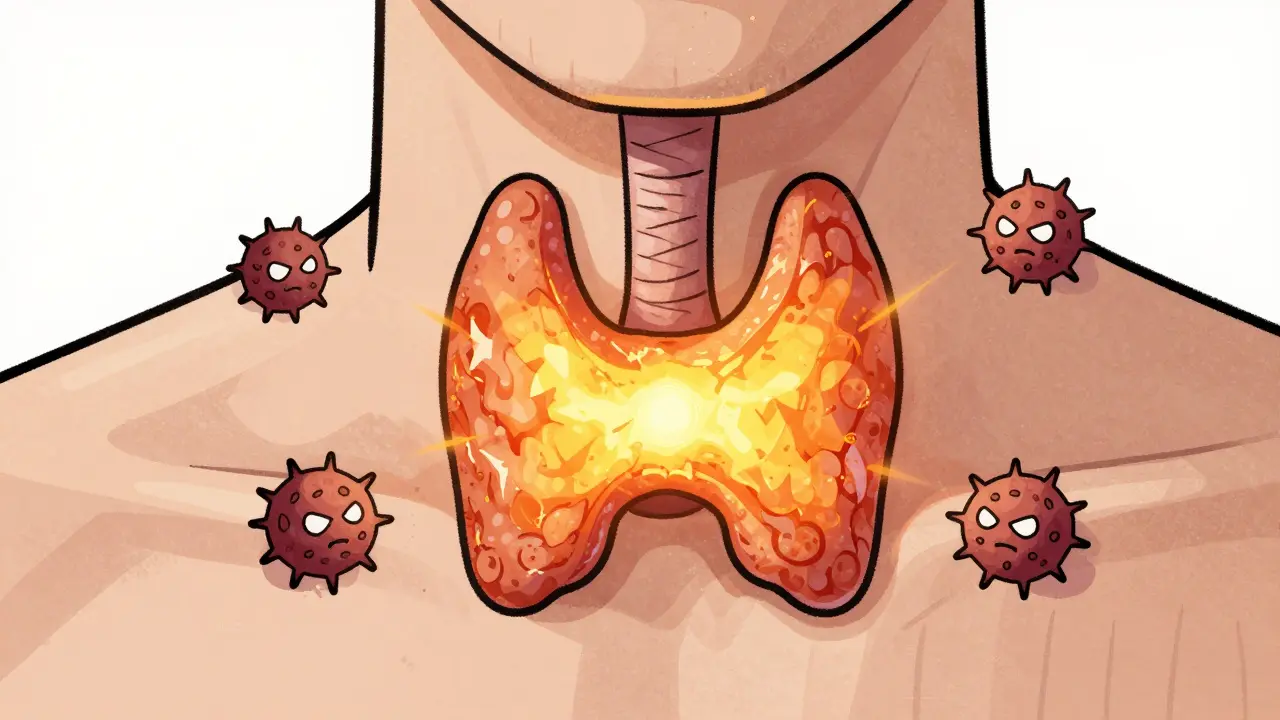
Graves' disease is an autoimmune disorder. In simple terms, your immune system, which usually fights off viruses and bacteria, mistakenly targets your own body. Specifically, it produces antibodies called thyroid-stimulating immunoglobulin (TSI) that latch onto your thyroid gland. This tricks the gland into producing too much thyroid hormone, leading to hyperthyroidism. About 80% of all hyperthyroidism cases are caused by Graves' disease.
The thyroid is a butterfly-shaped gland at the base of your neck. It acts as your body's thermostat, regulating metabolism, heart rate, and energy levels. When it goes into overdrive, every system in your body speeds up. This condition primarily affects women, who are seven times more likely to develop it than men, and typically shows up between ages 30 and 50.
If left untreated, the excess hormones can strain your heart, weaken your bones, and in rare cases, lead to a life-threatening crisis known as thyroid storm. However, with proper diagnosis and management, most people live normal, healthy lives.
Recognizing the Signs and Symptoms
Because the thyroid affects so many systems, symptoms can vary widely from person to person. Some people notice subtle changes, while others experience dramatic shifts in their health. Here are the most common signs to watch for:
- Rapid or irregular heartbeat: You may feel palpitations or notice your pulse racing even at rest.
- Unexplained weight loss: Despite having a good appetite, you lose weight quickly.
- Anxiety and irritability: Feeling nervous, jittery, or unable to relax is very common.
- Tremors: Fine shaking in your hands or fingers.
- Heat intolerance: Sweating more than usual and feeling hot when others are comfortable.
- Fatigue and muscle weakness: Paradoxically, despite high energy levels, you may feel exhausted.
- Sleep disturbances: Insomnia or difficulty staying asleep.
Two unique symptoms set Graves' disease apart from other causes of hyperthyroidism: eye issues and skin changes. Up to 50% of patients develop Graves' ophthalmopathy, which causes bulging eyes, redness, swelling, or double vision. A smaller percentage (1-4%) develop dermopathy, resulting in thickened, reddish skin, usually on the shins. If you have these specific signs along with general hyperthyroid symptoms, tell your doctor immediately.
How Doctors Diagnose Graves' Disease
You cannot diagnose Graves' disease based on symptoms alone. Anxiety, menopause, and other conditions can mimic its effects. That is why blood tests are crucial. Your doctor will look for three key markers:
- Low TSH (Thyroid-Stimulating Hormone): Normally, TSH tells your thyroid to work harder. In Graves', the thyroid is already overactive, so the pituitary gland stops sending signals, causing TSH levels to drop below 0.4 mIU/L.
- High Free T4 and T3: These are the actual thyroid hormones. Levels above 1.8 ng/dL for T4 and 4.2 pg/mL for T3 indicate hyperthyroidism.
- TRAb (Thyrotropin Receptor Antibody): This test checks for the specific antibodies that cause Graves'. A positive result confirms the autoimmune nature of the disease with 90-95% accuracy.
In some cases, a radioactive iodine uptake scan may be used. In Graves' disease, the thyroid absorbs more iodine than normal because it is working overtime. This helps distinguish it from other causes of high thyroid hormone levels, such as thyroiditis.
Treatment Options: Finding the Right Path
There is no one-size-fits-all cure for Graves' disease. Treatment depends on your age, severity of symptoms, whether you are pregnant, and your personal preferences. The three main approaches are antithyroid medications, radioactive iodine therapy, and surgery.
| Treatment Type | How It Works | Pros | Cons/Risks |
|---|---|---|---|
| Antithyroid Drugs (Methimazole/PTU) | Blocks hormone production | Non-invasive; reversible; preserves thyroid function | Side effects (liver issues, rash); relapse possible after stopping |
| Radioactive Iodine (I-131) | Destroys thyroid tissue | Permanent solution; no surgery needed | Causes permanent hypothyroidism; worsens eye disease in some |
| Thyroidectomy (Surgery) | Removes part or all of the thyroid | Immediate relief; good for large goiters or cancer risk | Surgical risks (nerve damage, low calcium); permanent hypothyroidism |
Understanding PTU (Propylthiouracil) Treatment
Among antithyroid drugs, methimazole is usually the first choice for most adults because it is taken once a day and has fewer severe side effects. However, propylthiouracil (PTU) plays a critical role in specific situations.
PTU is often prescribed during the first trimester of pregnancy. Methimazole carries a small risk of birth defects early in pregnancy, whereas PTU is considered safer for the developing baby during this window. After the first trimester, doctors often switch patients back to methimazole due to PTU's higher risk of liver damage.
PTU is also used in cases of thyroid storm-a rare but life-threatening complication where thyroid hormone levels skyrocket, causing fever, rapid heart rate, and confusion. PTU works faster than methimazole to block new hormone production and also stops the conversion of T4 to the more active T3 form.
Important Safety Note: PTU carries a black box warning from the FDA regarding severe liver injury. Although rare (affecting 0.2-0.5% of users), this risk requires close monitoring. You must report any signs of liver problems immediately, such as yellowing of the skin or eyes (jaundice), dark urine, or severe stomach pain. Regular blood tests to check liver function are essential while on this medication.
Living with Graves' Disease: Daily Management Tips
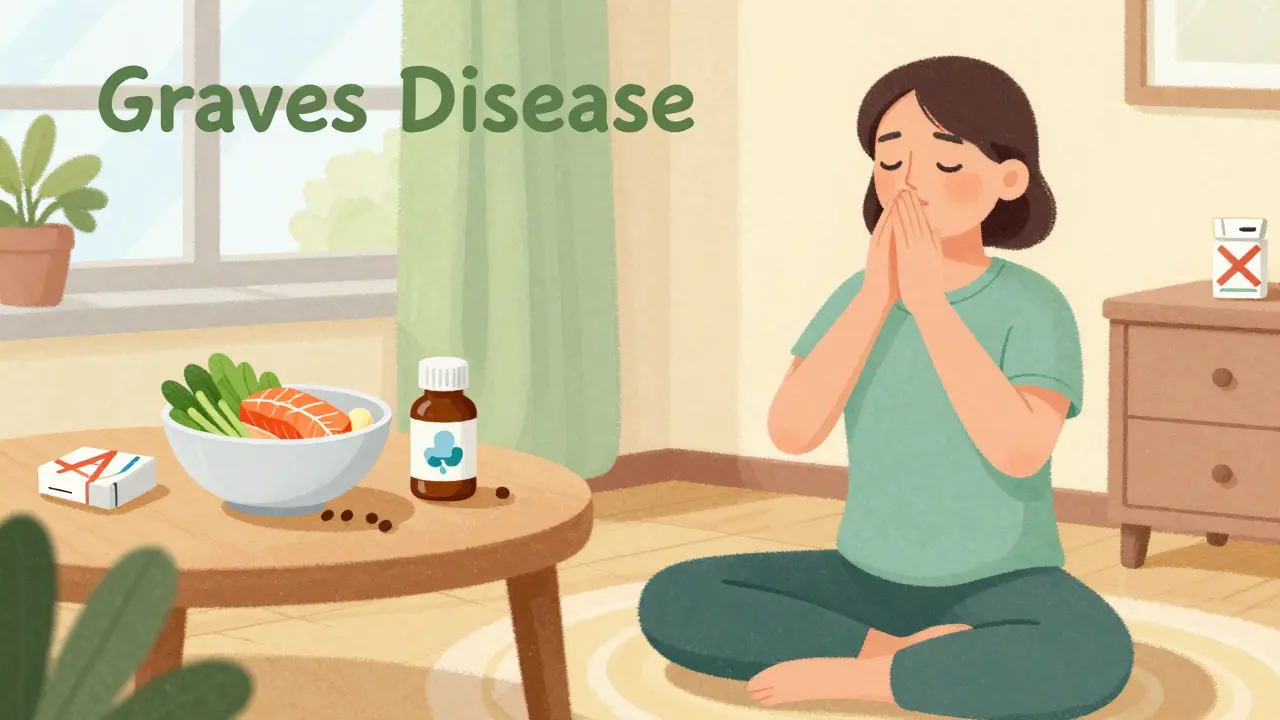
Managing Graves' disease is not just about taking pills. It involves lifestyle adjustments to support your body while it heals.
- Avoid Excess Iodine: Iodine fuels thyroid hormone production. Avoid kelp supplements, iodine-rich multivitamins, and excessive amounts of seaweed. Use regular salt instead of iodized salt if advised by your doctor.
- Quit Smoking: Smoking dramatically increases the risk of developing eye complications and makes them harder to treat. If you smoke, quitting is one of the best things you can do for your prognosis.
- Manage Stress: While stress doesn't cause Graves', it can worsen symptoms. Practice relaxation techniques like deep breathing, yoga, or meditation.
- Eat Nutrient-Dense Foods: Since your metabolism is burning calories rapidly, focus on protein, healthy fats, and complex carbohydrates to maintain muscle mass and energy levels.
- Protect Your Eyes: If you have eye sensitivity, wear sunglasses outdoors. Use artificial tears to keep eyes moist. Sleep with your head elevated to reduce morning swelling.
Prognosis and Long-Term Outlook
Many people worry that Graves' disease is a lifelong sentence. The truth is more nuanced. With antithyroid medication, about 30-50% of patients achieve remission after 12-18 months of treatment. This means their immune system stops attacking the thyroid, and they can stop medication without the disease returning.
However, relapse is possible. If symptoms return, your doctor may recommend radioactive iodine or surgery for a permanent solution. Even if you become hypothyroid (underactive thyroid) after treatment, this is easily managed with daily thyroid hormone replacement pills, which are safe and effective.
New treatments are emerging. For example, teprotumumab was approved in 2021 specifically for Graves' eye disease, offering hope for those struggling with proptosis. Research into personalized medicine aims to predict who will respond best to which treatment, reducing trial-and-error in care.
Can Graves' disease go away on its own?
No, Graves' disease does not resolve without treatment. However, it can go into remission with proper medication. About half of patients treated with antithyroid drugs for 12-18 months may remain symptom-free after stopping medication. Without treatment, the condition will likely worsen and lead to serious health complications.
Is PTU safe to take long-term?
PTU is generally safe for short-term use, particularly in the first trimester of pregnancy or during thyroid storm. However, due to the risk of severe liver damage, it is not recommended for long-term maintenance in non-pregnant adults. Methimazole is preferred for long-term therapy because it has a better safety profile and requires less frequent dosing.
Does Graves' disease affect fertility?
Untreated hyperthyroidism can make it harder to get pregnant and increase the risk of miscarriage. However, once thyroid levels are normalized with treatment, most women can conceive and have healthy pregnancies. It is crucial to work closely with your endocrinologist before trying to conceive to ensure your medication is adjusted safely.
What foods should I avoid with Graves' disease?
You should limit high-iodine foods like seaweed, kelp, and iodine supplements, as iodine fuels thyroid hormone production. Caffeine and stimulants can worsen anxiety and heart palpitations. There is no strict "Graves' diet," but focusing on nutrient-dense meals helps counteract the rapid metabolism caused by the disease.
When should I seek emergency care?
Seek immediate medical attention if you experience symptoms of thyroid storm, including high fever (over 100.4°F), rapid heart rate (over 100 bpm), confusion, vomiting, or extreme agitation. Also, contact your doctor immediately if you develop jaundice (yellow skin/eyes), severe abdominal pain, or a sore throat with fever while taking antithyroid drugs, as these could signal serious side effects.