
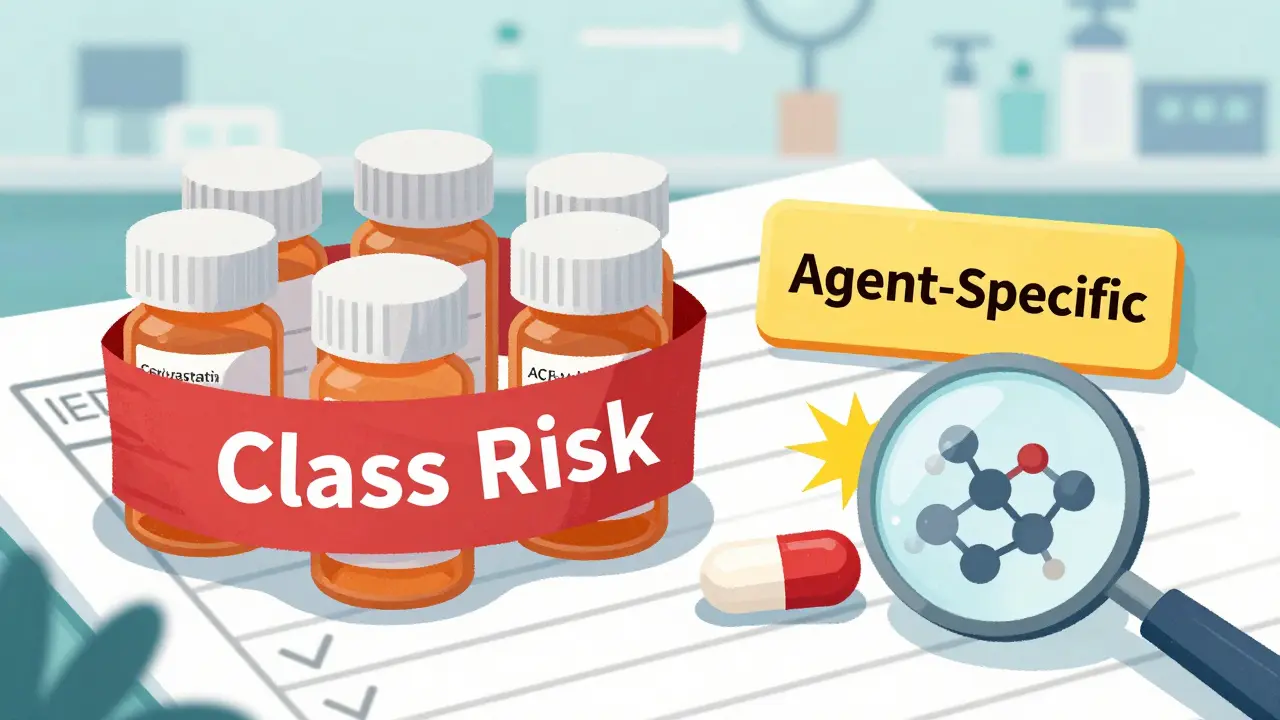
When a drug warning pops up on your screen or in a prescribing update, it’s easy to assume it applies to everything in that category. But that’s not always true. Some safety alerts hit an entire class of drugs-like all statins or all fluoroquinolones. Others target just one drug, even if it’s in a group of similar ones. Getting this wrong can lead to unnecessary fear, missed treatments, or even harm. So how do you tell the difference between a class-wide safety alert and a drug-specific alert?
What’s the Real Difference?
A class-wide safety alert means the risk is tied to the whole group because of how the drugs work. For example, all ACE inhibitors can cause angioedema because they affect the same biological pathway. If one drug in the class shows this side effect, regulators look at whether others do too. If the pattern holds, they issue a warning for the entire group. A drug-specific alert, on the other hand, is about something unique to that one molecule. Take cerivastatin. It was pulled from the market in 2001 because it caused dangerous muscle breakdown (rhabdomyolysis) at a much higher rate than other statins. But rosuvastatin, atorvastatin, and simvastatin stayed on shelves. Why? Because their chemical structures and how the body processes them are different. The risk wasn’t shared-it was isolated. The FDA doesn’t just guess. They use data from over 22 million adverse event reports in FAERS (the FDA Adverse Event Reporting System). They look for signals: if five or more cases of the same serious side effect pop up for one drug, but none for others in the class, it’s likely drug-specific. If the same side effect shows up in three or more drugs in the group, it’s probably class-wide.How Regulators Decide: The Five-Step Process
The FDA doesn’t slap warnings on everything at once. They follow a strict process to avoid overreacting or underreacting. Here’s how they do it:- Signal detection: They use statistical tools like the Proportional Reporting Ratio (PRR). If the PRR is above 2.0 and the Chi-squared value is over 4.0 across multiple databases, that’s a red flag worth investigating.
- Mechanistic plausibility: Do the drugs share the same target, metabolism, or chemical structure? If yes, the risk might be class-wide. For instance, all SSRIs affect serotonin-so if one causes QT prolongation, others might too.
- Evidence distribution: Is the problem seen in just one drug, or in three or more? If only one, it’s likely drug-specific. If it’s consistent across the class, it’s class-wide.
- Pharmacokinetic differences: Some drugs in a class are metabolized faster, or by different liver enzymes. That can lower risk. For example, some statins are broken down by CYP3A4, others aren’t-so drug interactions vary.
- Real-world evidence: Did the side effect show up in clinical trials? In post-market studies? In electronic health records from millions of patients? The more sources that confirm it, the stronger the case.
This process isn’t perfect. Only 2-10% of adverse events get reported. And sometimes, regulators have to make calls with incomplete data. That’s why you’ll see inconsistencies.
Why Inconsistencies Happen (and Why They Matter)
In 2011, the FDA reviewed 15 drugs with black box warnings. Five of them had warnings that didn’t apply to other drugs in the same class-even though those drugs were chemically similar. That’s not a mistake. It’s a reflection of messy, real-world data. Take the antidepressants citalopram and escitalopram. Both are SSRIs. In 2011, citalopram got a warning about QT prolongation (a heart rhythm issue). Escitalopram didn’t. Why? At the time, the data for escitalopram was less clear. Later studies showed it carried a similar risk-but the warning wasn’t updated. That kind of inconsistency confuses doctors. A 2022 survey of 1,200 U.S. physicians found 68% had trouble telling whether a warning applied to the whole class or just one drug. And it’s not just confusion. It affects care. A primary care doctor might avoid prescribing all statins after hearing about one drug’s muscle risk-even though the risk is low for most. Or worse, they might keep prescribing a dangerous drug because they think the warning only applies to another one.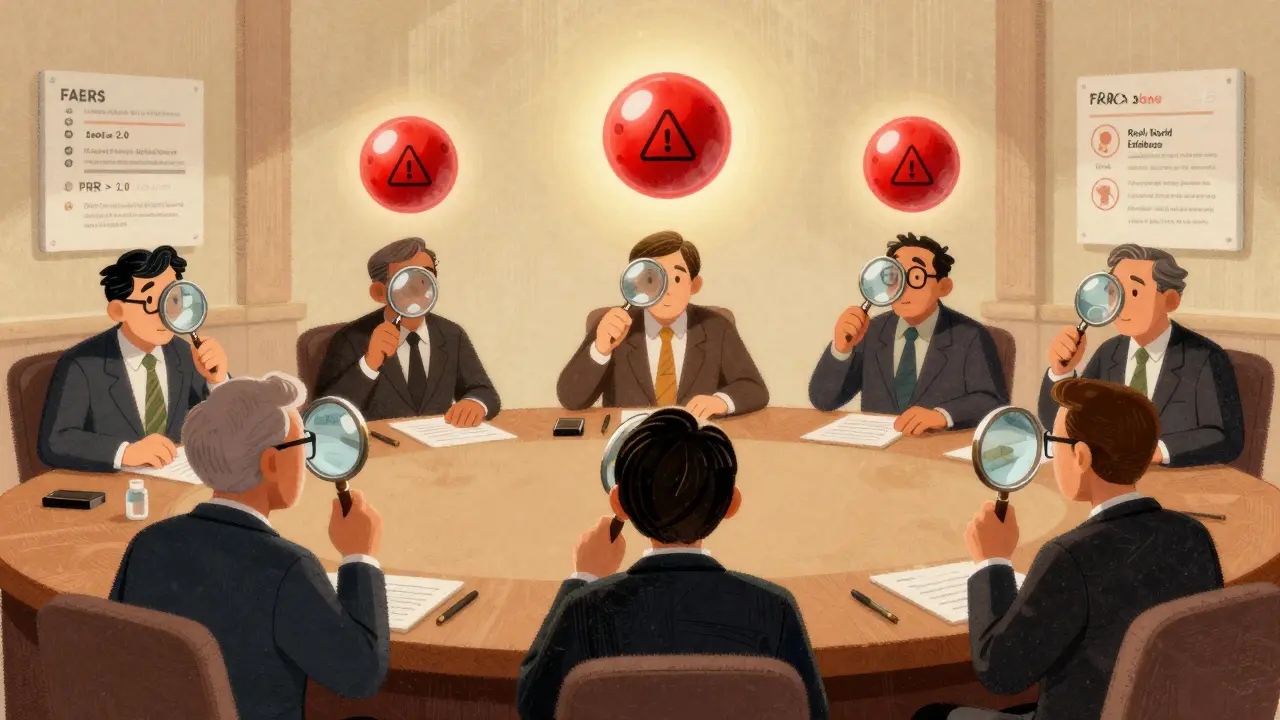
Real-World Examples That Changed Practice
Some warnings changed how medicine is practiced. Here are two clear cases:- Class-wide: Fluoroquinolones (2018)-The FDA issued a black box warning for all drugs in this antibiotic class (ciprofloxacin, levofloxacin, etc.) due to risks of tendon rupture, nerve damage, and other disabling side effects. Usage dropped 17% across the class. Doctors now reserve these for serious infections when no alternatives exist.
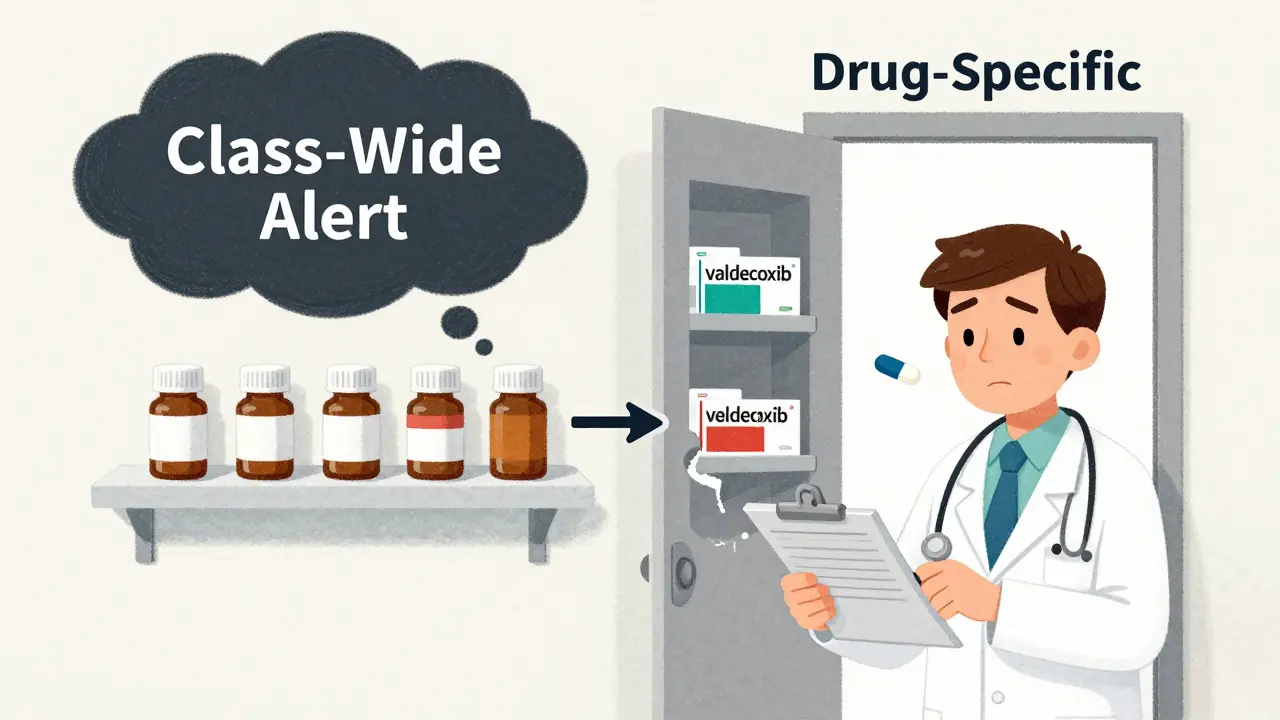
- Drug-specific: Valdecoxib (Bextra, 2004)-This COX-2 inhibitor was pulled because of rare but deadly skin reactions. Celecoxib (Celebrex), another COX-2 inhibitor, stayed on the market. Why? It didn’t show the same skin risk pattern. The warning stayed with valdecoxib alone.
Notice the difference in impact. When the fluoroquinolone warning came out, prescriptions for all drugs in the class fell. But when Bextra was pulled, Celebrex sales didn’t drop. The market kept going-because the risk wasn’t shared.
How Clinicians Can Tell the Difference
You don’t need to be a pharmacologist to spot the difference. Here’s what to look for:- Check the labeling. Look for phrases like “all drugs in this class” or “this warning applies to all agents.” The FDA started using exact terms like “Class Risk” and “Agent-Specific Risk” in 2024.
- Use DailyMed. This free database from the National Library of Medicine color-codes warnings. Red means class-wide. Yellow means drug-specific.
- Look at the evidence. If the warning came from a single case report or a small study, it’s probably drug-specific. If it’s backed by multiple large studies, meta-analyses, or real-world data from millions of patients, it’s likely class-wide.
- Ask: Is there a safer alternative? If yes, the warning might be drug-specific. If no-like with all testosterone products after the 2014 stroke warning-it’s probably class-wide.
And don’t rely on names. Just because two drugs end in “-sartan” (like losartan and valsartan) doesn’t mean they share all risks. One might cause a rare liver issue; the other doesn’t. Names are for convenience, not safety.
What Happens When You Get It Wrong?
Misreading a warning has real consequences. In 2023, a Pennsylvania patient safety report found that 57% of high-alert medication errors involved confusion between two drugs in the same class. Insulin errors made up nearly 30% of those cases. One nurse gave the wrong type because she thought all long-acting insulins were interchangeable. That’s a class-wide misunderstanding with dangerous results. Pharmacists are feeling the pressure too. Walgreens reported a 22% increase in time spent verifying prescriptions after class-wide warnings. For drug-specific warnings, it was only 8%. Why? With class-wide alerts, pharmacists have to check every possible alternative. With drug-specific ones, they just swap one drug for another. And then there’s alert fatigue. When doctors get too many warnings, they start ignoring them. A 2011 study showed that too many vague or overbroad alerts made clinicians less likely to respond to the truly critical ones.What’s Changing in 2026?
The system is evolving. The FDA’s 2024-2026 plan is focused on precision. They’re using AI to predict class-wide risks before they even show up-analyzing molecular structures and metabolic pathways. They’re also expanding the National Evaluation System for Health Technology (NEST), which pulls data from 100+ health systems covering 100 million patients. That’s huge. Right now, 72% of drug classes lack enough post-market data to confidently say whether a risk is class-wide. With better data, we’ll see fewer false alarms and fewer missed dangers. But here’s the catch: even with better tools, judgment still matters. A 2022 JAMIA study found AI could predict class effects with 89% accuracy-but it still needed human review. Because sometimes, a risk is real for one drug, and the rest are safe. And that’s worth preserving.Bottom Line: Don’t Assume. Verify.
You can’t rely on gut feeling or drug names. Every time you see a safety alert, pause. Ask: Is this about the whole class, or just one drug? Check the source. Look at the data. Use DailyMed. Talk to a pharmacist. Class-wide warnings are serious. They mean the mechanism itself carries risk. But drug-specific warnings? They’re often about chemistry, dosing, or metabolism-not the whole group. Getting this right means better decisions, fewer unnecessary changes, and safer care.When in doubt, assume the warning is drug-specific until proven otherwise. Overreacting to a class-wide alert can deny patients effective treatment. Underreacting to a drug-specific one can put them at risk. The difference isn’t academic-it’s life-changing.
How do I know if a safety alert applies to all drugs in a class?
Check the FDA’s Drug Safety Communications or DailyMed for explicit labels like "Class Risk" or "All drugs in this class." Look for evidence from multiple drugs in the group, not just one. If the warning is based on a shared biological mechanism (like all ACE inhibitors affecting bradykinin), it’s likely class-wide. If it’s tied to a unique chemical trait, it’s drug-specific.
Can a drug-specific warning become class-wide later?
Yes. Sometimes, early data only shows a risk in one drug. Later studies reveal the same issue in others. For example, after rosiglitazone got a cardiovascular warning, follow-up studies showed pioglitazone had similar risks-even though it wasn’t initially flagged. Regulators update labels as new evidence emerges.
Why do some drugs in the same class have different warnings?
Because their chemistry, metabolism, or dosing differs. One statin might be broken down by the liver enzyme CYP3A4, making it more prone to interactions. Another uses a different pathway. Even small differences can mean one drug carries a higher risk than others. Regulators evaluate each drug individually, even within a class.
Do class-wide warnings mean I can’t use any drug in that class?
No. Class-wide warnings mean the risk exists across the group-but they don’t mean the drugs are unsafe. They mean the benefit-risk balance needs careful review. For example, fluoroquinolones still have important uses in serious infections. The warning tells you to use them only when alternatives fail.
How can I stay updated on these alerts?
Subscribe to FDA Drug Safety Communications, use DailyMed to check drug labels, and attend continuing education on pharmacovigilance. Many hospitals and pharmacies also send internal alerts. Always verify the scope before changing prescriptions.
Hannah Gliane
Oh sweet jesus another ‘educational’ post that makes me feel like I’m back in med school with a caffeine overdose 🤡
So let me get this straight - if one statin gives me rhabdo, I should avoid ALL of them? But if one SSRI makes my heart do the cha-cha, the others are fine? 🤔
Meanwhile, my pharmacist just sighs and hands me a different pill like it’s a damn lottery ticket. I swear, if I have to read one more ‘Class Risk’ label, I’m switching to herbal tea and hoping for the best. 🍵
Murarikar Satishwar
This is one of the clearest explanations I’ve seen on this topic. The five-step FDA process is especially well-articulated - signal detection, mechanistic plausibility, evidence distribution, pharmacokinetics, and real-world validation. These aren’t just bureaucratic steps; they’re the backbone of evidence-based prescribing.
Many clinicians overlook how crucial DailyMed is - the color-coding (red for class-wide, yellow for drug-specific) is a game-changer. I’ve trained my residents to check it before prescribing anything new. It saves time, reduces errors, and builds confidence.
Also, the point about AI improving predictive accuracy to 89% but still requiring human review? Spot on. Technology augments, it doesn’t replace clinical judgment. We need both.
Brett MacDonald
so like… if a drug has a warning but its buddy in the same class doesnt… is that like… a glitch in the matrix? or just capitalism being lazy?
also why do all these warnings sound like they were written by a robot that hates humans
also why do i feel like im being scolded every time i open my ehr
also why is this so complicated when i just want to give someone a pill and not have a heart attack
Sandeep Kumar
USA thinks it runs medicine but India knows better - we’ve been using generics for decades without all this drama
Why do you need 22 million reports to know that one drug is dangerous? We just watch what happens in the clinic
Also dailymed? Who uses that? We have Google and WhatsApp groups with 500 doctors
Class-wide alert? Bullshit. If one drug fails, the whole class is guilty until proven innocent - no fancy stats needed
Stop overcomplicating. Simple is better. Always was. Always will be
Gary Mitts
Wow. A post that doesn’t make me want to quit medicine. Who knew?
Also, the part about alert fatigue? 100%. I’ve ignored three warnings today just to survive lunch.
But seriously - check DailyMed. Red = scary. Yellow = maybe.
And no, ‘-sartan’ doesn’t mean ‘same risk.’
Thanks for not being a robot.
jay patel
Man, this whole thing hits different when you’ve been on the front lines. I remember when we had that one patient on cerivastatin - 72-year-old guy, no history of muscle issues, just took his pill like always. Then boom - CK over 100,000. ICU for days. We didn’t even know it was a thing until it was too late.
And now? We got this whole system where we’re supposed to be detectives, pharmacologists, and data analysts all at once. And don’t get me started on the EHR alerts - they beep like a broken microwave. I’ve stopped reading half of them.
But honestly? The FDA’s process isn’t perfect, but it’s the best we’ve got. The fact that they use real-world data from 100 million patients? That’s not fluff. That’s life-saving.
And yeah, sometimes a drug-specific warning turns into a class-wide one later - like with rosiglitazone. We missed it at first. That’s why we keep learning. Not because we’re dumb - because medicine is messy, and people are complex.
So yeah, check DailyMed. Talk to pharmacists. Don’t assume. But also - don’t let the noise paralyze you. We’re not gods. We’re just trying not to hurt people. And sometimes, that’s enough.
Ansley Mayson
Class-wide alerts are just the FDA’s way of covering their ass
Real data? More like PR spin
Doctors don’t need color-coded labels
They need fewer alerts and more trust
Also, why is this even a post? Everyone knows the system’s broken
Just stop pretending it’s not
Dan Pearson
Okay but let’s be real - if you’re still prescribing fluoroquinolones for a sinus infection, you’re not a doctor, you’re a liability with a stethoscope 🤡
And why is no one talking about how valdecoxib got pulled but celecoxib survived? Because the FDA’s got a secret sauce? Nah. It’s because Pfizer had better lawyers and lobbyists.
Meanwhile, I’m sitting here trying to explain to a 65-year-old why her ‘generic’ blood pressure pill isn’t the same as the one she took for 10 years - because the label changed but the bottle looks identical.
This isn’t science. It’s a soap opera written by bureaucrats who’ve never met a patient.
Also - DailyMed? That’s a website? I thought it was a type of sushi.