
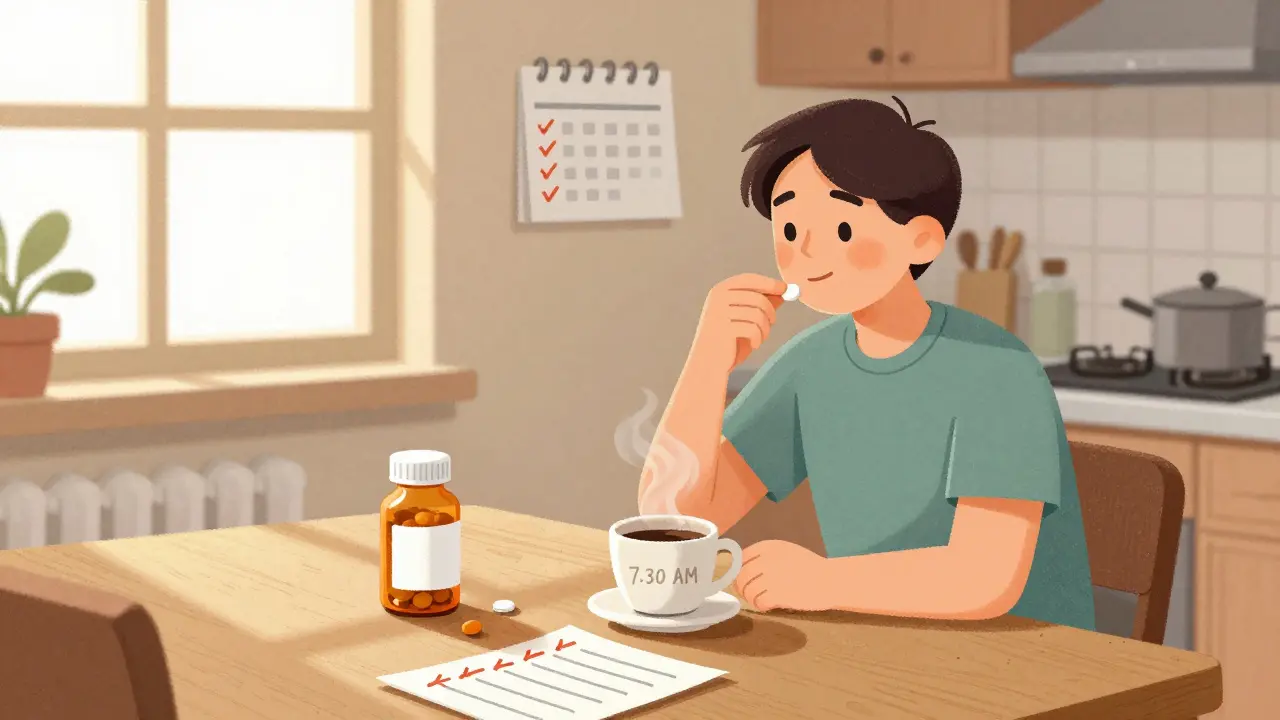
Setting goals for taking your medication isn’t just about remembering to pick up your prescription. It’s about building a habit that fits into your life - not the other way around. Too many people stop taking their meds because the plan feels too big, too vague, or too disconnected from their daily reality. The good news? You don’t need to be perfect. You just need to be consistent. And that starts with goals that are achievable - not just ambitious.
Why Most Medication Goals Fail
Let’s be honest: if your doctor told you to "take your blood pressure pill every day," and you didn’t get any further guidance, how likely are you to stick with it? Studies show that simple instructions like that lead to adherence rates as low as 50%. Why? Because "every day" doesn’t tell you when, how, or what happens if you miss one.
People forget. They get busy. They feel fine and think they don’t need it anymore. Or they’re overwhelmed by side effects, cost, or confusion about how the medicine works. Without a clear, personal roadmap, adherence falls apart. The solution isn’t more reminders - it’s better goals.
The SMART Framework: Simple, But Not Simple-Minded
You’ve probably heard of SMART goals before - Specific, Measurable, Achievable, Relevant, Time-bound. But in healthcare, they’re not just a management buzzword. They’re the difference between a prescription that works and one that gathers dust.
Here’s what each part actually looks like in real life:
- Specific: Instead of "take my pill," say: "I will take my 10mg Lisinopril with my morning coffee every day at 7:30 AM." Now you’ve answered Who (you), What (the pill), When (7:30 AM), Where (at the kitchen table), and Why (to control my blood pressure).
- Measurable: How will you know you did it? Use pill counts, a checklist, or a simple app that logs each dose. A smart pill bottle that beeps when opened? Even better. You need a way to track it - not guess it.
- Achievable: Can you really take it at 7:30 AM? What if you work nights? What if your coffee habit changes on weekends? Adjust the goal to fit your life, not force your life to fit the goal. Maybe it’s "I’ll take it before I brush my teeth," no matter what time that is.
- Relevant: Why does this matter to you? Not because your doctor said so. Maybe you want to walk your granddaughter to school without getting winded. Maybe you don’t want to end up in the hospital again. Tie the goal to something that moves you.
- Time-bound: Set a check-in. Not "try for a month," but "I’ll review my pill log every Friday at 6 PM for the next 4 weeks." That’s when you ask: Did I hit my target? What got in the way? What can I change?
Research from ThoroughCare in 2021 shows patients using this method had a 65.5% adherence rate - more than double the average. It’s not magic. It’s structure.
Track Progress Like You Track Your Steps
If you’ve ever used a fitness tracker, you know how motivating a visual progress bar can be. The same principle works for medication.
Here’s how to track without making it a chore:
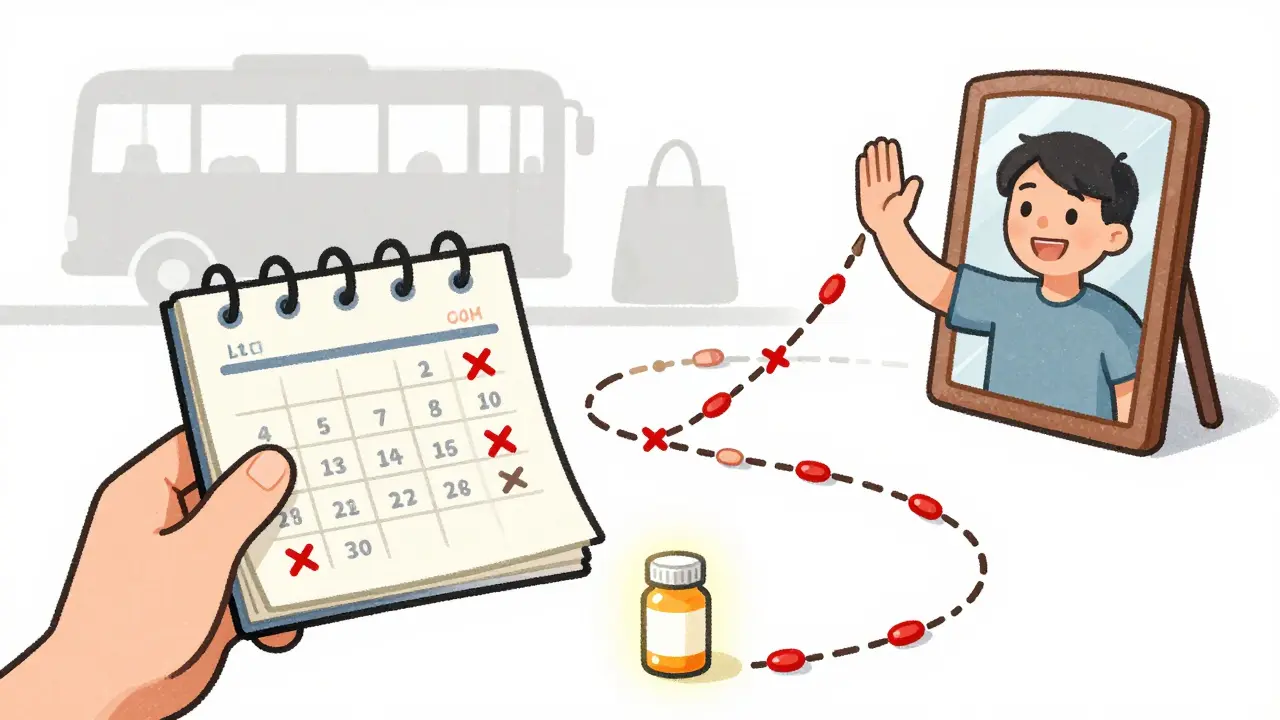
- Use a physical calendar: Mark an X every time you take your pill. Seeing a chain of X’s builds momentum. Don’t break the chain.
- Try a simple app: Medisafe, MyTherapy, or even the Notes app on your phone can log doses with a tap. Set a daily alert. No fancy features needed - just consistency.
- Use your pharmacy: Many pharmacies now track refill patterns. If you’re not refilling on time, they’ll call. That’s a built-in nudge.
- Pair it with a habit: Take your pill right after brushing your teeth, right after you pour your tea, right before you sit down to watch your favorite show. Habit stacking works better than alarms.
Electronic monitoring tools - like smart pill bottles or digital inhalers - are accurate to 98%. But you don’t need high-tech to succeed. A paper chart and a pen work just fine if you stick with it.
Plan for the Hiccups - Because They’ll Happen
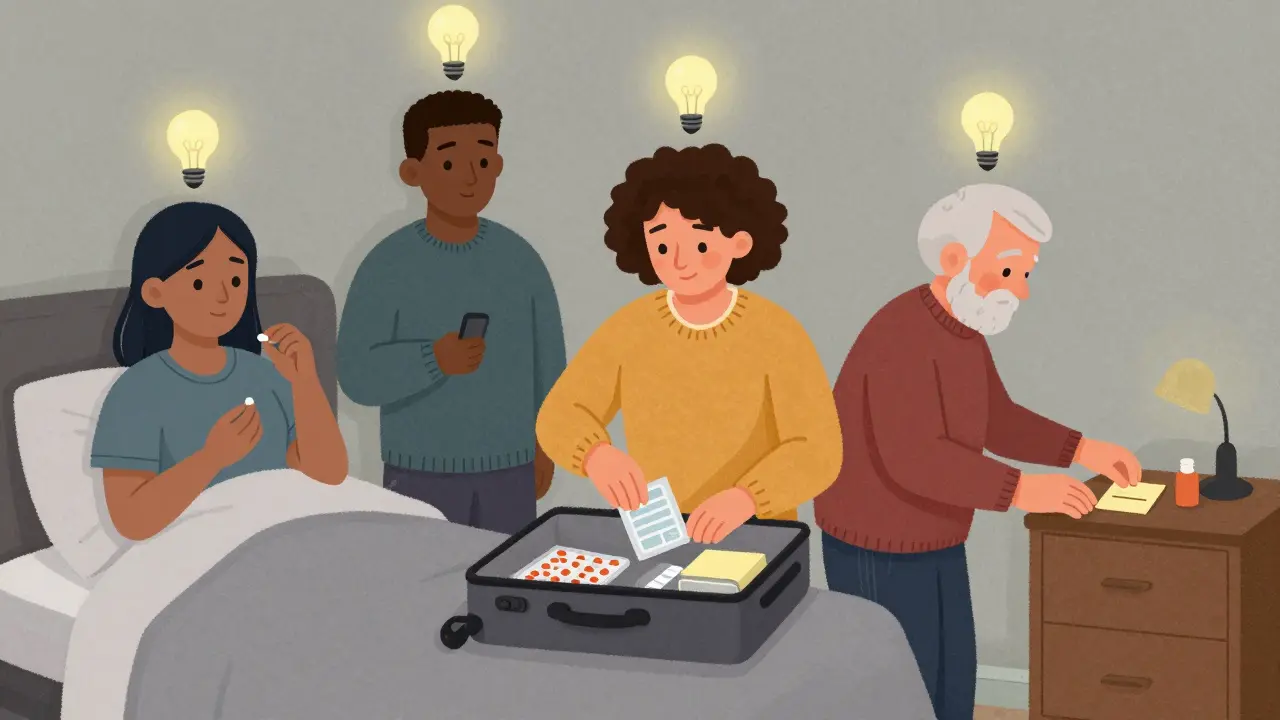
Life doesn’t pause for your medication schedule. You’ll forget. You’ll travel. You’ll feel fine and skip a dose. The key isn’t perfection - it’s recovery.
Before you even start, ask yourself: "What if I miss a dose?" Then write down your plan:
- If I forget on Monday, I’ll take it Tuesday morning - no double dose.
- If I’m traveling, I’ll pack extra pills in my carry-on.
- If I’m too tired to take it at night, I’ll set it out on my nightstand with a sticky note: "Don’t sleep without this."
Studies show that patients who plan for setbacks are 3x more likely to stay on track. It’s not about avoiding mistakes - it’s about knowing how to bounce back.
Make It Personal - Not Just Clinical
One of the biggest mistakes? Treating adherence like a math problem. It’s not. It’s a human behavior.
Think about what motivates you. For some, it’s numbers: "My HbA1c dropped from 8.1 to 6.9 in 3 months." For others, it’s feelings: "I can climb stairs without stopping." For others, it’s people: "I want to be there for my son’s graduation."
When you link your goal to something meaningful, your brain starts to care. That’s why celebrating small wins matters. Did you take your pills for 7 days straight? Reward yourself - not with food, but with something you enjoy: an extra 15 minutes of podcast time, a new book, a walk in the park. Positive reinforcement builds habits faster than guilt.
What If You’re Not Seeing Results?
If you’ve been trying for a few weeks and still can’t stick with it, don’t blame yourself. Blame the goal.
Ask yourself:
- Is the timing realistic? Maybe you need to take it at lunch instead of breakfast.
- Is the dose too hard to swallow? Ask about a different form - liquid, patch, or once-daily.
- Are side effects too much? Talk to your doctor. There are often alternatives.
- Is cost a barrier? Many pharmacies offer $4 generics. Or ask about patient assistance programs.
Don’t wait for your next appointment to fix this. Call your pharmacist. Text your nurse. Send a quick message: "I’m trying to take my meds better. Can we adjust my plan?" Most providers want to help - they just need you to speak up.
Tools That Actually Help
You don’t need to buy a dozen gadgets. But a few tools can cut the friction:
- Smart pill boxes: Like Hero or MedMinder. They beep, flash, and even call your caregiver if you miss a dose. Cost: $50-$150. Worth it if you forget often.
- Pharmacy apps: CVS, Walgreens, and others let you set refill alerts and track your medication history.
- Voice assistants: "Alexa, remind me to take my pill at 8 AM." Works surprisingly well.
- Shared digital logs: Use Google Sheets or a shared note with a family member. Knowing someone else sees your progress adds accountability.
Don’t overcomplicate it. Pick one tool. Stick with it for 30 days. If it doesn’t fit, try another.
What’s Holding You Back?
Let’s cut through the noise. The biggest barriers aren’t forgetfulness or laziness. They’re:
- Cost: One in four Americans skip doses because of price. If this is you, ask about generics, coupons, or patient assistance programs.
- Confusion: Too many pills, too many instructions. Ask for a simplified regimen. Sometimes, combining meds or switching to once-daily versions helps.
- Stigma: Some people feel ashamed about taking meds for mental health, diabetes, or high blood pressure. You’re not alone. Millions are doing the same thing - and living better because of it.
- Feeling fine: This is the biggest trap. High blood pressure doesn’t hurt. Diabetes doesn’t scream. But damage is still happening. Your goal isn’t to feel better today - it’s to stay healthy tomorrow.
There’s no shame in needing help. Adherence isn’t about willpower. It’s about systems.
Start Small. Stay Consistent.
You don’t need to overhaul your life to take your medicine. Start with one pill. One time. One day.
Here’s your first step:
- Write down the name of your most important medication.
- Answer the 5 W’s: Who, What, When, Where, Why.
- Choose one way to track it - pen and paper, app, or pill box.
- Set a 7-day goal: "I will take this pill every day for 7 days."
- At the end of 7 days, celebrate - even if it’s just a high-five in the mirror.
That’s it. No apps to download. No complex charts. Just one small win.
After that, add another. Then another. Progress isn’t about big leaps. It’s about showing up, day after day.
What if I forget to take my medication?
Don’t panic. Most medications are safe if you miss a single dose - but never double up unless your doctor says so. Instead, take it as soon as you remember, unless it’s close to your next scheduled dose. Then skip it and go back to your normal schedule. The key is consistency over perfection. Keep your tracker updated, even if you missed a dose. That way, you can spot patterns and adjust your plan.
Can I use my phone to track my medication?
Yes - and it’s one of the easiest ways to stay on track. Use apps like Medisafe or MyTherapy, or even your phone’s built-in reminders. Set a daily alert at the same time you usually take your pill. Add a note like "Take Lisinopril" so you don’t forget which one. Many apps also let you share your progress with a family member, which adds accountability. No need for fancy features - just a reliable alert and a habit.
How do I know if my goal is realistic?
Ask yourself: "Can I do this even on my worst day?" If your goal requires you to take a pill at 7 AM, but you often work nights, it’s not realistic. Adjust it. Maybe take it when you wake up - no matter the time. Realistic goals fit your life, not the other way around. If you can’t stick to it during a busy week, it’s too rigid. Simplify.
Why do I still feel fine even though I’m not taking my meds regularly?
Many chronic conditions - like high blood pressure or high cholesterol - don’t cause symptoms until damage is done. You might feel fine now, but skipping doses increases your risk of stroke, heart attack, or kidney damage later. The goal isn’t to feel better today - it’s to stay healthy tomorrow. Think of it like brushing your teeth: you don’t feel pain when you skip a day, but over time, the damage adds up.
Is it okay to ask my doctor for help with adherence?
Absolutely. Doctors expect this. In fact, they’re more likely to help if you speak up. Say something like: "I’m trying to take my meds every day, but I keep missing doses. Can we make this easier?" They might switch you to a once-daily pill, lower the cost with a generic, or help you set up a reminder system. Adherence is part of your care - not a personal failure.
Agnes Miller
i've been taking my blood pressure med for 3 years now, and this post actually helped me finally get it right. i started pairing it with my morning coffee like they said, and now i don't even think about it anymore. it's just part of the routine. no app, no fancy tracker-just a cup and a pill. simple.
Geoff Forbes
Wow. Just... wow. This is the first time I've seen someone actually understand adherence without overcomplicating it with 'SMART' jargon. Most 'experts' turn this into a productivity cult. But this? This is just... human. Kudos. (Though I still think you should use Medisafe. It's objectively superior.)
Kancharla Pavan
You people in the West treat medication like it's a hobby. You have time to track pills, set alarms, reward yourself with podcasts. In India, we take our medicine because we have no choice. No time for X's on calendars. No luxury of 'habit stacking.' We swallow it because we're alive, not because we're optimizing our lives. This post is cute. But real life doesn't have a '7-day goal.' It has a '12-hour shift' and a '300 rupee co-pay.'
Stop romanticizing compliance. It's not a self-help story. It's survival.
PRITAM BIJAPUR
There’s something deeply spiritual about consistency-not just with meds, but with life. 🌿 Every time you take that pill, you’re choosing yourself. Not tomorrow. Not ‘when you feel better.’ Right now. In this moment. That’s not discipline. That’s love. Quiet, stubborn, daily love. And yeah, maybe you don’t need a smart bottle. Maybe you just need to look at your reflection and say: ‘I’m still here because I showed up.’
And if you miss a day? It’s okay. Tomorrow, you’ll be gentler with yourself. That’s growth. Not perfection.
Dennis Santarinala
Love this. Seriously. I’ve been trying to get my dad to take his statins, and I used the calendar method-just X’s on a sticky note on his fridge. He didn’t even know I was doing it. Then last week, he said, ‘Hey, I’ve got 14 in a row.’ I didn’t say anything. He just smiled. That’s all it took. Simple. Human. No apps. No pressure. Just a little streak.
Logan Hawker
Look, I get it-you want to make adherence feel like a cozy Pinterest board. But let’s be real: 70% of people who ‘track’ meds still miss doses. Why? Because tracking doesn’t fix cost, confusion, or depression. You’re treating symptoms, not causes. And ‘celebrating with a walk in the park’? Cute. But if your pill costs $400/month, you’re not celebrating-you’re rationing.
Stop pretending systems fix systemic failure. Fix the system. Or stop pretending this is about willpower.
James Lloyd
I’ve worked in primary care for 12 years. The biggest breakthrough I’ve seen isn’t tech-it’s language. When patients say, ‘I take my pill with my tea,’ instead of ‘I take my Lisinopril,’ they’re more likely to stick with it. It’s not about the medicine. It’s about the ritual. This post nails it. The ‘why’ matters more than the ‘how.’ I’ve handed this out to 3 patients this week. All of them improved adherence in 14 days.
Brenda K. Wolfgram Moore
My mom skipped her diabetes meds for 8 months because she thought she was ‘fine.’ She didn’t feel bad. Until she didn’t walk again. This post is the reason I finally got through to her. I didn’t lecture. I just said: ‘What do you want to do next year? Walk the garden? See your grandkids play? Then take the pill.’ She started. Now she has 47 days in a row. No app. Just a sticky note on the mirror.
Tony Shuman
Wow. Another American self-help guide that assumes everyone has a kitchen, a coffee habit, and free time. What about people who work two jobs? Who don’t have a phone? Who can’t afford a pill box? This isn’t advice. It’s a luxury. And now you’re making people feel guilty for not being ‘consistent’? Real talk: if you’re not fixing poverty, you’re not fixing adherence.
Digital Raju Yadav
Every time I see this kind of post, I think: ‘Why are we letting corporations profit off our sickness?’ You’re selling ‘habits’ when you should be selling affordable medicine. In India, we don’t need reminders-we need $1 pills. Stop making compliance a personal failure. Make it a policy failure. Your ‘SMART goals’ won’t fix a broken healthcare system.