

Every year, millions of doses of medication are thrown away because they’ve expired-many of them still perfectly safe to use. But more dangerously, some patients end up taking expired drugs because no one checked. It’s not just a waste of money. It’s a risk to health. The good news? You don’t have to rely on handwritten labels or memory anymore. Technology now makes it easy to track when medications expire-with systems that scan, alert, and even block expired drugs from being used.
Why Tracking Expiration Dates Matters
Expired medications don’t always become toxic. But they do lose potency. A painkiller that’s 20% less effective might mean a patient suffers longer. Antibiotics that aren’t strong enough can lead to resistant infections. In hospitals, giving a patient an expired IV drug can trigger a serious safety event. In home settings, people often keep old pills in drawers, cabinets, or first aid kits-sometimes for years. Without a system to track them, they’re a hidden danger. Regulations like the FDA’s Drug Supply Chain Security Act and DEA requirements for controlled substances now demand better tracking. But even outside legal rules, the goal is simple: keep patients safe and reduce waste. Hospitals using modern tracking systems report up to 20% less medication disposal. That’s not just savings-it’s fewer drugs ending up in landfills or water systems.How RFID Systems Work for Medication Tracking
The most advanced method today uses RFID-Radio Frequency Identification. Each medication package gets a tiny tag, like a microchip sticker, embedded during manufacturing or applied in the pharmacy. These tags don’t need line-of-sight to be read. You can scan an entire tray of pills, syringes, or IV bags with one pass of a handheld reader or a fixed scanner mounted on a cabinet. Systems like KitCheck, used in over 900 hospitals, read up to 100 items at once in under 10 seconds. Compare that to manual counting, which can take hours for a single crash cart. The system automatically logs each item’s lot number and expiration date. When a medication is within two days of expiring, it flags the item in the software. Some systems even prevent the drug from being dispensed until it’s replaced. This isn’t science fiction. Texas Children’s Hospital uses RFID to track 784 high-value medications costing over $100 each. Before RFID, pharmacists spent hours every week checking expiration dates. Now, they get real-time alerts. One pharmacist said they saved “many hours of often tedious work”-time now spent helping patients instead of counting pills.Electronic Medication Administration Records (eMAR)
If you’re managing medications in a long-term care facility, home health service, or IDD (Intellectual and Developmental Disabilities) agency, you’re likely already using an eMAR system. These are digital versions of paper medication administration records. Nurses or caregivers log each dose given-date, time, patient, and drug. But modern eMARs do more than record. They connect to pharmacy systems, auto-generate refill orders, and track expiration dates across all medications in a patient’s profile. eVero’s platform, for example, integrates with pharmacy databases so when a new prescription arrives, the system automatically updates the expiration date. If a medication is nearing expiry, it sends alerts to the care team. Some eMARs even require biometric login-like a fingerprint scan-to ensure the right person is giving the right drug. This cuts down on human error and creates a full audit trail for regulators. Unlike RFID, eMAR doesn’t track physical inventory. It tracks what’s been given to whom. So it’s perfect for homes or clinics where medications are dispensed directly to individuals. But it won’t help you know if your pharmacy stock has expired bottles sitting on the shelf. That’s why some organizations use both systems together.Automated Dispensing Cabinets (ADCs)
If you’ve ever seen a locked cabinet in a hospital hallway that dispenses pills with a swipe card, you’ve seen an Automated Dispensing Cabinet. These aren’t just fancy lockboxes. They’re smart inventory systems. Every time a nurse takes a medication, the cabinet logs: which drug, how many, who took it, and when. The cabinet also knows the expiration date of every bottle inside. Manufacturers like TouchPoint Medical build ADCs that automatically scan barcodes or RFID tags as items are loaded. If a bottle is expired, the cabinet won’t release it. Even better, the system can alert pharmacy staff when stock is low or when a batch is about to expire. Closed-door pharmacies use ADCs to manage controlled substances like opioids, where tracking is legally required. One hospital reported a 40% drop in medication errors after switching to ADCs with built-in expiration tracking. The catch? ADCs need to be stocked properly. If someone manually loads a new batch without scanning the barcode, the system won’t know the expiration date. Training and process discipline matter just as much as the technology.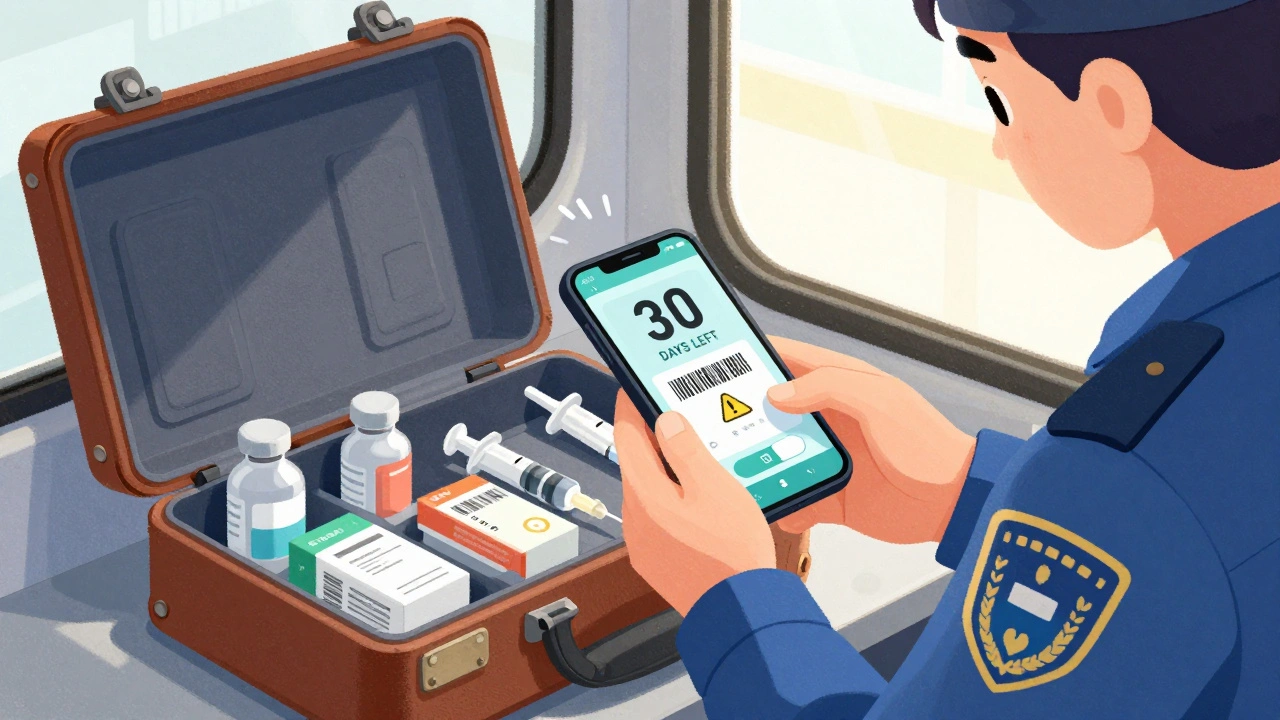
Mobile Apps for Emergency and Field Use
Not every setting has a hospital-grade system. Emergency responders, paramedics, and field medics need something lighter. That’s where apps like LogRx come in. It runs on standard iPhones and Android devices-no extra hardware needed. First responders scan the barcode on a medication package, and the app records the expiration date. It sends reminders when a drug is within 30 days of expiring and flags recalled products instantly. Portland Fire & Rescue started using LogRx in 2023. Their report? “The decrease in administrative workload has been truly amazing.” Before, they spent hours manually checking each medication in their ambulances. Now, it’s automated. They also use it to prove compliance with DEA rules during inspections. In the UK, Elite EMS said LogRx helped them stand out as a leader in medicine management. These apps are ideal for small teams or mobile units. But they rely on users scanning every item. If someone forgets, the system breaks. That’s why they work best when combined with clear protocols-like scanning every medication during daily vehicle checks.What You Need to Get Started
If you’re thinking about adopting one of these systems, here’s what to expect:- Assessment (2-4 weeks): Figure out what you need. Are you tracking hospital inventory? Home medications? Emergency kits?
- Hardware/Software (1-3 weeks): Order scanners, cabinets, or software licenses. RFID systems need tags-some manufacturers now ship pre-tagged medications.
- Training (2-6 weeks): Staff need to learn how to scan, respond to alerts, and handle exceptions. Resistance is common. One survey found 62% of hospitals saw pushback during rollout.
- Integration (2-4 weeks): Connect the new system to your existing pharmacy software or EHR. This is where most failures happen. If the systems don’t talk to each other, data gets lost.
Costs and Return on Investment
RFID systems aren’t cheap. Implementation can cost between $50,000 and $200,000, depending on size. eMAR platforms start at a few thousand dollars per year for small clinics. Mobile apps like LogRx cost under $1,000 annually for a team. But the savings add up. Hospitals using RFID report $120,000 to $300,000 saved each year by reducing expired medication waste. Fewer recalls mean less downtime. Less manual work means staff can focus on care. One UK EMS team saved 15 hours a week just by switching from paper logs to LogRx. The bigger picture? The global market for medication tracking is projected to hit $5.1 billion by 2028. More hospitals are adopting it-not because it’s trendy, but because it works.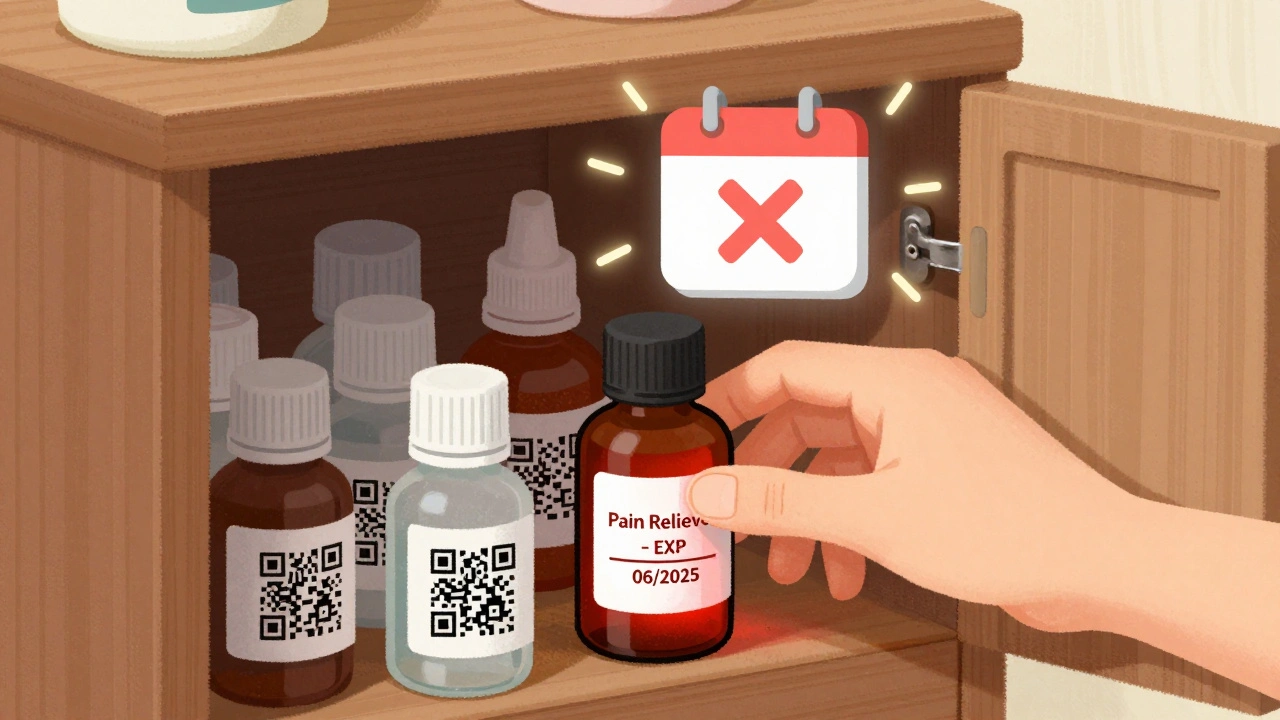
What Doesn’t Work
Some people try to track expiration dates with spreadsheets or phone alarms. It’s tempting. But it’s unreliable. Someone forgets to update it. A new batch arrives without a label. A bottle gets moved. A shelf gets rearranged. In one case, a Midwest hospital had 30% tracking errors in their first quarter after trying a DIY system. Barcodes alone aren’t enough anymore. They require line-of-sight scanning. One item at a time. Slow. Prone to human error. RFID and smart software are replacing them-not because they’re flashy, but because they’re accurate.What’s Next
The future is smarter. Some systems now use AI to predict when a medication is likely to expire based on usage patterns. Intelliguard Health piloted this in early 2025. Others are testing blockchain to track drugs from factory to patient-so you know exactly where every pill came from. More hospitals are linking tracking systems directly to electronic health records. By 2026, 72% of hospital CIOs plan to have this integration. That means when a doctor prescribes a drug, the system already knows its expiration date-and can warn if it’s too close to expiring. The goal isn’t just to avoid expired drugs. It’s to make medication safety seamless. To turn a manual, error-prone task into something invisible-like electricity. You don’t notice it until it’s gone.Can I use my phone to track my own medication expiration dates?
Yes. Apps like LogRx, Medisafe, and MyTherapy let you scan barcodes on your prescription bottles and set alerts for when they expire. You can also manually enter dates if scanning isn’t possible. These apps work well for personal use, especially if you take multiple medications. They’re not as robust as hospital systems, but they’re far better than writing dates on sticky notes.
Do all medications come with RFID tags already?
No. Most don’t. Currently, only a small number of high-value or controlled medications come pre-tagged from manufacturers. Hospitals and pharmacies usually apply RFID tags themselves during inventory processing. Some vendors offer pre-tagged kits for specific drugs, but widespread manufacturer adoption is still growing. By 2027, more companies are expected to ship medications with embedded tags to reduce the burden on healthcare providers.
Is RFID tracking only for hospitals?
No. While hospitals are the biggest users, the technology is expanding. Long-term care homes, hospice services, and even home health agencies are starting to use smaller RFID systems. Some companies now offer portable RFID scanners for home use. Emergency responders, like paramedics and fire departments, use mobile versions. The key is matching the system to your needs-not the setting.
What happens if a medication expires during a patient’s treatment?
In a well-run system, it shouldn’t happen. RFID and eMAR systems flag medications before they expire-usually two days in advance. The pharmacy is alerted to replace them. In emergency situations, if an expired drug is accidentally used, the system logs it and triggers a safety review. Most hospitals require staff to document why it happened and how it was prevented in the future. This isn’t just about compliance-it’s about learning.
Are these systems secure and private?
Yes. Systems like eVero and KitCheck follow HIPAA and GDPR standards. Patient data is encrypted. Access is controlled through passwords, biometrics, or smart cards. Only authorized staff can view or change medication records. Mobile apps like LogRx store data locally on the device or in encrypted cloud servers. No system is 100% foolproof, but the leading platforms are built with healthcare security as a top priority.
Deborah Andrich
This is life-saving tech and nobody's talking about it enough. I work in home care and we still use sticky notes. Time to upgrade.
Keasha Trawick
RFID tags on meds? That’s not innovation-that’s *necessary infrastructure*. We’re still letting nurses count pills by hand like it’s 1998? The FDA’s got regulations, but the real revolution is in the supply chain. If your pharmacy can’t scan 100 items in 10 seconds, you’re not just inefficient-you’re endangering lives. And don’t get me started on how many expired beta-blockers are rotting in basement cabinets because someone ‘forgot’ to check. This isn’t about tech for tech’s sake. It’s about not letting people die because we’re too lazy to automate the obvious.
Tommy Watson
lol so now we need chips in our tylenol? next theyll put gps in my aspirin so it can text me when i need it. why cant we just write dates on the bottle like normal people? this is why america is broke.
Sheldon Bird
Honestly? This is the kind of stuff that makes me proud to be in healthcare. 🙌 The fact that we’re moving from sticky notes to systems that *prevent* errors? That’s not just efficiency-that’s dignity. You’re not just tracking pills. You’re protecting people. Keep pushing for this. 💪
Ronan Lansbury
Of course they're pushing RFID. Next thing you know, the pharmaceutical-industrial complex will be embedding microchips in every pill to track your compliance. This isn't safety-it's surveillance disguised as care. The FDA doesn't care about you. They care about liability. And don't even get me started on who owns the data.
nithin Kuntumadugu
hahahaha u think this is new? in india we use whatsapp groups to remind old people to take meds. one uncle took his blood pressure pill 3x because he forgot he already took it. no rfid needed. tech is just rich people’s way of overcomplicating simple things 😂
John Fred
eMAR + RFID combo? YES. 🚀 We rolled this out in our clinic last year and the drop in near-misses was insane. Nurses are now spending 3+ hours a week less on inventory. That’s 150+ hours/month. That’s 150+ hours of actual patient time. This isn’t just tech-it’s a culture shift. And it’s working. 👏
Hamza Laassili
I don't care if it's 'efficient'-this is government overreach wrapped in a lab coat! Who authorized these scanners?! Are we gonna start tagging insulin pens next?! And why do I need a fingerprint to give my grandma her heart med?! This is not safety-it's control. And it's expensive. And it's wrong.
Cole Newman
You people are missing the point. The real problem isn't expired meds-it's that people don't take them correctly. You can scan every pill in the world but if someone skips doses or mixes them with alcohol, you're still gonna have problems. This tech is a Band-Aid on a gunshot wound. Fix the human behavior first.
Casey Mellish
In Australia, we’ve been using barcode scanning in aged care for nearly a decade. The cultural shift was the hardest part-not the tech. Nurses initially resisted because they felt it made them ‘robots’. But once they saw the drop in errors and the relief from paperwork? They became the biggest advocates. This isn’t American tech-it’s global best practice. And it’s working.
Emily Haworth
I just scanned my entire medicine cabinet with LogRx. Found 4 expired pills I forgot about. One was from 2018. I cried. Not because I was sad-because I realized how much I trust my own memory when I shouldn’t. This app saved me from a dumb mistake. Thank you.
Tom Zerkoff
The integration of medication tracking systems with electronic health records represents a paradigmatic advancement in clinical safety protocols. It is imperative that healthcare institutions prioritize interoperability standards to ensure that temporal data integrity is maintained across disparate systems. The confluence of RFID, eMAR, and ADC technologies, when properly implemented, constitutes a non-trivial reduction in iatrogenic risk. Furthermore, longitudinal data aggregation may facilitate predictive analytics regarding pharmacokinetic degradation patterns in stored pharmaceuticals, thereby enabling proactive replenishment cycles. The cost-benefit analysis, when calibrated against litigation exposure and regulatory non-compliance penalties, demonstrates a compelling return on investment. We must not allow inertia to impede the adoption of evidence-based pharmaceutical stewardship.
Yatendra S
We are not just tracking pills... we are tracking time. And time is the one thing we can't buy back. When a pill expires, it's not just the chemical that degrades-it's the trust we placed in our own bodies to heal. This tech? It's just a mirror. It shows us how fragile we are. And maybe... that's the real point.
Himmat Singh
The notion that RFID reduces waste is statistically misleading. The real cause of medication expiration is overprescribing and poor forecasting, not lack of scanning. To focus on tracking is to ignore the systemic failure of pharmaceutical marketing and physician prescribing habits. This is a distraction. Fix the supply chain, not the label.
Alvin Montanez
Let me tell you something about this whole ‘technology solves everything’ mindset. I’ve worked in three different hospitals, and every single time they rolled out some fancy new system, the first thing that happened was the nurses started writing the expiration dates on the bottles anyway-because the system glitched, or the scanner didn’t read the tag, or someone forgot to scan the new batch, or the Wi-Fi went down during a code blue. And guess what? The handwritten date on the bottle? It didn’t disappear. It just got buried under layers of digital noise. Now you’ve got two systems. One that works. One that pretends to work. And when the lights go out? The handwritten one still works. So tell me again why we need to spend $200,000 on a machine that can’t handle a power outage?