

When you pick up a prescription, you might not think twice about whether it’s the brand name or the generic version. After all, the label says it’s the same drug-same active ingredient, same dose, same pill shape. But here’s the question most people don’t ask: Are generic drugs just as safe as brand-name ones over years of use? The answer isn’t simple. Some studies say generics are just as good. Others show real differences in outcomes. And then there are the personal stories-patients who swear their seizures returned, or their blood pressure spiked, after switching to a cheaper version.
What Does ‘Therapeutic Equivalence’ Really Mean?
The FDA says generics are therapeutically equivalent to brand-name drugs. That’s based on bioequivalence testing: the generic must deliver the same amount of active ingredient into your bloodstream within a certain range-usually 80% to 125% of the brand’s levels. On paper, that sounds tight. But here’s the catch: that 20% variation can matter a lot if you’re taking a drug with a narrow therapeutic index. That means the difference between working and being dangerous is small. Drugs like warfarin (a blood thinner), levothyroxine (for thyroid issues), and certain epilepsy medications fall into this category. A 2017 study found patients switching from Synthroid to generic levothyroxine had a 12.3% higher chance of abnormal thyroid hormone levels. That might not sound like much, but for someone relying on precise hormone control, it can mean fatigue, weight gain, or even heart rhythm problems. The FDA’s testing looks at short-term absorption-not what happens after five years of daily use. That’s a big gap. Real people take these pills every day for decades. What happens then?The Austrian Study That Changed the Conversation
In 2020, researchers in Austria looked at over 1.5 million people taking blood pressure meds between 2007 and 2012. They didn’t just check lab results-they tracked deaths and major heart events. The results stunned many in the medical community. People taking brand-name antihypertensives had 53.8 deaths per 1,000 patient-years. Those on generics? Only 30.2. That’s nearly half the death rate. Major cardiac events like heart attacks and strokes were also 40% lower with generics. The study used advanced statistical methods to rule out bias-age, income, pre-existing conditions, even how often people refilled prescriptions. The result held up. So why did generics perform better? The researchers didn’t say for sure. But they speculated it might be because brand-name drugs were more likely to be prescribed to sicker patients from the start. Or maybe the generics used in Austria were made to stricter standards than those in other countries. Either way, it challenged the assumption that brand = better.But Then There Are the Cases That Don’t Fit
Not every story lines up with big data. In 2013, doctors reported two patients whose symptoms got worse after switching from brand-name ciprofloxacin and levofloxacin to generics. One kept having a fever. The other couldn’t shake a persistent infection. Both got better-fast-when switched back to the original brand. No lab tests showed a difference in the pills. No manufacturing flaws were found. Just a clear clinical pattern: the generic didn’t work for them. These aren’t rare outliers. A 2013 review estimated that 30% of patients see no change after switching, 30% get worse, and 30% actually feel better. Only 10% report side effects. That’s a lot of variation. And it’s not about the active ingredient-it’s about the fillers, the coating, how fast the pill dissolves, even the shape. These things don’t show up in bioequivalence tests, but they can change how your body responds.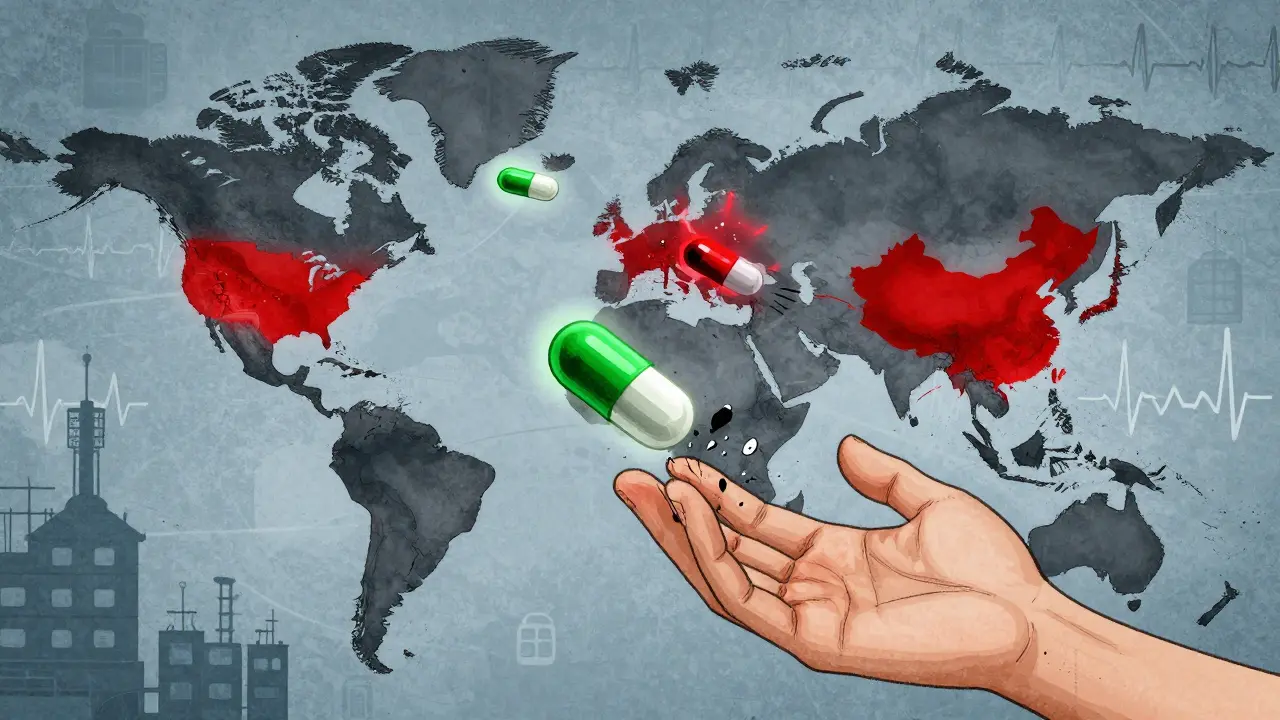
Manufacturing Location Matters More Than You Think
Here’s something most people don’t realize: the same generic drug can be made in three different countries, and the safety profile can be wildly different. A 2018 study from Ohio State University analyzed FDA adverse event reports and found a shocking pattern. Generic drugs made in India were linked to 54% more severe adverse events-including hospitalizations and deaths-than those made in the U.S. For ciprofloxacin, the rate of hospitalizations from Indian-made generics was 62% higher than U.S.-made versions. That’s not a small difference. And it wasn’t just new drugs. It was older, well-established generics-ones that had been on the market for years. That suggests the problem isn’t just poor quality control in new factories. It’s systemic. The FDA doesn’t test every batch. It relies on inspections, which happen rarely. And with over 80% of active pharmaceutical ingredients coming from India and China, the scale of the problem is massive. You might be getting a perfectly legal generic. But if it was made in a factory with outdated equipment or lax oversight, your safety could be at risk.Authorized Generics: The Hidden Middle Ground
There’s a version of generics most people have never heard of: authorized generics. These are the exact same drug as the brand, made by the same company, just sold under a generic label. They’re cheaper than the brand, but identical in every way-including the fillers and manufacturing process. A 2018 analysis of adverse event reports showed something surprising. For drugs like amlodipine and losartan, the number of reports for authorized generics was much closer to the brand than to traditional generics. In fact, the difference between authorized generics and traditional generics was often the only statistically significant one. That suggests a lot of the safety problems people report aren’t because it’s a generic-they’re because it’s a low-cost generic from a lesser-known manufacturer. If you’re worried about long-term safety, asking your pharmacist for an authorized generic might be the smartest move. You get the price of a generic, with the reliability of the brand.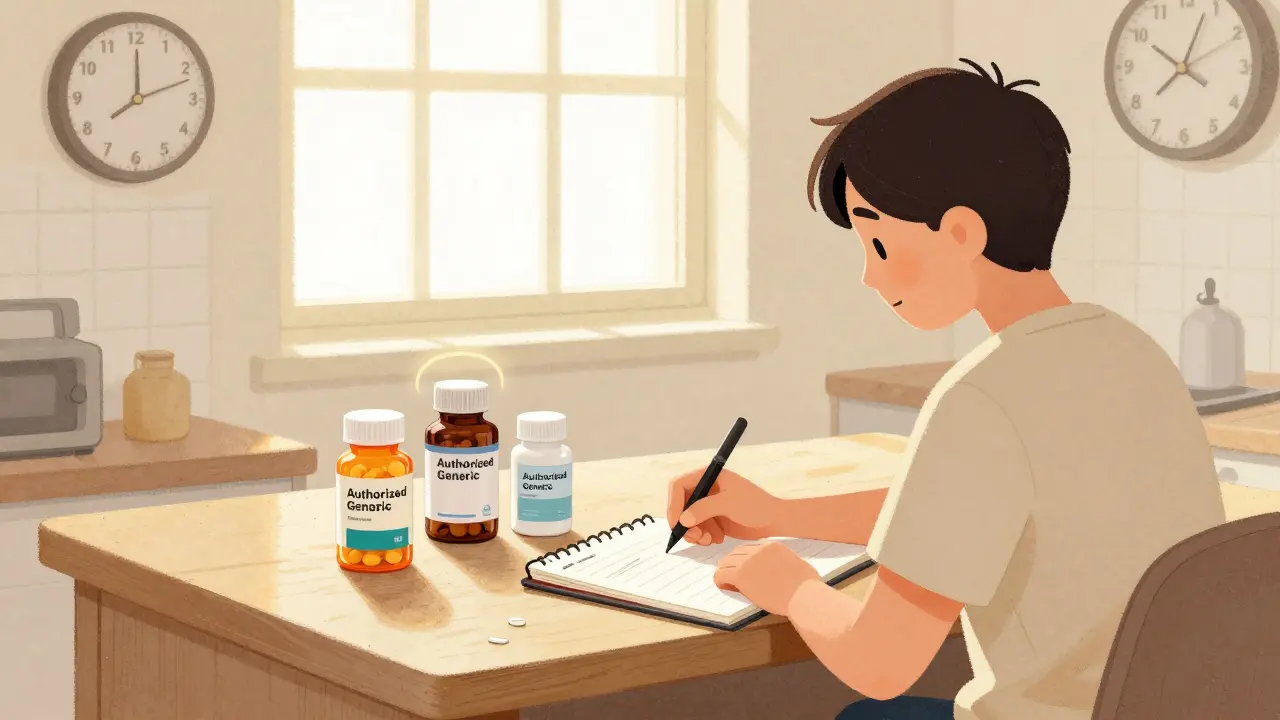
Harsh Khandelwal
Bro, I swear after I switched to generic warfarin, I was dizzy all day and my gums bled like a horror movie. Went back to brand - boom, normal. FDA doesn’t care. Pharma doesn’t care. But my body? It remembers. 😒
Andy Grace
Interesting read. I’ve been on generic levothyroxine for 8 years and never had an issue - but I also get my blood tested every 3 months. Maybe consistency and monitoring matter more than the pill’s label?
Abby Polhill
Authorized generics are the secret sauce. I work in a hospital pharmacy and we stock them for high-risk patients - same pill, different box. The cost difference is negligible, and the adverse event logs? Night and day. Why aren’t more people asking for these?
Lindsey Kidd
OMG YES. My mom switched to generic seizure meds and had a seizure at her book club 😱 We went back to brand and she’s been fine. I now have a spreadsheet tracking every med switch. You’re not crazy if you feel different - your body’s not lying.
Austin LeBlanc
Let’s be real - if you’re taking a generic made in India, you’re basically gambling with your life. I don’t care what the FDA says. I’ve seen the inspection reports. Half those factories look like a biohazard zone. Americans need to stop being cheap and start demanding quality. This isn’t a Starbucks latte.
niharika hardikar
While the anecdotal evidence presented is compelling, it is imperative to recognize that the statistical power of adverse event reporting is inherently confounded by reporting bias. The pharmacovigilance infrastructure in the United States is not designed for longitudinal patient-level outcomes, and thus, extrapolation to population-level safety is methodologically unsound.
Rachel Cericola
Look, I get it - people are scared. But here’s the truth: the real issue isn’t generics. It’s the lack of transparency. You don’t know where your pill came from, who made it, or what filler they used. That’s on the system, not the drug. If you’re on warfarin or levothyroxine? Ask for the authorized generic. It’s not harder. It’s not more expensive. It’s just not advertised. And if your pharmacist says no? Find a new one. Your life isn’t a cost-cutting experiment.
Blow Job
My dad’s on generic lisinopril and his BP’s been stable for 5 years. He’s 72. No hospital visits. No side effects. Maybe the problem isn’t the generic - maybe it’s the people who panic every time the label changes?
Christine Détraz
I think we’re all looking for a simple answer - but this isn’t one. Some generics are great. Some are risky. Some people react, others don’t. The key is awareness. Track your symptoms. Ask your pharmacist. Don’t assume. Don’t fear. Just be informed. And if you feel off? Speak up. Even if it’s just a tiny change.
John Pearce CP
The United States of America has the most rigorous pharmaceutical regulatory framework in the history of civilization. To suggest that foreign-manufactured generics are equivalent to American-made products is not only scientifically dubious - it is an affront to national sovereignty and public health integrity. We must restore domestic production or risk national biological vulnerability.
EMMANUEL EMEKAOGBOR
Thank you for sharing this. In Nigeria, we often get generics without knowing the source. This has opened my eyes. Perhaps we need a similar system of tracking and transparency where I am. Safety should not be a luxury.
CHETAN MANDLECHA
Generic vs brand - it’s not about the pill. It’s about the person. I’ve been switching back and forth for 12 years. Some generics work. Some don’t. I keep a notebook. I log everything. If you’re on a critical med, do the same. Your doctor won’t ask. But you? You owe it to yourself.
Aurora Daisy
Oh, so now it’s ‘Indian-made’ generics that are the villains? Funny how the same people who scream about outsourcing when it’s jobs suddenly don’t care when it’s their heart medication. Wake up, folks. The FDA doesn’t have time to babysit every pill. You want safety? Pay for it.
Raja P
Just had a patient come in last week after switching to generic cipro. Said he felt ‘off’ - no fever, no labs out of range. Just… not right. Switched back. He’s fine. I told him: if your body says no, trust it. Science can wait. You can’t.