
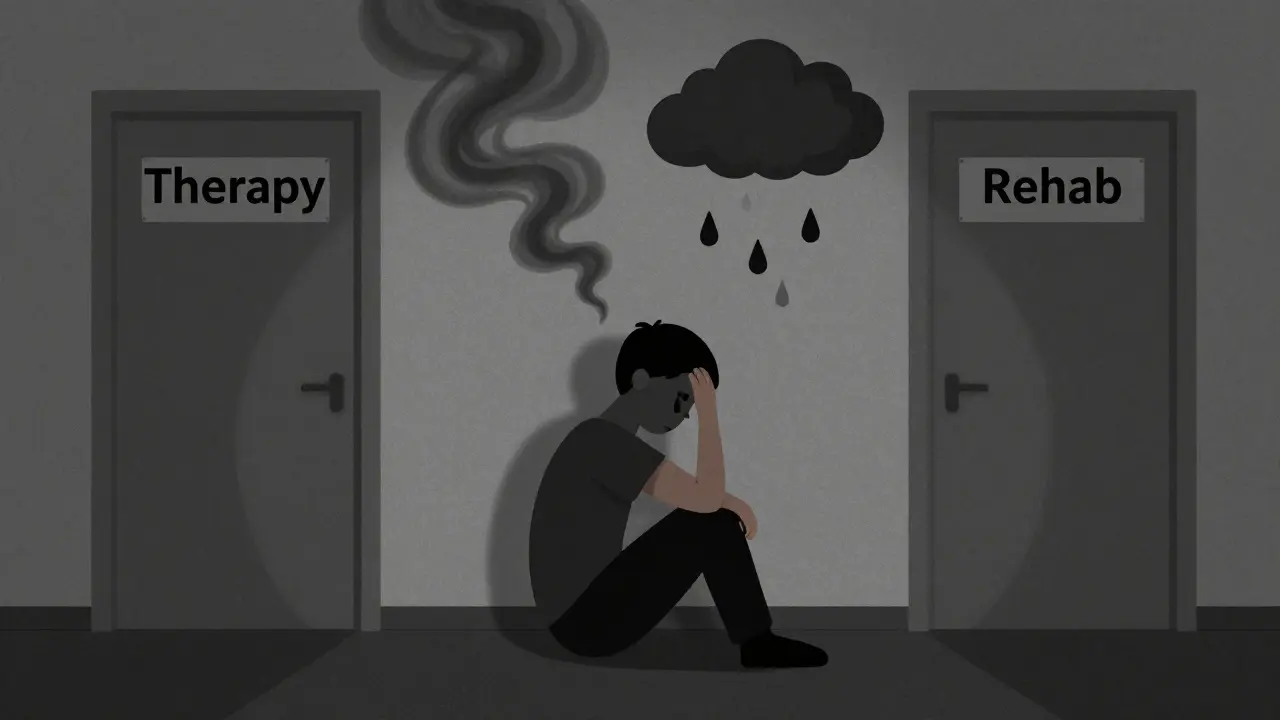
Imagine you’re struggling with depression, and to numb the pain, you start drinking every night. Over time, the drinking makes your depression worse. You feel more hopeless, sleep less, and stop showing up for work. You go to a therapist for your mood, but they don’t ask about your drinking. You go to a rehab center for your alcohol use, but they don’t talk about your sadness. You’re caught in two systems that don’t talk to each other. This isn’t rare-it’s the norm for millions of people. That’s where integrated dual diagnosis care changes everything.
What Is Dual Diagnosis?
Dual diagnosis means someone has both a mental health condition-like depression, bipolar disorder, schizophrenia, or PTSD-and a substance use disorder at the same time. It’s not two separate problems. They feed each other. Someone with anxiety might use alcohol to calm down. Someone with psychosis might use stimulants to feel more in control. The substance makes the mental illness worse. The mental illness makes the substance use harder to stop.
According to the Cleveland Clinic, about 20.4 million U.S. adults had a dual diagnosis in 2023. That’s roughly one in every 16 adults. And yet, only about 6% of them get treatment for both conditions together. The rest fall through the cracks-treated for one issue while the other gets ignored. That’s like trying to fix a leaky roof while the foundation is crumbling.
Why Traditional Treatment Fails
For decades, the system was built on parallel treatment. You went to a mental health clinic for your mood. You went to a separate rehab center for your drinking or drug use. Sometimes you had to wait months to get into one program before you could even start the other. Many people dropped out because it was too confusing, too exhausting, or too expensive.
SAMHSA calls this approach “costly, inefficient, and ineffective.” And they’re right. When you treat one condition and leave the other alone, you’re setting the person up to fail. If you stop someone from using drugs but don’t help them manage their anxiety, they’ll likely go back to using. If you stabilize someone’s psychosis but don’t address their opioid dependence, they won’t stay on their medication.
Studies show that people in parallel treatment are more likely to be hospitalized, arrested, or homeless. They’re also less likely to stick with treatment long-term. The system isn’t broken because people aren’t trying-it’s broken because it’s designed wrong.
The Gold Standard: Integrated Dual Disorder Treatment (IDDT)
There’s a better way. It’s called Integrated Dual Disorder Treatment, or IDDT. Developed in the 1990s by researchers at Dartmouth and New Hampshire, it’s now recognized as the gold standard by SAMHSA, the National Institute on Drug Abuse, and leading mental health organizations.
IDDT isn’t just a new therapy. It’s a complete system change. Instead of two teams, you have one. Instead of two treatment plans, you have one. Instead of two sets of rules, you have one message: your mental health and your substance use are connected, and we’re going to treat them together.
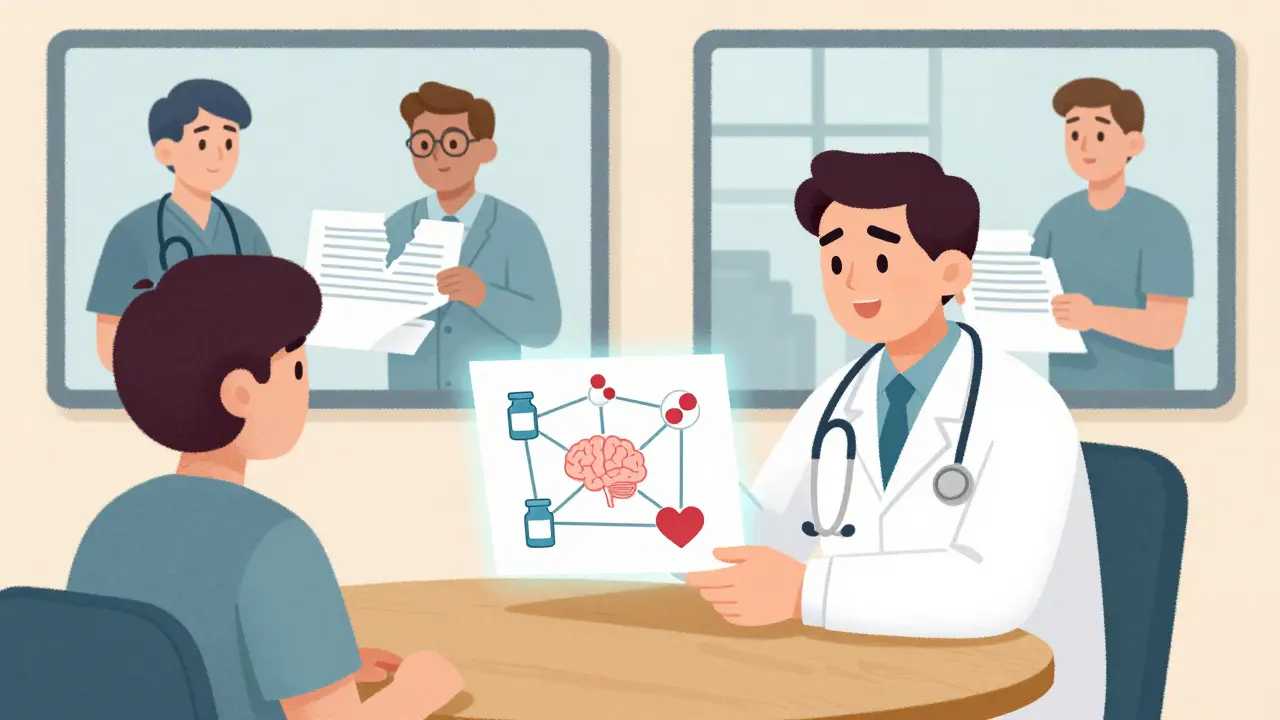
This means the same clinician-whether they’re a psychiatrist, counselor, or case manager-is trained in both mental illness and addiction. They don’t just ask, “Are you using?” They ask, “How is your anxiety affecting your drinking? What happens when you feel paranoid and reach for cocaine?” They look at the whole person.
The Nine Core Components of IDDT
IDDT isn’t vague. It’s built on nine specific, evidence-based practices:
- Motivational interviewing-a way of talking that helps people find their own reasons to change, without pushing or judging.
- Substance abuse counseling-focused on reducing harm, not just stopping use. If someone isn’t ready to quit, the goal is to make their use safer.
- Group treatment-where people with similar experiences support each other in a space that understands both mental health and addiction.
- Family psychoeducation-teaching loved ones how to help without enabling, how to recognize warning signs, and how to respond without panic.
- Participation in self-help groups-like Alcoholics Anonymous or Narcotics Anonymous, but adapted for people with psychosis or mood disorders.
- Pharmacological treatment-medications for depression, bipolar disorder, or schizophrenia, carefully chosen so they don’t interact badly with substances.
- Health promotion-helping people eat better, sleep more, exercise, and get regular medical checkups. Substance use often ruins physical health.
- Secondary interventions-for people who aren’t responding to standard treatment. This might mean more frequent check-ins, housing help, or crisis planning.
- Relapse prevention-not just avoiding drugs, but learning how to handle triggers, manage stress, and rebuild a life worth staying sober for.
One of the most important shifts? IDDT doesn’t demand abstinence right away. It’s harm reduction in action. If someone is using heroin and has schizophrenia, the goal isn’t to make them quit cold turkey on day one. It’s to get them on antipsychotic medication, connect them to a case manager, reduce how often they use, and help them avoid overdosing. Progress, not perfection, is the measure.
What Does Success Look Like?
A 2018 study tracked 154 people with severe mental illness and substance use disorders over a year. After IDDT, the number of days they used alcohol or drugs dropped significantly. That’s huge. But the real win? People started showing up for appointments. They got jobs. Some moved out of shelters. They stopped going to the ER every month.
Another study from Washington State found that IDDT reduced alcohol use disorder symptoms by 16.5% and illicit drug use disorder symptoms by 20.7%. That’s not a cure, but it’s meaningful change. People reported feeling less confused, less judged, and more understood. One patient said, “For the first time, someone asked me how my meds made me feel when I drank. No one ever asked that before.”
But here’s the catch: IDDT doesn’t always improve every outcome. The same study found no big changes in motivation, therapeutic alliance, or overall functioning. Why? Because implementation is hard. Training clinicians to handle both mental illness and addiction takes time. Most teams aren’t fully trained. Funding is tight. Clinicians are burned out.
Why Isn’t Everyone Getting This Care?
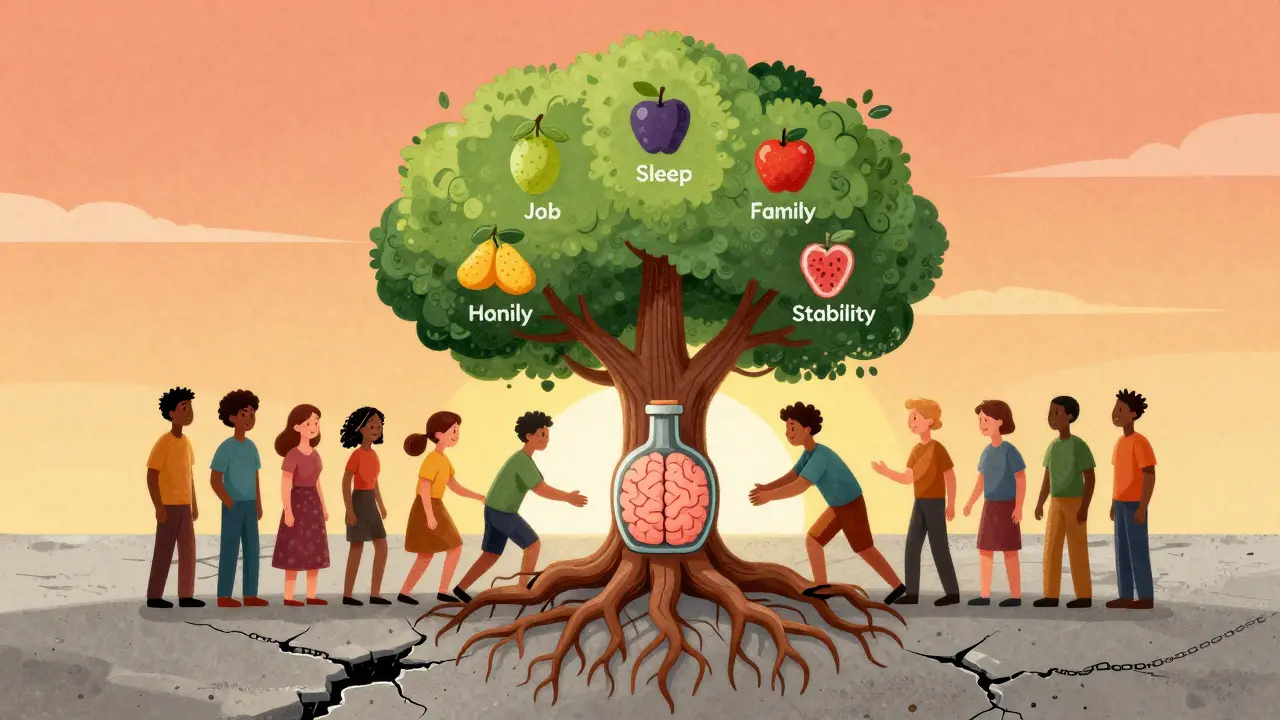
Despite the evidence, only 6% of people with dual diagnosis get integrated treatment. Why?
First, funding. Most insurance systems still pay for mental health and substance use services separately. That means clinics have to run two billing systems, two sets of staff, two schedules. It’s messy. Medicaid and Medicare are slowly changing, but slowly.
Second, training. A 2018 trial gave 37 clinicians a three-day IDDT workshop. Guess what? Their knowledge didn’t improve. Their skills didn’t get better. The training was too short. Real competence takes months of supervision, coaching, and practice.
Third, stigma. Mental health providers sometimes fear substance use. Addiction specialists sometimes fear psychosis. Neither group feels equipped to handle the other. So they pass the person back and forth.
And fourth, politics. Integrated care costs money upfront. It’s harder to measure than “number of detoxes completed.” But the long-term savings? Lower hospitalizations, fewer jail stays, less homelessness. The Washington State Institute found the benefit-cost ratio was under 0.5-meaning for every dollar spent, only 50 cents in benefits were returned. But that doesn’t count the human cost. Or the cost to families. Or the cost to emergency rooms and police departments.
What Needs to Change
We can fix this. But it won’t happen with more brochures or awareness campaigns. It needs real investment:
- Insurance companies must pay for integrated care as one service, not two.
- Training programs for therapists, nurses, and case managers must include dual diagnosis as core curriculum-not an elective.
- States need dedicated grants to build IDDT teams, not just fund pilot projects.
- Leadership in clinics must demand it. If the director doesn’t prioritize integration, nothing changes.
The tools exist. The evidence is solid. What’s missing is the will to do it right.
Where to Start If You or Someone You Love Needs Help
If you’re looking for integrated care, ask these questions:
- Do you treat both mental health and substance use in the same place, with the same team?
- Is your staff trained in both addiction and psychiatric disorders?
- Do you use motivational interviewing and harm reduction?
- Can I meet my clinician before starting treatment?
Call your local mental health authority or SAMHSA’s helpline (1-800-662-HELP). Ask for providers who offer integrated dual diagnosis treatment. Don’t settle for a program that only does one thing.
Recovery isn’t about quitting everything at once. It’s about finding people who see you as a whole person-and helping you rebuild a life that doesn’t need substances to survive.
What’s the difference between dual diagnosis and co-occurring disorders?
They mean the same thing. "Dual diagnosis" is the older term. "Co-occurring disorders" is more modern and preferred in clinical settings because it avoids the idea that one disorder is the "primary" one. Both refer to having a mental health condition and a substance use disorder at the same time.
Can you treat addiction and mental illness with the same medications?
Sometimes, but it’s complicated. Medications for depression or bipolar disorder can interact with alcohol, opioids, or stimulants. A good IDDT team knows which combinations are safe and which are dangerous. For example, benzodiazepines for anxiety can be risky with alcohol. Antidepressants are usually safe, but require careful monitoring. The key is having a clinician who understands both systems-not just one.
Is IDDT only for severe mental illness?
No. While IDDT was originally designed for serious mental illnesses like schizophrenia and bipolar disorder, it’s now used for anyone with co-occurring conditions-even mild depression and alcohol use. The principles-integration, harm reduction, one team, one plan-work for anyone caught between two systems.
How long does IDDT treatment last?
There’s no fixed timeline. Some people need intensive support for 6 to 12 months. Others need ongoing check-ins for years. Recovery isn’t a race. The goal is to build stability, not check boxes. IDDT teams stay with people as long as they need-whether that’s three months or three years.
What if my provider says they don’t offer IDDT?
Ask if they can refer you to someone who does. If they can’t, push back. You deserve care that addresses both parts of your struggle. You can also contact your state’s behavioral health department or SAMHSA’s Co-Occurring Center of Excellence for a list of certified providers. Don’t accept being passed between two disconnected systems.
Blow Job
I used to think I had to choose between therapy and rehab. Turns out, I didn’t. Found an IDDT program last year after hitting rock bottom with anxiety and alcohol. Same clinician, same plan. No more bouncing between offices. I’m 14 months sober and actually sleeping through the night. No magic pill-just someone who finally asked how the meds made me feel when I drank.
Christine Détraz
My brother’s been in and out of systems for 8 years. Last time he got discharged from the psych ward, they gave him a pamphlet for AA and told him to call back in a week. He didn’t. He didn’t even know where to start. I wish someone had told us about IDDT before he lost his apartment. This isn’t just clinical-it’s survival.
John Pearce CP
It is an egregious failure of public policy that we allow the conflation of mental health and substance use disorders under the guise of "integration." The very notion undermines the biological distinction between neurochemical imbalance and behavioral addiction. One is a medical condition; the other is a moral choice cloaked in pathology. To treat them as interdependent is to abdicate clinical rigor in favor of ideological conformity.
Jillian Angus
my friend tried iddt and said it felt like someone finally stopped treating her like a problem to solve and started treating her like a person. i cried reading that. also the part about not demanding abstinence right away? that’s huge. i’ve seen people quit and relapse three times because they felt like failures. this makes sense
Katie Taylor
STOP SETTLING FOR LESS. If your provider doesn’t offer integrated care, tell them you’re leaving. Tell them you’ll go public on social media. Tell them you’ll call the state board. This isn’t optional-it’s basic human dignity. We’ve had the evidence for 30 years. Why are we still begging for it? Get off your ass and demand it.
Payson Mattes
Did you know the CIA ran MKUltra experiments in the 60s using LSD and psychiatric drugs on unsuspecting people? And now we’re told to trust the same system that invented "treatment"? IDDT is just the new face of control. They want you medicated, docile, and dependent on their programs. The real cure? Get off the grid. Stop taking pills. Stop going to meetings. Your mind and body will heal themselves if you just stop listening to the noise.
Isaac Bonillo Alcaina
Let’s be honest: most people with dual diagnosis are simply weak-willed. They lack discipline. They use mental illness as an excuse for their addiction. And now we’re rewarding that with a whole system built around coddling? This isn’t healing-it’s enabling. If you can’t stop drinking because you’re depressed, then you need to grow up. Therapy won’t fix laziness. Willpower will.
Bhargav Patel
The philosophical underpinning of IDDT is not merely clinical but existential: it acknowledges the irreducible unity of human suffering. To bifurcate the psyche into "mental" and "addictive" components is to replicate the Cartesian dualism that has long impoverished our understanding of consciousness. The clinician, then, becomes not merely a technician but a witness to the whole person-in their fragility, their contradictions, their yearning for meaning beyond the chemical relief. This is not therapy as intervention, but therapy as communion.
Joe Jeter
They say IDDT works, but have they looked at the recidivism rates? I’ve seen people go through this "gold standard" program and still end up dead in an alley six months later. This isn’t a solution-it’s a feel-good marketing campaign for bureaucrats. Real recovery happens in silence, alone, with no one telling you what to do. You don’t need a team. You need grit.
Sidra Khan
so like… if i have anxiety and drink to calm down… does that mean i’m just a broken person who needs a whole team to fix me? or is it possible i just need a better job and less stress? 🤔 maybe the real problem isn’t the system… it’s capitalism. 🤷♀️