
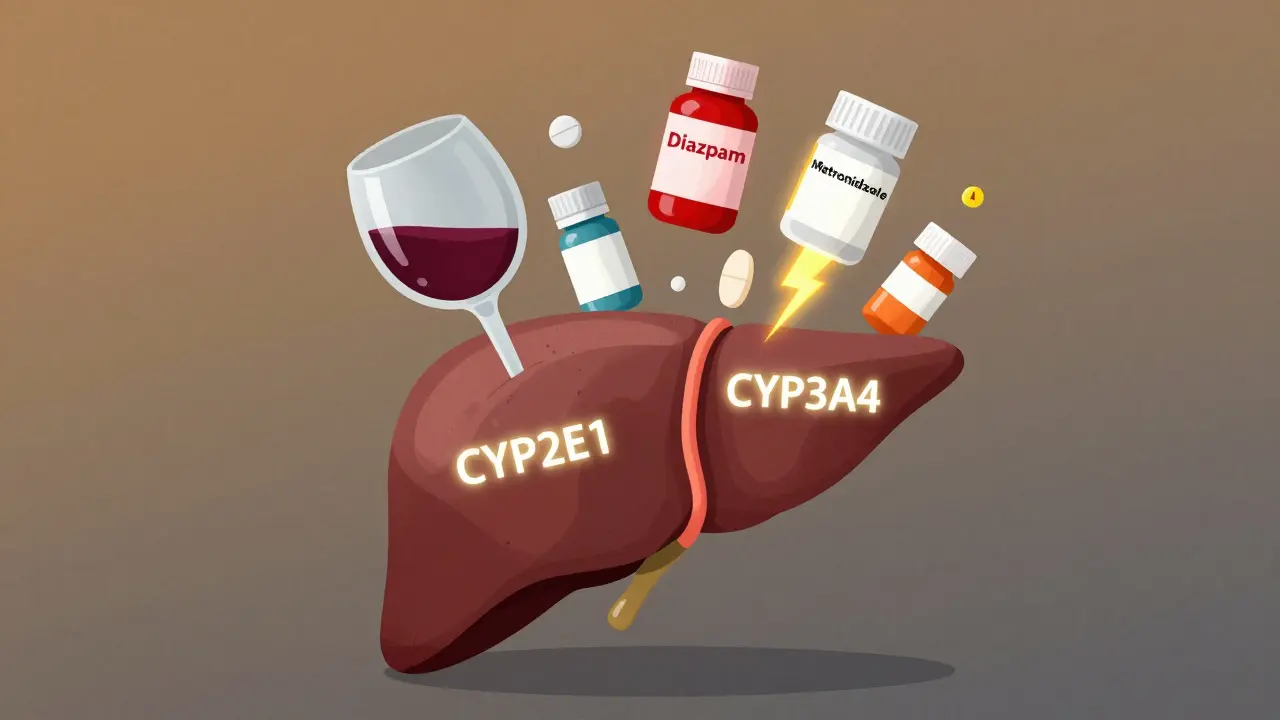
More than 40% of adults taking prescription or over-the-counter medications are at risk of dangerous reactions when they drink alcohol. These aren’t just mild side effects-they can lead to hospitalization, liver failure, or even death. Yet most people don’t realize how serious this risk is until it’s too late.
Why Alcohol and Medications Don’t Mix
Alcohol doesn’t just make you sleepy or dizzy. When it enters your body, it competes with your medications for the same liver enzymes that break them down. This can cause one of two things: either your medication builds up to toxic levels in your blood, or it gets broken down too fast and stops working. The liver uses enzymes like CYP2E1, CYP3A4, and CYP1A2 to process both alcohol and most medications. If you drink while on meds, these enzymes get overwhelmed. Acute drinking-like having a drink or two with dinner-can slow down how fast your body clears the drug. That means higher doses stay in your system longer. Chronic drinking-having alcohol most days-does the opposite. It tricks your liver into making more enzymes, which can make your meds less effective over time.High-Risk Medication Classes
Some medications are far more dangerous when mixed with alcohol than others. Here are the biggest offenders:- Benzodiazepines (like diazepam, alprazolam): These are sedatives used for anxiety and sleep. Alcohol boosts their effect by up to 400%, increasing the risk of slowed breathing, unconsciousness, or fatal overdose. One study found that combining these with alcohol triples the chance of a car crash.
- Opioids (like oxycodone, morphine): Both alcohol and opioids depress your central nervous system. Together, they can shut down your breathing. The CDC reports this combo increases overdose risk by eight times.
- Antibiotics (especially metronidazole and tinidazole): These can trigger a disulfiram-like reaction-flushing, rapid heartbeat, vomiting, and severe nausea-even after just one drink. About 92% of people who mix metronidazole with alcohol experience this reaction.
- Antidepressants (like fluoxetine, sertraline): Alcohol can make depression worse and increase drowsiness. Studies show SSRIs can extend the time you feel drunk by over three hours.
- Antihistamines (like diphenhydramine): Found in sleep aids and allergy pills, these already cause drowsiness. Alcohol multiplies that effect by 300%, making you dangerously uncoordinated.
- Acetaminophen (Tylenol): Even moderate drinking (three or more drinks a day) can cause severe liver damage when combined with regular acetaminophen use. One study found 18% of users developed elevated liver enzymes after just a few weeks of mixing the two.
- NSAIDs (like ibuprofen, naproxen): These already irritate your stomach lining. Alcohol makes bleeding in the stomach or intestines 300-500% more likely.
What Counts as a "Standard Drink"?
Many people think "one drink" means a glass of wine or a bottle of beer. But what matters is the amount of pure alcohol. Here’s what counts as one standard drink:- 12 ounces of regular beer (5% alcohol)
- 5 ounces of wine (12% alcohol)
- 1.5 ounces of distilled spirits (40% alcohol, like vodka or whiskey)
Who’s at Highest Risk?
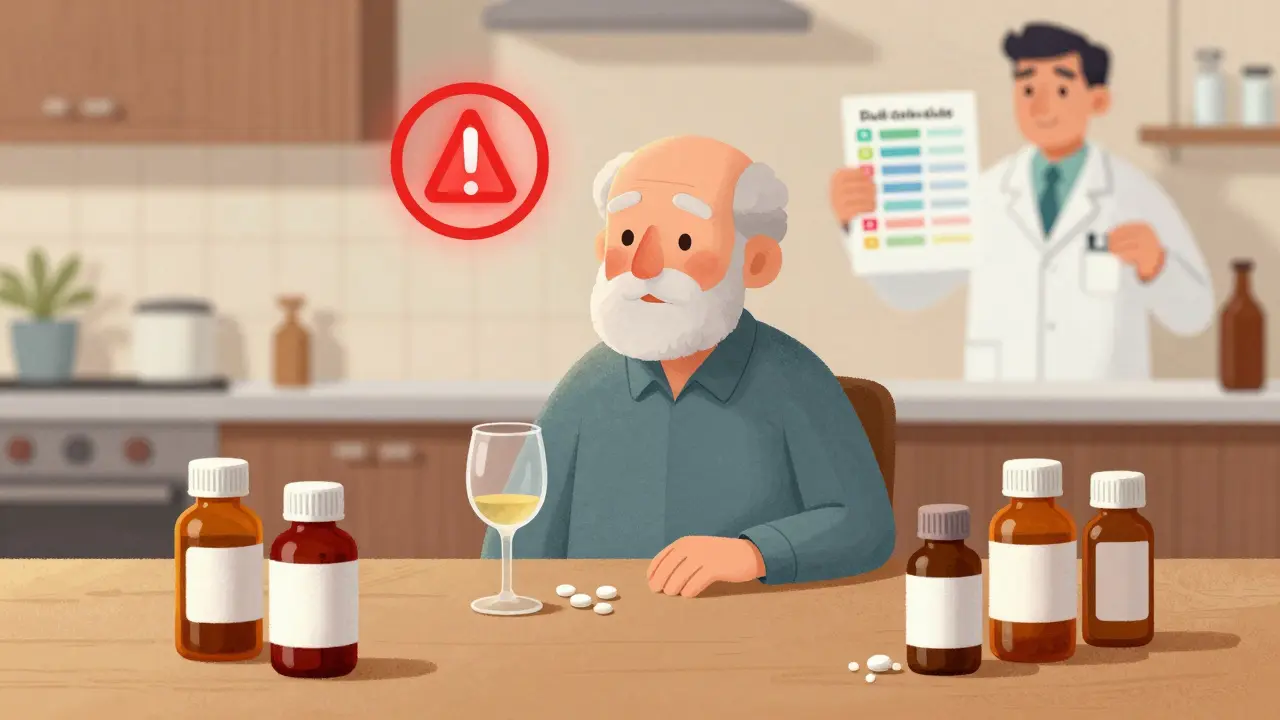
Older adults are especially vulnerable. After age 65, liver blood flow drops by about 35%. That means alcohol and meds stay in the body longer. The American Geriatrics Society lists 17 medications with high-risk alcohol interactions specifically for seniors. People taking five or more medications are also at greater risk. Nearly 70% of adults over 65 take multiple prescriptions. Add alcohol to the mix, and the chance of a dangerous interaction skyrockets. Even younger adults aren’t safe. A 2021 study found 5.7% of U.S. adults regularly mix alcohol with high-risk medications-with the highest rates in people aged 40 to 59.What Patients Are Reporting
Real stories show how common-and dangerous-this problem is:- One Reddit user took one beer with metronidazole and ended up in the ER with a heart rate of 180 beats per minute.
- A woman on hydroxyzine (an allergy and anxiety med) was warned by her pharmacist not to drink wine. She skipped it at her sister’s wedding-and avoided a near-fatal episode of extreme drowsiness.
- On Drugs.com, over 78,000 users have reported bad reactions. The top three meds involved? Alprazolam, amitriptyline, and warfarin.
What Works: Better Warnings and Tools
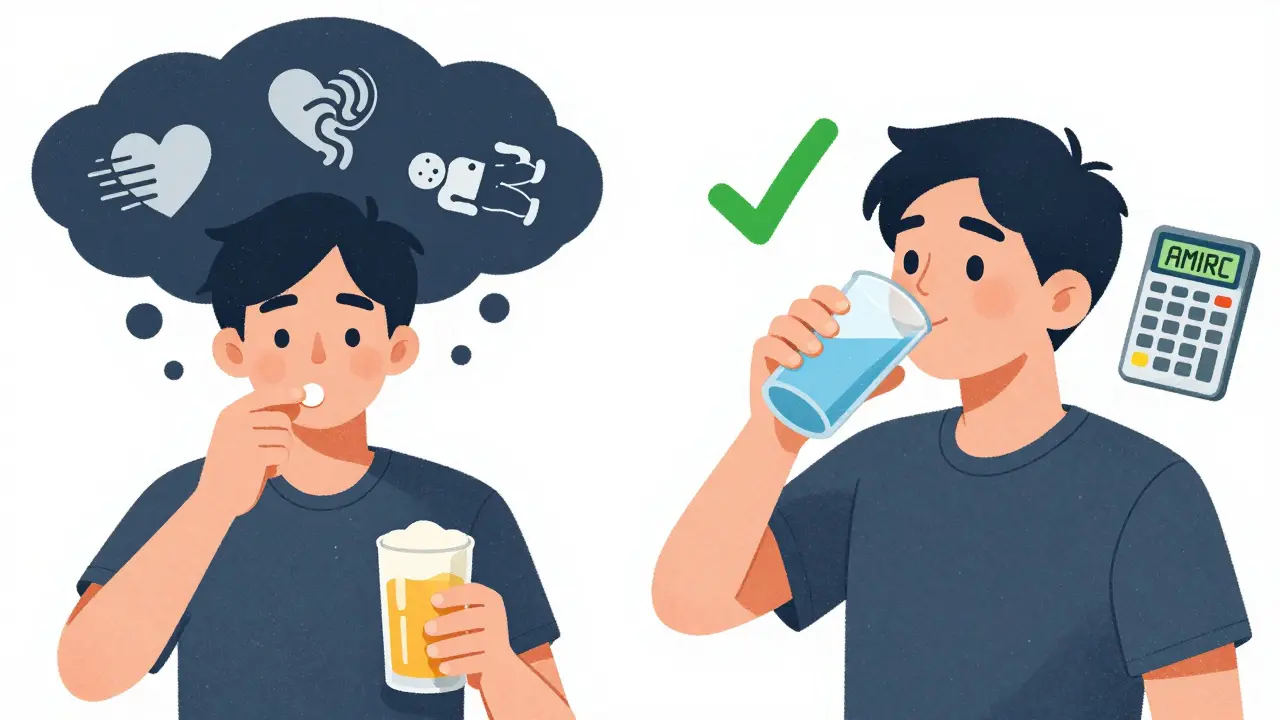
Some solutions are already making a difference:- Pharmacists who give personalized alcohol interaction counseling saw 89% of patients change their drinking habits.
- New FDA rules, effective January 2024, require warning labels on high-risk medications that specifically mention alcohol.
- Visual tools like color-coded charts improved patient understanding from 48% to 82% in testing.
- Telehealth platforms now routinely screen patients for alcohol use before prescribing.
What You Can Do Right Now
You don’t need to wait for a warning label or a pharmacist’s advice. Here’s what to do:- Check every medication you take. Look at the label, the patient information sheet, or ask your pharmacist. If it doesn’t say anything about alcohol, ask anyway.
- Know your meds. If you’re on benzodiazepines, opioids, metronidazole, or any sedative, avoid alcohol completely.
- Wait 72 hours. For high-risk drugs like metronidazole, stop drinking at least three days before starting the medication.
- If you must drink, be cautious. For meds like SSRIs or NSAIDs, limit yourself to one drink, eat food first, and wait at least two hours after taking your pill.
- Track your symptoms. If you feel unusually drowsy, nauseous, dizzy, or your heart races after drinking, stop immediately and call your doctor.
The Bottom Line
Alcohol isn’t just another thing you consume-it’s a drug. And like any drug, it can interact with others in unpredictable, sometimes deadly ways. The problem isn’t that people are careless-it’s that they’re uninformed. Doctors don’t always bring it up. Labels don’t always warn you clearly. But you can protect yourself. Ask questions. Read the fine print. Talk to your pharmacist. And when in doubt-skip the drink. Your liver, your brain, and your life will thank you.Can I have one drink with my medication?
It depends on the medication. For some, like metronidazole or benzodiazepines, even one drink can cause a dangerous reaction. For others, like SSRIs or NSAIDs, one drink may be okay if you’re healthy and don’t drink often. But there’s no universal safe amount. Always check with your pharmacist or doctor before drinking with any medication.
How long should I wait after taking medication before drinking alcohol?
There’s no single answer. For short-acting drugs, waiting 2-3 hours after taking the pill reduces risk. But for long-acting ones like diazepam (which stays in your system for up to 100 hours), you need to avoid alcohol for days. If your medication has a known interaction, it’s safest to avoid alcohol entirely while taking it-and for at least 24-72 hours after your last dose.
Do over-the-counter meds have alcohol warnings too?
Yes. Many OTC products like sleep aids (diphenhydramine), pain relievers (acetaminophen, ibuprofen), and cold medicines contain ingredients that interact with alcohol. These are often overlooked because they’re sold without a prescription. Always read the Drug Facts label and look for warnings about alcohol, drowsiness, or liver damage.
Is it safe to drink alcohol while taking antibiotics?
Most antibiotics don’t interact badly with alcohol-but a few do. Metronidazole, tinidazole, and linezolid can cause severe reactions like vomiting, flushing, and rapid heartbeat. Others, like azithromycin, have minimal interaction. Never assume all antibiotics are safe. Always ask your pharmacist or check the specific drug’s warning label.
Why don’t doctors always warn patients about alcohol interactions?
Many doctors don’t ask about alcohol use during appointments. A 2022 survey found that 68% of patients never received a warning. Some assume patients will read the label. Others don’t know the full scope of interactions. It’s not always negligence-it’s a system gap. That’s why it’s up to you to ask: "Is it safe to drink alcohol with this medicine?"
Can alcohol make my medication less effective?
Yes. Chronic alcohol use can speed up how fast your liver breaks down certain medications, making them less effective. This is common with drugs like warfarin (a blood thinner), some antidepressants, and seizure medications. You might think your treatment isn’t working-but it could be because alcohol is interfering with how your body processes it.
What should I do if I accidentally mixed alcohol and medication?
If you feel dizzy, nauseous, have a racing heart, trouble breathing, or extreme drowsiness, seek medical help immediately. Call poison control at 1-800-222-1222 or go to the nearest ER. Don’t wait for symptoms to get worse. Even if you feel fine, it’s worth checking in-some reactions can be delayed.
George Bridges
Just had my pharmacist pull me aside last week because I mentioned I had a glass of wine with my amitriptyline. She looked at me like I’d just admitted to juggling chainsaws. Turned out I didn’t even know it was a risk. Now I just sip water at dinner. No regrets.
Wish more docs would actually ask about drinking habits instead of assuming we’re all teetotalers or alcoholics. The truth is usually somewhere in between.
Faith Wright
Oh wow, so now we’re treating alcohol like it’s some kind of poison? Next you’ll tell me breathing is dangerous if you’re on asthma meds. I mean, come on. One beer with ibuprofen? I’ve done it for years. My liver’s still functioning. Your fear-mongering is exhausting.
Also, who even reads labels anymore? I just take what the doctor says and go about my life. Not everyone needs a 10-page warning pamphlet to enjoy a glass of wine.
Rebekah Cobbson
I get where you’re coming from - but let’s not villainize alcohol or panic over every interaction. The real issue is lack of education. I’m a nurse, and I’ve seen people come in after mixing metronidazole with wine thinking it was just ‘bad luck.’
Here’s what helps: simple, visual reminders on pill bottles. A little red flag icon. A one-line warning in plain language. Not a 2000-word essay. People don’t need to be scared - they need to be informed, clearly and kindly.
And yes, your pharmacist is your best friend here. Don’t be shy. Ask them. They’re paid to care.
Audu ikhlas
USA always exaggerate. In Nigeria we drink whiskey with every medicine - even for high blood pressure. You people weak. Your liver is like baby skin. We have strong liver. No problem. Even doctor in Lagos say: ‘If you can drink, you can take medicine.’
Also why you worry about Tylenol? You think Africa have Tylenol? We use paracetamol. Same thing. No warning. No fear. Just drink. Life good. You need to chill. This post make me laugh. So many rules for one drink? Pathetic.
Sonal Guha
Metronidazole and alcohol is a hard no 92 percent reaction rate that’s not a suggestion that’s a fact. Benzodiazepines plus booze is a death combo CDC says 8x overdose risk. Acetaminophen and daily drinking? Liver enzymes up 18 percent in weeks. Stop pretending this is debatable. The data is clear. You’re not special. Your liver isn’t invincible. Your ‘one drink’ is statistically dangerous. End of story.
TiM Vince
I used to think ‘one drink’ was fine with my antidepressants. Then I passed out on the couch after a single glass of wine. Woke up with my dog licking my face and my wife freaking out. Scared the crap out of me.
Now I don’t drink at all while on meds. It’s not about being perfect - it’s about being safe. Your body’s already doing a lot. Let it focus on healing, not fighting alcohol.
And yeah, talk to your pharmacist. They’re the real heroes here. Not the doctors who rush through appointments. Not the ads that say ‘enjoy responsibly.’ Just ask. It’s worth it.
gary ysturiz
Just wanted to say - this is so important. I used to think alcohol was harmless unless you were drunk. Turns out, even one drink can mess with your meds in ways you can’t feel right away.
I started using the AMIRC tool after reading this. Gave me a score and told me to avoid wine with my blood pressure pill. I did. No more weird dizziness.
Small change. Big difference. You don’t need to quit everything - just be smart. Your future self will thank you.
Also - if you’re on antibiotics, don’t guess. Ask. Always ask.
Jessica Bnouzalim
OMG YES. I took a sip of wine with my Zoloft last month and felt like I was floating through a fog for 5 hours. Like, I couldn’t even walk straight. I thought I was having a panic attack - turns out it was the alcohol + SSRI combo. My pharmacist was like ‘DUH’ when I told her.
Now I keep a little note on my fridge: ‘NO WINE WITH PILLS.’ I even printed out the chart from the NIAAA site and taped it next to my medicine cabinet. It’s saved me twice already.
Also - if you’re 65+? Please be extra careful. Your body doesn’t process stuff like it used to. I’m not saying stop living - I’m saying live smarter.
George Bridges
Just saw Audu’s comment about Nigeria. I appreciate the cultural perspective - but please, don’t treat this like a toughness contest. Liver damage doesn’t care where you’re from. It just breaks.
And honestly? If you’re in a country where doctors don’t warn people, that’s even MORE reason to educate yourself. You don’t need a label to know something’s dangerous. You just need to care enough to look.
Thanks for sharing your experience - but let’s not romanticize risk. Safety isn’t weakness. It’s wisdom.