

Imagine taking a round of antibiotics to clear up a routine infection, only to end up with a far more aggressive problem in your gut. For many, this is the reality of C. difficile colitis is a bacterial infection that attacks the lining of the colon, often triggered by the disruption of healthy gut bacteria due to antibiotic use. While it can start as simple diarrhea, it can quickly spiral into life-threatening conditions like toxic megacolon or sepsis. The real tragedy is that the very medicine meant to heal you can be the catalyst for this "urgent threat" pathogen.
Quick Guide to C. diff and Recovery
- Primary Cause: Antibiotics wipe out "good" bacteria, letting C. diff take over.
- High-Risk Drugs: Broad-spectrum agents like piperacillin-tazobactam and clindamycin.
- The Danger Zone: Risk increases significantly after 14 days of antibiotic therapy.
- The "Gold Standard" for Recurrence: Fecal Microbiota Transplantation (FMT) offers a 90%+ cure rate for repeat infections.
How Antibiotics Trigger a Gut Crisis
Your colon is home to a complex ecosystem of bacteria that keep things in balance. When you take a broad-spectrum antibiotic, it doesn't just target the "bad" germs; it clears out the beneficial microbes that normally keep Clostridioides difficile in check. Once these guardians are gone, C. diff proliferates and releases toxins that damage the intestinal lining, leading to inflammation and severe colitis.
Not all antibiotics are created equal when it comes to this risk. Research indicates that certain drug classes are far more likely to trigger an outbreak. For instance, Beta-lactam/beta-lactamase inhibitor combinations (specifically piperacillin-tazobactam) have shown a hazard ratio of 2.18, meaning they more than double the risk compared to non-users. Other high-risk culprits include carbapenems and broad-spectrum cephalosporins.
The timing of your medication also matters. While the risk is present from day one, it tends to follow a nonlinear path. Evidence shows that after 14 days of treatment, the risk of developing C. diff spikes again. This is why doctors are pushing for "antibiotic stewardship"-the practice of using the narrowest spectrum drug for the shortest time possible.
Comparing Antibiotic Risk Levels
Depending on what you're prescribed, your risk profile changes. While no antibiotic is completely risk-free, some are significantly more aggressive in disrupting your gut flora.
| Antibiotic Class | Risk Level | Common Example | Impact on Microbiome |
|---|---|---|---|
| BLBLIs | Very High | Piperacillin-tazobactam | Severe disruption; high hazard ratio |
| Cephalosporins | High | Later-generation variants | Significant depletion of anaerobes |
| Clindamycin | High | Clindamycin phosphate | Classic trigger for pseudomembranous colitis |
| Quinolones | Moderate to High | Ciprofloxacin | Varies by strain and duration |
| Tetracyclines | Lower | Doxycycline | Less likely to cause severe dysbiosis |
The Cycle of Recurrence
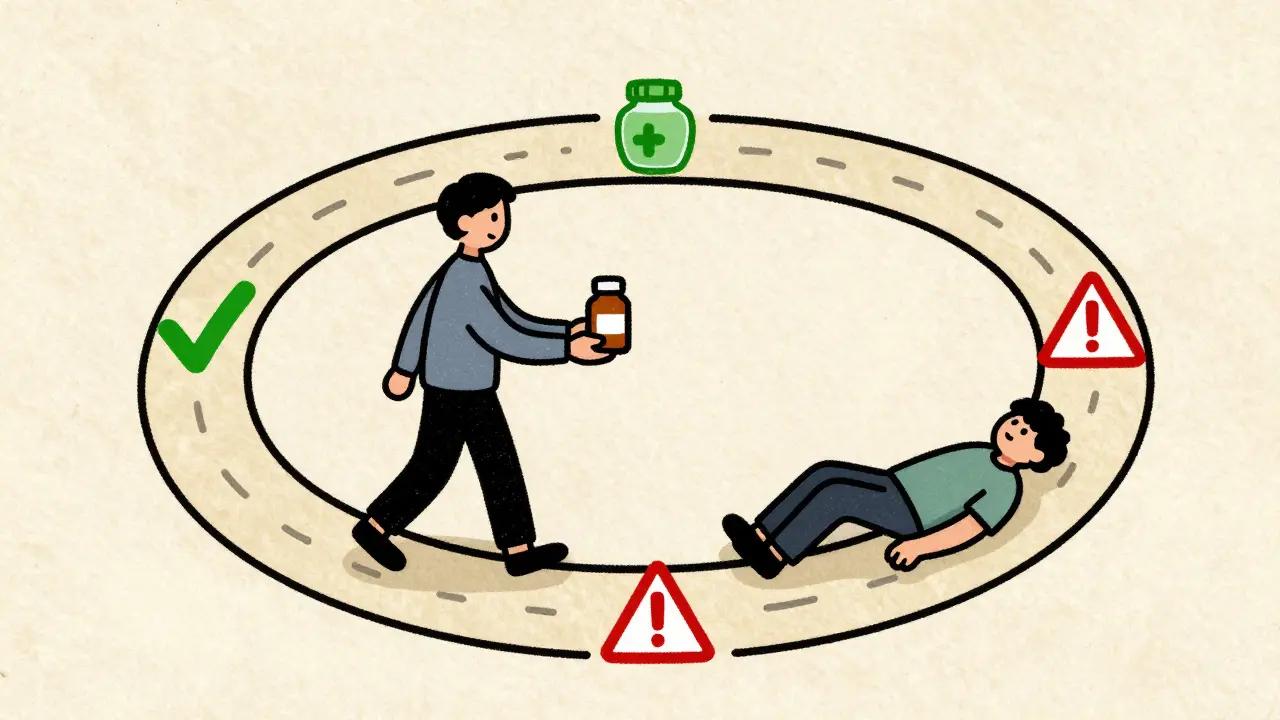
The most frustrating part of C. diff is the relapse. Standard treatments often involve Vancomycin, a powerful antibiotic. But here is the paradox: using an antibiotic to treat a condition caused by antibiotics can sometimes keep the gut in a state of instability. If you continue the original antibiotic that caused the infection, you're essentially fueling the fire, which prolongs the diarrhea and increases the chance of the infection coming back.
Some patients find success with Fidaxomicin, which often shows a better sustained response rate than vancomycin. In very severe cases, doctors might add bezlotoxumab-a monoclonal antibody that neutralizes the toxins produced by the bacteria-to prevent a second or third episode. However, for those trapped in a loop of three or more recurrences, traditional drugs often fail.
Fecal Microbiota Transplantation: The Microbiome Reset
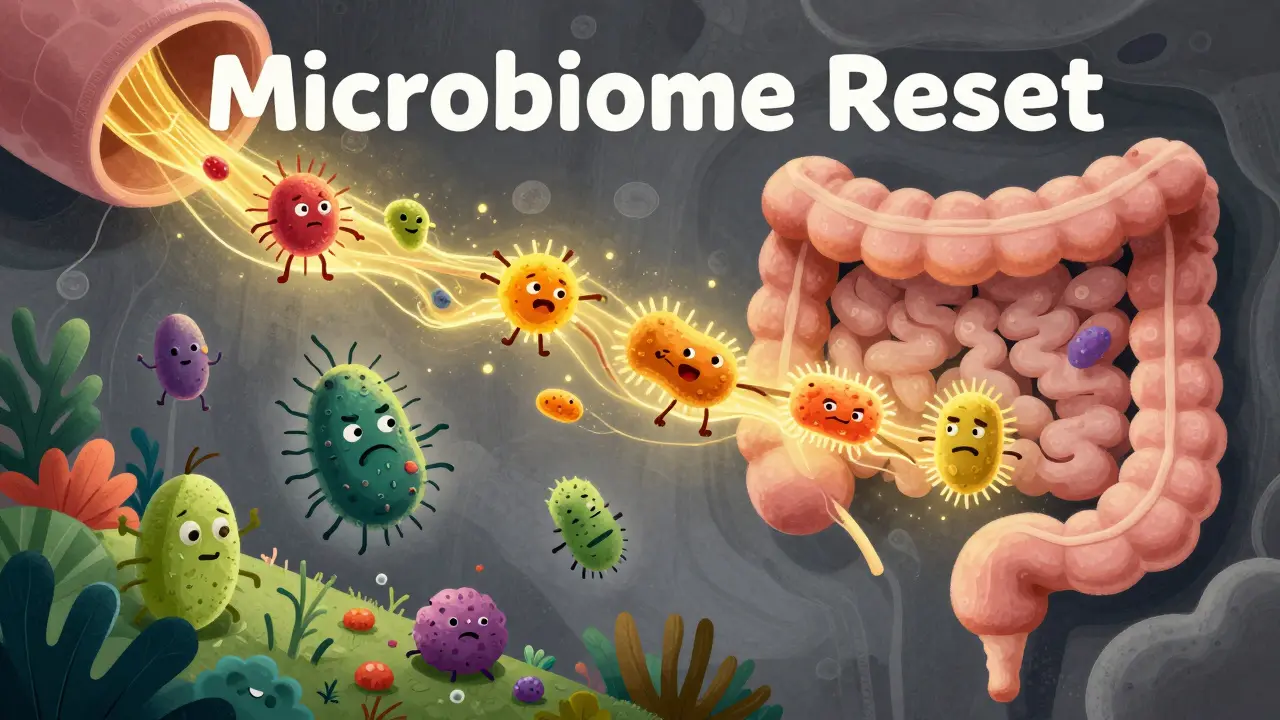
When drugs fail, the best solution is often to bring in a new army of bacteria. Fecal Microbiota Transplantation (FMT) is exactly what it sounds like: taking a stool sample from a healthy donor and introducing it into the colon of the patient. The goal isn't to "give you someone else's poop," but to transplant a diverse, healthy microbiome that can outcompete the C. diff bacteria and restore balance.
The results are staggering. While standard vancomycin might only cure about 31% of recurrent cases, a landmark study in the New England Journal of Medicine found that FMT had a 94% cure rate after a second infusion. It effectively "reboots" the gut's immune system. This procedure is typically done via colonoscopy, though enemas and oral capsules are becoming more common.
The field is moving away from "homemade" transplants toward standardized, FDA-approved products. New therapies like Rebyota and Vonjo provide a regulated way to deliver the necessary microbes without the unpredictability of individual donors. These products aim to remove the "yuck factor" while maintaining the high efficacy of traditional FMT.
Practical Steps for Prevention and Recovery
If you are currently taking antibiotics or recovering from C. diff, there are concrete steps you can take to protect your health. First, advocate for a "Start Smart-Then Focus" approach with your doctor. This means questioning whether a broad-spectrum antibiotic is truly necessary or if a narrower, lower-risk option (like a tetracycline, if appropriate) would work.
For those in recovery, the temptation to jump on probiotics is high. However, be cautious. While some people use kefir or specific probiotic strains to help, the Infectious Diseases Society of America warns that there is insufficient evidence to recommend them as a universal preventive measure. In immunocompromised patients, some probiotics can even increase the risk of blood infections.
The most effective prevention is strict hygiene. C. diff spores are hardy and don't die with alcohol-based hand sanitizers. If you're caring for someone with the infection, use soap and water to physically wash the spores off your skin. In a hospital setting, this is the difference between stopping a spread and fueling an outbreak.
Can I just stop taking antibiotics to cure C. diff?
While stopping the triggering antibiotic can help the gut recover in some mild cases, C. diff can quickly become fatal if not treated properly. You should never stop a prescribed medication without consulting your doctor, as the infection itself requires specific treatment like Vancomycin or Fidaxomicin.
Is a fecal transplant safe?
Generally, yes, but it carries risks. Because it involves biological material, there is a small chance of transmitting other pathogens. This is why FDA guidelines require rigorous donor screening. Standardized products like Rebyota are designed to minimize these risks compared to physician-compounded transplants.
How do I know if my diarrhea is C. diff or just a side effect?
Antibiotic-associated diarrhea is common, but C. diff colitis usually presents with more severe symptoms: intense abdominal pain, fever, and watery diarrhea that occurs multiple times a day. A stool test for C. diff toxins is the only way to confirm the diagnosis.
Does FMT cost a lot?
In the US, the procedure typically ranges from $1,500 to $3,000. While this seems high, it is significantly cheaper than the average $11,000 cost of a hospital admission for a severe recurrent episode.
Will probiotics prevent C. diff?
The evidence is mixed. Some small studies suggest certain probiotics might help, but major health organizations like the IDSA state there isn't enough high-quality evidence to recommend them as a primary preventive measure, especially for high-risk or immunocompromised patients.
What to Do Next
If you've had one episode of C. diff, the priority is avoiding a second. Discuss your antibiotic history with your provider and ask if a "narrow-spectrum" alternative is possible for future prescriptions. If you are facing a third recurrence, ask your gastroenterologist about the eligibility for FMT or the new FDA-approved microbiome products.
For those who are asymptomatic carriers-meaning you have the bacteria but no symptoms-the strategy changes. Since you are a reservoir for the bacteria, focus on extreme hygiene and discuss potential new biotherapies with your specialist, as traditional antibiotic stewardship is less effective for carriers than for non-carriers.
dallia alaba
The point about alcohol-based sanitizers not killing spores is so critical.
I always tell my patients that soap and water is the only way to physically remove C. diff from the skin because the spores have a protective shell that alcohol just can't penetrate. It's a common misconception that gel is enough, but in a clinical setting, that mistake can lead to a massive outbreak.
Olushola Adedoyin
This is exactly how they get you! First, they give you a pill to "fix" a cough, then they wipe out your insides so you're desperate for their expensive "poop pills." It's a giant loop designed to keep us sick and paying the big pharma lords! Absolute madness!
Tanya Rogers
The obsession with "standardized products" like Rebyota is merely a symptom of our culture's pathological need to sanitize the raw, biological reality of existence. One must wonder if the perceived "yuck factor" isn't actually a subconscious rebellion against the sterile hegemony of modern medicine, which seeks to commodify the very act of symbiotic restoration.
Don Drapper
The hazard ratio of 2.18 for piperacillin-tazobactam is a catastrophic failure of pharmaceutical oversight. It is utterly abhorrent that clinicians continue to deploy such a blunt instrument when the risk of inducing a life-threatening colitis is so mathematically evident. The incompetence is practically theatrical.
Shalika Jain
Please, as if we need another lecture on how poop cures poop. I've read three journals on this and the "gold standard" label is just marketing for people who can't handle the complexity of gut dysbiosis. It's so basic.
Aaron McGrath
Slam the brakes on the broad-spectrum stuff! We need high-octane antibiotic stewardship NOW. Stop the leakage! If you aren't optimizing the narrow-spectrum pipeline, you're just inviting a systemic crash. Get the ROI on your microbiome back in the green!
Lesley Wimbush
I've always found that a little bit of intuition goes further than these rigid tables. Of course, the science is cute, but those of us with a more refined sense of wellness know that the body just needs a gentle push back to its natural state, provided you have the right guidance, naturally.
Truman Media
It is truly a miracle of modern science that we can help each other heal in such a way. 🌟 We are all connected through these tiny organisms! 😊
aman motamedi
I appreciate the detailed explanation regarding the risk levels of various antibiotic classes.
Charlotte Boychuk
Honestly, the whole idea of a poop transplant sounds like a wild ride, but if it works, it works! Just imagine the chaos of the first person who suggested this to a doctor. Totally mental but super cool that it's actually a thing now.
Cynthia Didion
USA leads the way in FMT research. Period.
anne camba
The paradox of using a poison to cure a poison... it's almost poetic, isn't it... the way we struggle to find balance in a world of extremes... the gut is just a mirror of our own chaotic internal states... truly... a tragedy of biological proportions...