
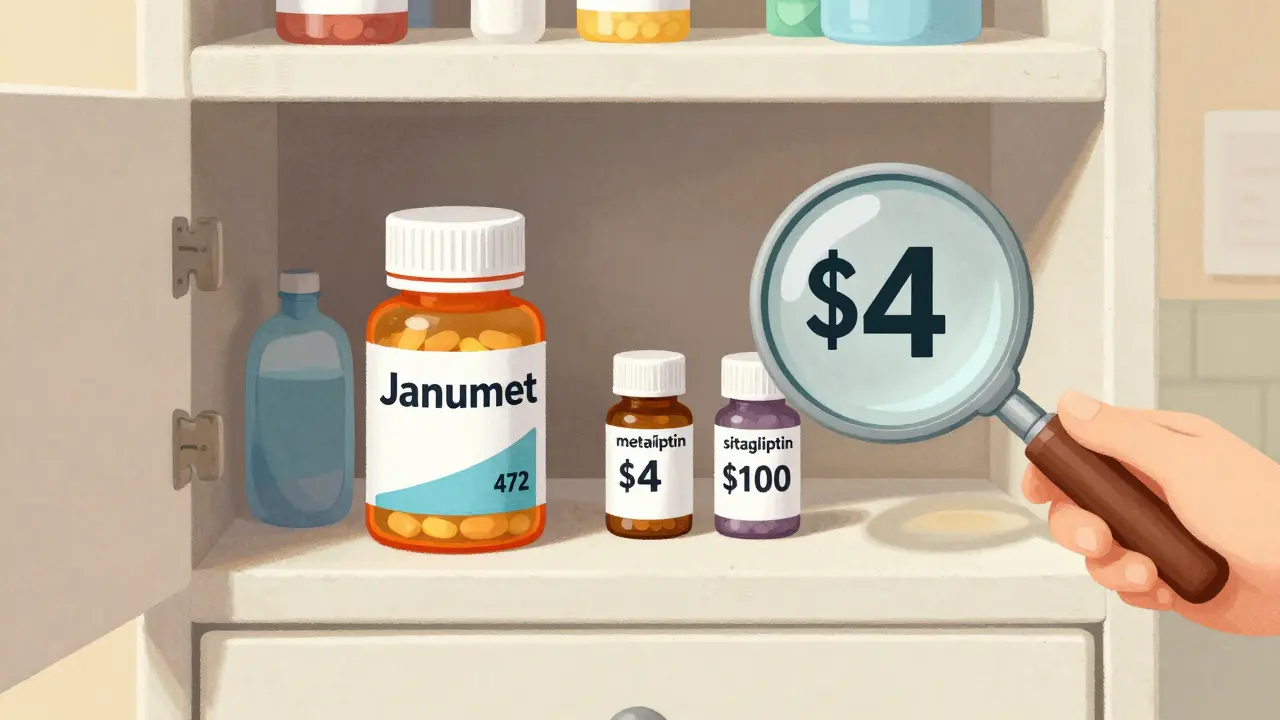
When you’re managing a chronic condition like high blood pressure or type 2 diabetes, your doctor might prescribe a combo generic - a single pill that contains two or more medications. It sounds convenient. Fewer pills to remember. Less clutter in your medicine cabinet. But here’s the question most people don’t ask: Is it actually cheaper?
The answer isn’t what you think. In many cases, buying the same two drugs as separate generic pills costs far less than the combo version - sometimes less than a tenth of the price.
Why Combo Pills Cost More Than They Should
Fixed-dose combinations (FDCs) were originally designed to help patients stick to their treatment plans. That’s a good goal. But over time, drugmakers started using them as a way to keep prices high, even when the individual ingredients were already available as cheap generics.
Take Janumet, a combo pill for diabetes that contains sitagliptin and metformin. In 2016, Medicare paid an average of $472 for a 30-day supply of this branded combo. Meanwhile, generic metformin? At Walmart’s $4 program, it cost $4 for the same amount. The sitagliptin component, even as a brand-name drug, wasn’t much more than $100. Add them together - you’re looking at maybe $104 total. Yet the combo pill cost nearly five times that.
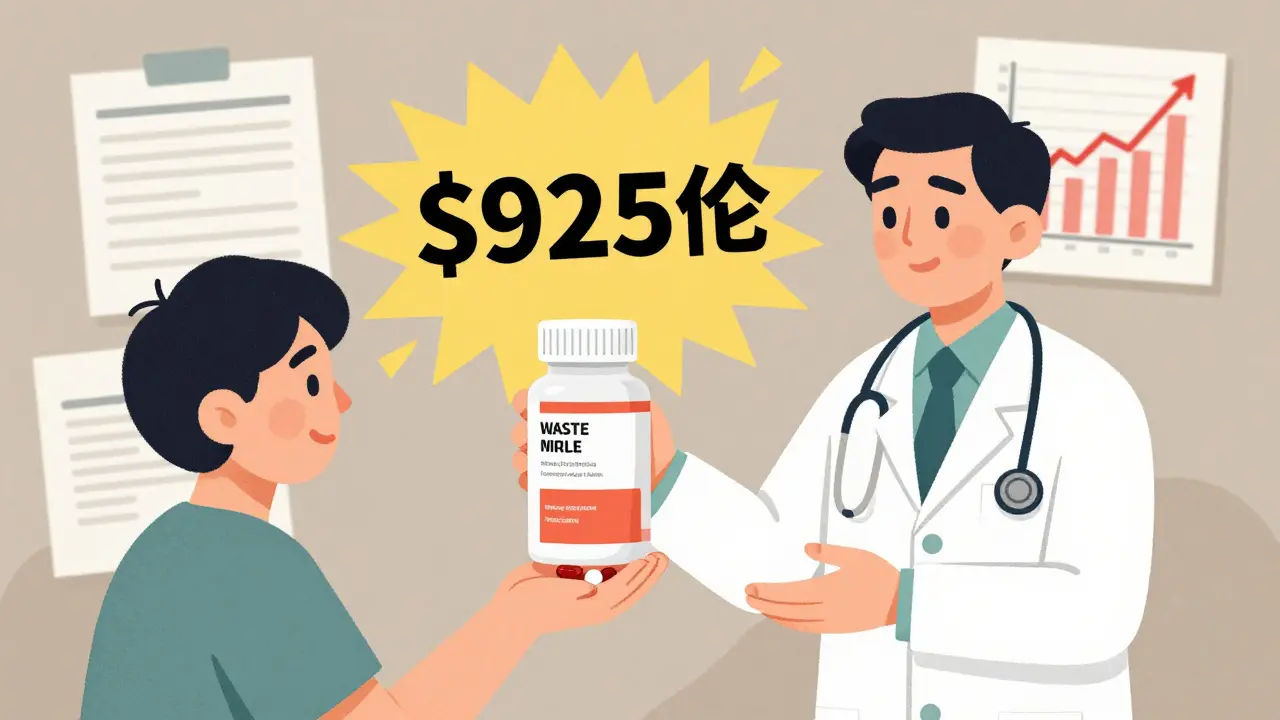
This isn’t an outlier. A 2018 study from Boston University found that Medicare spent $925 million more in one year on 29 branded combo drugs than it would have if patients had taken the same drugs as separate generics. That’s nearly a billion dollars wasted because the system allowed drugmakers to bundle cheap generics with newer, pricier ones and charge premium prices.
The Math Doesn’t Add Up
Here’s how the pricing trick works: When two drugs are in one pill, manufacturers don’t price them like 1 + 1 = 2. They price them like 1 + 1 = 1.6. That’s what IQVIA found - combo pills typically cost 60% of what two separate brand-name drugs would cost. Sounds fair, right? But here’s the catch: When one or both drugs are generic, the combo price doesn’t drop. It stays high.
For example, Kazano combines alogliptin and metformin. The branded combo cost $425 a month. Generic metformin? Under $10. Even if you paid full price for the alogliptin, you’d still save hundreds per month by buying them separately.
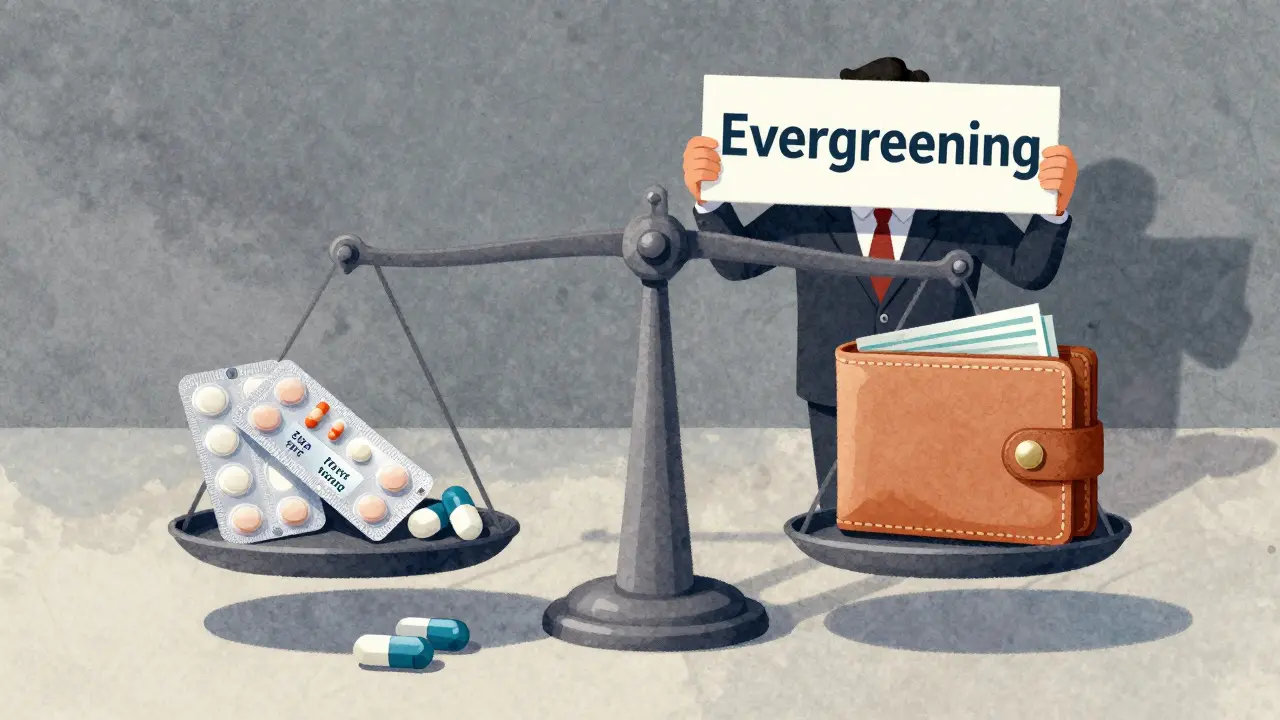
And it gets worse. Some combo pills contain one generic and one brand-new drug that’s still under patent. The manufacturer knows the generic part is cheap, so they jack up the price of the whole pill, banking on the fact that patients and even doctors assume the combo is just a “convenience.” That’s called “evergreening” - extending profits by re-packaging old drugs with new ones.
Who Pays the Difference?
You might think, “Well, insurance covers it.” But here’s the truth: Insurance doesn’t pay the full price. You do - through higher premiums, deductibles, and co-pays. And when Medicare pays more for these combos, it drives up costs for everyone.
Medicare Part D paid 22-33% more for brand-name drugs than the Department of Veterans Affairs did for the exact same medications. That gap gets even wider with combo pills. In 2021, combo drugs made up just 2.1% of all Part D prescriptions - but they accounted for 8.3% of total spending. That’s a massive imbalance.
Pharmacy benefit managers (PBMs) know this. That’s why 62% of Medicare Part D plans now require prior authorization for high-cost combos. They’re trying to block unnecessary spending. But many doctors still prescribe them because they’re unaware of the cost difference - or because the patient asks for the “one-pill solution.”
When Combos Actually Make Sense
Not all combo pills are bad. Sometimes, they’re the right choice.
Take HIV treatment. Studies show patients are 15-20% more likely to stick to their regimen when they take one pill instead of five. That’s huge. Missing doses can lead to drug resistance, hospital stays, and worse outcomes. In those cases, the higher cost is justified by better health.
Same with heart failure. Entresto (sacubitril/valsartan) is a combo that’s saved lives. Even though valsartan is available as a cheap generic, the combo works better than taking them separately - and studies back that up. In these cases, the combo isn’t a cost trap. It’s a clinical advantage.
The key difference? When the combo contains two brand-new drugs, or when the combination has been proven to work better than separate pills, the price premium might be fair. But when one or both components are off-patent generics? That’s not innovation. That’s exploitation.
What You Can Do
You don’t have to accept whatever your doctor prescribes. Here’s what to do next time you’re handed a combo pill:
- Ask: “Is there a generic version of each drug separately?”
- Ask: “How much would it cost if I bought them as two separate pills?”
- Check your pharmacy’s price list - Walmart, Costco, and CVS all list their generic prices online.
- If the combo is way more expensive, ask your doctor if switching to separate generics is safe and possible.
Most doctors will say yes - especially if you’re paying out of pocket. In fact, a University of Michigan Health System study found that switching from branded combos to separate generics saved patients an average of $1,200 per year. That’s enough to cover a month’s rent for many people.
And if your insurance denies coverage for the combo? That’s not a problem - it’s a clue. It means they already know it’s overpriced.
The Bigger Picture
This isn’t just about your wallet. It’s about how the system works. Drug companies know that most patients won’t question the price of a combo pill. They count on that. And with Medicare’s pricing rules, they’re right.
The Inflation Reduction Act of 2022 started to change that by letting Medicare negotiate drug prices. But it only applies to a small number of high-cost drugs - and combo pills are still mostly excluded.
Meanwhile, the FDA is pushing to approve more generic versions of individual components. That’s good news. More generics = more competition = lower prices. But until the system stops rewarding bundling over transparency, patients will keep paying too much.
The truth? You’re not being lazy for wanting to save money. You’re being smart.
Next time you get a combo prescription, don’t assume it’s the best deal. Do the math. Ask the questions. And don’t be afraid to ask for a cheaper option. Your body will thank you - and so will your bank account.
jaspreet sandhu
People in the US don’t get it. In India, we buy meds by the tablet, not by the pill pack. If metformin is 10 rupees a strip and sitagliptin is 50, why would anyone pay 2000 rupees for a combo? Doctors here know this. They tell you to split the blister pack. No one gets mad. It’s just common sense.
But in America, you get a pill and you take it. No questions. That’s not healthcare. That’s obedience training.
Alex Warden
Of course it’s a scam. Big Pharma’s been running this racket since the 90s. They take two cheap generics, slap them in one capsule, and call it ‘innovation.’ Then they charge you like you’re buying a Tesla. And Medicare? They’re the ones paying the bill. Taxpayers are getting robbed. And you think your ‘insurance’ is helping? Nah. It’s just the middleman taking a cut while you bleed out.
Stop being a sheep. Ask for the generics. Fight back. America deserves better than this.
LIZETH DE PACHECO
This is such an important post. I had no idea this was happening. My dad’s on a combo pill for blood pressure and he’s been paying $180/month. I looked up the generics-$12 total. I showed him. He cried. Not because he’s upset, but because he felt stupid for never asking.
Doctors don’t always know the prices. We have to be our own advocates. Thank you for giving us the tools to do that.
Lee M
The system is rigged. Not just by pharma, but by the entire medical-industrial complex. Doctors are trained to prescribe, not to calculate. Pharmacies are incentivized to push branded combos because the rebates are higher. PBMs? They’re the real villains-they pocket the difference while you’re left with a $50 co-pay.
This isn’t about individual choice. It’s about structural corruption. And until we dismantle the profit-driven model of healthcare, this will keep happening. The combo pill is just the symptom. The disease is capitalism.
Kristen Russell
Ask your doctor. Always. It’s that simple. You’d be surprised how often they say yes.
And if they say no? Ask why. Then ask again.
Bryan Anderson
Thank you for laying this out so clearly. I’ve seen this in my own practice-patients assume the combo is more effective, or that it’s somehow ‘better’ for adherence. But the data doesn’t support that for most cases. When both components are generic, the clinical equivalence is nearly 100%.
The real barrier isn’t medical-it’s informational. Patients aren’t given the tools to compare. And many physicians, even well-intentioned ones, are unaware of the pricing disparity. This post bridges that gap. I’ll be sharing it with my team.
Matthew Hekmatniaz
I’m from Iran, and we’ve had this problem for decades. Back in the 2000s, we had a combo pill for TB that cost 10x more than the separate drugs. People started breaking the pills apart. The government cracked down. Said it was ‘unsafe.’ But everyone knew it was about profit.
Now I live in the U.S. and I see the same thing. It’s not cultural. It’s corporate. And it’s global. The system doesn’t care where you live-it only cares about the bottom line.
Liam George
Did you know the FDA approves these combos without requiring comparative cost-effectiveness studies? That’s not oversight. That’s collusion.
Big Pharma owns the FDA. The FDA owns Congress. Congress owns Medicare. And Medicare owns your premiums. It’s a closed loop. The combo pill is just the tip of the iceberg. They’re also putting tracking chips in the pills. Don’t believe me? Look up the 2021 Senate hearings on ingestible sensors. They’re already doing it. They want to know if you’re taking your meds… so they can charge you more if you don’t.
Wake up. This isn’t healthcare. It’s surveillance capitalism with a stethoscope.
sharad vyas
My grandfather used to say: ‘If it looks too good to be true, it’s a trap.’
One pill for two diseases? Sounds like magic. But magic costs money. And money flows uphill.
People in India know this. We don’t trust the shiny box. We check the powder inside. That’s wisdom, not ignorance.
Dusty Weeks
so like… if i buy the two pills separate… do i still get the ‘combo discount’ from my insurance? 😅 i think i just lost 2000 dollars last year 🤦♂️💸
Sally Denham-Vaughan
Just had this exact conversation with my mom yesterday. She was on a combo for cholesterol and blood pressure. We checked the prices. Switched. Saved $1,100 a year.
She said: ‘I feel like a genius.’
You’re not just saving money. You’re reclaiming your power.