
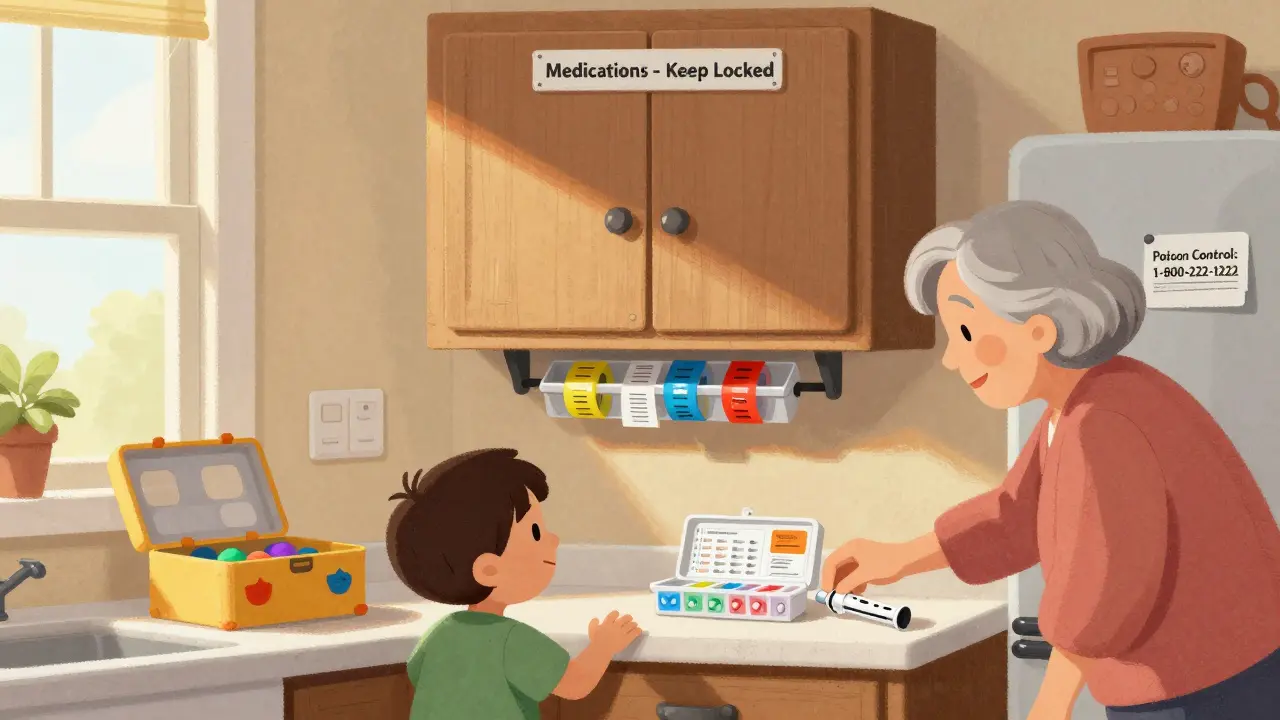
Every year, 60,000 children end up in emergency rooms because they got into medicine they weren’t supposed to. Most of these incidents happen in the home - not in a hospital, not at school, but right where your family spends most of its time. And it’s not just kids. Older adults taking five or more medications daily are at high risk for dangerous interactions, missed doses, or accidental overdoses. The good news? You can prevent most of these mistakes with a simple, consistent routine. You don’t need fancy gadgets or a medical degree. You just need a clear plan, a few smart habits, and the willingness to make safety a daily priority.
Store Medications Up and Away - and Locked
The first rule of safe medication storage is simple: keep them out of reach and out of sight. But “out of reach” doesn’t mean putting them on the top shelf of the bathroom cabinet. Kids climb. Grandparents leave purses on the couch. Caregivers forget. According to Children’s Hospital Los Angeles, 25% of medication exposures happen because medicines were left in bags, purses, or on countertops. That’s why the CDC and pediatric safety experts agree: lock it up. Use a locked cabinet - preferably one with a childproof latch - in a common area like the kitchen or bedroom. Avoid bathrooms. Humidity from showers and sinks can weaken pills and liquids, making them less effective. And never store medications in a drawer next to toys or snacks. Kids associate drawers with things they can open. They don’t care if it says “Prescription Only.” If someone in your home takes opioids, make sure you have naloxone (Narcan) on hand. It’s not just for emergencies - it’s insurance. Opioid overdoses in homes can happen fast: small pupils, slow breathing, extreme drowsiness. Having naloxone nearby could save a life before EMS arrives.Use Original Containers and Child-Resistant Caps
Never transfer pills into unmarked containers - not even for convenience. A blue capsule might be your blood pressure pill today, but tomorrow it could be your grandchild’s favorite candy. The Poison Prevention Packaging Act of 1970 requires child-resistant caps on most prescription and over-the-counter meds for a reason. But here’s the catch: only 55% of parents use them correctly. That means they open the cap, take the pills, and leave it loose. Always snap the cap back down after each use. If the cap feels too hard to close, ask your pharmacist for a different type. Some caps are easier for adults to open but still tough for kids. Also, keep the original label with the name, dosage, and instructions. That’s your safety net. If a child swallows something, EMS or Poison Control needs to know exactly what it is.Build a Master Medication List
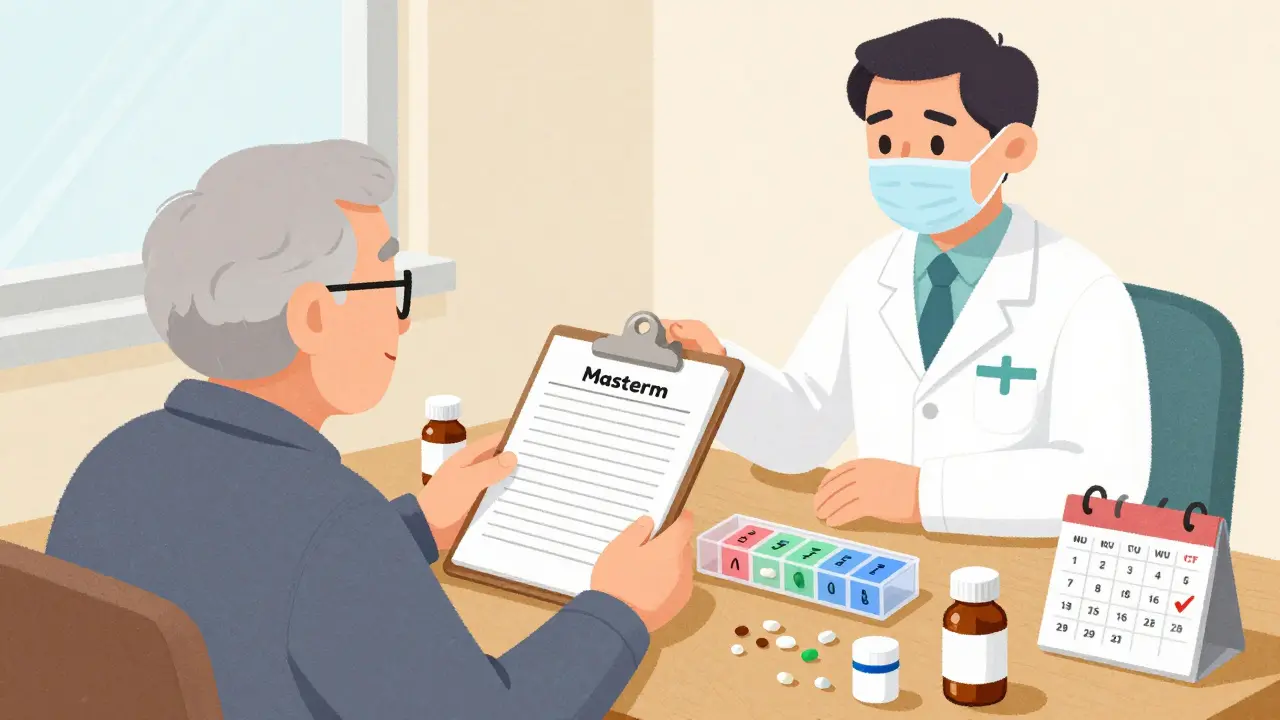
Start with a piece of paper - or a digital note - and write down every single thing everyone in your household takes. That includes:- Prescription drugs
- Over-the-counter meds (like ibuprofen, antihistamines, or sleep aids)
- Vitamins and supplements
- Herbal remedies (like echinacea or melatonin)
- Topical creams and patches
Follow the Five Rights of Medication Administration
Before you give any medication - even a child’s Tylenol - ask yourself these five questions:- Right person? Is this pill meant for the person I’m giving it to?
- Right medication? Does the name on the bottle match the list?
- Right dose? Are you using the right tool? Never use a kitchen spoon. Use the oral syringe or dosing cup that came with the medicine.
- Right route? Is this meant to be swallowed, applied to the skin, or inhaled?
- Right time? Is it the correct time of day? Some meds need to be taken with food, others on an empty stomach.
Use a Pill Organizer - But Not as a Storage Box
A 7-day pill organizer is one of the most effective tools for families managing multiple meds. It helps prevent double-dosing and missed doses. But here’s the mistake most people make: they use it as a long-term storage container. That’s dangerous. Pill organizers are for daily use - not for storing weeks of medication. Humidity, heat, and light can degrade pills over time. Keep your main supply in the locked cabinet. Only fill the organizer for one week at a time. If you’re using a digital app like Medisafe, that’s great - but don’t rely on it if someone in the house doesn’t use smartphones. 41% of caregivers use apps, but 27% give up because it’s too complicated. Pro tip: Use colored painter’s tape on different pill organizers. Red for blood pressure, green for thyroid, blue for pain relief. Visual cues help when you’re rushing in the morning or tired after work.Dispose of Unused or Expired Medications Properly
Don’t flush pills down the toilet. Don’t throw them in the trash without mixing them with something unpleasant. The safest way? Use a drug take-back program. Many pharmacies, hospitals, and police stations have drop boxes. If that’s not available, mix old pills with coffee grounds or cat litter, seal them in a plastic bag, and throw them in the trash. Remove the labels or scratch them out so no one can read what they were. Expired medications lose potency. That means they might not work when you need them. And if someone finds them - especially teens or older adults - they might take them thinking they’re still good. A 2023 CDC report found that 60% of households don’t know how to dispose of meds safely. Don’t be one of them.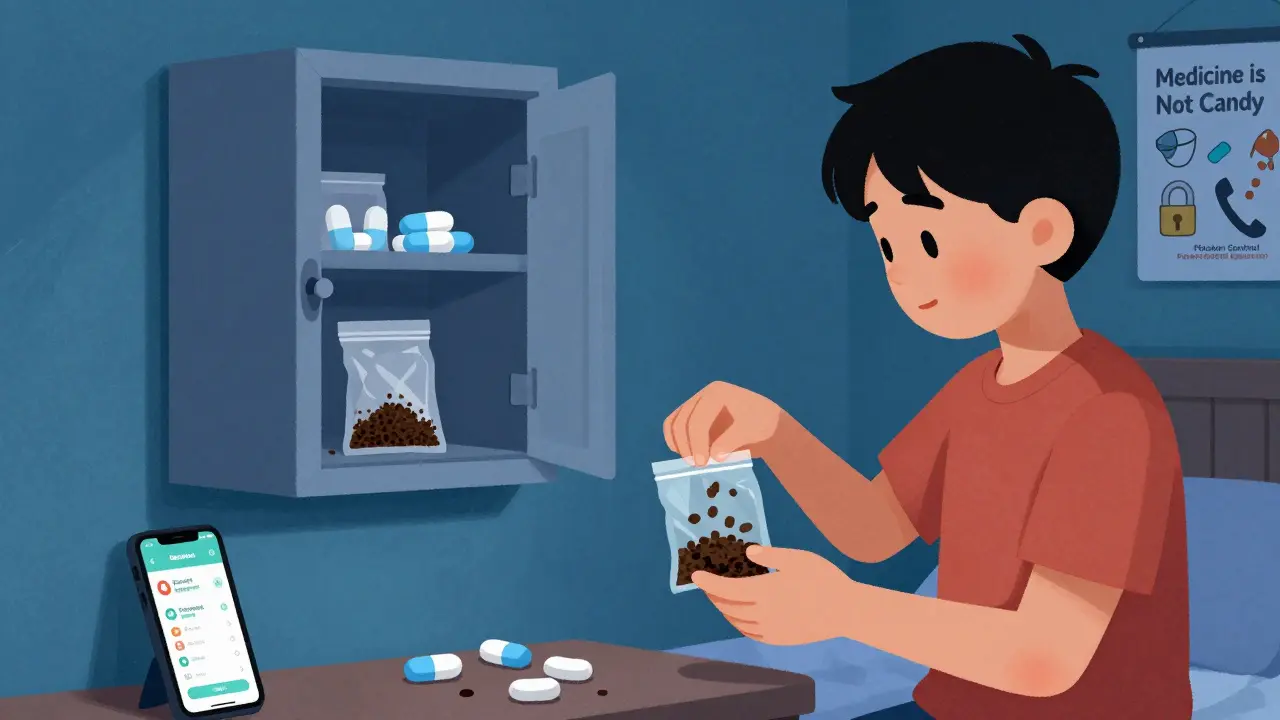
Review Medications Regularly - Especially for Seniors
As people age, their bodies process drugs differently. Some medications that were fine at 55 become risky at 75. The American Geriatrics Society’s 2023 Beers Criteria lists drugs that increase fall risk, confusion, or heart problems in older adults. Anticholinergics - often found in allergy meds, sleep aids, and bladder pills - can raise fall risk by 50%. Schedule a medication review with your pharmacist or doctor at least once a year. Ask: “Is this still necessary?” “Are there safer alternatives?” “Could any of these be interacting?” The American Medical Association says 15% of hospital admissions for seniors are caused by inappropriate meds. A simple review can prevent a trip to the ER.Prepare for Mistakes - And Emergencies
Even the best routines have slip-ups. You forget a dose. You give the wrong one. You’re distracted. What then? If you miss a dose, don’t double up unless your doctor says so. HealthyChildren.org advises: “Give the missed dose as soon as you remember, then go back to your normal schedule.” Never give two doses at once unless instructed. Know the Poison Control number: 1-800-222-1222. Save it in your phone. Write it on the fridge. Tell your babysitter. In 2023, the CDC found that 60% of households didn’t know this number. That’s unacceptable. Poison Control is free, 24/7, and staffed by nurses and pharmacists who can tell you exactly what to do - whether it’s a toddler with a handful of gummy vitamins or an elderly parent who took too much blood pressure medicine.Make It a Family Habit
Medication safety isn’t a one-time task. It’s a rhythm. Set a weekly reminder to check the pill organizer. Do a monthly review of the master list. Keep the cabinet locked. Talk to your kids about why medicine isn’t candy. Teach your teen to never share pills - even if a friend says it’s “just Advil.” The biggest success stories come from families who make this routine part of their daily life. One Reddit user shared that after color-coding her parents’ meds with tape and installing a lock on the cabinet, she went six months without a single mistake. Another family started using a digital reminder app and added a “buddy check” - one person fills the organizer, another verifies it. Zero errors since. It’s not about perfection. It’s about consistency. You don’t need to be a nurse. You just need to care enough to make the small changes that keep your family safe.What’s the most common cause of medication errors in homes?
The most common cause is confusion over timing and dosage - especially when multiple people are taking several medications. Studies show 35% of errors involve giving the wrong dose or giving a dose at the wrong time. Another 28% are duplicate doses, often because the person forgot they already took it. Poor storage and lack of a written list make these mistakes more likely.
Can I use a kitchen spoon to measure liquid medicine?
No. Kitchen spoons vary in size and are not accurate. A teaspoon at home might hold 3-7 milliliters, but medicine doses are measured precisely. Always use the oral syringe, dropper, or dosing cup that came with the medicine. Studies show using syringes instead of cups reduces dosing errors by 47%.
Should I keep all medications in the same place?
Yes - but only if it’s a locked, dry, cool place like a kitchen cabinet or bedroom drawer. Never store meds in the bathroom, car, or purse. Humidity, heat, and movement can damage pills. Keeping everything in one secure spot also reduces the chance of someone accidentally grabbing the wrong bottle.
Is it safe to give my child someone else’s prescription?
Never. Even if the symptoms seem similar, medications are prescribed based on weight, age, medical history, and allergies. Giving someone else’s prescription can cause serious harm. For example, a child’s cough medicine might contain ingredients that are dangerous for a different child’s condition. Always consult a doctor before giving any medication to a child.
How often should I update my family’s medication list?
Update it every time there’s a change - a new prescription, stopping a drug, adding a supplement. At a minimum, review it every six months. Bring the updated list to every doctor or pharmacy visit. This helps prevent dangerous interactions and ensures everyone is on the same page.
What should I do if my child swallows medicine?
Don’t wait for symptoms. Call Poison Control immediately at 1-800-222-1222. Have the medicine bottle handy so you can tell them the name and amount. Do not induce vomiting unless instructed. Keep the child calm and monitor breathing. Even if they seem fine, some medicines cause delayed reactions. It’s better to be safe than sorry.
Vu L
Yeah right, lock it up. My cousin’s kid got into his grandpa’s fentanyl patch because it was in a ‘locked’ cabinet that a 4-year-old could open with a butter knife. Security theater. Real safety is teaching kids medicine isn’t candy, not hiding it like it’s nuclear codes.
Mimi Bos
i just put all my meds in a shoebox under my bed 😅 my grandma says its fine cuz shes done it for 40 yrs and shes still here. also why do i need a list? i know what i take. its like 3 things. 🤷♀️
Payton Daily
You know what this is really about? Control. Society’s afraid of autonomy. We’re told to lock up our medicine like it’s a weapon, to write lists like we’re soldiers in a war against our own bodies. But what if the real danger isn’t the pills? What if it’s the fear that makes us treat our own families like potential enemies? I’ve seen people die from overdoses… and I’ve seen people die from never feeling trusted to manage their own lives. Maybe the real safety isn’t in the cabinet-it’s in the love that lets someone choose.
Debra Cagwin
This is such an important post-and I love how practical it is. One thing I’d add: if you’re helping an elderly parent, don’t just make the list-read it aloud with them once a week. Hearing it spoken helps memory, and it turns a chore into a moment of connection. Also, if you’re using a pill organizer, try putting a sticky note on it that says ‘I’m safe because I check twice.’ Small things make big differences.
Ryan Touhill
Let’s be honest: the CDC’s recommendations are the bare minimum of what a competent adult should do. If you’re relying on a ‘locked cabinet’ to prevent your toddler from accessing opioids, you’ve already failed as a parent. The real issue is systemic negligence-poor education, lazy pharmacies, and a culture that treats medication like a free-for-all. You don’t need a ‘master list.’ You need accountability. And if your child can open a childproof cap, maybe it’s time to reconsider your parenting strategy.
Teresa Marzo Lostalé
My grandma used to keep her pills in a mason jar labeled ‘vitamins’… and she’d take them with her tea. One day, she gave my cousin’s 7-year-old a ‘vitamin’ and he spent 3 hours in the ER. 😔 Now we all use color-coded boxes. I put a little sun sticker on the morning ones. 🌞 It’s not fancy. But it works. And we laugh about it now. Which is better than crying later.
Gran Badshah
why you keep medicine in kitchen? in india we keep in bedroom shelf. no humidity. and no kid go to bedroom alone. also we use old medicine bottle with label. no organizer. simple. no app. no list. just memory. and god. god protect us.
Ellen-Cathryn Nash
It’s not just about locking up pills-it’s about the moral decay of treating your own home like a chemical warehouse. You wouldn’t leave poison in the pantry, so why leave a lethal cocktail on the counter? This isn’t ‘safety.’ It’s basic human responsibility. And if you think your child is too ‘good’ to touch medicine… well, I’ve seen too many obituaries to believe in innocence anymore.
Samantha Hobbs
OMG I just realized my 12-year-old has been stealing my melatonin and calling it ‘sleep candy’ 😳 I’m locking everything up tonight. Also, why didn’t anyone tell me about the 1-800 number? I’m writing it on my mirror right now.
Nicole Beasley
Just started using Medisafe! 📱✨ It sends me alerts and even reminds my mom when she forgets. Also, I made a little chart with emoji for each med: 💊 = blood pressure, 😴 = sleep, 🌿 = turmeric. My grandma thinks it’s cute. And now she actually takes them. Win 🎉
sonam gupta
in america you worry too much about pills. in india we have real problems like clean water and electricity. why are you so scared of your own home
Julius Hader
My wife and I do the buddy check every Sunday. We don’t use apps. We use a whiteboard. We write the meds, check them off, and then hug. It’s not about safety-it’s about showing up for each other. That’s the real medicine.
Kelsey Youmans
While the recommendations provided are indeed sound and evidence-based, one must not overlook the sociocultural context in which these practices are implemented. The assumption of universal access to secure storage, pharmaceutical literacy, and digital infrastructure is inherently exclusionary. For low-income households, single-parent families, and elderly individuals living alone, these protocols may be aspirational rather than actionable. A more equitable approach would integrate community-based support systems, such as visiting nurse programs and subsidized lockboxes, rather than placing the entire burden on the individual.
Payton Daily
You know what’s worse than a kid getting into medicine? A kid who’s never been taught that medicine is powerful. That’s the real tragedy. We lock things up because we’re too afraid to talk. But if we taught children that pills aren’t candy-but tools, like fire or knives-we’d raise a generation that respects power, not fears it. Locks are for the lazy. Education is for the brave.