
Medication Weight Change Calculator
Estimate potential weight changes based on your prescribed medication. This tool uses clinically documented data from peer-reviewed studies.
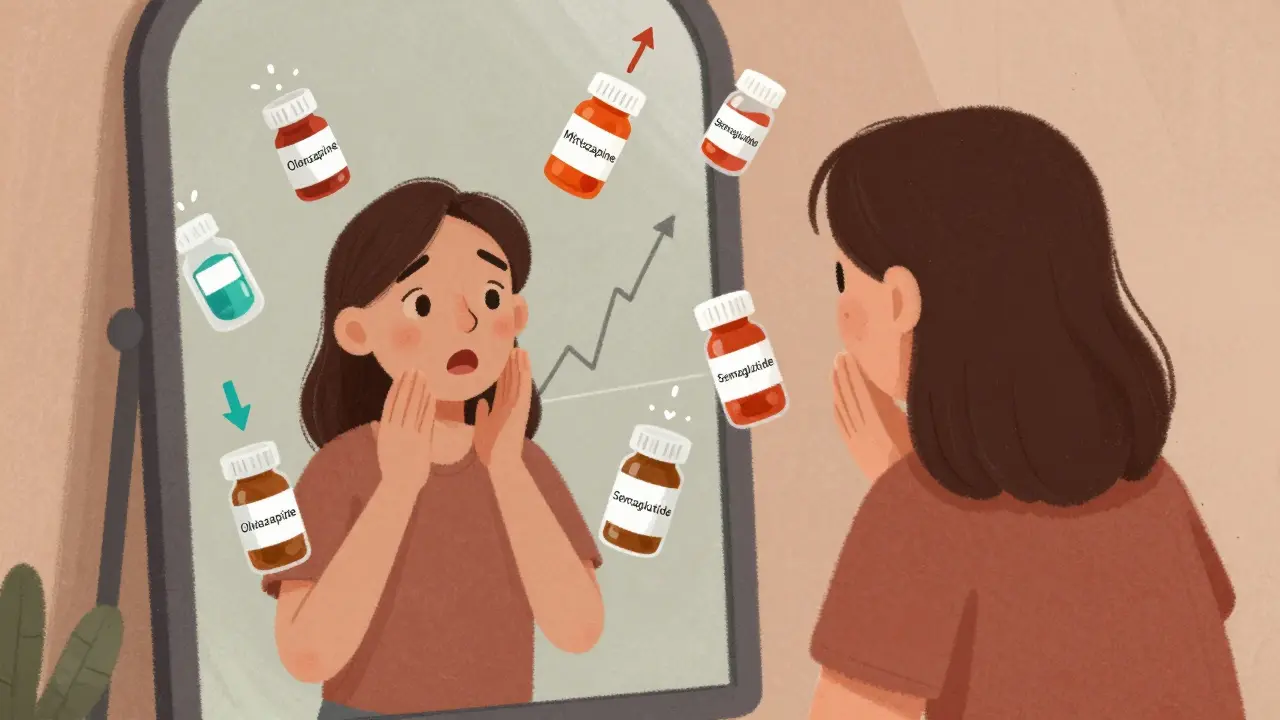
It’s not just about eating too much or skipping the gym. Sometimes, the pills you take to feel better are quietly changing your weight - without you asking for it. You start a new antidepressant, and over a few months, your clothes feel tighter. Or you switch diabetes meds, and suddenly you’re losing pounds you didn’t plan to. This isn’t rare. About one in four prescription drugs can cause noticeable weight changes, and most people aren’t warned before they start taking them.
Why Do Medications Make You Gain or Lose Weight?
It’s not magic. It’s biology. Different drugs mess with your body in specific ways, and weight is often an unintended side effect. Here’s how it actually happens:
- Appetite boost: Some antidepressants like mirtazapine and antipsychotics like olanzapine activate brain receptors that make you hungrier. In fact, 78% of long-term SSRI users show changes in serotonin signaling that increase food cravings.
- Fat storage trigger: Diabetes drugs like pioglitazone turn on fat-making switches in your cells. Studies show they can increase fat cell production by 40-60%, leading to steady weight gain even if you eat the same.
- Slowed metabolism: Beta-blockers like propranolol lower your resting metabolic rate by 8-10%. That means you burn fewer calories just sitting still - enough to add 2-4 kg over a year without changing habits.
- Water retention: Steroids like prednisone cause your body to hold onto extra fluid. Many patients gain 2-5 kg in the first month - not fat, but water. It’s temporary, but it feels real.
- Movement reduction: Antipsychotics can make you feel sluggish. Mayo Clinic studies found patients on these drugs take 1,200-2,500 fewer steps a day. Less movement = fewer calories burned.
These aren’t guesses. They’re measurable, documented effects backed by clinical trials and real-world data.
Which Drugs Are Most Likely to Cause Weight Gain?
Not all meds are equal. Some are notorious for packing on pounds, while others might help you lose them. Here’s a clear breakdown:
| Medication Class | Example Drugs | Average Weight Change | Timeframe |
|---|---|---|---|
| Antipsychotics | Olanzapine, clozapine | +4.5 to +6.0 kg | First 10 weeks |
| Antidepressants | Mirtazapine, paroxetine | +2 to +5 kg | 6 months |
| Antidepressants | Bupropion | -1.5 to -2.5 kg | 12 months |
| Diabetes (Insulin) | Insulin, glargine | +2 to +4 kg | First year |
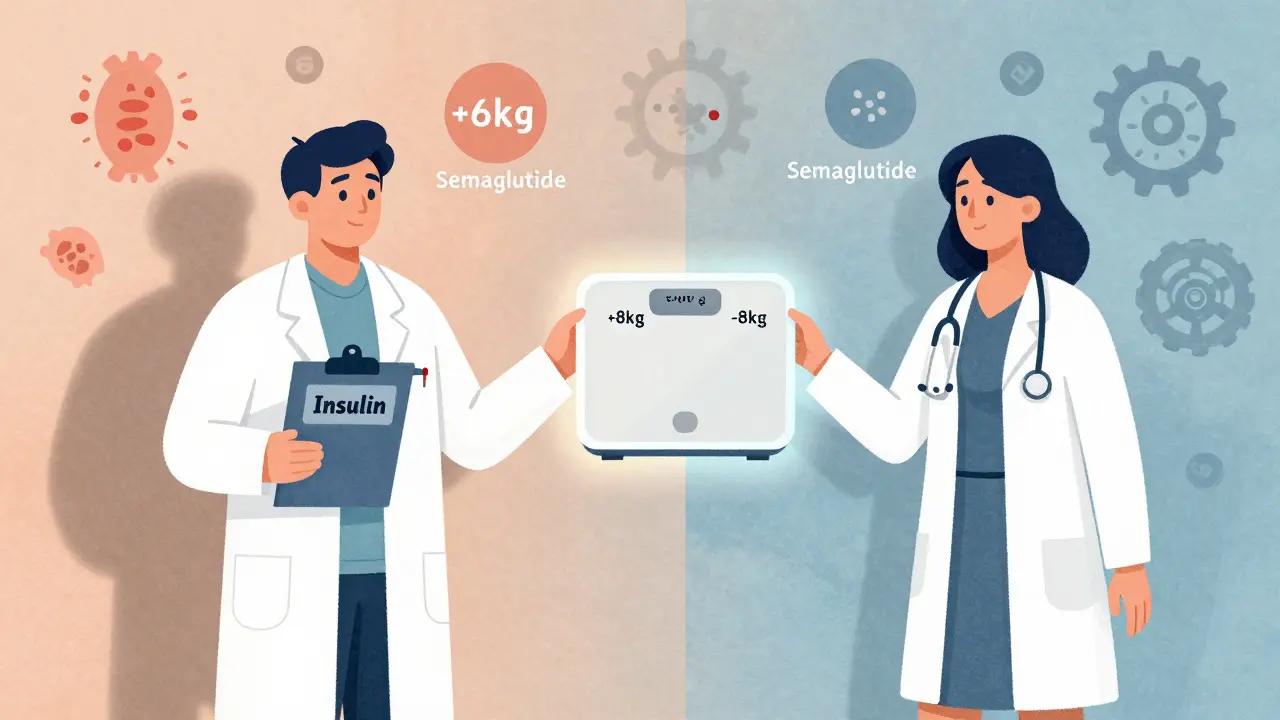
| Diabetes (GLP-1 analogues) | Semaglutide, liraglutide | -6 to -10 kg | 68 weeks |
| Antipsychotics | Aripiprazole | +0.2 to +0.8 kg | 12 weeks |
Notice the difference? Olanzapine can make you gain over 6 kg in just two months. Aripiprazole? Almost nothing. Same class - wildly different outcomes. That’s why choosing the right drug matters.
What About Weight Loss? Are Any Drugs Actually Helpful?
Yes - and it’s not just a coincidence. The GLP-1 receptor agonists - like semaglutide (Wegovy, Ozempic) and liraglutide (Saxenda) - were originally designed for diabetes. But they turned out to be powerful weight-loss tools. In the STEP trials, people lost 15% of their body weight on average over 1.5 years. That’s not just a few pounds - it’s life-changing.
How? These drugs slow stomach emptying, reduce appetite, and signal fullness to your brain. They don’t just block hunger - they rewire it. And unlike older weight-loss pills, they’ve been proven safe in large, long-term studies.
Even bupropion, an antidepressant, shows consistent weight loss. It’s not a magic bullet, but for someone needing treatment for depression and worried about weight gain, it’s a rare win-win.
Who’s at Risk - and Why It Matters
Weight gain from meds doesn’t hit everyone the same. If you already have a BMI over 30, adding even 5 kg can increase your risk of heart disease by 12-18%. That’s not a small risk. And it’s not just about appearance - it’s about health.
People on multiple medications are especially vulnerable. One study found that taking three or more weight-promoting drugs over five years could lead to 10-15 kg of weight gain - enough to push someone from normal weight into obesity. That’s not just side effects. That’s a cascade.
And here’s the kicker: most patients aren’t warned. Only 38% of people say their doctor talked to them about weight changes before prescribing. That’s not just poor communication - it’s a missed opportunity to prevent harm.
What You Can Do: A Realistic Plan
You don’t have to quit your meds or suffer in silence. Here’s what actually works:
- Get a baseline. Before starting any new drug, record your weight, waist size, and BMI. Keep a note in your phone or journal.
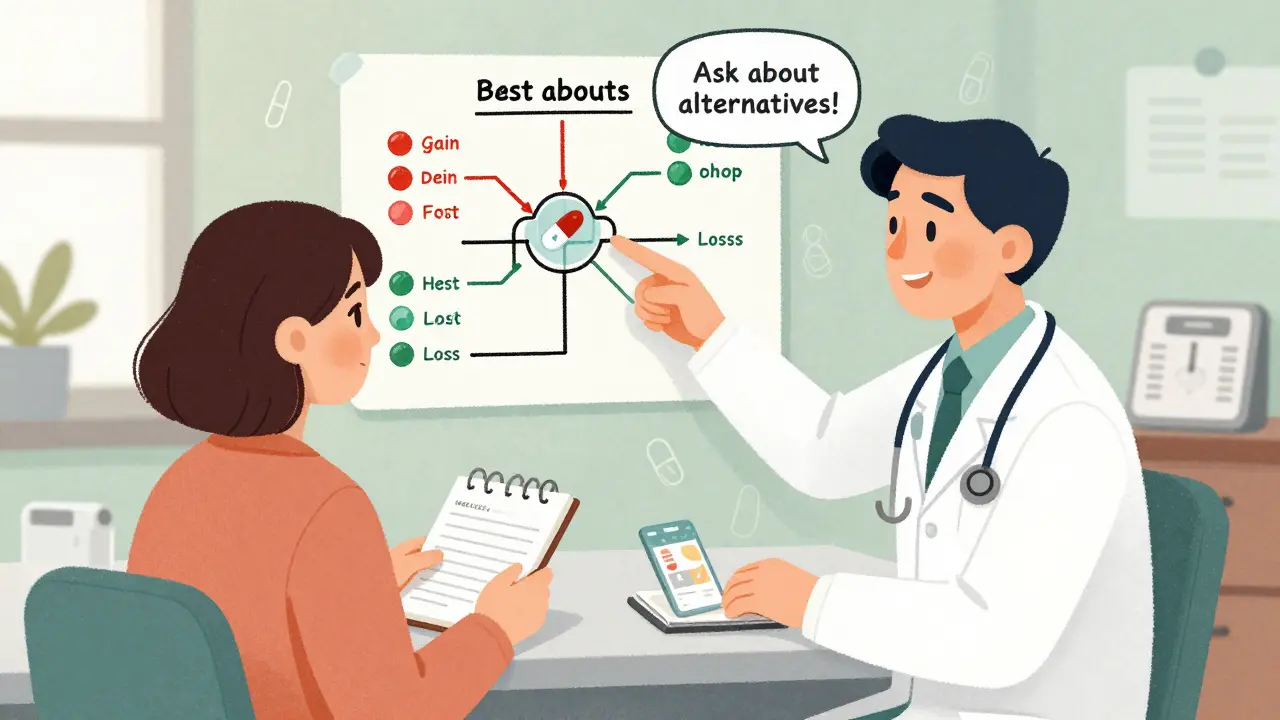
- Ask the right question. Don’t just ask, “What are the side effects?” Ask: “Does this medication cause weight gain or loss? How common is it? Are there alternatives with less metabolic impact?”
- Track monthly. Weigh yourself once a week, same time, same scale. If you gain more than 2.5 kg in the first six months, talk to your doctor. Don’t wait.
- Consider alternatives. For depression, bupropion may be better than mirtazapine. For diabetes, GLP-1 drugs can replace insulin in some cases. For psychosis, aripiprazole often causes less weight gain than olanzapine.
- Use support. Many hospitals now offer metabolic clinics for patients on long-term meds. If yours doesn’t, ask about telehealth options with obesity specialists - 41% of U.S. clinics now offer these partnerships.
It’s not about perfection. It’s about awareness. Small changes in medication choice can prevent 3-5 kg of unwanted gain in the first year - and that’s enough to keep you out of a higher risk category.
What’s Changing in 2025 and Beyond
The tide is turning. Since 2021, the FDA has required drug makers to report weight changes in new psychiatric medications. In March 2024, new guidelines linked specific gene variants (like HTR2C) to weight gain risk from antipsychotics - meaning genetic testing could soon help predict who’s most vulnerable.
Companies are responding. Genomind’s Mental Health Map panel predicts weight gain risk with 79% accuracy. New combo drugs like Xultophy reduce insulin-related weight gain by over 4 kg. And digital tools like Noom’s MedWeight program are helping patients stay on track with real-time coaching.
By 2025, 87% of U.S. academic medical centers will screen patients for metabolic risk before prescribing. That’s not science fiction - it’s becoming standard care.
Real Stories: What Patients Are Saying
On Reddit, someone wrote: “I gained 18 pounds on sertraline. I didn’t change a thing. I had to switch - my mental health was fine, but my body felt like it was betraying me.”
Another shared: “Switching from insulin to semaglutide? I lost 22 pounds. My blood sugar is better, and I can finally wear clothes I like again.”
These aren’t outliers. On Drugs.com, 68% of people on olanzapine reported “significant weight gain.” Eighty-two percent on liraglutide said they lost “meaningful weight.”
The message? Your experience matters. And you’re not alone.
Final Thought: Your Health Is Worth the Conversation
Medications save lives. But they can also change them - sometimes in ways we don’t expect. Weight gain or loss isn’t a personal failure. It’s a biological response. And it’s one you can manage.
Don’t wait until your clothes don’t fit or your doctor mentions your rising blood pressure. Ask early. Track honestly. Advocate for yourself. There are better options out there - if you know to look for them.
Can antidepressants really make you gain weight?
Yes, some can. Mirtazapine and paroxetine are known to cause 2-5 kg of weight gain within six months. But others like bupropion often lead to modest weight loss. The key is matching the drug to your body - not just your symptoms.
Is weight gain from steroids permanent?
Not usually. Steroids like prednisone cause water retention, not fat gain. Once you stop taking them, most of that weight comes off within weeks. But if you gain fat while on steroids - often from increased appetite - that can stick. Monitoring diet and activity helps.
Why don’t doctors talk about weight changes more often?
Many don’t realize how common it is - or how much it affects quality of life. Others worry about scaring patients off needed treatment. But studies show patients who are warned are more likely to stick with treatment and less likely to feel blamed for weight changes.
Can I switch medications if I’m gaining weight?
Absolutely - if your condition allows it. Many conditions have multiple treatment options with different side effect profiles. For example, switching from olanzapine to aripiprazole can cut weight gain by 90%. Always discuss alternatives with your provider - don’t stop meds on your own.
Are GLP-1 drugs like Ozempic safe for weight loss if I’m not diabetic?
Yes - when prescribed appropriately. Drugs like Wegovy and Saxenda are FDA-approved for weight management in people with overweight or obesity, regardless of diabetes status. They’re not for casual use, but for those who need help losing weight safely, they’re one of the most effective tools we have.
How do I know if my weight change is from my meds or something else?
Track your weight before and after starting the drug. If you gained 2.5 kg or more in the first 6 months - and your diet and activity haven’t changed - it’s likely the medication. Talk to your doctor about alternatives. If you’re losing weight unexpectedly without trying, that’s also a red flag - especially with cancer, thyroid, or GI drugs.
Medications are powerful. They can heal - or harm - in ways we don’t always see. The best way to protect yourself isn’t to avoid pills. It’s to understand them. And to speak up before it’s too late.
Lydia H.
Been on mirtazapine for two years. Gained 22 lbs. Didn’t even realize it until my jeans ripped at the seam during yoga. Weird part? I was eating less. My body just... decided to hold onto everything. I switched to bupropion last month. Lost 8 lbs in 6 weeks. Not because I tried - because my body finally stopped treating food like a security blanket.
Astha Jain
lol so u mean like… my zoloft made me fat?? no sh*t sherlock. i thought i was just lazy. turns out my brain was just being a greedy little gremlin. also why do all these meds sound like they’re from a sci-fi movie? GLP-1 agonists?? sounds like a dragon from lord of the rings.
Erwin Kodiat
I’m a nurse in a psych ward. Saw a guy gain 40 pounds on olanzapine. He cried because he couldn’t fit in his wheelchair anymore. Then we switched him to aripiprazole - he lost 30 in six months. No diet. No exercise. Just a different pill. It’s wild how much power we give to something we barely understand. We treat the mind, but forget the body’s screaming.
Jacob Hill
Thank you for this. I’ve been tracking my weight since starting insulin last year - gained 5.2 kg. I asked my endo about alternatives, and she said, ‘Oh, you’re doing fine.’ No mention of semaglutide. I had to Google it myself. It’s frustrating when your doctor treats weight gain like a personal failing instead of a pharmacological side effect. I’m switching next month. I’ve already printed this article.
Lewis Yeaple
While the empirical data presented is largely accurate and corroborated by multiple meta-analyses, including those from the Journal of Clinical Psychiatry and The Lancet Diabetes & Endocrinology, it is critical to note that individual metabolic variance - particularly in relation to polymorphisms in the HTR2C and MC4R genes - significantly modulates drug-induced weight outcomes. Therefore, while population-level trends are informative, personalized pharmacogenomic screening remains the gold standard for clinical decision-making, which is currently underutilized in primary care settings.
Jake Rudin
It’s funny… we’ve got these drugs that can rewire your appetite like a software update… but we still act like weight gain is moral failure. Like, if you gained weight because you ate a donut, that’s ‘lack of willpower.’ But if your brain’s serotonin receptors are being hijacked by a pill? That’s ‘biology.’ Why is one a choice and the other an accident? We need to stop blaming people and start redesigning the system.
Josh Kenna
My mom’s on prednisone for RA and gained 15 lbs in 3 months - all water, she said. But then she started binge-eating because the meds made her hungry 24/7. She’s now on metformin to counter it. I told her: ‘You’re not failing. The system is.’ She cried. Then she called her doctor and demanded a metabolic consult. Now she’s getting help. Don’t let them make you feel guilty. Fight for your body - even if it’s just one email at a time.
Valerie DeLoach
I teach health literacy to low-income patients. Many don’t know that their antidepressant might be making them gain weight - or that there’s a better option. We run little workshops: ‘Ask your doctor: Will this change my weight?’ One woman switched from paroxetine to bupropion and lost 18 lbs. She said, ‘I didn’t know I could feel like myself again without feeling like I was drowning in my own skin.’ This isn’t just medicine. It’s dignity.
Christi Steinbeck
GLP-1 drugs are not magic. But they’re the first time in decades that weight loss has been treated like a real medical condition - not a moral one. I’ve seen people cry in my office because they finally feel like they can wear a swimsuit again. If you’re on a med that’s making you gain, don’t wait. Ask. Push. Bring this article. Your life matters more than their inertia.
Jackson Doughart
There’s a quiet revolution happening - not in labs, but in living rooms. People are sharing their stories. They’re Googling their prescriptions. They’re asking questions. And slowly, the power is shifting. It’s not about rejecting medicine. It’s about reclaiming agency. I’ve watched patients become their own advocates - and it’s the most beautiful thing I’ve seen in healthcare.