

Hyperthyroidism & Stimulant Risk Assessor

Configure your profile on the left and click "Assess Interaction Risk" to see potential outcomes based on clinical data.
Disclaimer: This tool provides estimates based on general clinical data presented in the article. It is not medical advice. Always consult a healthcare professional for personal medical decisions.
Imagine your heart is already running a marathon because of an overactive thyroid. Now, imagine you take a pill designed to push your body into high gear. This isn’t just uncomfortable; it can be dangerous. When hyperthyroidism, a condition where the thyroid gland produces too much hormone, meets stimulant medications like Adderall or Ritalin, the result is often a storm of cardiac stress and severe anxiety.
You might think these two issues are unrelated. One affects your metabolism and energy levels, while the other treats attention deficits. But they share a common enemy: your nervous system’s ability to handle stimulation. If you have been diagnosed with ADHD but also have symptoms of a racing heart or unexplained weight loss, you need to understand this interaction before your next prescription refill.
The Physiology: Why the Combination Is Dangerous
To understand the risk, we have to look at what happens inside your body. Hyperthyroidism doesn’t just make you feel jittery; it fundamentally changes how your cells respond to adrenaline. A 2021 study in the Journal of Clinical Endocrinology & Metabolism found that hyperthyroidism increases beta-adrenergic receptor sensitivity by 30-40%. In plain English, your heart becomes hypersensitive to any signal telling it to beat faster.
When you add a stimulant like Adderall (which contains amphetamine salts), you are flooding your brain with norepinephrine and dopamine. The FDA notes that these drugs increase neurotransmitter release by 300-500% in synaptic clefts. Normally, this helps focus. But in a hyperthyroid patient, whose metabolic rate is already elevated by 60-100%, this surge acts like pouring gasoline on a fire.
- Heart Rate Spike: A normal resting heart rate is 60-100 beats per minute (bpm). With hyperthyroidism alone, this might rise to 100-120 bpm. Combine that with stimulants, and patients frequently see rates jump to 120-160 bpm at rest.
- Blood Pressure Surge: While methylphenidate (Ritalin) raises blood pressure slightly in healthy people, in hyperthyroid patients, systolic pressure can spike by 10-15 mmHg, pushing many into hypertensive crisis territory (>140/90 mmHg).
- Atrial Fibrillation Risk: The American Heart Association reports that patients with hyperthyroidism taking stimulants face a 3.2-fold increased risk of developing atrial fibrillation compared to those with the thyroid condition alone.
This isn’t just about feeling anxious. It is about mechanical strain on the heart muscle. Over time, this constant high-speed operation can lead to permanent damage or acute events like ventricular tachycardia.
Misdiagnosis: The Hidden Trap
Here is the tricky part: hyperthyroidism and ADHD look almost identical on the surface. Both conditions cause restlessness, difficulty concentrating, irritability, and sleep disturbances. The Endocrine Society reports that 15-20% of adults with undiagnosed hyperthyroidism initially present with symptoms mistaken for ADHD.
If a doctor prescribes stimulants for what they think is ADHD, but the root cause is actually an overactive thyroid, they are treating the symptom while ignoring the disease. This leads to a vicious cycle. The patient takes the medication, feels worse due to the side effects, and thinks their "ADHD" is getting harder to manage. Meanwhile, their thyroid continues to wreak havoc on their cardiovascular system.
The American Thyroid Association emphasizes that ruling out thyroid problems before diagnosing ADHD is crucial. A simple blood test checking TSH (Thyroid Stimulating Hormone), T3, and T4 levels can prevent this error. If your TSH is suppressed (low) and your T3/T4 are high, you likely have hyperthyroidism, not primary ADHD.
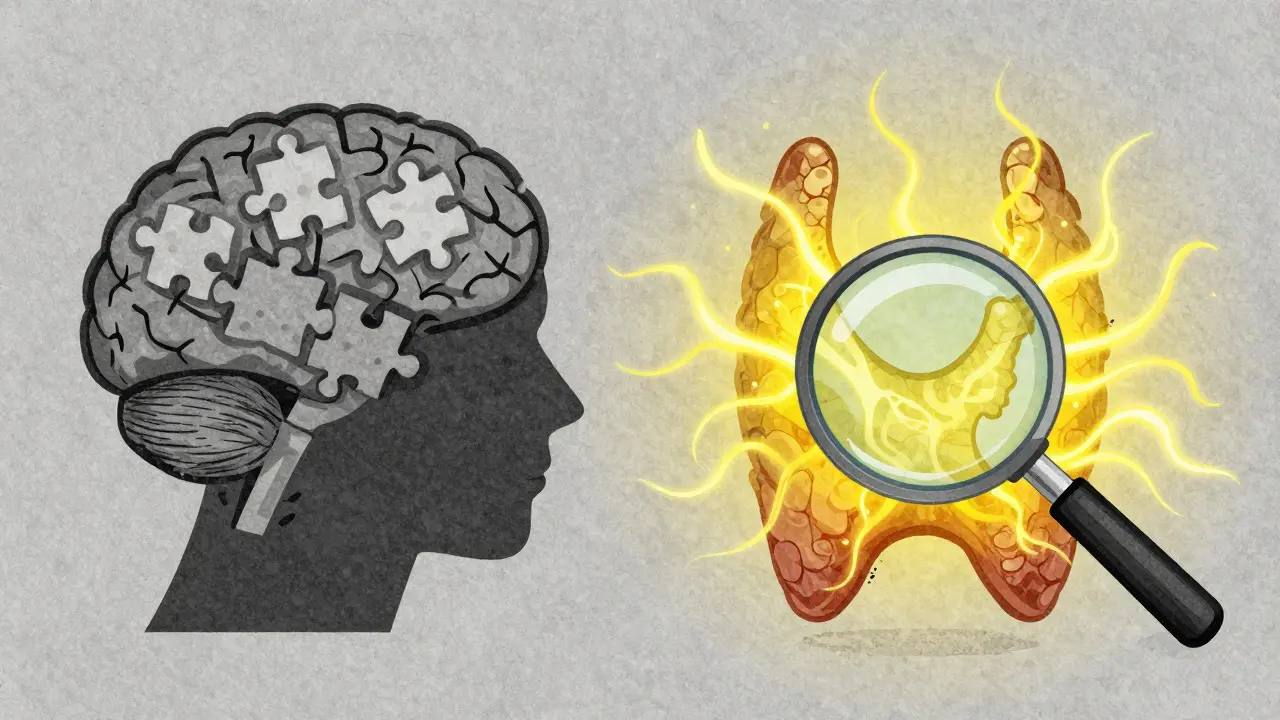
Comparing Stimulant Risks
Not all stimulants carry the same level of danger. If you must take medication for attention issues while managing thyroid health, knowing the differences between drugs is vital. Here is how the major options stack up against each other regarding cardiac risk.
| Medication | Type | Cardiac Risk Profile | Anxiety Impact |
|---|---|---|---|
| Adderall (Amphetamine Salts) | Stimulant | High (28% greater HR increase than methylphenidate) | Severe (78% report severe anxiety) |
| Ritalin (Methylphenidate) | Stimulant | Moderate-High | Moderate |
| Vyvanse (Lisdexamfetamine) | Prodrug Stimulant | Moderate (Gradual onset reduces peak stress) | Moderate-Low |
| Strattera (Atomoxetine) | Non-Stimulant | Low (2-3 bpm average HR increase) | Low |
Adderall carries the highest cardiac risk. The American College of Cardiology warns that high-dose Adderall (>30mg/day) in hyperthyroid patients increases the risk of ventricular tachycardia by 4.7-fold. Vyvanse, being a prodrug, converts slowly in the body, which may reduce peak cardiac effects by 15-20% compared to immediate-release Adderall. However, it is still an amphetamine derivative and should be used with extreme caution.
For many patients, non-stimulant alternatives like atomoxetine (Strattera) offer a safer path. They do not rely on the same catecholamine surge that triggers the thyroid-heart synergy, making them a preferred option when thyroid levels are unstable.
Real-World Experiences and Warning Signs
Data from clinical trials tells one story, but patient experiences tell another. On community forums like Reddit’s r/Thyroid, users frequently describe terrifying reactions. One user reported their heart racing at 140 bpm constantly after taking Adderall, requiring an emergency room visit. Another described panic attacks within 30 minutes of dosing.
A survey by Paloma Health found that 41% of patients initially diagnosed with ADHD had undiagnosed thyroid abnormalities. Of those, 33% saw their symptoms improve simply by treating the thyroid condition, without ever needing stimulants. This highlights a critical point: if you are struggling with focus and anxiety, check your thyroid first.
You should watch for these specific warning signs if you are on both medications:
- Resting heart rate consistently above 110 bpm.
- Chest pain or palpitations that feel like fluttering or pounding.
- Anxiety that does not subside within two hours of taking the dose.
- Tremors in the hands that worsen after medication intake.
- Unexplained weight loss despite normal eating habits.

Safety Protocols and Management
If you have controlled hyperthyroidism and still require treatment for ADHD, it is possible to manage both safely, but it requires strict protocols. The American Association of Clinical Endocrinologists recommends ruling out thyroid dysfunction before starting any stimulant therapy. Once stable, here is how experts suggest proceeding:
- Baseline Testing: Before starting stimulants, get a full thyroid panel (TSH, Free T3, Free T4) and a cardiac evaluation, including an echocardiogram and 24-hour Holter monitor.
- Start Low, Go Slow: Begin with the lowest possible dose. For methylphenidate, this might be 5-10mg. For Adderall, 5mg. Increase gradually only if tolerated.
- Monitor Regularly: Check thyroid function every three months when adjusting medications. It takes two to three months for TSH levels to stabilize after a change.
- Separate Medications: If you are taking levothyroxine (for hypothyroidism) or anti-thyroid drugs, separate them from supplements like iron or calcium by at least four hours to ensure proper absorption.
- Have an Exit Strategy: Know when to stop. If your heart rate stays elevated or anxiety becomes unmanageable, discontinue the stimulant and consult your endocrinologist.
Dr. Deena Adimoolam from Mount Sinai notes that interactions can cause thyroid medication to work improperly, leading to ineffective treatment. Therefore, coordination between your psychiatrist and endocrinologist is non-negotiable.
Frequently Asked Questions
Can I take Adderall if I have hyperthyroidism?
Generally, Adderall is contraindicated or used with extreme caution in patients with active hyperthyroidism. The combination significantly increases the risk of atrial fibrillation, hypertension, and severe anxiety. Most guidelines recommend stabilizing thyroid levels first and considering non-stimulant alternatives like atomoxetine.
Does hyperthyroidism mimic ADHD symptoms?
Yes, hyperthyroidism often mimics ADHD. Symptoms such as restlessness, poor concentration, irritability, and sleep disturbances are common in both conditions. Up to 20% of adults with undiagnosed hyperthyroidism are initially misdiagnosed with ADHD. A thyroid blood test is essential to rule out thyroid dysfunction before prescribing stimulants.
What is the safest stimulant for someone with thyroid issues?
Non-stimulant medications like atomoxetine (Strattera) are considered the safest option as they have minimal impact on heart rate and blood pressure. Among stimulants, Vyvanse may be slightly safer than Adderall due to its gradual onset, but all stimulants carry increased cardiac risk in hyperthyroid patients.
How long does it take for thyroid levels to stabilize after changing medication?
It typically takes two to three months for TSH levels to stabilize following a change in thyroid medication or dosage. During this period, frequent monitoring is recommended to ensure levels remain within the target range and to adjust treatment as needed.
What are the warning signs of a dangerous interaction between stimulants and hyperthyroidism?
Warning signs include a resting heart rate above 110 bpm, chest pain, severe palpitations, intense anxiety that doesn't subside, hand tremors, and unexplained weight loss. If you experience these symptoms, seek medical attention immediately as they may indicate cardiac stress or hypertensive crisis.