
Why Sleep Gets So Hard During Pregnancy
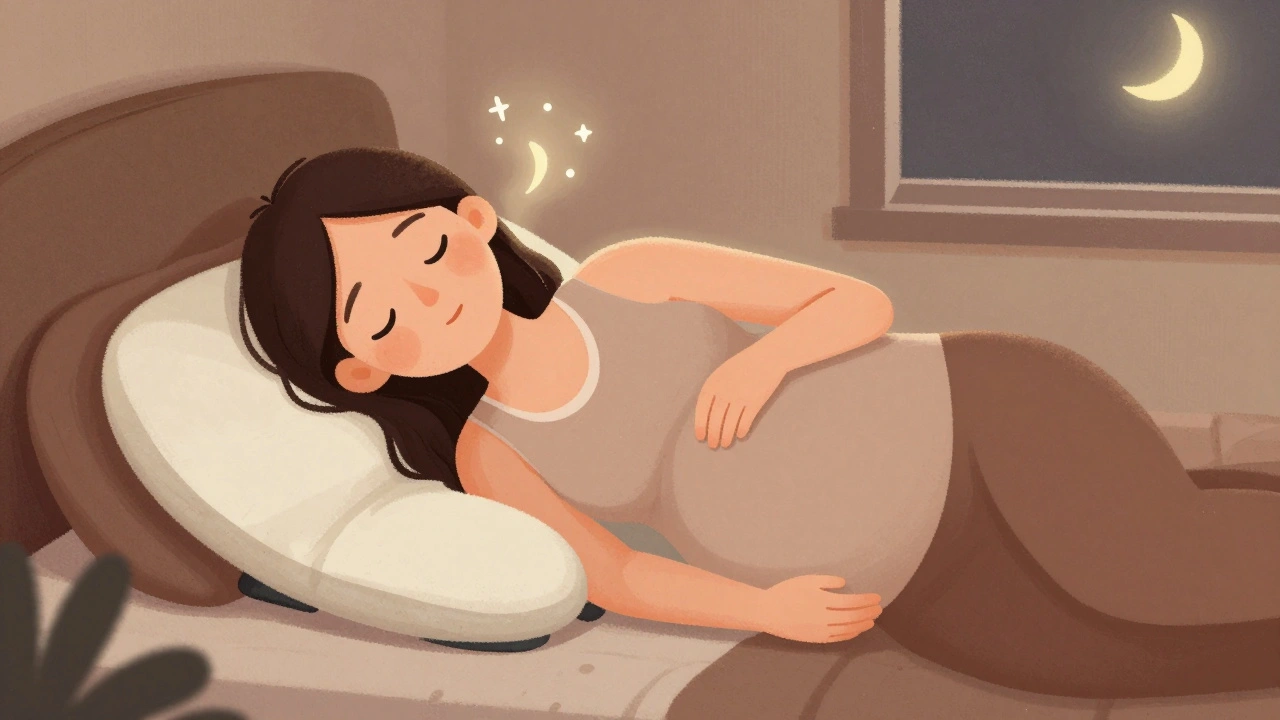
By the third trimester, many pregnant women feel like they’re sleeping on a beach ball with a side of heartburn. It’s not just discomfort-it’s a physiological shift that can trigger serious sleep problems. Obstructive sleep apnea (OSA) affects about 10.5% of pregnant women by the end of pregnancy, and that number jumps to nearly 27% for those with a BMI over 30. Snoring isn’t just annoying-it’s a red flag. When your airway gets blocked during sleep, your oxygen levels drop, your heart works harder, and your body stays in stress mode. This isn’t normal tiredness. It’s a medical issue linked to higher risks of preeclampsia, gestational diabetes, and even cesarean delivery.
On top of apnea, acid reflux becomes a nightly battle. Hormones relax the valve between your stomach and esophagus, and your growing uterus pushes upward. Lying flat makes it worse. You wake up with a burning throat, a sour taste, and no idea how to get back to sleep. And then there’s positioning. You can’t sleep on your back anymore, but sleeping on your stomach? Impossible. Finding a comfortable, safe position feels like solving a puzzle with no solution.
What Is Sleep Apnea in Pregnancy-and Why It Matters
Sleep apnea during pregnancy isn’t just snoring. It’s when your airway collapses repeatedly during sleep, causing breathing to stop for 10 seconds or more. These pauses can happen 15, 30, even 50 times an hour. Your brain jolts you awake just enough to restart breathing, but you never get deep, restorative sleep. The result? Constant fatigue, morning headaches, high blood pressure, and a body stuck in fight-or-flight mode.
The risks aren’t theoretical. A 2022 meta-analysis found that untreated OSA increases the chance of preeclampsia by 2.3 times, gestational diabetes by 1.7 times, and cesarean delivery by 2.1 times. These aren’t rare complications-they’re common enough that the American College of Obstetricians and Gynecologists now recommends screening all pregnant women for sleep-disordered breathing at the first prenatal visit using a simple questionnaire.
What causes it? Your body changes in ways you can’t control. Hormones like progesterone swell the tissues in your nose and throat. Your neck gets thicker. Your ribcage expands, but your lungs can’t fully inflate. All of this narrows your airway. And as your baby grows, your belly pushes up, making it even harder to breathe when you lie down.
How to Diagnose Sleep Apnea During Pregnancy
Don’t assume you’re just ‘tired because you’re pregnant.’ If you snore loudly, gasp for air at night, wake up choking, or feel exhausted even after 8 hours of sleep, get checked. The gold standard is an overnight sleep study-either in a lab or at home with a portable monitor. Home tests are now widely accepted for low-risk patients and measure your breathing, oxygen levels, and heart rate while you sleep.
Doctors use the Apnea-Hypopnea Index (AHI) to measure severity:
- Mild: 5-14 events per hour
- Modest: 15-29 events per hour
- Severe: 30+ events per hour
Many women don’t realize they have OSA because symptoms are dismissed as ‘normal pregnancy stuff.’ But if you’re struggling to sleep, it’s not normal. A 2022 National Sleep Foundation survey found that women waited an average of 14 weeks before getting tested-by then, the risks are already mounting.
CPAP Therapy: The Most Effective Treatment
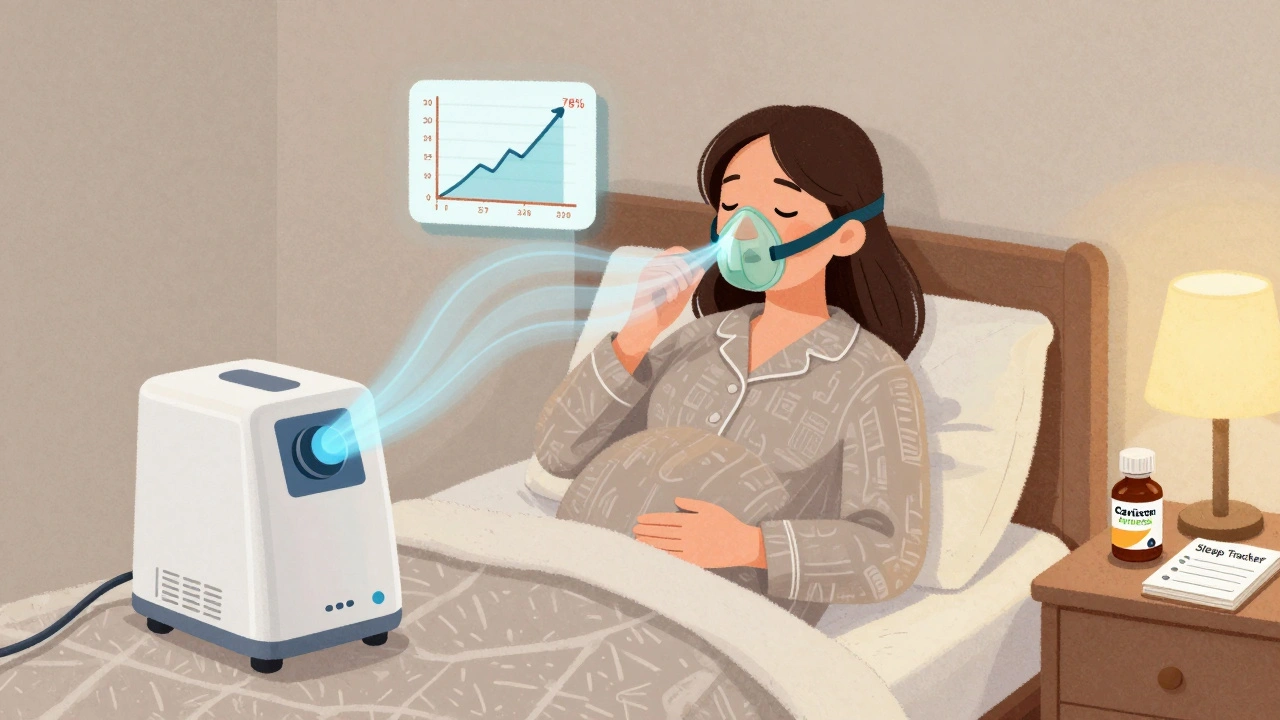
Continuous Positive Airway Pressure (CPAP) is the most proven way to treat sleep apnea during pregnancy. It uses a small machine to push gentle air through a mask, keeping your airway open all night. Studies show CPAP reduces AHI by 78% and lowers the risk of preeclampsia by 30% when started between 24-28 weeks.
But it’s not perfect. About 62% of pregnant women stop using CPAP within 4 weeks because of discomfort. That’s why modern devices are designed with pregnancy in mind:
- Nasal pillows instead of full-face masks-less pressure on swollen facial skin
- Auto-titrating machines that adjust pressure as your body changes
- Humidifiers set to 37°C to fight pregnancy-related nasal dryness
- Quiet operation and lightweight tubing to avoid tugging
ResMed’s AirSense 11 Pregnancy Mode, cleared by the FDA in 2022, automatically adjusts pressure based on your breathing patterns as your pregnancy progresses. And the AirTouch F20 Pregnancy Edition, released in 2023, uses a softer silicone cushion that fits better as your face swells.
Adherence improves dramatically with support. At Sleep Healthy PA, patients who got a 30-minute orientation on mask fitting and troubleshooting went from 54% to 82% consistent use. Don’t give up after a bad night-call your provider. Adjustments take minutes.
Positional Therapy: Sleeping on Your Side
If your apnea is mild (AHI under 15), changing your position can help. Sleeping on your left side is the gold standard-it takes pressure off your vena cava (the big vein that brings blood back to your heart), improves circulation to your baby, and reduces airway collapse. Studies show left-side sleeping can cut your AHI by 22.7%.
But staying on your side all night? Nearly impossible without help. That’s where pregnancy pillows come in. Full-body pillows (like the Leachco Full Body Pillow Pro, priced at $89.99) wrap around you, supporting your belly, back, and legs. A 2023 study found women using these pillows were 85% likely to stick with positional therapy-far higher than CPAP adherence.
For extra support, place a wedge pillow under your upper body at a 15-30 degree angle. This helps both apnea and reflux. Don’t just stack regular pillows-they can push your neck forward and worsen breathing. Use a firm wedge that’s 7-8 inches tall.
Managing Reflux Without Medications
Heartburn during pregnancy isn’t just about spicy food. It’s hormonal and mechanical. To stop the burn:
- Elevate the head of your bed by 6-8 inches using blocks under the legs-not just pillows. Pillows can bend your neck and make apnea worse.
- Avoid eating 3 hours before bed. Even a light snack can trigger reflux.
- Choose low-fat, non-acidic foods. Avoid chocolate, caffeine, citrus, and fried foods.
- Use Gaviscon Advance (alginate-based). It forms a protective foam barrier on top of your stomach contents without being absorbed into your bloodstream. It’s safe, effective, and costs about $15 for a 500ml bottle.
Antacids like Tums or Maalox are okay occasionally, but they don’t block reflux-they just neutralize acid. Alginate-based products like Gaviscon Advance actually prevent acid from rising. That’s the difference between temporary relief and real protection.
What Doesn’t Work (and Why)
Not all sleep aids are safe or effective during pregnancy.
Mandibular advancement devices (mouthpieces that push your jaw forward) work well for non-pregnant people with mild apnea. But during pregnancy, hormonal changes can loosen your jaw joints and teeth. The 2023 SASM/SOAP guidelines specifically advise against them because of potential long-term damage.
Over-the-counter sleep aids like diphenhydramine (Benadryl) are sometimes suggested, but they can cross the placenta and cause fetal sedation. They also don’t treat the root cause-apnea or reflux-and can make morning grogginess worse.
Alcohol or sedatives? Absolutely avoid. They relax your airway muscles and make apnea much worse.
What to Expect After Baby Arrives
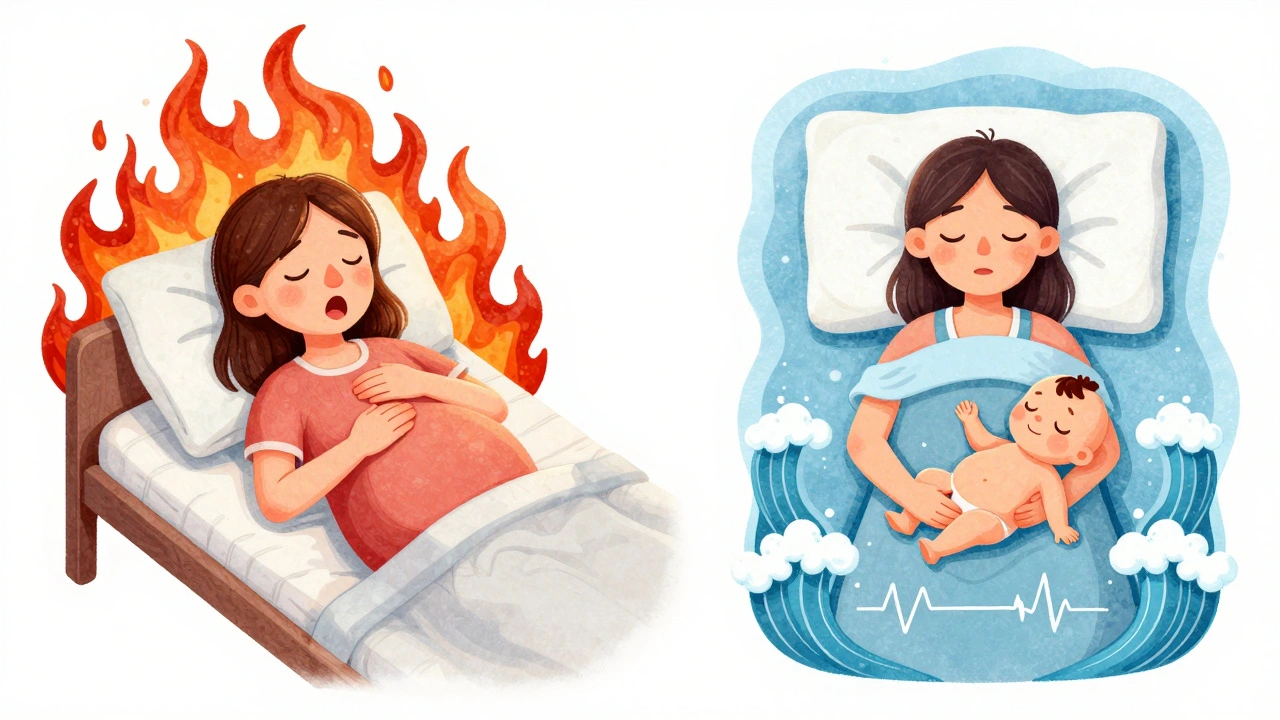
Many women think sleep apnea disappears after delivery-and sometimes it does. But not always. A 2023 Sleep Cohort Study found that 58% of women who developed OSA during pregnancy went on to develop chronic high blood pressure within 10 years-even if their apnea seemed to resolve.
Some experts, like Brown Health, recommend a follow-up sleep study at 12 weeks postpartum to check if OSA is still present. Others, like the NIH, suggest waiting unless symptoms return. Either way, don’t assume it’s gone. If you’re still snoring, exhausted, or waking up gasping after delivery, get tested. Postpartum sleep apnea is often overlooked but just as dangerous.
Real Stories: What Works and What Doesn’t
On Reddit, a user named ‘ExpectingMom2023’ wrote: ‘CPAP saved my third trimester-my blood pressure dropped within two weeks. But the mask leaked because my nose swelled.’ She kept using it, adjusted the fit, and now her baby is healthy.
Another user on SleepAdvisor.org said: ‘I tried a pregnancy pillow first. It helped my back, but I still woke up choking. Then I got CPAP. I thought I’d hate it. I didn’t. I sleep like a rock now.’
But not everyone has access. Many women report waiting months for referrals, or being told ‘it’s just pregnancy.’ That’s changing. The American Academy of Sleep Medicine now recommends universal screening at 28 weeks. And with Apple Watch Series 9’s new sleep apnea detection (validated in a 2024 JAMA study with 89% accuracy), more women may catch it early through everyday tech.
Next Steps: What to Do Today
If you’re pregnant and struggling with sleep:
- Ask your OB-GYN for a sleep screening at your next visit. Use the STOP-Bang questionnaire-it’s quick and free.
- Track your symptoms: Do you snore? Wake up gasping? Feel exhausted even after 8 hours? Keep a log.
- Start left-side sleeping tonight. Use a pregnancy pillow or a wedge under your belly.
- Stop eating 3 hours before bed and elevate your head with a proper wedge, not pillows.
- If you’re diagnosed, don’t delay CPAP. Starting between 24-28 weeks gives you the best shot at reducing risks.
Sleep isn’t a luxury during pregnancy. It’s medicine. The right support, the right position, the right treatment-these aren’t just comfort fixes. They’re life-saving interventions for you and your baby.
Stephanie Fiero
I tried CPAP and it felt like sleeping with a space helmet on. My nose swelled so bad the mask leaked every night. But I kept at it. Now my baby’s healthy and I’m not waking up gasping. Don’t give up. Just tweak the fit. Your body’s changing, the mask needs to change too.
Laura Saye
There’s something profoundly humbling about needing a machine to breathe while carrying life. It’s not weakness-it’s biology asking for grace. The body doesn’t ask permission to transform. We just learn to hold space for its demands. CPAP isn’t a crutch. It’s a silent covenant between mother and child to keep the rhythm alive.
Krishan Patel
You people are too quick to medicalize normal pregnancy discomfort. Back in my village in India, women slept on the floor, carried heavy loads, and gave birth without a single machine. Now you need a $2000 device to sleep? This is what happens when you lose touch with nature. Stop buying into corporate sleep-industrial complex.
Carole Nkosi
They say sleep apnea increases preeclampsia risk. But who’s really profiting here? Hospitals? Mask manufacturers? Pharma? I’ve seen women get pressured into CPAP because insurance requires it-not because they need it. They’re scared into compliance. Wake up. This isn’t medicine. It’s monetized fear.
Philip Kristy Wijaya
I have to say I find the entire approach to pregnancy sleep issues deeply concerning. The overreliance on technological interventions like CPAP masks and wedge pillows reflects a systemic failure to recognize the innate wisdom of the female body. Why not try fasting before bed? Or sleeping under a full moon? Or grounding your body to the earth? The body knows. We’ve just forgotten how to listen. Also the word 'apnea' is misspelled in the title
Rupa DasGupta
I tried the pregnancy pillow and it made my back hurt MORE 😭 Then I got CPAP and it felt like a robot was sucking my soul out through my nose 😫 BUT THEN I started using lavender oil and whispering to my belly at night and now I sleep like a baby (pun intended) 🌿👶 #SleepIsASacredRitual
Marvin Gordon
This is exactly the kind of info every pregnant person needs. No fluff. No sugarcoating. Just facts with actionable steps. Left-side sleeping + wedge + Gaviscon? Done. I told my OB about this and she said she’s printing it for her next class. Seriously, if you’re pregnant and struggling-do the basics. Your baby’s brain is developing while you’re asleep. Don’t waste it.
ashlie perry
They’re hiding the truth. Sleep apnea during pregnancy is caused by 5G towers and chemtrails. The FDA cleared CPAP because Big Pharma owns them. Apple Watch is tracking your dreams. You think your baby’s healthy? They’re already implanted with microchips from your mask. Wake up. The real danger isn’t apnea-it’s compliance.
James Moore
I must respectfully and with the utmost intellectual rigor, assert that the entire framework presented herein is not only incomplete but fundamentally flawed in its epistemological grounding. The article presumes a biomedical hegemony that pathologizes natural physiological adaptation-when in fact, the human body, particularly the female body, possesses an innate, evolutionarily optimized capacity for self-regulation during gestation. To introduce mechanical intervention-such as CPAP-is to disrupt a sacred, millennia-old biological equilibrium. Furthermore, the assertion that 'sleep is medicine' is a neoliberal construct designed to commodify rest. The true remedy? Quietude. Fasting. Breathwork. And, perhaps most importantly, the rejection of algorithmically curated health advice from institutions that profit from your fear. I have studied this for seventeen years. I am not a doctor. But I play one on the internet.