

Hypoglycemia Risk Calculator
Personal Risk Assessment
This tool helps you understand your risk of hypoglycemia unawareness when taking insulin and beta-blockers based on your medication type and monitoring habits.
When you’re managing diabetes with insulin, your body already walks a tightrope between too high and too low blood sugar. Add beta-blockers into the mix-medications commonly prescribed for high blood pressure, heart disease, or arrhythmias-and that tightrope gets even narrower. The danger isn’t always obvious. You might not feel the warning signs when your blood sugar drops. This is called hypoglycemia unawareness, and it’s not just a nuisance-it’s life-threatening.
What Happens When Insulin Meets Beta-Blockers?
Insulin lowers blood sugar. Beta-blockers, like metoprolol or atenolol, slow your heart rate and reduce blood pressure. On the surface, they seem unrelated. But together, they create a silent risk. Beta-blockers block the adrenaline response that normally triggers symptoms like shaking, rapid heartbeat, and sweating when blood sugar falls. These are your body’s early alarms. When they’re muted, you don’t know your sugar is dropping until it’s dangerously low.
It’s not just about missing the shakes. The problem runs deeper. Beta-blockers don’t just hide symptoms-they also interfere with your body’s ability to fix low blood sugar. Normally, when glucose drops, your liver releases stored sugar. Beta-blockers, especially the selective ones, blunt this process by blocking beta-2 receptors in the liver and muscles. So your body can’t correct the low on its own. You’re stuck with no warning and no backup.
Not All Beta-Blockers Are the Same
There’s a big difference between types of beta-blockers. Non-selective ones like propranolol block both beta-1 and beta-2 receptors. They’re more likely to mask symptoms and interfere with glucose recovery. Selective beta-blockers like metoprolol or atenolol mainly target the heart (beta-1), so they’re considered safer-but still risky.
Carvedilol is the exception. It’s a beta-blocker with additional alpha-blocking properties. Studies show it has a much lower risk of causing or worsening hypoglycemia unawareness. In fact, a 2022 American College of Cardiology review found diabetic patients on carvedilol had 17% fewer severe hypoglycemia events compared to those on metoprolol. That’s not a small difference. For someone on insulin, choosing carvedilol over metoprolol could mean the difference between a manageable low and a hospital visit.
One Warning Sign Still Works
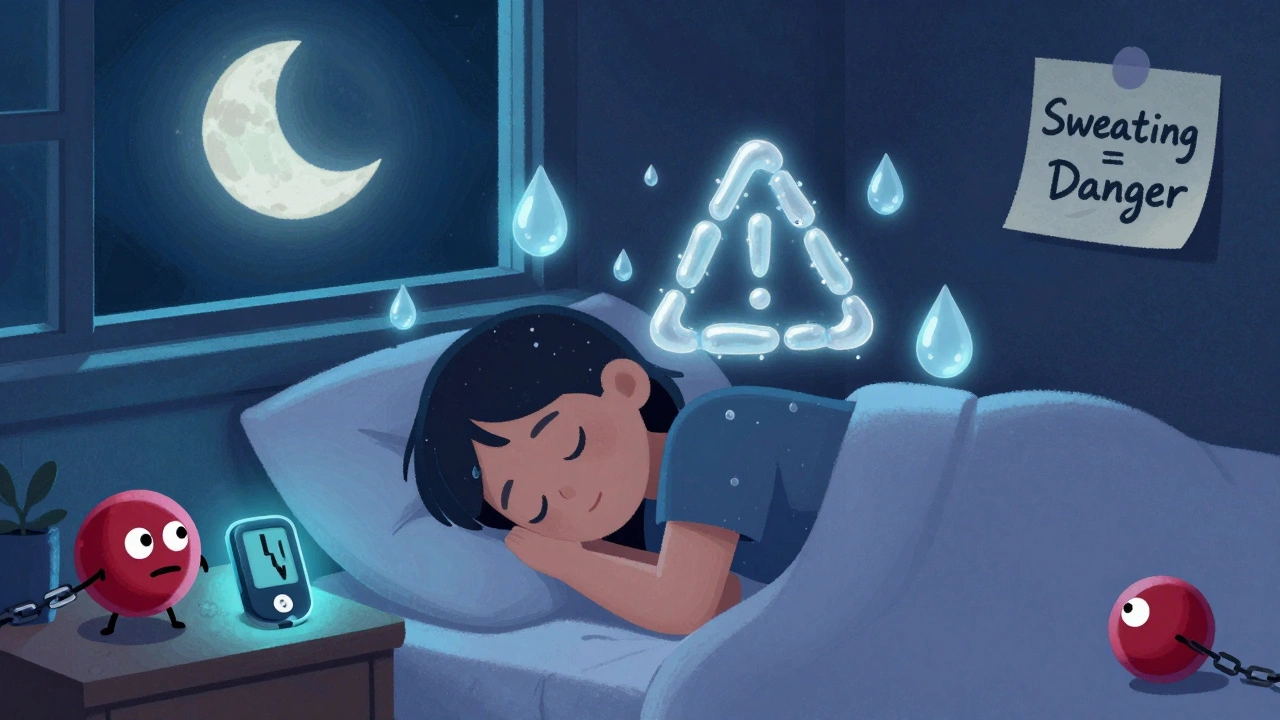
Even though beta-blockers shut down most adrenaline-driven symptoms, one remains: sweating. That’s because sweating is controlled by acetylcholine, not adrenaline. If you start to sweat unexpectedly-especially at night, during meals, or without physical exertion-it could be your body’s last signal that your blood sugar is crashing.
Many patients don’t realize this. They’ve been taught to watch for shakiness or dizziness. When those don’t happen, they assume everything’s fine. But if you’re on insulin and a beta-blocker, sweating is your new early warning. Learn to recognize it. Keep a log: when did it happen? What was your glucose level? Over time, you’ll start to connect the dots.

When Is the Risk Highest?
The biggest danger isn’t at home. It’s in the hospital. Research shows that 68% of hypoglycemia events linked to beta-blockers happen within the first 24 hours of hospital admission. Why? Changes in diet, stress, IV insulin adjustments, and disrupted routines all play a role. And in a hospital setting, staff may not know you’re on a beta-blocker-or may not realize how dangerous that combo can be.
That’s why the American Diabetes Association recommends checking blood glucose every 2-4 hours for diabetic patients on beta-blockers during hospitalization. It’s not optional. It’s a safety protocol. If you’re admitted, make sure your care team knows you’re on insulin and a beta-blocker. Ask them to check your sugar more often. Don’t assume they’ll know.
Long-Term Risks and Real-World Data
Some studies suggest the risk might be lower outside the hospital. The ADVANCE trial, which followed diabetic patients for five years, found no significant difference in severe hypoglycemia rates between those on atenolol and those on placebo. But that doesn’t mean it’s safe. Hospital data is acute; real-world data is averaged over years. The danger is still there, especially if you’ve had prior episodes of low blood sugar.
And the consequences are serious. A 2019 study found that patients on selective beta-blockers had a 28% higher risk of dying from a hypoglycemic event compared to those not taking them. That’s not a statistical blip-it’s a red flag. The combination doesn’t just increase the chance of low blood sugar. It increases the chance you won’t survive it.
What You Can Do to Stay Safe
If you’re on insulin and a beta-blocker, here’s what you need to do right now:
- Know your medication. Ask your doctor: Is it selective or non-selective? Is it carvedilol? If you’re on propranolol or nadolol, ask if switching to carvedilol is an option.
- Check your glucose more often. Even if you feel fine, test before meals, at bedtime, and if you feel odd. Don’t wait for symptoms.
- Watch for sweating. If you break out in a cold sweat for no reason, check your sugar. It could be your only warning.
- Use continuous glucose monitoring (CGM). CGM has reduced severe hypoglycemia events by 42% in people on beta-blockers. It gives you real-time alerts-even while you sleep.
- Educate your family and friends. Teach them to recognize sweating, confusion, or sudden fatigue as signs of low blood sugar. They may be the ones to help you before it’s too late.
What Doctors Are Doing Differently Now
Clinicians are waking up to this issue. Quality improvement programs in hospitals that implemented stricter glucose monitoring and switched high-risk patients to carvedilol saw a 35% drop in beta-blocker-related hypoglycemia complications. That’s not magic. It’s protocol.
The American Heart Association and the European Society of Cardiology now recommend continuing beta-blockers for heart protection-but only if glucose monitoring is intensified. They’re not telling doctors to stop prescribing them. They’re telling them to be smarter about how they prescribe them.
Emerging research is pointing toward personalized medicine. The 2023 DIAMOND trial is testing genetic markers that predict who’s most likely to develop hypoglycemia unawareness on beta-blockers. In the future, your DNA might help your doctor choose the safest drug for you.
The Bottom Line
Insulin and beta-blockers can be a dangerous mix-but they don’t have to be. The risk isn’t about avoiding one or the other. It’s about managing the interaction. You need both: insulin to control your diabetes, and beta-blockers to protect your heart. The key is knowing how they work together-and how to protect yourself when they do.
Don’t wait for a scary low to teach you. Start today. Ask your doctor about your beta-blocker type. Get a CGM if you don’t have one. Learn to trust sweating as your alarm. And never assume you’ll feel it coming. Because sometimes, you won’t.
Can beta-blockers cause low blood sugar on their own?
Beta-blockers don’t directly cause low blood sugar, but they make it harder for your body to recover from it. They block the liver’s ability to release stored glucose and hide the warning signs. So while they don’t lower your sugar directly, they increase the chance of a severe low if you’re on insulin or other diabetes medications.
Is carvedilol safer than metoprolol for diabetics?
Yes. Carvedilol has a better safety profile for people with diabetes. Studies show it causes less interference with hypoglycemia awareness and glucose recovery compared to metoprolol or atenolol. In fact, one major study found a 17% reduction in severe hypoglycemia events when patients switched from metoprolol to carvedilol. It’s now recommended as a first-choice beta-blocker for diabetic patients with heart disease.
What should I do if I feel fine but my CGM says my sugar is dropping?
Treat it immediately. Hypoglycemia unawareness means your body no longer gives you warning signs. Feeling fine doesn’t mean you’re safe. Follow your usual low-sugar protocol: consume 15 grams of fast-acting carbs (glucose tablets, juice, or candy), wait 15 minutes, then recheck. If you’re still low, repeat. Don’t wait for symptoms. Your CGM is your lifeline now.
Can I stop my beta-blocker if I’m worried about low blood sugar?
Never stop a beta-blocker suddenly. Doing so can trigger dangerous spikes in blood pressure or heart rate, and even increase your risk of heart attack. If you’re concerned, talk to your doctor about switching to a safer option like carvedilol or adjusting your insulin. Don’t make changes on your own.
Should I avoid beta-blockers completely if I have hypoglycemia unawareness?
Not necessarily. Beta-blockers are often essential for heart health, especially after a heart attack. The goal isn’t to avoid them-it’s to manage the risk. If you have hypoglycemia unawareness, your doctor may switch you to carvedilol, increase glucose monitoring, or recommend CGM. Avoiding beta-blockers entirely could put your heart at greater risk than the low blood sugar.
Jennifer Patrician
So let me get this straight - the government and Big Pharma are secretly using beta-blockers to make diabetics more vulnerable so they can sell more CGMs and insulin? Classic. I’ve been testing my sugar 12 times a day since 2020 and I haven’t had a single low… because I stopped taking all meds except vitamin D and moon water. They don’t want you to know this.
Mellissa Landrum
lol u think this is about health? nah. beta blockers are just a gateway drug to the glucose surveillance state. they want us reliant on CGMs so they can track our every move. i got mine hacked last week - it sent my data to a server in denver labeled ‘diabetes control program’. sounds like a cult to me. also, carvedilol? more like carvi-LOL. they just changed the name to sell it.
luke newton
It’s disgusting how people treat their bodies like machines you can just swap parts in and out. You think a pill is a solution? No. It’s a crutch. Real health comes from fasting, walking barefoot, and praying. If you’re on insulin and beta-blockers, you’ve already lost. The system hooked you. And now you’re begging for a ‘safer’ beta-blocker like it’s a religious rite. Pathetic.
Ali Bradshaw
Good breakdown. I’ve been on metoprolol for 8 years and just switched to carvedilol last year after a scary low at 3 a.m. No shakes, no sweat - just woke up confused and drenched. Turns out, sweat was my only warning. Got a CGM after that. Best decision ever. If you’re on insulin + beta-blocker, don’t wait for a hospital visit. Start tracking. Your future self will thank you.
an mo
Let’s contextualize this through a pharmacokinetic lens: beta-1 selectivity ≠ safety. The hepatic glycogenolytic suppression mediated by beta-2 antagonism is dose-dependent and synergistic with exogenous insulin. The 17% reduction in severe hypoglycemia with carvedilol isn’t statistically insignificant - it’s clinically actionable. Also, sweating is cholinergic, not adrenergic - so yes, it remains intact. CGM adoption in this cohort reduces event severity by 42% per the 2021 JAMA study. Stop guessing. Start monitoring. Your HbA1c isn’t the only metric that matters.
aditya dixit
There’s a quiet wisdom in this post. We’re taught to fear the numbers - low sugar, high pressure - but we forget the body is trying to speak. Beta-blockers silence the shout, but the whisper remains: sweat. It’s not a symptom. It’s a plea. And the real question isn’t which drug is safer - it’s whether we’re still listening. I’ve seen patients on insulin live decades without incident, not because of meds, but because they learned to feel again. Not just measure.
Lynette Myles
Carvedilol is not safer. It’s just less bad. The system still wants you dependent. Trust nothing.
Annie Grajewski
soooo… you’re telling me the one thing i can trust is my sweat? lol. i’ve been sweating since i ate that burrito at 2am. also, why does everyone act like CGMs are magic? mine beeps every time i sneeze. and carvedilol? sounds like a new energy drink. ‘carvedilol: now with 17% less existential dread!’