
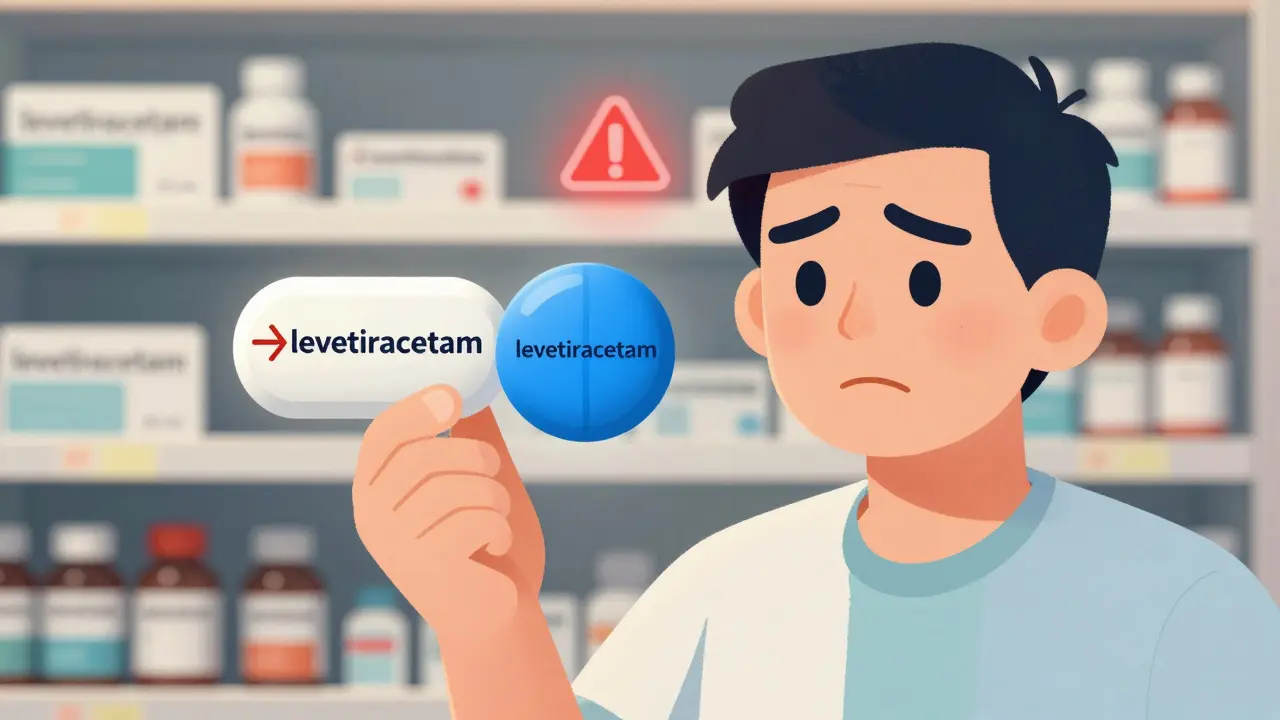
When you pick up a prescription, you might not notice the difference between the brand-name pill and the generic one. They look different - maybe a different color, shape, or logo - but the active ingredient is supposed to be the same. And for most people, that’s true. But for others, especially those managing serious conditions like epilepsy or heart disease, switching from a brand-name drug to a generic can mean more than just saving money. It can mean the difference between staying stable and facing a medical crisis.
What Does "Bioequivalent" Really Mean?
The U.S. Food and Drug Administration (FDA) says generics must be bioequivalent to their brand-name counterparts. That means the generic must deliver the same amount of active drug into the bloodstream, within the same time frame, as the original. The acceptable range? Between 80% and 125% of the brand’s performance. Sounds strict, right? But here’s the catch: that 20% window can matter a lot. For drugs with a narrow therapeutic index - where even a small change in blood levels can cause side effects or treatment failure - that 20% swing isn’t just statistical. It’s clinical. Take phenytoin, a common antiepileptic. Studies show generic versions can deliver 22% to 31% less drug in the blood than the brand. That’s not within the 80%-125% range - it’s below it. And for someone whose seizures are tightly controlled, that drop can trigger a breakthrough seizure.When Generics Work Better - And When They Don’t
Not all generics are created equal in real-world outcomes. A massive 2020 study in Nature Scientific Reports analyzed data from 8.5 million Austrians over five years. It found that for 10 out of 17 drugs studied - including statins like simvastatin and atorvastatin - generic versions were linked to fewer deaths and fewer heart attacks or strokes. Why? Better adherence. People were more likely to keep taking their meds when they cost less. But then there are exceptions. For bisoprolol and nebivolol - two beta-blockers used for high blood pressure and heart failure - the study found worse outcomes with generics. And in another study, patients who switched from brand-name to generic blood pressure pills had a 5.4% higher chance of ending up in the emergency room within six months. The biggest red flags come from epilepsy. A 2017 review of 760 patients found that nearly one in five who switched to generic levetiracetam reported blurred vision, headaches, depression, memory loss, or mood swings. Almost half of those who had breakthrough seizures after switching had significantly lower drug levels in their blood. That’s not a coincidence. It’s a pattern.Why Do Some People Switch Back?
A 2023 study tracking 218 patients over five years found that 12.8% switched back from generic to brand-name drugs. That’s not small. It’s alarming. And it wasn’t because they couldn’t afford the brand. It was because they felt worse. Patients often identify their pills by appearance - color, shape, scoring - not by name. One patient might take a white oval pill labeled "levetiracetam" from Manufacturer A. Then, without warning, the pharmacy gives them a blue round pill labeled "levetiracetam" from Manufacturer B. To them, it’s a different drug. They stop taking it. Or they think it’s not working. They don’t tell their doctor. That’s how treatment fails. In fact, 67% of patients in that study recognized their meds by looks alone. And 11.5% ended up taking the same drug twice - because they didn’t realize they were getting two different generics.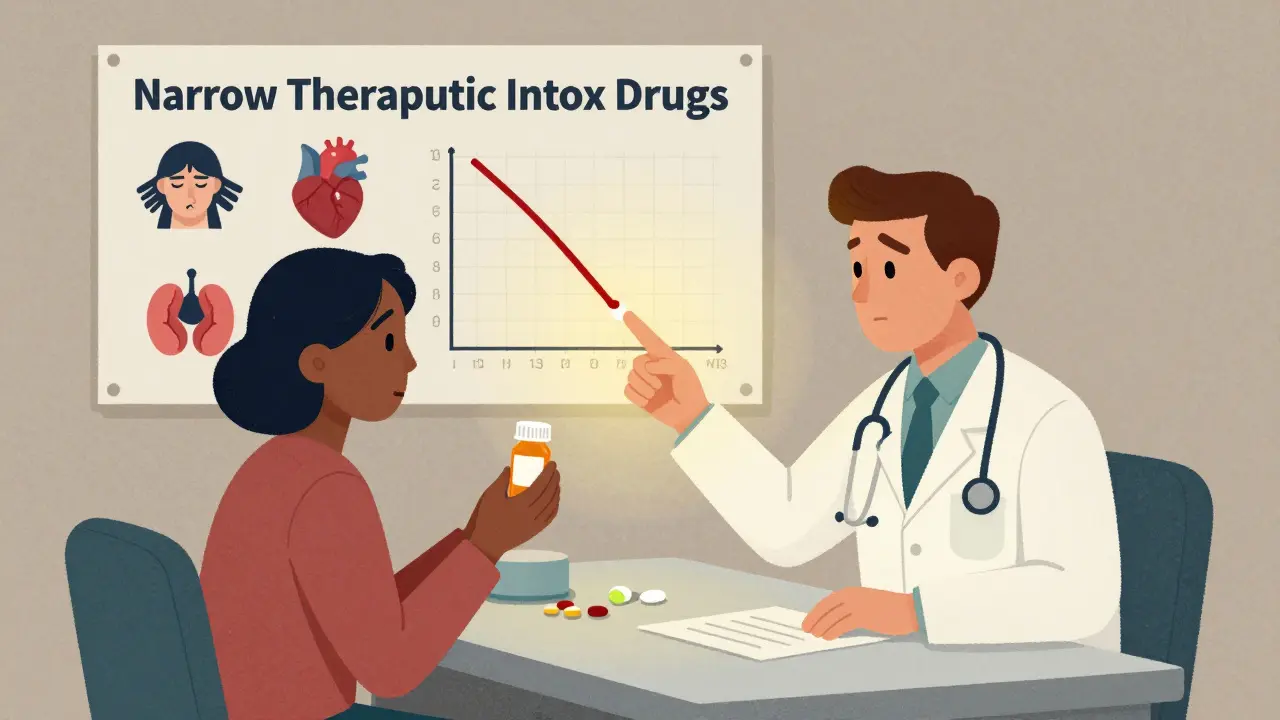
The Role of the Pharmacist vs. The Doctor
There’s a big difference between substitution and switching. Substitution happens at the pharmacy. The doctor writes for "atenolol." The pharmacist gives you the cheapest generic. No one told you. No one asked you. That’s legal in 49 U.S. states. Therapeutic switching is different. That’s when your doctor decides to change your medication on purpose - maybe because a generic is cheaper, or because your insurance won’t cover the brand. That’s a clinical decision. And it should come with a conversation. A 2014 study found that cost savings from switching to generics were often wiped out by the cost of treating side effects, hospital visits, and seizures. For epilepsy patients, each breakthrough seizure cost an average of $1,850 in 2013 dollars. That’s not a bargain. It’s a risk.Who Should Be Careful?
Not everyone needs to worry. For most people on cholesterol meds, diabetes drugs, or even common antibiotics, generics are just as safe and effective. The science backs it. But if you’re taking one of these, proceed with caution:- Antiepileptic drugs (phenytoin, levetiracetam, carbamazepine)
- Blood thinners (warfarin - though not always classified as NTI, it behaves like one)
- Thyroid meds (levothyroxine)
- Heart drugs (digoxin, some beta-blockers like bisoprolol)
- Immunosuppressants (cyclosporine, tacrolimus)
What Should You Do?
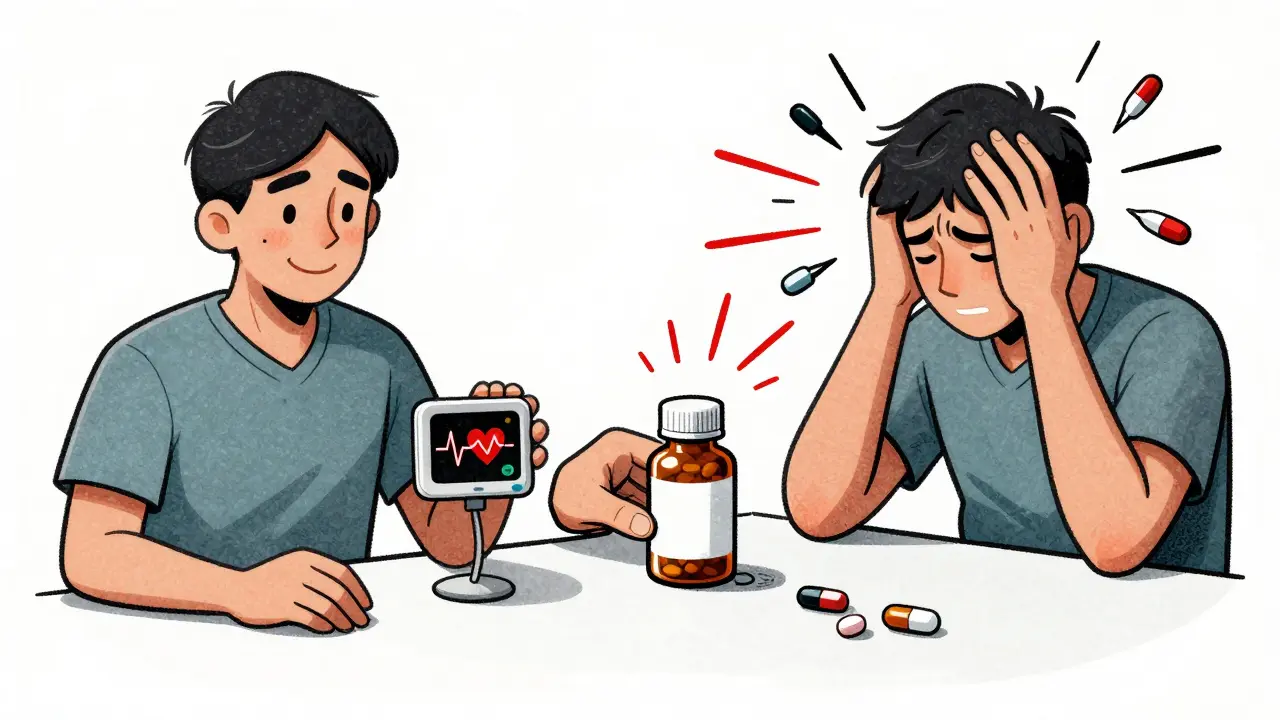
If you’re on a medication with a narrow therapeutic index:- Ask your doctor: "Is this a drug where switching to generic has been shown to cause problems?"
- Ask your pharmacist: "Is this the same manufacturer as last time?"
- Don’t assume two pills with the same name are the same.
- Keep a log: Note changes in how you feel after a switch - sleep, mood, energy, seizures, dizziness.
- If you feel worse, don’t ignore it. Call your doctor. Get your blood levels checked.
The Bigger Picture
Generics save the U.S. healthcare system over $370 billion a year. That’s huge. They make medicine accessible. But savings shouldn’t come at the cost of safety. The FDA is now looking at stricter rules for generics with narrow therapeutic indices. The European Medicines Agency says patients with unstable epilepsy, multiple drugs, or metabolic issues need extra care. And researchers are starting to look at genetics - some people’s bodies process drugs differently based on their DNA. This isn’t about being anti-generic. It’s about being informed. The science is clear: for most drugs, generics are fine. For a few, they’re risky. And if you’re one of those people, you deserve to know.Are generic drugs always as effective as brand-name drugs?
For most medications, yes. Generic drugs must meet strict FDA standards for bioequivalence, meaning they deliver the same active ingredient in the same way as the brand. But for drugs with a narrow therapeutic index - like antiepileptics, blood thinners, or thyroid meds - even small differences in absorption can lead to treatment failure or side effects. Studies show some patients on generic versions of these drugs have lower blood levels or more adverse events.
Why do some patients switch back from generic to brand-name drugs?
Many patients switch back because they feel worse after the change. Symptoms like increased seizures, mood swings, headaches, or dizziness are common. In one study, nearly half of epilepsy patients who had breakthrough seizures after switching to generic levetiracetam had significantly lower drug levels in their blood. Others simply don’t recognize their pill because it looks different - leading to confusion, missed doses, or accidental duplication.
Can pharmacists switch my prescription to a generic without telling me?
In 49 U.S. states, yes. Pharmacists are allowed to substitute a generic for a brand-name drug unless the doctor writes "dispense as written" or the patient opts out. But they’re not required to tell you. That’s why it’s important to check the pill’s appearance each time you refill and ask if it’s the same as before.
Which drugs have the highest risk when switching to generics?
Drugs with a narrow therapeutic index carry the highest risk. These include antiepileptics (phenytoin, levetiracetam, carbamazepine), thyroid hormone (levothyroxine), blood thinners (warfarin), heart drugs (digoxin), and some immunosuppressants (cyclosporine). For these, even a 10% change in blood concentration can cause serious harm.
Should I get my blood levels checked after switching to a generic?
If you’re on a high-risk medication - especially antiepileptics, thyroid meds, or immunosuppressants - yes. Therapeutic drug monitoring can show whether the generic is delivering the same amount of drug as your brand. If your levels drop or spike after switching, your doctor may need to adjust your dose or switch you back.
Tatiana Barbosa
Look, I get it - generics save money, and for most people, they’re totally fine. But when you’re talking about epilepsy or thyroid meds, this isn’t about cost. It’s about survival. I’ve seen a friend go from zero seizures to three in a week after a pharmacy switch. No warning. No discussion. Just a different-looking pill. That’s not healthcare - that’s Russian roulette with your nervous system.
Doctors and pharmacists need to stop treating patients like vending machines. We’re not interchangeable parts. We’re humans with fragile biological balances. If your life depends on a 0.5 mg difference, you deserve to know what you’re getting.
Brandon Osborne
Oh here we go again - the ‘but what about the exceptions’ crowd. Let me guess, you also think seatbelts are unnecessary because one guy survived a crash without one? The FDA’s 80-125% range isn’t a loophole - it’s a scientifically validated standard. If your drug is so sensitive that a 15% fluctuation kills you, maybe you shouldn’t be on it in the first place. There’s a reason 95% of people do fine with generics. Stop fearmongering.
Also, ‘different color pill’? That’s your excuse? Grow up. You think brand-name Adderall is magic because it’s blue? It’s a pill. The active ingredient is the same. You’re not special.
Susan Kwan
Brandon, you’re the reason people don’t trust doctors. ‘Grow up’? Wow. That’s not advice - that’s a punch in the gut to someone who almost died because a pharmacist swapped their med without telling them. You don’t get to dismiss lived experience because it doesn’t fit your worldview. And no, not everyone is ‘fine’ with generics. Some of us are the 5% who get screwed over so the system can save $10 per prescription. That math doesn’t add up when your life is the cost.
Joseph Charles Colin
Let’s clarify the science: bioequivalence is measured via AUC and Cmax - area under the curve and maximum concentration. The 80-125% CI is a 90% confidence interval, not a 20% tolerance. That means the true difference between brand and generic is statistically indistinguishable in 90% of cases.
But here’s the catch - for narrow therapeutic index (NTI) drugs, the FDA now recommends a tighter 90-111% range for certain agents (e.g., levetiracetam, warfarin). Many generics still use the old standard. That’s the real issue. Not ‘fearmongering’ - regulatory lag. And yes, some generics are made by different manufacturers with different excipients. That matters. Especially in patients with GI motility disorders or liver enzyme polymorphisms.
Ken Cooper
Wait so let me get this straight - if i take a pill that says 'levetiracetam' but it's blue instead of white, and i get a seizure, it's because i didn't check the label? I mean, i'm not a pharmacist. I'm just a guy trying not to die. Why does the system make me a detective? And why does the pharmacy not say 'hey, your med changed'? It's like buying the same model car but the engine gets swapped without telling you. You'd freak out. So why is this okay with medicine?
Also - i've had the same generic for 3 years. Then last month i got a new one. Same name. Different shape. I thought i was having a stroke. Called my doc. Turned out i was just confused. But i almost stopped taking it. That's not my fault. That's the system's.
Ryan Vargas
This isn’t about generics. It’s about control. The pharmaceutical-industrial complex doesn’t want you to know that the same molecule, in the same dosage, can behave differently based on the manufacturer’s filler compounds - which are rarely disclosed. Why? Because if you knew that, you’d realize your ‘medication’ is more like a lottery ticket than a cure.
The FDA’s approval process is a joke. They don’t test real-world outcomes - they test bioequivalence in 20 healthy young men. Real patients? Diabetics? Elderly with kidney disease? People on five other meds? Nah. We’re just data points. And now they’re pushing this as ‘cost-saving innovation.’ It’s not innovation. It’s exploitation. They’re gambling with your life so shareholders can get a bonus. Wake up.
And don’t even get me started on how the same generic from the same company can vary batch to batch. I’ve seen it. I’ve had my blood drawn. The levels jumped 22% between two refills. No one cared. That’s not science. That’s negligence.
John McDonald
Appreciate the depth here. I’m a nurse on the neuro unit. We’ve had three patients this year who had breakthrough seizures after a generic switch. All were on levetiracetam. All were stable for years. All had no other changes - meds, diet, sleep. Just a new pill.
One guy’s mom found the old prescription bottle in the drawer. Same name. Different look. She called us crying. We checked levels - 32% below therapeutic. We switched him back. He’s seizure-free again.
Bottom line: if your med is critical, ask for the brand. If you can’t afford it, ask for assistance programs. Don’t let a pharmacy’s cost-cutting become your crisis.
MANI V
People like you are why America is broken. You think your ‘personal experience’ overrides science? The FDA doesn’t approve drugs based on anecdotes. It’s based on data. 80-125% is the global standard. Europe uses it. Canada uses it. Even China uses it. You’re just whining because you don’t like change. Get over it. Your life isn’t special. The system works for millions. Stop being a drama queen.
Susan Kwan
Mani, you’re the reason people stop trusting medical advice. You don’t get to dismiss trauma as ‘drama.’ You’ve never had a seizure. You’ve never watched someone you love lose control because a pharmacist swapped their pill. That’s not ‘whining.’ That’s survival. And if you think the FDA’s standards are flawless, go read the 2017 study on levetiracetam generics - 18% of patients had clinically significant drops. That’s not ‘science.’ That’s a failure. And you’re defending it like it’s gospel.
Andy Cortez
Y’all are overthinking this. I take a generic for my blood pressure. I’ve been on it for 7 years. No issues. My doc switched me from brand to generic because my insurance changed. I didn’t even notice. I’m not some fragile snowflake. People who freak out over pill color are the reason pharmacies have to put 17 warning labels on everything.
Also - if you’re so scared of generics, why don’t you just pay for the brand? No one’s forcing you to take the cheap one. You’re mad because you can’t have both safety AND free money. Sorry. Life ain’t a buffet.
Joshua Smith
Just wanted to say thanks to Joseph and Susan - this is the kind of conversation we need. Not yelling. Not dismissing. Just facts and lived experience.
I’m on levothyroxine. Switched generics twice. First time, I got super tired. Second time, I gained 8 lbs. Didn’t connect it until I checked my TSH. Was way off. Switched back to brand. Back to normal.
My point? If you’re on one of these high-risk meds - don’t assume. Ask. Track. Monitor. And if your doc says ‘it’s fine,’ ask for the data. You’re not being paranoid. You’re being smart.
PAUL MCQUEEN
Wow. So much drama over a pill. The FDA’s been doing this for 40 years. If generics were this dangerous, they’d be banned. The fact that they’re not means you’re all just scared of saving money. Also, ‘I felt worse’ - that’s not data. That’s emotion. Go get a lab test if you’re so worried. Or just shut up and take the cheap pill. The system works. You’re just not used to it.