

Serotonin Syndrome Symptom Checker
Select the symptoms currently being experienced to estimate potential severity based on clinical triads.
1. Cognitive Changes
2. Neuromuscular
3. Autonomic
Estimated Severity: None
Please select symptoms to begin analysis.
The Red Flags: Identifying the Symptom Triad
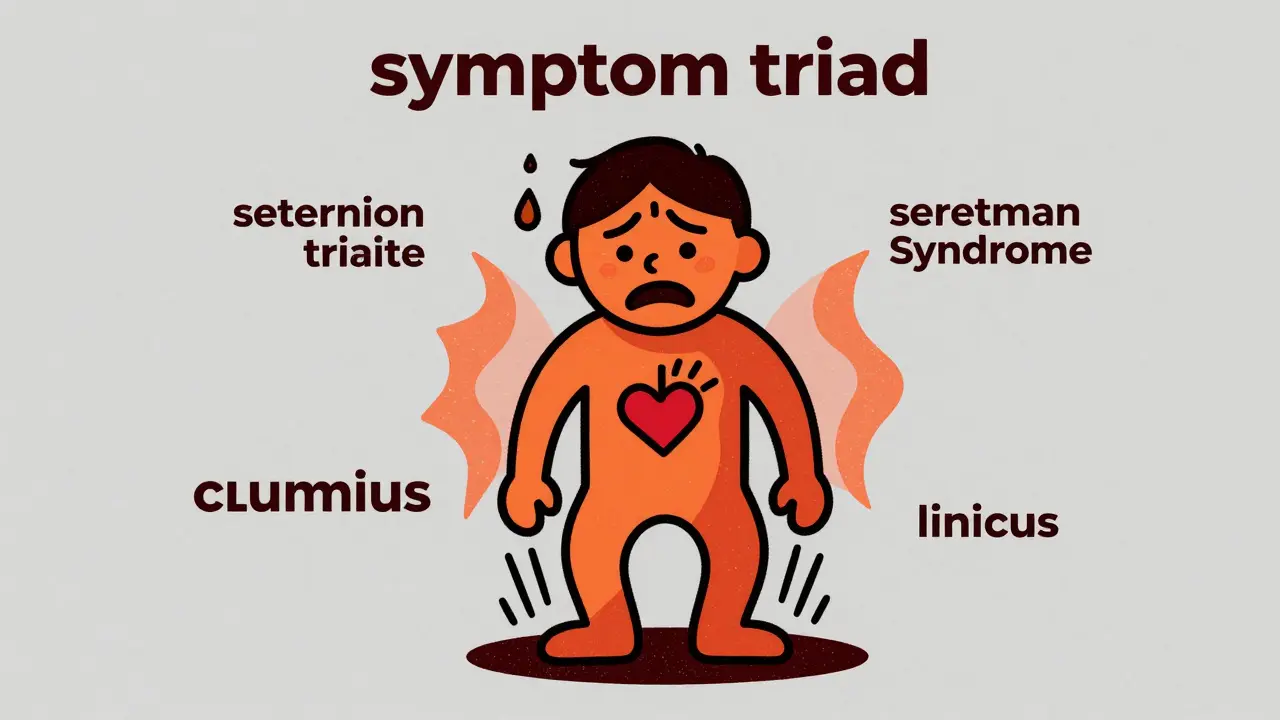
Doctors don't just guess when diagnosing this condition; they look for a specific "triad" of symptoms. If you see a combination of these three categories, it's time to seek help immediately.First, there are the cognitive changes. This is often how the crisis begins. You might notice extreme agitation or confusion. In more severe cases, this progresses to delirium or even hallucinations. It's not just "feeling anxious"; it's a state of mental disorientation where the person may not know where they are or start seeing things that aren't there.
Next are the neuromuscular abnormalities. This is the most telling physical sign. Look for "clonus," which is a series of involuntary, rhythmic muscular contractions. This often shows up as shivering or rhythmic jerking of the ankles. You might also notice hyperreflexia (overresponsive reflexes) or severe muscle rigidity. If a person's muscles feel stiff or they can't stop shaking, this is a major warning sign.
Finally, there is autonomic hyperactivity. This is where the body's internal systems go into overdrive. Common signs include heavy sweating (diaphoresis), a racing heart (tachycardia), and sudden spikes or drops in blood pressure. High fever, or hyperthermia, is the most dangerous symptom here. If you notice diarrhea accompanying these symptoms, it's another clue that the gut's serotonin receptors are overstimulated.
| Severity | Key Symptoms | Temperature | Typical Outcome |
|---|---|---|---|
| Mild | Mild agitation, sweating, hyperreflexia | Below 38.5°C (101.3°F) | Resolves quickly after stopping drug |
| Moderate | Confusion, clonus, tachycardia, fever | 38.5°C - 41.1°C | Requires hospital monitoring/sedation |
| Severe | Delirium, rigid muscles, organ failure | Above 41.1°C (106°F) | ICU admission, high risk of mortality |
How to Respond in an Emergency
If you suspect serotonin syndrome, the clock is ticking. The speed of response is the biggest predictor of survival. For severe cases, the difference between treatment within 2 hours versus 6 hours can change the mortality rate from roughly 2% to over 11%.For Mild Reactions: The first step is the immediate discontinuation of all serotonergic agents. This means stopping the SSRI or any other contributing drug. Medical teams typically provide IV fluids to keep the patient hydrated and use Benzodiazepines (like diazepam or lorazepam) to calm the nervous system and relax the muscles. Patients are usually monitored for 12 to 24 hours to ensure the symptoms don't escalate.
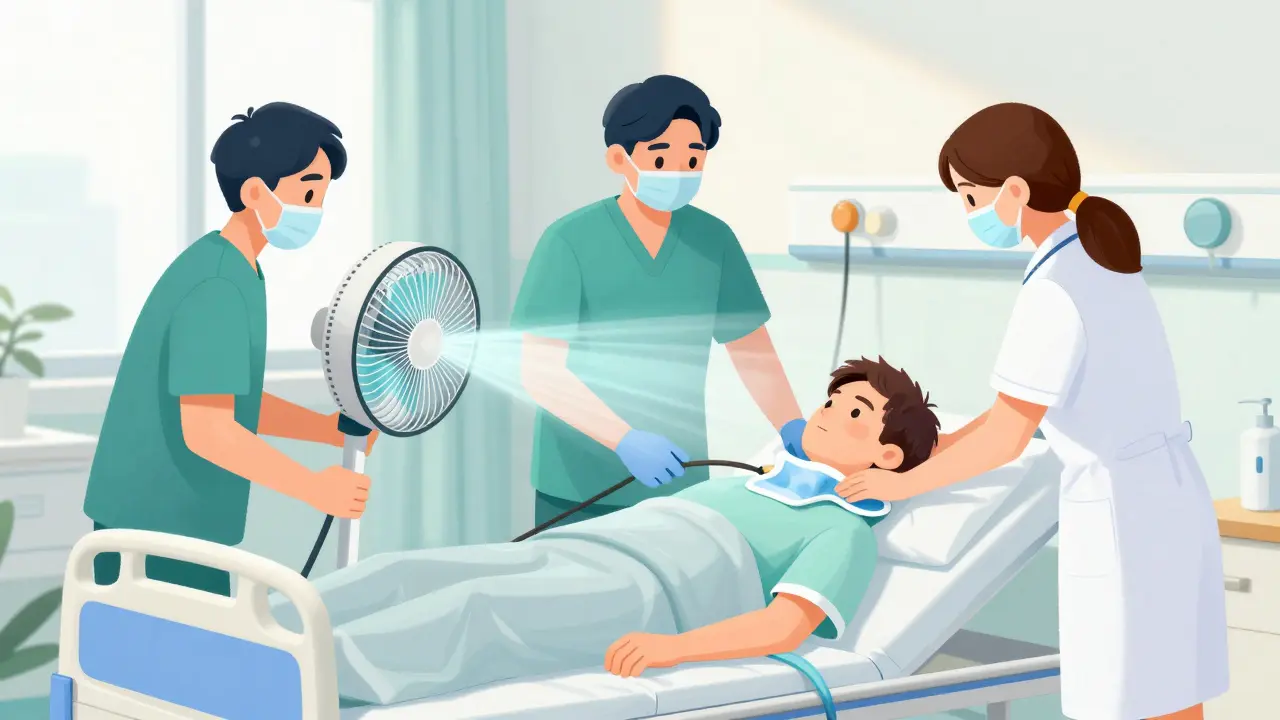
For Moderate Reactions: In addition to stopping the meds and using benzodiazepines, doctors will implement active cooling. This means using fans and misting to bring the temperature down. They may also use non-serotonergic antiemetics to treat nausea. At this stage, the focus is on preventing the patient from sliding into a severe crisis.
For Severe Crises: This is a critical care scenario. Patients often require rapid sequence intubation to manage their airway and paralysis with non-depolarizing agents like rocuronium to stop the muscle contractions that are driving the fever up. Aggressive external cooling, such as ice packs on major blood vessels and cooling blankets, is mandatory. In some extreme cases, a drug called Cyproheptadine-an antihistamine that blocks serotonin receptors-is administered via a feeding tube.
A Critical Warning: Never use physical restraints on someone with serotonin syndrome. It seems intuitive to hold someone down if they are agitated, but doing so actually increases muscle contractions. This raises the body temperature even further, potentially turning a moderate case into a fatal one.
Common Triggers and High-Risk Combinations
Most people don't get serotonin syndrome from taking their prescribed antidepressant alone. It usually happens when two or more "serotonergic" substances interact. You should be especially careful if you are mixing an SSRI with any of the following:- MAOIs (Monoamine Oxidase Inhibitors): These have the highest risk level. Combining an SSRI with an MAOI can be catastrophic.
- Tramadol: This pain medication is a common culprit in ER visits because it increases serotonin levels.
- Triptans: Often used for migraines, these can interact with SSRIs, though the risk is lower than with MAOIs.
- Certain Supplements: Be cautious with St. John's Wort, as it can mimic the effects of an antidepressant and push your serotonin levels too high.
It is also important to note that some medications stay in your system longer than others. For example, Fluoxetine (Prozac) has a very long half-life. This means even after you stop taking it, the drug remains in your body for weeks, and the risk of serotonin syndrome persists long after the last pill.
Diagnostic Truths: Avoiding Misdiagnosis
One of the biggest dangers of serotonin syndrome is that it looks like other things. In emergency rooms, about 30% to 40% of cases are initially misdiagnosed. It is frequently mistaken for an anxiety attack, a panic disorder, or even a different condition called Neuroleptic Malignant Syndrome (NMS).How do doctors tell them apart? The key is timing and muscle tone. Serotonin syndrome happens fast-usually within 24 hours of a dose change. NMS takes longer, often appearing after 7 to 10 days of medication. Furthermore, serotonin syndrome features "hyperreflexia" (bouncy, overactive reflexes), whereas NMS is characterized by "lead-pipe rigidity," where the muscles are stiff and frozen.
To get it right, medical professionals use the Hunter Serotonin Toxicity Criteria. This is a set of clinical observations that focuses on the presence of clonus and agitation. When applied within the first 15 minutes of arrival, this tool significantly improves patient outcomes by cutting down the time to correct treatment.
Can I treat the fever with Tylenol or Ibuprofen?
No. This is a common and dangerous mistake. In serotonin syndrome, the fever is caused by intense muscle activity (shivering and rigidity), not by a "reset" of the body's thermostat in the brain. Antipyretics like acetaminophen or ibuprofen do not work for this type of hyperthermia and waste precious time. Physical cooling is the only effective method.
How long does it take to recover from serotonin syndrome?
For mild to moderate cases, about 92% of people recover within 24 to 72 hours after the offending medication is stopped. However, if the medication was Fluoxetine, recovery can take 3 to 4 weeks because the drug stays in the system so long. Severe cases requiring ICU care take much longer and depend on how quickly the cooling and sedation were started.
Is serotonin syndrome the same as an allergic reaction?
No. An allergic reaction is an immune response (causing hives, swelling, or anaphylaxis). Serotonin syndrome is a pharmacological toxicity-essentially an "overdose" of chemical activity in the brain. It is not about your immune system; it is about your neurotransmitters being overwhelmed.
What should I do if I think I'm having a reaction?
Do not "wait it out." If you notice tremors, sudden sweating, or confusion, go to the emergency room immediately. Tell the triage nurse exactly which medications you are taking, including dosages and any recent changes or new supplements. This allows them to use the Hunter Criteria and start benzodiazepines immediately.
Can this happen if I take my medication exactly as prescribed?
Yes, though it is less common. It typically happens if you add a second medication (like a cough suppressant or painkiller) that also affects serotonin, or if your body processes the drug slower than usual. Always check for drug interactions before starting any new medication, even over-the-counter ones.
Next Steps for Patients and Caregivers
If you are currently taking an SSRI, the best way to stay safe is through proactive communication. Create a comprehensive list of every medication, vitamin, and supplement you take. Share this list with every doctor you see-including your dentist and primary care physician-because interactions can happen in unexpected places.If you are a caregiver, learn the signs of ocular clonus (uncontrolled eye movements) and muscle rigidity. These are often the first visible signs that a patient is slipping into toxicity before they are even able to articulate that they feel "wrong." If you see these signs, seek emergency care and specifically mention the risk of serotonin syndrome to the medical staff to avoid the common 30-40% misdiagnosis rate.
Olayinka Ibukunoluwa Mercy
This is such a vital reminder for everyone!!! 🌟 Please, please be safe with your medications and always keep your doctors in the loop!!! ❤️🙏✨
RAJESH MARAVI
Sry but this is totaly overblowen... ppl act like every SSRI is a death trap lol. Most doctors dont even mention this because its so rare for normal ppl. Just another way to scare us into thinkin we need a medcal degree to take a pill... ridiculuos!!
Mike Arrant
Listen, if you're actually getting this, you're probably ignoring your diet and relying too much on chemicals. You can't just pop pills and then act surprised when your brain chemistry goes haywire. Get some sunlight and stop overmedicating.
Dan Wizard
It is quite fascinating how the biological mechanism of the 5-HT receptors can lead to such a rapid systemic collapse, and while I agree that the guide is helpful, I wonder if the intersection of these medications with common over-the-counter cold medicines is discussed enough in general practice because many people just grab a cough syrup without realizing it might have a serotonergic effect that could potentially push someone over the edge into a mild crisis.
Anastasios Kyriacou
idk why ppl care so much about these lists just call a doc if u feel weird lol
Mayur Pankhi Saikia
The sheer lack of nuance in the general public's understanding of pharmacokinetics is simply... appalling!!! One must consider the enzymatic pathways, specifically CYP2D6, before making such sweeping generalizations about 'triggers'!!!! Most people reading this barely understand basic biology, yet they feel entitled to an opinion on medical toxicity!!!!
Amy Fredericks
I'm so glad there's a clear breakdown of the symptoms here. It can be so frightening when you're not sure what's happening, but having a guide like this helps us stay calm and act quickly to help our loved ones. Let's all look out for each other! <3
Dave Edwards
Oh, absolutely brilliant! Let's just trust the 'Hunter Criteria' blindly without questioning the systemic failures of the ER triage process! :) It's almost poetic how we're told NOT to restrain people, yet the system itself is a restraint on patient autonomy! What a joke! :P
Saptatshi Biswas
The incompetence of Western medical systems is precisely why these lists are necessary because they cannot even diagnose a basic toxicity without a manual! This guide is merely a bandage on a gaping wound of medical negligence! It is an absolute disgrace that 40% of cases are misdiagnosed in those so-called 'advanced' hospitals!
Divyanshu Giri
Stay strong everyone! Just keep it simple and stay safe! You got this champ!
Caroline Duvoe
whatever lol just dont mix pills 🙄💅
Mel Glick
I cannot believe people are actually arguing about this in the comments. The post is clear. If you're on these meds, be careful. End of story. Stop trying to make it a debate about 'systemic failures' or 'biological nuance' and just read the damn warning signs!
Sue Stoller
Sending so much love to anyone struggling with their meds right now! 🌸 You are not alone and it's okay to ask for help! Just keep a little list of your supplements and you'll be golden! ✨💪
Nicole Antunes
It is very encouraging to see such detailed information available for caregivers. Understanding that Tylenol doesn't work for this specific type of fever is a crucial point that could prevent a lot of wasted time in an emergency. (^_^)
Odicha ude Somtochukwu
I must express my deepest gratitude for this comprehensive guide, as it provides a necessary level of clarity for those of us who may be navigating these complex treatments within our communities. It is our collective responsibility to ensure that such life-saving knowledge is disseminated with precision and care, ensuring that no one suffers due to a lack of information or a failure in communication between patient and provider. I truly believe that through such openness and education, we can foster a safer environment for all patients regardless of their background or location. The distinction between NMS and Serotonin Syndrome is particularly enlightening and should be emphasized more in clinical settings to avoid the tragic errors mentioned. Let us all strive to be more vigilant and supportive of one another in our journeys toward mental wellness. It is an honor to see such a detailed breakdown provided for the public good. I hope many more will find this resource helpful and a source of strength in times of crisis. May we all remain healthy and informed in our pursuit of stability and peace. Thank you for this contribution!!!