
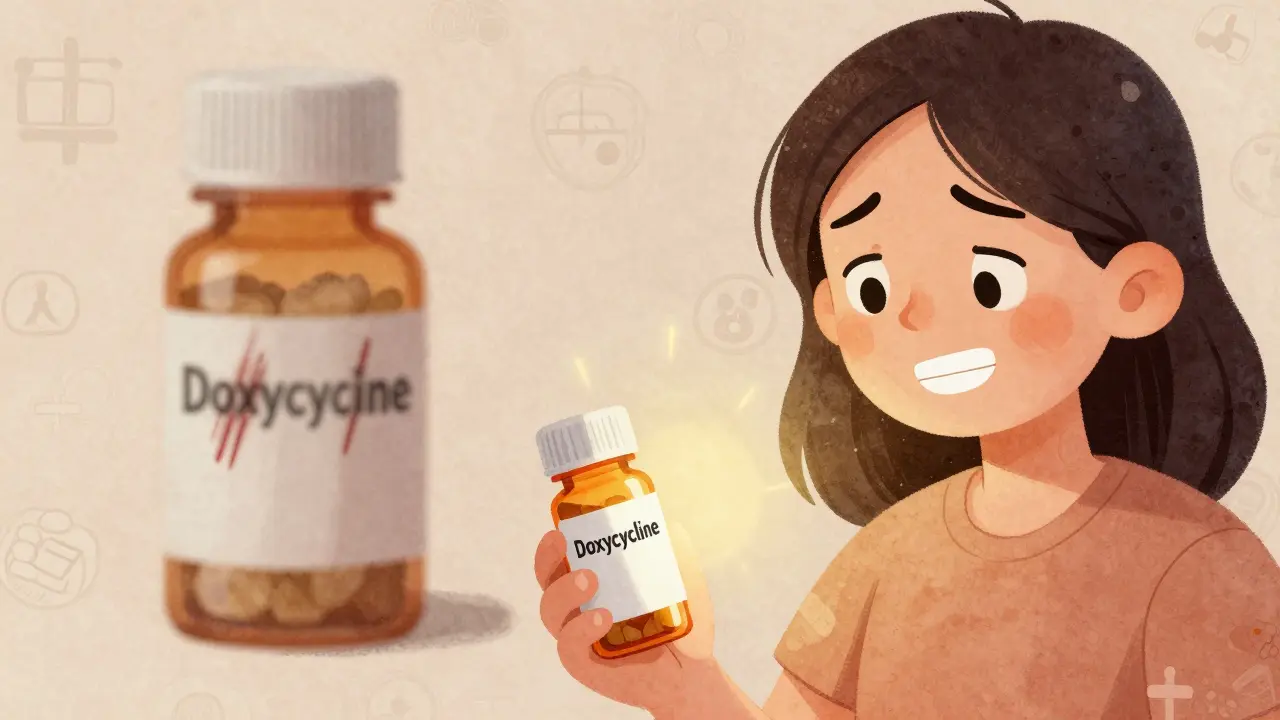
Tetracycline Safety Checker
Is This Antibiotic Safe for Your Child?
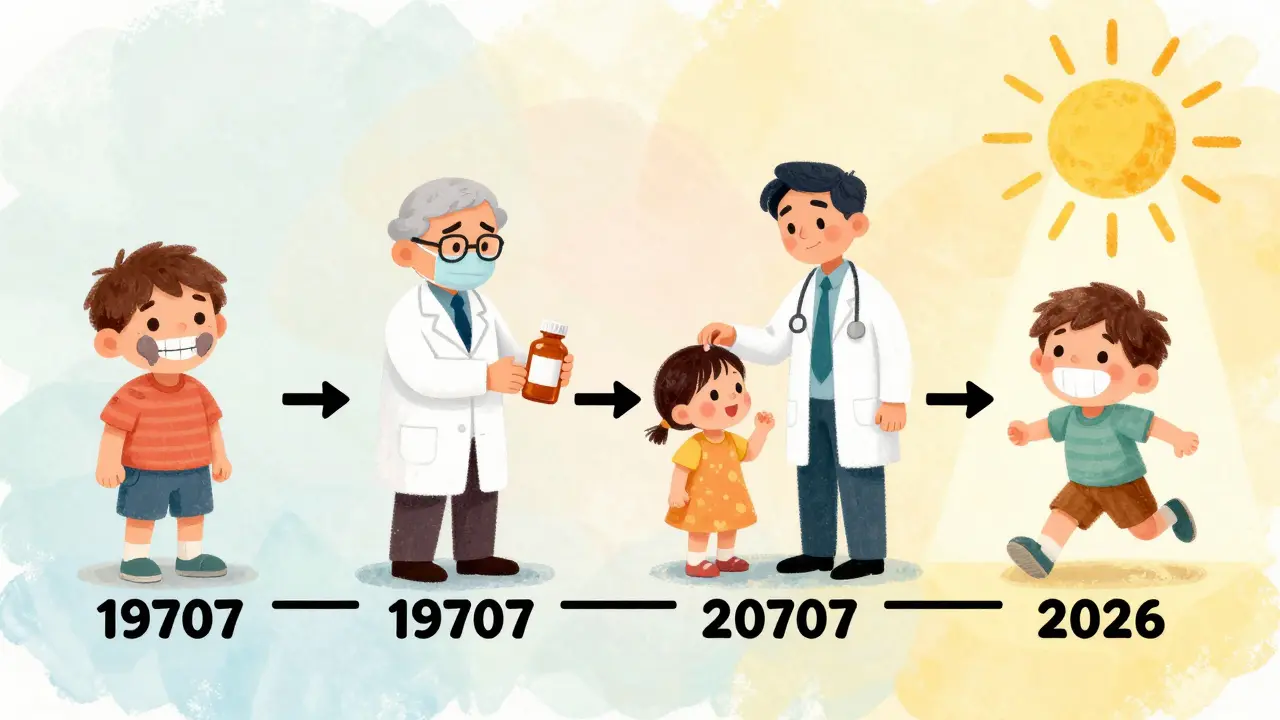
For decades, doctors avoided giving tetracycline antibiotics to children under 8 because of a well-known risk: permanent tooth staining. If your child took tetracycline as a baby or toddler in the 1970s, you might remember the yellow, gray, or brown bands that showed up on their front teeth. It wasn’t just cosmetic-it was heartbreaking for families and a nightmare for dentists. But here’s the twist: doxycycline, the most commonly used tetracycline today, doesn’t cause the same damage. And the medical world is finally catching up.
Why Tetracycline Stains Teeth
Tetracycline doesn’t just kill bacteria-it also binds to calcium. When a child’s teeth are still forming-especially before age 8-the antibiotic gets locked into the developing enamel and dentin. This creates a chemical complex that changes color over time. New teeth might look bright yellow at first, but as they’re exposed to sunlight, they darken to gray or brown. The staining isn’t surface-level like coffee stains. It’s deep inside the tooth structure, so brushing won’t fix it.The worst damage happens with long courses or high doses. Studies from the 1960s showed that kids who took more than 35 mg per kilogram per day, or more than 10 days total, were far more likely to have severe staining. That’s why older guidelines said: avoid tetracycline entirely under age 8. But not all tetracyclines are the same.
Doxycycline Is Different
Doxycycline is a cousin of tetracycline, but it behaves differently in the body. It binds to calcium at less than half the rate-just 19% compared to tetracycline’s 39.5%. It’s also given in lower daily doses and for shorter periods. That small difference changed everything.In 2023, the CDC and the American Academy of Pediatrics updated their guidelines: doxycycline is now the first-choice antibiotic for Rocky Mountain spotted fever (RMSF) in children of any age. Why? Because delaying treatment can be deadly. RMSF kills 4% to 21% of patients if not treated early. The risk of tooth staining from a 7- to 14-day course of doxycycline? Almost zero.
A 2025 review of 162 children under 8 who got doxycycline found only one case of possible discoloration-and that child was a premature infant under 2 months old. In another study, blinded dentists examined permanent teeth of children who’d taken doxycycline for suspected RMSF and found no difference in color or enamel strength compared to kids who never took it. The largest study to date, involving hundreds of children followed for over a decade, showed no staining in any child with permanent teeth.
What About Other Tetracyclines?
Don’t assume all tetracyclines are safe. Chlortetracycline, oxytetracycline, and tetracycline itself? Still off-limits for kids under 8. These older versions have a proven track record of causing deep, permanent stains. Even tigecycline, a newer tetracycline derivative, is still contraindicated in young children. The key distinction isn’t just about the drug name-it’s about the specific chemical structure and how it interacts with developing teeth.Parents often hear “tetracycline” and think, “That’s the one that stains teeth.” But if the doctor prescribes doxycycline for a tick bite or suspected RMSF, that’s not the same thing. The difference matters. One can be life-saving. The others are still dangerous for young teeth.

When Are Teeth Most at Risk?
Tooth development happens in stages. Primary (baby) teeth start forming around 16 weeks in the womb and finish calcifying by 10-14 months after birth. Permanent front teeth begin forming around 6 months of age and finish around age 6. The back teeth (molars) keep developing until age 8. That’s why the old rule said “no tetracycline under 8”-it covered the full window of risk.But here’s the nuance: doxycycline doesn’t cause staining even during this window, as long as it’s given for a short time. A 7-day course for Lyme disease or RMSF won’t harm teeth. A 30-day course for acne? That’s a different story. The risk isn’t just about age-it’s about dose and duration. The CDC recommends no more than 21 days of doxycycline in children unless absolutely necessary.
What Do Dentists See Today?
Dental professionals who’ve been practicing for 20+ years still remember the cases: kids with dark, streaked front teeth because their parents gave them tetracycline for an ear infection in the 1980s. That trauma shaped decades of caution.But now? Pediatric dentists report seeing almost no cases of doxycycline-related staining. In fact, many say they’ve never seen it. A 2023 survey of members of the American Academy of Pediatric Dentistry found that nearly 70% had treated children with doxycycline for rickettsial infections and observed no dental changes. The fear is fading, replaced by evidence.
Why Are Some Doctors Still Hesitant?
Despite the evidence, many doctors still avoid doxycycline in young kids. Why? Because the old warnings are still printed on drug labels, and parents still ask, “Isn’t that the one that turns teeth gray?” Pharmacy systems sometimes flag doxycycline prescriptions for children under 8 as “contraindicated,” forcing doctors to justify it.One 2018 study found that nearly half of Tennessee doctors still didn’t prescribe doxycycline to children under 8 with suspected RMSF-even though it’s the only antibiotic proven to prevent death from the disease. The problem isn’t science. It’s habit. And fear.
Clearer labeling and better education are helping. The CDC now provides printable handouts for parents: “Short-term doxycycline does not cause tooth staining.” Many pediatric clinics now include this in their discharge instructions. Still, it’s up to doctors to explain the difference between doxycycline and older tetracyclines.
What Should Parents Do?
If your child is prescribed doxycycline for a tick bite, suspected RMSF, or another serious infection:- Ask: “Is this doxycycline?” Not just “Is this a tetracycline?”
- Confirm the dose and duration. A 7- to 14-day course is standard and safe.
- Don’t panic if your child is under 8. The risk of tooth staining is negligible.
- Do not give any other tetracycline (like tetracycline HCl or oxytetracycline) to a child under 8.
- If you’re unsure, ask for the CDC’s patient guide or check their website for updated recommendations.
And if your child already took doxycycline under age 8? Don’t stress. If it was a short course, there’s almost certainly no damage. The teeth are already formed. The staining risk is only during development.
The Bigger Picture
This isn’t just about teeth. It’s about trusting science over old fears. For decades, we sacrificed effective treatment to avoid a risk that turned out to be exaggerated. Now we know: a short course of doxycycline can save a child’s life without harming their smile.Future guidelines may expand doxycycline’s use beyond rickettsial diseases-perhaps for certain types of pneumonia or acne in teens. But for now, the message is clear: doxycycline is safe for kids. Other tetracyclines are not. And when it comes to infections like RMSF, waiting to treat is far more dangerous than giving the right antibiotic.
What About Pregnancy?
The same logic applies to pregnant women. Tetracycline is still contraindicated after the fourth month of pregnancy because the baby’s teeth are developing. Doxycycline? The data is limited, but current guidelines still recommend avoiding it during pregnancy unless there’s no alternative-for example, in life-threatening infections like RMSF. Even then, doctors weigh the risks carefully. But for children, the balance has tipped decisively toward safety.Can doxycycline cause tooth staining in children under 8?
No, not when given in short courses (7-14 days) for serious infections like Rocky Mountain spotted fever. Multiple studies, including one with over 160 children, found no significant tooth discoloration. The risk is negligible compared to older tetracyclines like tetracycline HCl or oxytetracycline, which are still known to cause permanent staining.
Is all tetracycline dangerous for kids?
No. Only older tetracyclines-like tetracycline, chlortetracycline, and oxytetracycline-are dangerous for children under 8. Doxycycline and minocycline are different. Doxycycline is now considered safe for short-term use in young children for life-threatening infections. Minocycline, however, still carries a risk of staining and is not recommended under age 8.
What’s the safest antibiotic for a child under 8 with an infection?
It depends on the infection. For bacterial ear infections or strep throat, amoxicillin or azithromycin are first-line. But for tick-borne illnesses like Rocky Mountain spotted fever, doxycycline is the most effective and safest choice-even for infants. Never avoid doxycycline for a serious infection because of outdated fears about teeth.
How long does it take for tetracycline staining to appear?
Staining from older tetracyclines doesn’t show up right away. Newly erupted teeth may look yellow or pale at first. Over months to years, exposure to sunlight causes the color to darken to gray, brown, or even red-brown. The stains are permanent and embedded in the tooth structure, not on the surface.
Can teeth whitening fix tetracycline staining?
Traditional whitening treatments like hydrogen peroxide gels rarely work on tetracycline stains because the discoloration is inside the tooth, not on the enamel. Veneers or crowns are often the only reliable solution. That’s why prevention-avoiding the wrong antibiotics-is far better than trying to fix the damage later.
Erwin Kodiat
Wow, I had no idea doxycycline was safe for kids. My cousin’s kid got it for a tick bite last year and I was totally freaked out-thought it’d ruin their smile. Turns out I was the one stuck in the 90s. Good to see science finally catching up with real life.
Lydia H.
It’s wild how fear outlives evidence. We used to avoid penicillin because of ‘allergies’ too-until we realized most people weren’t actually allergic. Same pattern here. We let old warnings become dogma, even when the data says otherwise. Time to update the mental software.
Astha Jain
OMG i was like wait so doxycycline is fine?? i thought all tetracycline stuff turns teeth black like in those old pics?? lmao my bro got it for acne when he was 6 and his teeth are fine???
Lewis Yeaple
While the data supporting the safety of short-term doxycycline use in pediatric populations is robust, it is imperative to distinguish between off-label use and evidence-based practice. The CDC’s 2023 update reflects a paradigm shift, yet institutional prescribing protocols often lag behind current literature. Physicians must be prepared to articulate this distinction to both colleagues and patients, particularly in light of persistent pharmaceutical labeling restrictions.
Jackson Doughart
I’ve seen the stains. I’ve talked to the parents who still feel guilty. And I’ve seen the teeth of kids who took doxycycline-bright, white, unharmed. It’s not just about the science. It’s about healing the anxiety that’s been passed down for decades. This post doesn’t just inform-it redeems.
Jake Rudin
Let’s be precise: tetracycline-yes, dangerous. Oxytetracycline-yes, dangerous. Chlortetracycline-yes, dangerous. Minocycline-still risky, especially with prolonged use. Doxycycline? Not the same. Not even close. The molecular binding affinity is different, the pharmacokinetics are different, the dosing regimens are different. And yet, the stigma remains. Why? Because humans fear what they don’t understand-and they cling to old warnings like security blankets.
Josh Kenna
So let me get this straight-you’re telling me my kid’s 10-day doxycycline for suspected RMSF didn’t ruin their teeth? But my dentist still won’t stop talking about ‘tetracycline stains’ like it’s a horror movie? I’m so sick of this outdated crap. Doctors need to stop being cowards and start reading the papers. My daughter’s teeth are fine, and she’s alive. That’s the win.
Valerie DeLoach
This is such an important shift-not just medically, but culturally. We’ve spent generations teaching parents to fear antibiotics, and now we’re realizing we’ve been fearing the wrong thing. The real danger wasn’t the medicine-it was the silence around nuance. We need more posts like this. We need more doctors who say, ‘Here’s what the data says.’ And we need to stop letting labels scare us into making worse decisions.
Christi Steinbeck
STOP SCARING PARENTS. If your kid has a tick bite and you’re hesitating because of tooth stains-you’re risking their life. Doxycycline saves lives. Period. No ‘maybe.’ No ‘probably.’ If it’s RMSF, give it. If it’s Lyme and you’re worried, talk to a pediatric infectious disease specialist. But don’t let fear turn into negligence. Your kid’s smile matters-but their life matters more.