
Imagine paying full price for a medication when an identical, cheaper version exists on the shelf. For decades, that was the reality for millions of Americans. Today, generic drugs are pharmaceutical products that contain the same active ingredients as brand-name drugs and meet identical quality standards account for more than 90% of all prescriptions filled in the United States. This shift didn't happen overnight. It was the result of nearly two centuries of regulatory evolution, tragic medical incidents, and fierce legislative battles.
The journey from expensive brand-name monopolies to affordable generic alternatives is a story of public health crises forcing government action. Understanding this history helps explain why your prescription costs what it does today and how future innovations like biosimilars might change the landscape again.
The Early Foundations: Standards Before Regulations
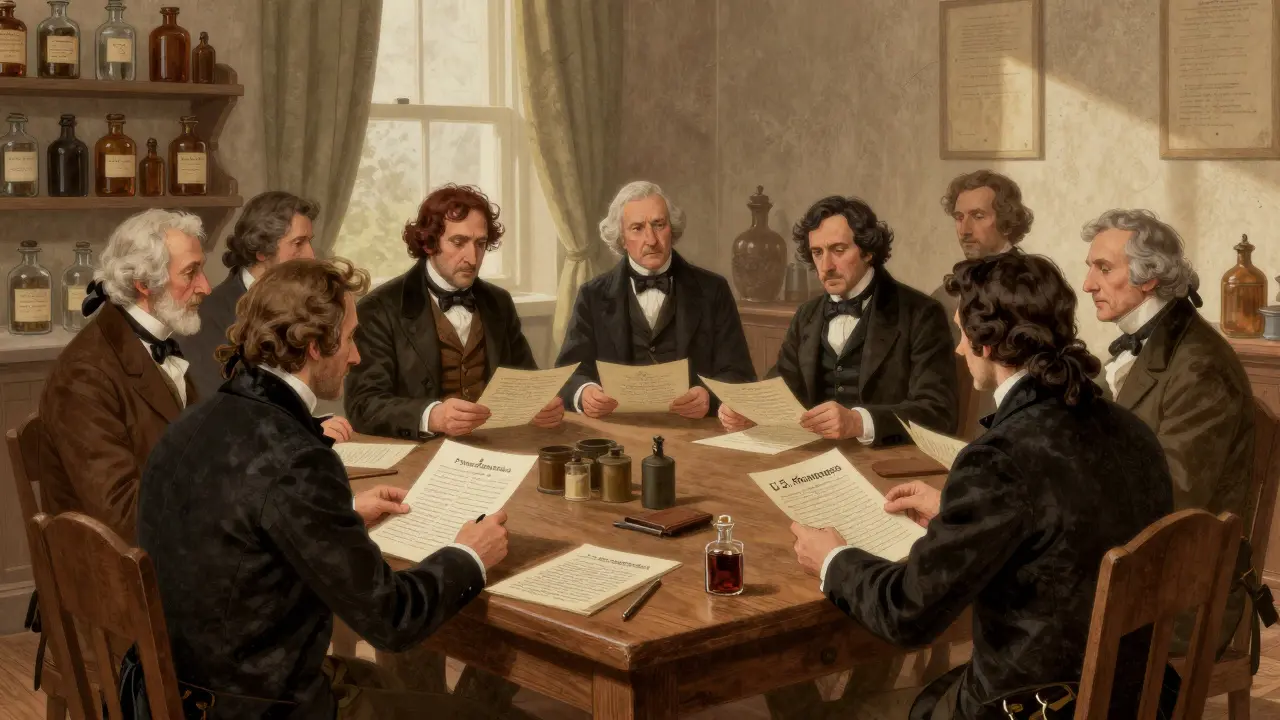
Long before the Food and Drug Administration (FDA) existed, physicians recognized the need for consistency in medicine. In 1820, eleven doctors met in Washington, D.C., to establish the U.S. Pharmacopeia, creating the first compendium of standard drugs. This early effort aimed to ensure that medicines were pure and potent, but without federal enforcement, counterfeit and adulterated drugs remained rampant.
The first major legal step came with the Drug Importation Act of 1848. This law required U.S. Customs Service inspectors to examine incoming drugs to prevent adulterated products from entering the country. While it was a start, it only addressed imports, leaving domestic production largely unregulated. By 1888, the American Pharmaceutical Association published the National Formulary to help combat counterfeiting, establishing early industry standards for drug quality.
The Turning Point: Safety Laws After Tragedy
Public outrage eventually forced the government's hand. In 1906, President Theodore Roosevelt signed the Federal Food and Drugs Act. This landmark legislation required product labeling to prevent misbranding and allowed the government to take action against products causing injury or death. It laid the groundwork for the modern regulatory framework, though it did not yet require proof of safety before marketing.
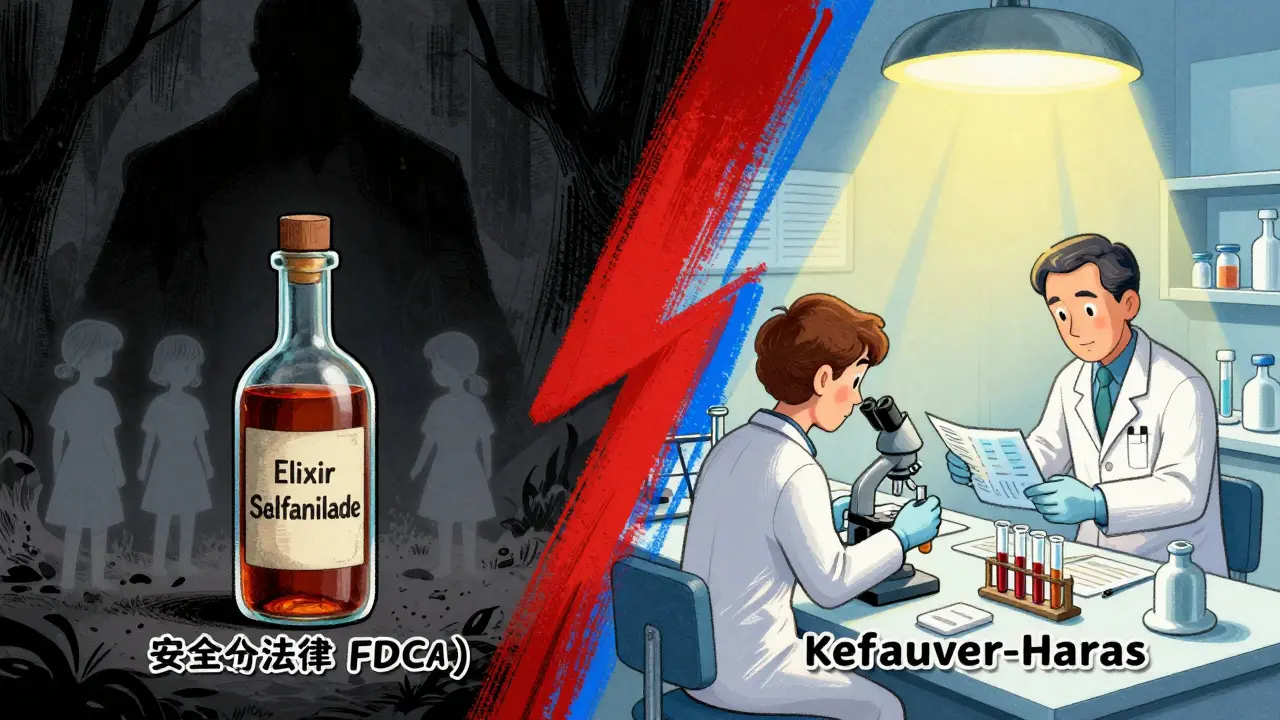
The true catalyst for stricter regulations was the Elixir Sulfanilamide disaster of 1937. A pharmaceutical company marketed a liquid form of sulfanilamide dissolved in diethylene glycol, a toxic industrial solvent. The poison killed 107 people, mostly children. This tragedy directly led to the passage of the Federal Food, Drug, and Cosmetic Act (FDCA) of 1938.
The FDCA fundamentally changed the industry by requiring manufacturers to prove their drugs were safe through rigorous testing before they could be sold. It also gave the FDA authority to inspect manufacturing facilities. However, safety was still the only requirement; efficacy-whether the drug actually worked-was not mandated until later.
Proving Efficacy: The Kefauver-Harris Amendments
In the late 1950s and early 1960s, another crisis emerged. The sedative thalidomide, widely prescribed in Europe, caused severe birth defects. Although it was never approved in the U.S., the scare highlighted gaps in regulation. In response, Congress passed the Kefauver-Harris Drug Amendments of 1962.
This amendment required drug manufacturers to prove both safety and efficacy to the FDA before marketing. It also mandated that all drugs approved between 1938 and 1962 submit efficacy data for evaluation. If a drug couldn't prove it worked, it was pulled from the market. This process took years but ensured that only effective medications remained available to patients.
Simultaneously, the Durham-Humphrey Amendment of 1951 had already established the distinction between prescription and over-the-counter drugs, defining which medications required medical supervision. These laws created a robust system for brand-name drugs but did little to encourage competition from generics.
The Birth of Modern Generics: The Hatch-Waxman Act
By the 1970s, the pharmaceutical industry faced a dilemma. Brand-name companies argued that lengthy clinical trials discouraged innovation because competitors could copy successful drugs once patents expired. Generic manufacturers argued that repeating these costly trials was redundant since the active ingredients were identical. Neither side would budge.
The solution arrived in 1984 with the Drug Price Competition and Patent Term Restoration Act, commonly known as the Hatch-Waxman Act. This legislation created a delicate balance:
- For Innovators: It extended patent terms to compensate for time lost during FDA review, protecting profits for new drugs.
- For Generics: It introduced the Abbreviated New Drug Application (ANDA) process. Generic manufacturers no longer needed to conduct full clinical trials. Instead, they only had to prove bioequivalence-showing that their drug delivered the same amount of active ingredient into the bloodstream at the same rate as the brand-name version.
The impact was immediate. Before 1984, generic drugs accounted for just 19% of prescriptions. Today, that figure exceeds 90%. The ANDA process streamlined approvals, allowing generics to enter the market quickly after patent expiration, driving down costs significantly.
Challenges and Controversies: Quality, Shortages, and Tactics
While Hatch-Waxman succeeded in lowering prices, it also introduced new challenges. One significant loophole allows brand-name companies to sue generic manufacturers upon filing an ANDA, triggering a 30-month stay on generic approval. Companies have used this tactic repeatedly to delay competition and maintain higher prices.
In 2007, the FDA launched the Generic Initiative for Value and Efficiency (GIVE) to address growing backlogs and modernize the approval process. Later, the Generic Drug User Fee Amendments (GDUFA) of 2012 further accelerated reviews. Since GDUFA implementation, the FDA reduced ANDA review times from 30 months to 10 months, increasing approval rates from 45% to 95%.
However, the generic market has faced volatility. As major brand-name drugs lost patent protection simultaneously in the mid-2010s, supply chains strained. Between 2018 and 2022, the FDA reported 1,234 drug shortages, 65% of which involved generic drugs. Additionally, while most generic prices fell, some saw spikes. Dr. Aaron Kesselheim of Harvard Medical School noted that prices for 15% of generic drugs increased by more than 100% between 2013 and 2017 due to limited competition and manufacturing issues.
Global supply chain vulnerabilities remain a concern. Approximately 80% of active pharmaceutical ingredients (APIs) are manufactured outside the United States, primarily in China and India. This reliance creates risks during global disruptions, such as pandemics or geopolitical tensions.
The Economic Impact: Saving Billions
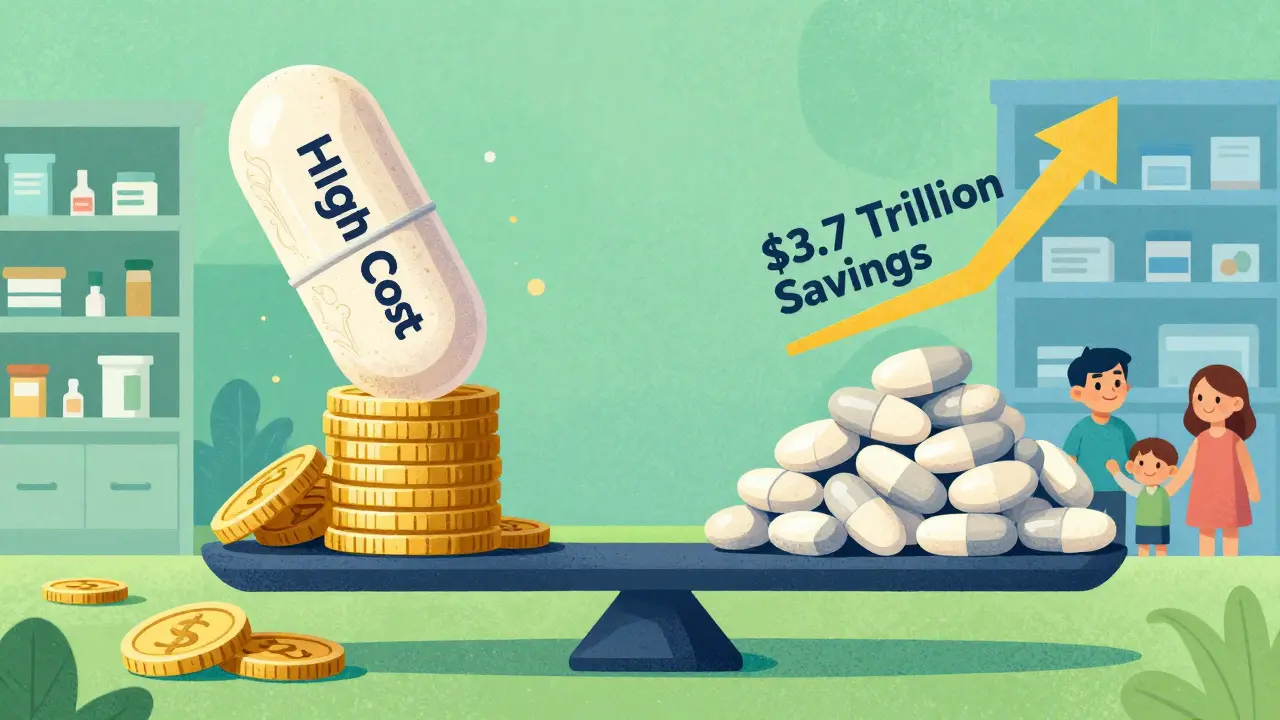
Despite these challenges, generic drugs have been a financial lifeline for the U.S. healthcare system. According to the Association for Accessible Medicines, generic drugs saved the U.S. healthcare system $373 billion in 2021 alone. Over the past decade, cumulative savings exceed $3.7 trillion.
In 2022, generic drugs represented 90.5% of all prescriptions dispensed but only 23.4% of total drug expenditures. The Congressional Budget Office estimated that generics reduce prescription spending by 80-85% compared to brand-name equivalents. These savings allow insurers and patients to afford necessary treatments, reducing overall healthcare costs.
| Year | Legislation/Event | Impact on Generics |
|---|---|---|
| 1820 | U.S. Pharmacopeia Established | Created first standards for drug purity and potency |
| 1938 | Federal Food, Drug, and Cosmetic Act | Required safety testing before marketing |
| 1962 | Kefauver-Harris Amendments | Mandated proof of efficacy, pulling ineffective drugs |
| 1984 | Hatch-Waxman Act | Introduced ANDA process, enabling bioequivalence testing |
| 2012 | GDUFA Implementation | Reduced ANDA review times from 30 to 10 months |
The Future: Biosimilars and Beyond
As small-molecule generic drugs dominate the market, the next frontier is biosimilars. These are biological products highly similar to existing reference biologics, which are complex molecules produced in living organisms. Unlike small molecules, biologics cannot be exactly copied, so biosimilars must demonstrate similarity rather than identity.
Industry analysts at IQVIA project that generic drugs will maintain 90-92% market share through 2027, with biosimilars representing the next wave of cost-saving opportunities. High-cost biologic drugs, often used for chronic conditions like rheumatoid arthritis and cancer, are prime targets for biosimilar competition.
Recent legislation like the CREATES Act of 2019 aims to prevent brand-name manufacturers from blocking generic and biosimilar competition through restricted distribution practices. The FDA has taken 27 enforcement actions under this law as of December 2022, signaling a commitment to maintaining competitive markets.
The history of generic drugs in the United States is a testament to the power of regulation in balancing innovation with accessibility. From the early days of unstandardized remedies to today's sophisticated bioequivalence testing, each milestone has brought patients closer to affordable, safe, and effective care. As supply chains evolve and new technologies emerge, the principles established by Hatch-Waxman will continue to guide the industry, ensuring that life-saving medications remain within reach for all.
What is the difference between a generic drug and a brand-name drug?
Generic drugs contain the same active ingredients, strength, dosage form, and route of administration as brand-name drugs. They must meet the same quality, purity, and potency standards. The main differences are usually the name, color, shape, and inactive ingredients (like fillers or dyes), which do not affect therapeutic effect.
Why are generic drugs cheaper than brand-name drugs?
Brand-name drugs incur high research, development, and marketing costs, which are recouped during the patent period. Generic manufacturers do not need to repeat costly clinical trials if they can prove bioequivalence via the ANDA process. This lower cost of entry allows them to offer the drug at a significantly reduced price.
What is the Hatch-Waxman Act?
The Hatch-Waxman Act, officially the Drug Price Competition and Patent Term Restoration Act of 1984, standardized the procedure for recognizing generic drugs. It created the Abbreviated New Drug Application (ANDA) pathway, allowing generics to bypass full clinical trials by demonstrating bioequivalence, while also extending patent terms for innovator drugs to compensate for regulatory delays.
Are generic drugs as safe and effective as brand-name drugs?
Yes. The FDA requires generic drugs to be bioequivalent to their brand-name counterparts, meaning they deliver the same amount of active ingredient into the bloodstream at the same rate. They undergo rigorous testing for quality, purity, and potency, ensuring they perform identically in the body.
What are biosimilars?
Biosimilars are biological products that are highly similar to an already approved reference biologic. Because biologics are complex molecules made in living organisms, they cannot be exact copies like small-molecule generics. Biosimilars must demonstrate no clinically meaningful differences in safety, purity, and potency, offering a cost-effective alternative for high-cost biologic therapies.