
Serotonin Syndrome Risk & Symptom Checker
Interaction Risk Estimator
Select your current regimen to see the potential risk level.
Risk Assessment:
Early Symptom Checklist
Based on Hunter Criteria. Select any symptoms you are currently experiencing.
Muscle twitching or shakiness in hands/legs
Agitation, restlessness, or feeling disoriented
Sudden onset of heavy sweating (diaphoresis)
Heart beating faster than normal at rest
Gastrointestinal distress or diarrhea
Fever or feeling unusually hot
Assessment Result
You might be taking an SSRI to help with anxiety or depression, looking for a natural boost, and considering adding 5-HTP, a popular dietary supplement found in many health stores. It seems like a harmless addition-after all, it’s “natural.” But combining 5-hydroxytryptophan (5-HTP) is a precursor molecule that directly increases serotonin production in the brain with prescription antidepressants creates a dangerous chemical overload. This mix can trigger serotonin toxicity, a condition that ranges from uncomfortable shivering to life-threatening organ failure.
The risk isn’t theoretical. Medical experts warn that mixing these two substances disrupts your brain’s delicate balance of neurotransmitters. While SSRIs prevent serotonin from being reabsorbed, 5-HTP floods the system with more raw material to make serotonin. The result? A surge that your body cannot handle. Understanding this interaction is critical if you want to stay safe while managing your mental health.
How the Combination Triggers Serotonin Syndrome
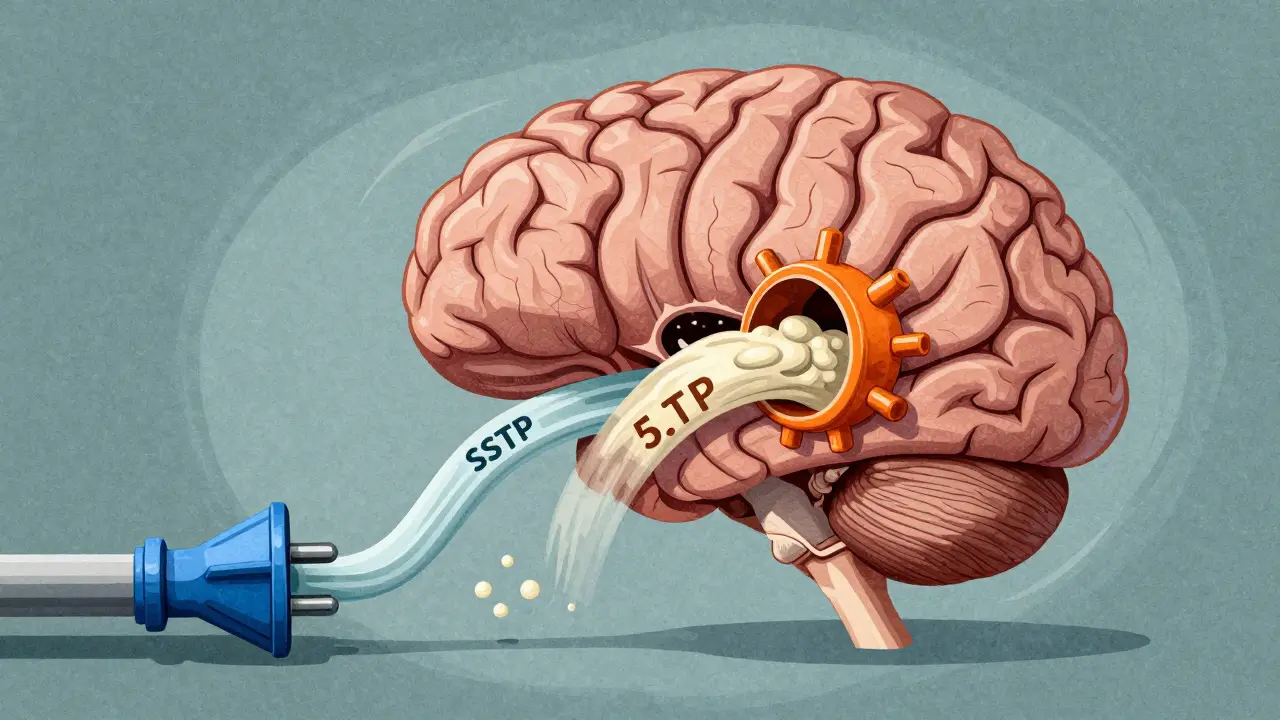
To understand why this combination is risky, you need to look at how each substance works individually and what happens when they collide. Selective serotonin reuptake inhibitors (SSRIs), such as fluoxetine (Prozac), sertraline (Zoloft), and citalopram (Celexa), work by blocking the reuptake of serotonin at synaptic clefts. Think of it like putting a lid on a drain; serotonin stays in the space between nerve cells longer, improving mood regulation.
5-HTP bypasses the rate-limiting enzyme tryptophan hydroxylase, allowing unregulated serotonin production. Normally, your body controls how much serotonin it makes through a bottleneck enzyme. 5-HTP skips this checkpoint entirely. When you take both, you are simultaneously flooding the tank with fuel (5-HTP) and plugging the exhaust pipe (SSRI). This dual mechanism causes serotonin levels to spike beyond the normal range of 101-283 ng/mL, potentially exceeding 400 ng/mL. According to Dr. Paul Perry, a board-certified psychiatrist, this creates a "perfect storm" for accumulation.
| Substance | Action in Brain | Effect on Serotonin Levels |
|---|---|---|
| SSRIs | Blocks reuptake (recycling) of serotonin | Increases available serotonin by preventing breakdown |
| 5-HTP | Converts directly into serotonin | Increases production by providing excess precursor |
| Combination | Dual elevation mechanism | Rapid, uncontrolled accumulation leading to toxicity |
Recognizing the Symptoms Early
Serotonin syndrome doesn’t always hit like a truck. Sometimes, it starts subtly. If you’ve recently added 5-HTP to your regimen, watch for changes in your physical state. The Hunter Criteria, considered the gold standard for diagnosis with 97% sensitivity, focuses on specific signs that distinguish this condition from other issues.
Early symptoms often include:
- Mental status changes: Agitation, confusion, or restlessness that feels out of character.
- Autonomic instability: Sweating (diaphoresis), rapid heart rate, or dilated pupils.
- Neuromuscular abnormalities: Tremors, muscle twitching (myoclonus), or hyperreflexia (overactive reflexes).
- Gastrointestinal distress: Nausea, vomiting, or diarrhea.
If left untreated, these symptoms can escalate rapidly. Severe cases involve hyperthermia (body temperature exceeding 106°F), muscle rigidity, seizures, and irregular heartbeat. A 2019 systematic review noted mortality rates between 2-12% in severe, hospitalized cases. However, mild cases may resolve within 24-72 hours once the causative agents are stopped. The key is recognizing the shift from "I feel weird" to "I need help now."

The Hidden Danger of Supplement Quality
One reason this interaction is so unpredictable is the lack of regulation in the supplement industry. Unlike pharmaceuticals, which undergo rigorous testing for consistency and purity, dietary supplements fall under the Dietary Supplement Health and Education Act of 1994. This law exempts them from pre-market safety testing.
In 2022, ConsumerLab.com tested various 5-HTP products and found that 31% contained inconsistent dosing, ranging from 72% to 128% of the labeled amount. Imagine taking a pill thinking you’re getting 50mg, but actually ingesting 64mg-or worse, having no idea because the batch varies. Dr. Pieter Cohen from Harvard Medical School calls this a "dangerous loophole." When you combine an unregulated variable like 5-HTP with a precisely dosed medication like an SSRI, you lose control over your total serotonin load.
This unpredictability is compounded by the fact that many users self-medicate without consulting a doctor. Data from Reddit’s r/SSRI community showed that 62% of posts mentioning 5-HTP involved users who had not discussed the addition with their physician. Among those, many reported adverse effects, including severe tremors requiring emergency room visits.
Who Is Most at Risk?
While anyone can experience serotonin syndrome, certain groups face higher risks. The National Health Interview Survey (2022) indicated that 12.8% of antidepressant users report concurrent 5-HTP use. The highest usage was among women aged 35-54 (18.7%), likely due to targeted marketing for mood and sleep support. Men over 65 had the lowest usage (4.2%).
Other factors increase vulnerability:
- Metabolism speed: Individuals who are slow metabolizers of CYP2D6 enzymes (which process many SSRIs) retain higher drug levels in their blood, increasing interaction risk.
- Polypharmacy: Taking multiple medications, especially those affecting serotonin (like tramadol or triptans), compounds the danger.
- High-dose supplementation: Using 5-HTP doses above 100mg daily significantly raises the threshold for toxicity when combined with SSRIs.
Dr. David Juurlink, head of clinical pharmacology at Toronto’s Sunnybrook Hospital, noted that cases involving supplement-drug interactions rose from 7% in 2010 to approximately 22% in 2020. This trend highlights a growing gap between public perception of "natural" safety and medical reality.
Safety Guidelines and Washout Periods
If you are considering switching from an SSRI to 5-HTP, or vice versa, timing is everything. You cannot simply stop one and start the other immediately. The Mayo Clinic recommends a mandatory 2-week washout period between discontinuing SSRIs and starting 5-HTP. However, this is a general guideline. For SSRIs with long half-lives, like paroxetine or fluoxetine, Dr. James Bibb suggests waiting up to 3-4 weeks to ensure the drug has fully cleared your system.
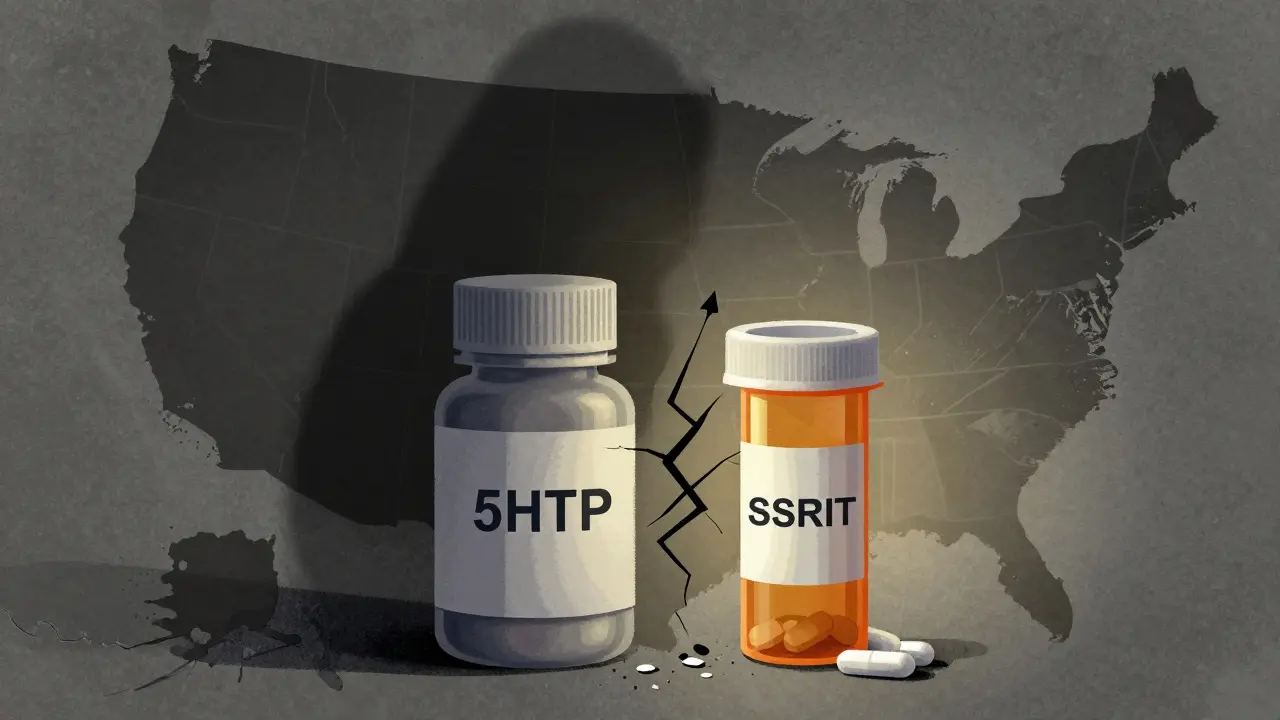
Conversely, if you are currently on an SSRI and want to try 5-HTP, the consensus among toxicologists is clear: do not do it. The American College of Medical Toxicology issued a formal position statement in March 2019 declaring concurrent use contraindicated. There is no known safe dose combination that eliminates the risk entirely.
If you suspect you have serotonin syndrome, seek immediate medical attention. Treatment typically involves stopping the offending agents, supportive care (cooling, hydration), and sometimes administering cyproheptadine, a serotonin antagonist, at an initial dose of 4-8mg. Do not attempt to treat this at home.
Frequently Asked Questions
Can I take 5-HTP and Zoloft together?
No, you should not take 5-HTP and Zoloft (sertraline) together. Both affect serotonin levels-one by increasing production and the other by preventing reuptake. Combining them significantly increases the risk of serotonin syndrome, a potentially life-threatening condition. Always consult your doctor before adding any supplement to your prescription regimen.
How long does it take for serotonin syndrome to develop?
Symptoms can appear quickly, often within hours of taking the combination. In some cases, mild symptoms may develop gradually over days. If you start feeling agitated, sweaty, or tremulous after starting a new supplement while on an SSRI, seek medical help immediately. Early intervention prevents progression to severe stages.
Is 5-HTP safer than St. John's Wort with SSRIs?
Both carry significant risks, but they differ in magnitude. Studies suggest SSRIs with St. John's Wort have a ~2.3% risk of interaction, while the combination with 5-HTP is comparable to MAOI interactions, which are far more dangerous. Neither is considered safe to mix with SSRIs without strict medical supervision, but 5-HTP poses a higher acute toxicity risk due to its direct precursor nature.
What should I do if I accidentally took 5-HTP with my SSRI?
If you have only taken one dose and feel fine, monitor yourself closely for symptoms like agitation, sweating, or tremors. Contact your healthcare provider or poison control center for advice. If you experience any symptoms, go to the nearest emergency room. Do not wait for symptoms to worsen. Bring the bottles of both medications/supplements with you.
Are there natural alternatives to 5-HTP that are safe with SSRIs?
Most supplements that boost serotonin or dopamine carry similar risks. However, non-serotonergic options like omega-3 fatty acids, magnesium, or vitamin D may support overall brain health without interacting with SSRIs. Always discuss any new supplement with your psychiatrist to ensure it does not interfere with your treatment plan.