
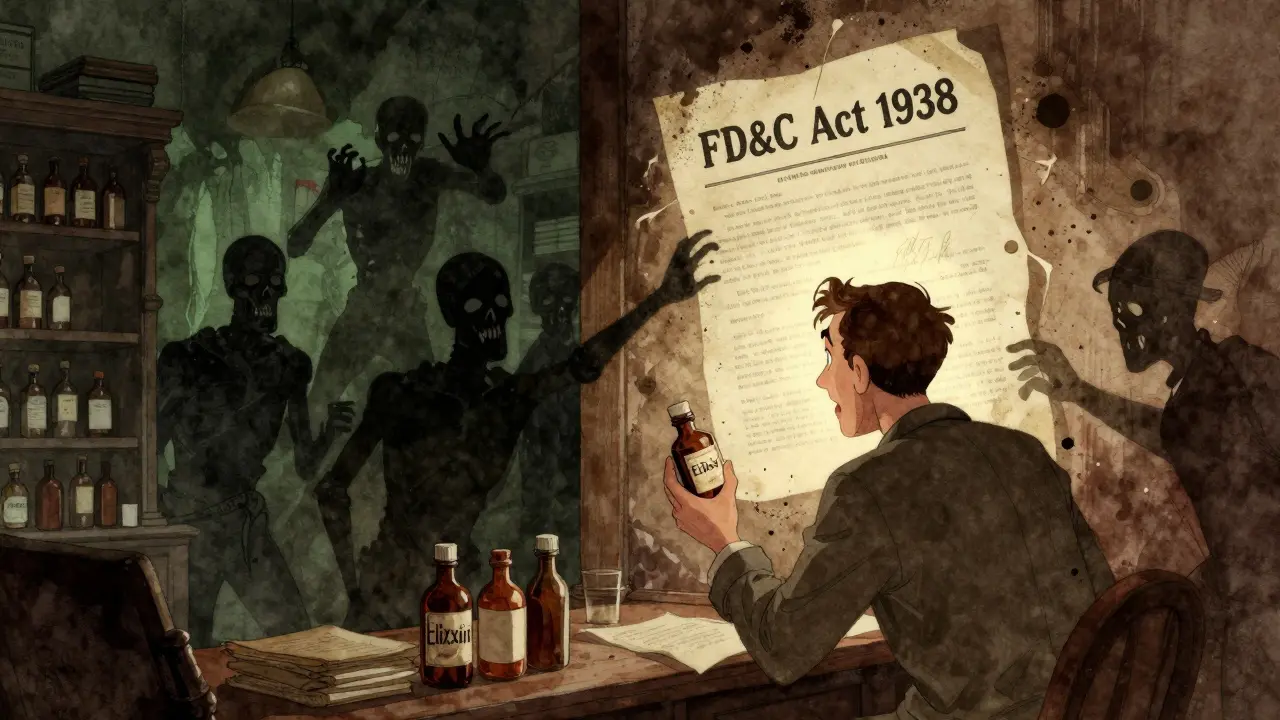
Imagine walking into a pharmacy in the late 1930s. You could buy almost any pill on the shelf without knowing if it was safe. That changed dramatically after a single tragedy killed over 100 people. Today, when you pick up a generic medication, you are holding the result of decades of legal evolution centered around one specific law: the Federal Food, Drug, and Cosmetic Act, often called the FD&C Act. But here is the twist: the original 1938 law didn't actually create the system we use for generics today. It took another landmark piece of legislation to bridge the gap between brand-name innovation and affordable competition.
If you have ever wondered why your doctor can prescribe a cheaper version of a drug with confidence, the answer lies in the intricate relationship between the FD&C Act and its most famous amendment. This isn't just dry legal history; it is the framework that keeps your medicine cabinet stocked with affordable options while ensuring those pills work exactly as intended.
The Birth of Modern Drug Regulation
To understand where we are, we have to look back at where we started. Before June 25, 1938, the U.S. government had very little power to stop dangerous products from hitting the market. Manufacturers did not need to prove their drugs were safe. They only had to ensure labels weren't misleading. This loophole led to the elixir sulfanilamide disaster. A company used diethylene glycol-a toxic industrial solvent-as a carrier for an antibiotic. The result? Over 100 deaths across 15 states.
This catastrophe shocked the nation into action. President Franklin D. Roosevelt signed the FD&C Act into law later that year. For the first time, manufacturers had to submit evidence of safety before marketing new drugs. The Food and Drug Administration (FDA) gained the authority to oversee food, drugs, medical devices, and cosmetics. However, the original act had a major blind spot regarding generics. It required every new drug applicant to run full clinical trials to prove safety and efficacy. If you wanted to make a generic version of a proven drug, you still had to repeat those expensive, time-consuming studies. This created a massive barrier to entry, keeping prices high and competition low.
The Game Changer: Hatch-Waxman Amendments
The real foundation for the modern generic drug industry wasn't laid until 1984. Congress passed the Drug Price Competition and Patent Term Restoration Act, universally known as the Hatch-Waxman Amendments. Named after Senator Orrin Hatch and Representative Henry Waxman, this legislation solved a tricky problem: how do you encourage pharmaceutical companies to invent new cures while also allowing competitors to sell cheaper versions once patents expire?
Hatch-Waxman introduced Section 505(j) of the FD&C Act. This section created the Abbreviated New Drug Application (ANDA) pathway. Instead of repeating clinical trials, generic manufacturers now only needed to prove two things:
- Pharmaceutical Equivalence: The generic has the same active ingredient, strength, dosage form, and route of administration as the brand-name drug.
- Bioequivalence: The generic performs in the body similarly to the brand-name drug. Specifically, pharmacokinetic studies must show that the 90% confidence intervals for Cmax (peak concentration) and AUC (total exposure) fall within 80-125% of the reference product.
This change was revolutionary. It removed the duplicative burden of clinical trials, making it financially viable for companies to produce generics. The FDA’s Office of Generic Drugs oversees this process today, ensuring that every approved generic meets these strict standards.
How the Balance Works: Patents vs. Competition
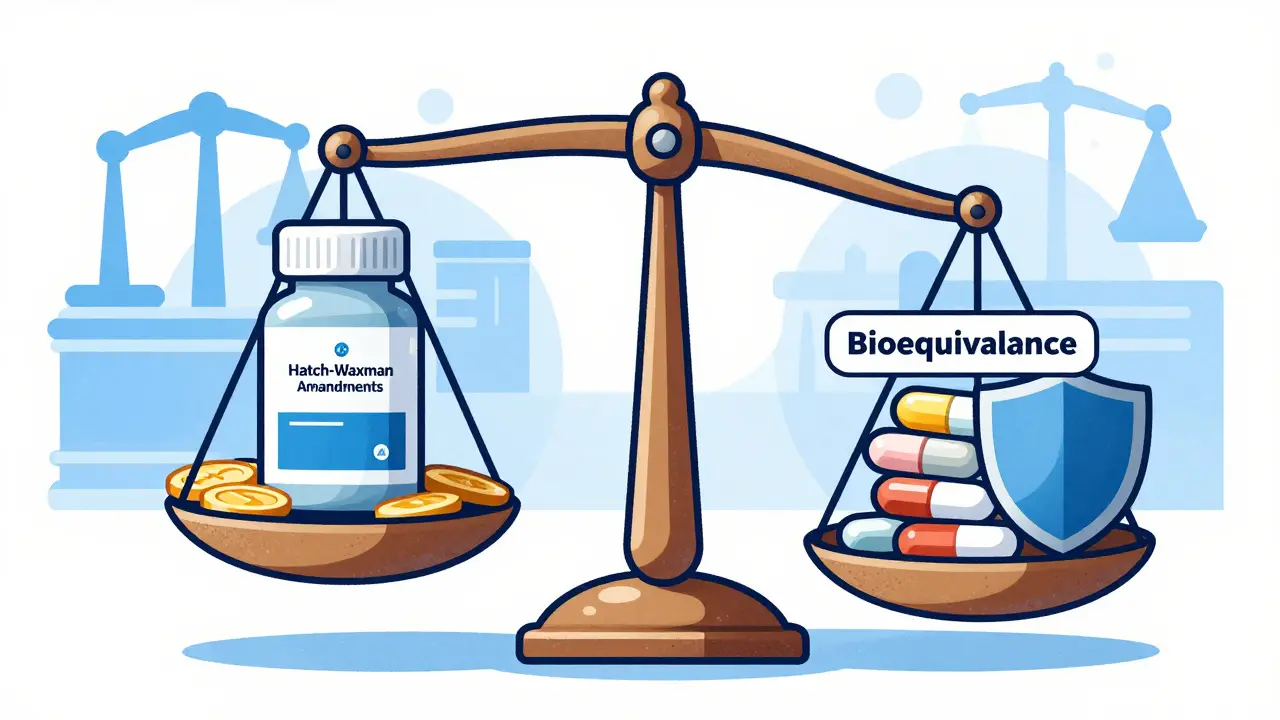
The Hatch-Waxman framework is often described as a delicate balancing act. On one side, you have brand-name manufacturers who invest billions in research and development. On the other, you have generic companies ready to drive down costs. The law addresses both sides through a complex patent notification system.
When a brand-name drug is approved, its relevant patents are listed in the FDA's Orange Book (Approved Drug Products with Therapeutic Equivalence Evaluations). When a generic company wants to enter the market, they must certify against these patents. Here is where it gets interesting:
- Paragraph IV Certification: A generic applicant can challenge the validity of a brand-name patent. If they succeed, they get a 180-day period of marketing exclusivity. This means no other generic can launch for six months, giving the challenger a significant financial reward for taking on the big pharma giant.
- Patent Term Restoration: To compensate brand-name companies for time lost during FDA review, the law allows them to extend their patent term by up to five years, provided the total patent life does not exceed 14 years from approval.
This system incentivizes generic companies to challenge weak patents quickly, which brings lower-cost options to patients sooner. According to FDA data, before Hatch-Waxman, generics accounted for only 19% of prescriptions. Today, they represent about 90% of all prescriptions filled in the United States, yet they account for only 17% of pharmaceutical spending. That is a massive shift in value.
Navigating Compliance and Enforcement
Getting a generic drug approved is just the beginning. Once on the market, manufacturers must adhere to strict compliance rules under the FD&C Act. The FDA prohibits the sale of "adulterated" or "misbranded" products. Violations can lead to severe consequences, including civil penalties exceeding $1.1 million per violation or even criminal prosecution for intentional misconduct.
In recent years, the FDA has cracked down hard on quality issues. In 2022 alone, the agency issued 47 warning letters to generic manufacturers. The most common problems? Inadequate quality control procedures (32% of cases) and data integrity concerns (28% of cases). These aren't minor paperwork errors; they are fundamental failures in ensuring that the drug reaching the patient is safe and effective.
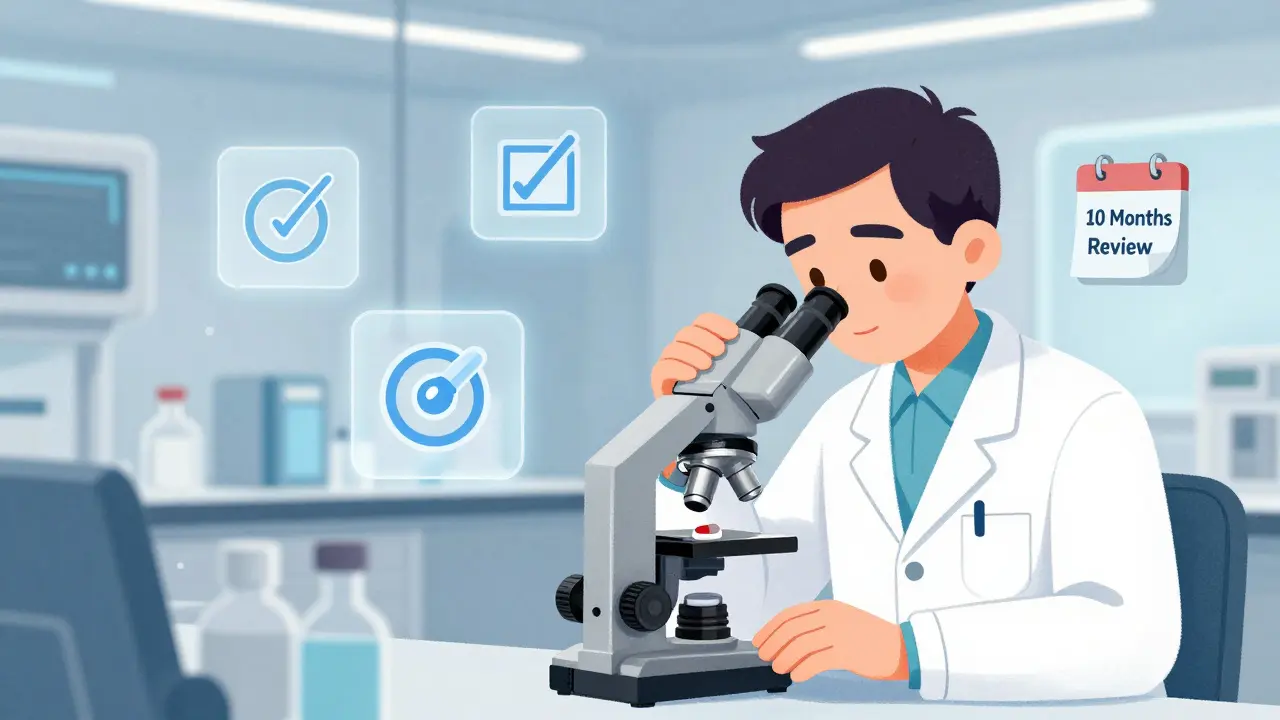
The regulatory environment continues to tighten. The Generic Drug User Fee Amendments (GDUFA), reauthorized in 2022, set performance goals for FDA reviews. As a result, 95% of ANDAs are now approved within 10 months, compared to over 30 months in the 1990s. This speed helps get generics to market faster, but it also means manufacturers cannot cut corners on quality assurance.
| Feature | Brand-Name Drug (NDA) | Generic Drug (ANDA) |
|---|---|---|
| Clinical Trials Required? | Yes, extensive Phase I-III trials | No, relies on existing data |
| Safety/Efficacy Proof | Must demonstrate independently | Must demonstrate bioequivalence to Reference Listed Drug (RLD) |
| Patent Protection | Full patent term + potential restoration | None, but may receive 180-day exclusivity for patent challenges |
| Review Time Goal | Varies by complexity | 10 months for standard ANDAs (GDUFA target) |
Current Challenges and Future Outlook
While the Hatch-Waxman system has saved consumers an estimated $2.2 trillion over the past decade, it is not perfect. Experts like Dr. Aaron Kesselheim from Harvard Medical School point out that brand-name companies sometimes use "evergreening" tactics. This involves filing secondary patents or submitting citizen petitions to delay generic approvals beyond the intended period. Additionally, "product hopping"-where a brand company reformulates a drug right before patent expiration-can confuse the generic pathway.
To address these issues, Congress passed the CREATES Act in 2019, which limits brand-name manufacturers' ability to withhold samples needed for generic testing. The FDA is also working on modernizing guidelines for complex generics, such as inhalers and injectables, which face higher barriers to entry due to patent thickets. Despite these hurdles, the core mission remains clear: leverage the FD&C Act to ensure that every American has access to safe, effective, and affordable medications.
What is the primary difference between an NDA and an ANDA?
An NDA (New Drug Application) requires a manufacturer to conduct extensive clinical trials to prove a drug's safety and efficacy from scratch. An ANDA (Abbreviated New Drug Application) allows generic manufacturers to skip these trials by proving their product is bioequivalent to an already-approved brand-name drug.
Why are generic drugs so much cheaper than brand-name drugs?
Generics are cheaper because manufacturers do not bear the cost of initial research, development, and large-scale clinical trials. They only need to demonstrate that their version works the same way in the body as the brand-name drug, significantly reducing production expenses.
What happens if a generic drug fails to meet bioequivalence standards?
If a generic drug fails to meet bioequivalence standards (falling outside the 80-125% range for Cmax and AUC), the FDA will reject the ANDA. The manufacturer must reformulate the drug and resubmit data. Repeated failures can lead to enforcement actions.
How does the 180-day exclusivity period benefit patients?
The 180-day exclusivity period rewards the first generic company to successfully challenge a brand-name patent. This incentive encourages companies to take on costly legal battles to break monopolies, leading to faster introduction of lower-cost generic options for patients.
Can generic drugs contain different inactive ingredients?
Yes. While the active ingredient must be identical, generic drugs can have different inactive ingredients (like fillers, binders, or dyes). These differences generally do not affect safety or efficacy, though rare allergies to specific inactive components should be monitored.