
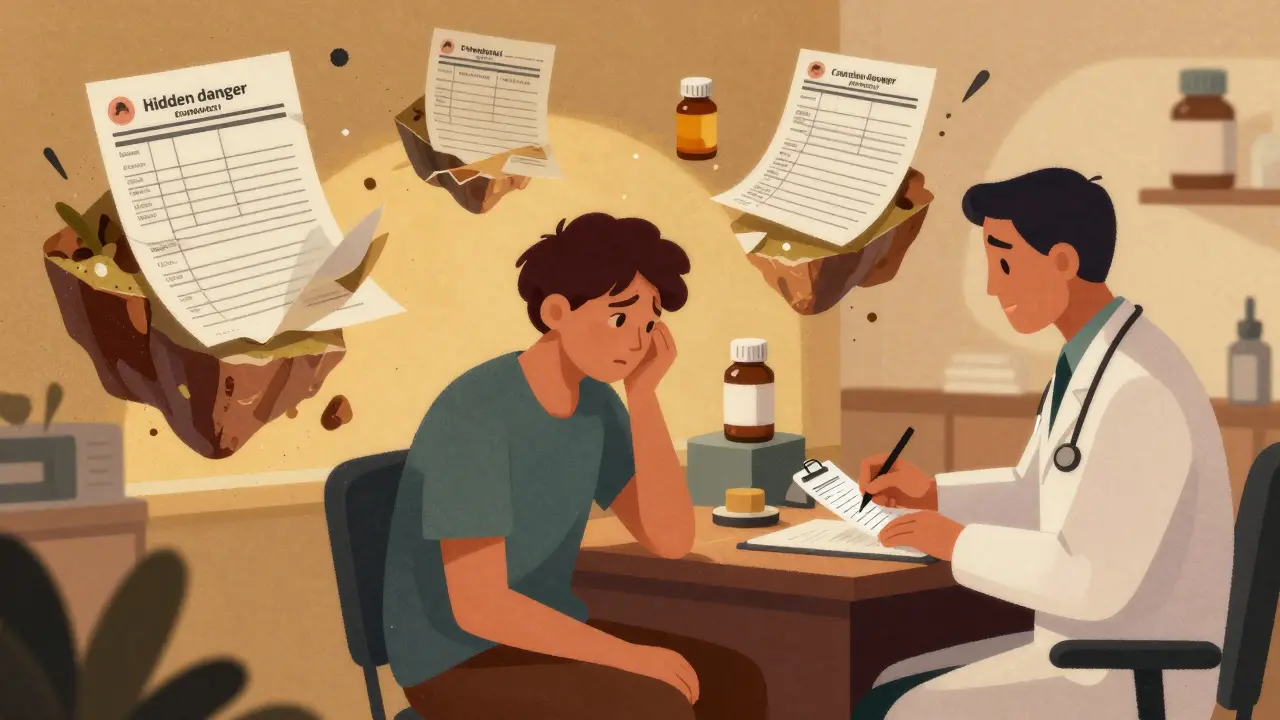
Imagine walking into a clinic for a routine check-up. You mention you take a daily blood thinner. The doctor prescribes a new anti-inflammatory for your knee pain without checking for interactions. Two weeks later, you end up in the emergency room with internal bleeding. This isn't just a hypothetical nightmare; it is a preventable reality that happens thousands of times every year. The bridge between your health and safe treatment is simple but often overlooked: sharing your medical history.
We tend to think of doctors as the ones who hold all the cards. We assume they know everything about us because our records are 'in the system.' But here is the hard truth: your electronic health record might be missing half the picture. It might not show the over-the-counter supplements you bought at the grocery store, the herbal tea you drink daily, or the prescription you filled at a different pharmacy chain last month. When we leave these details out, we aren't just being forgetful; we are creating blind spots that can lead to serious harm.
The Hidden Danger of Incomplete Information
Medication errors are not rare anomalies. They are a systemic issue rooted in gaps in communication. According to data from the World Health Organization, approximately 50% of all medication errors occur during transitions of care-like when you move from a hospital to home, or from a specialist back to your primary care physician. Of those errors, 20% cause actual harm to patients. In the United States alone, these mistakes contribute to an estimated 7,000 to 9,000 preventable deaths annually.
Why does this happen? Often, it comes down to what experts call 'medication discrepancies.' A discrepancy occurs when there is a difference between what a patient is actually taking and what the healthcare provider thinks they are taking. For patients on polypharmacy-defined as taking five or more medications-the risk skyrockets. These individuals face an 88% higher risk of having significant medication discrepancies compared to those on fewer drugs. If you are managing diabetes, hypertension, and high cholesterol, plus a few vitamins, you are in the highest risk category.
The problem isn't usually malice or incompetence. It is fragmentation. Your cardiologist uses one electronic health record (EHR) system. Your dermatologist uses another. The local pharmacy where you pick up your occasional antibiotics doesn't talk to the big chain pharmacy where you get your chronic meds. Without you acting as the central hub connecting these islands of information, critical context gets lost.
What Exactly Belongs in Your Medical History?
When providers ask for your 'medication list,' many patients only recite their prescription pills. This is a dangerous mistake. To ensure safe medication decisions, your list must be comprehensive. Here is what needs to be included:
- Prescription Medications: Include the name, dosage, frequency, and the reason you take them. Don't forget prescriptions that have been discontinued recently; knowing why you stopped a drug is just as important as knowing why you started it.
- Over-the-Counter (OTC) Drugs: This includes common items like ibuprofen, acetaminophen, antacids, and sleep aids. Many people don't realize that OTC drugs can interact dangerously with prescriptions. For example, combining certain blood thinners with aspirin can increase bleeding risk significantly.
- Supplements and Herbals: Vitamins, minerals, and herbal remedies like St. John's Wort, garlic supplements, or ginkgo biloba. These are biologically active substances that can alter how your body processes other drugs. St. John's Wort, for instance, can render some antidepressants and birth control pills ineffective.
- Allergies and Adverse Reactions: Distinguish between true allergies (anaphylaxis, hives, breathing trouble) and side effects (nausea, headache). Knowing the difference helps providers avoid unnecessary restrictions while keeping you safe.
- Recent Changes: Any dose adjustments, new additions, or discontinuations made in the last three months.
A staggering 67% of patients fail to report over-the-counter medications accurately during consultations. By leaving these out, you are essentially flying blind. Providing a complete list allows your provider to screen for drug-drug interactions, duplicate therapies, and contraindications before they become problems.
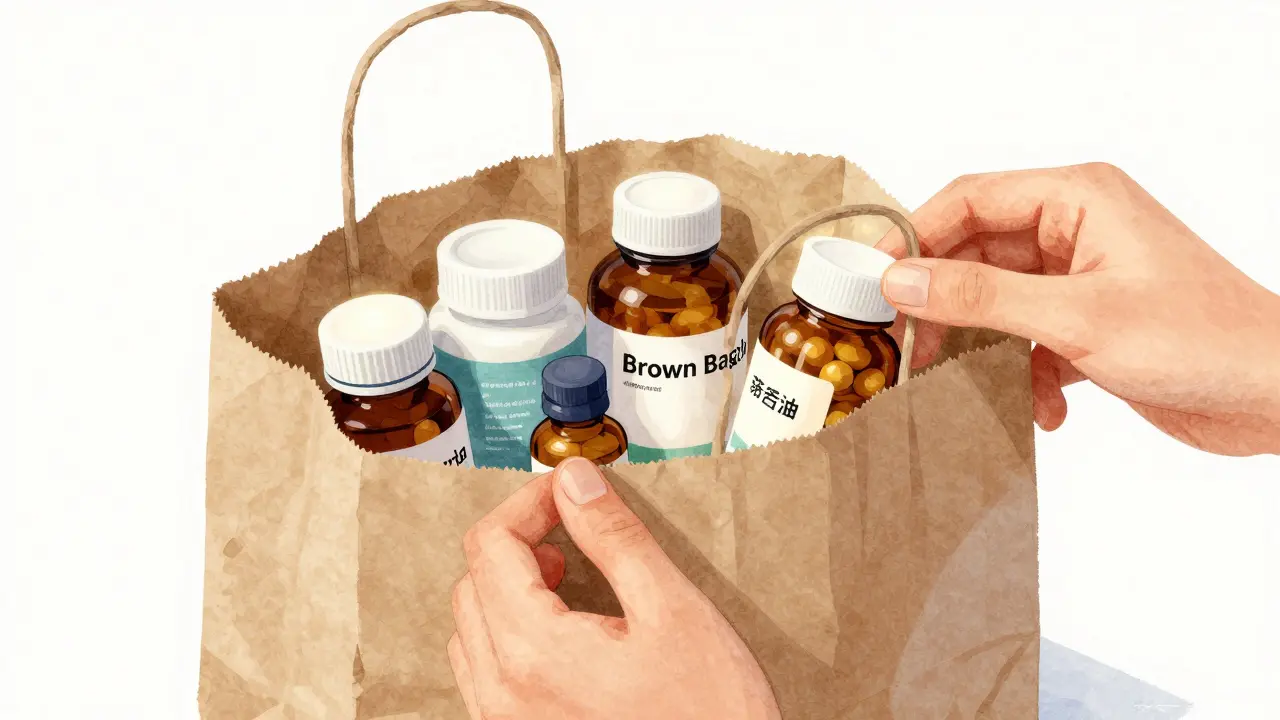
The "Brown Bag" Method: A Simple Safety Tool
Technology has improved how hospitals share data, but it still falls short. Studies show that even advanced electronic systems capture only about 52% of actual medication discrepancies. That means nearly half of the potential errors slip through the digital cracks. So, what can you do? You can use the 'Brown Bag Method.'
This technique, recommended by the American Society of Health-System Pharmacists (ASHP), is deceptively simple. Before any appointment, gather all your medications-prescriptions, OTC drugs, supplements, and inhalers-and put them in a bag or box. Bring this physical collection to your visit. Let the pharmacist or nurse verify each item against your chart.
Why does this work so well? Because it forces a visual audit. Providers can see if you are still holding onto old medications that should be discarded, or if you have multiple bottles of the same drug from different visits. Research indicates that using the Brown Bag Method reduces medication discrepancies by 40% compared to relying on verbal reporting alone. It cuts reconciliation time in half and ensures that nothing is missed due to memory lapses or fragmented records.
If you cannot bring all your bottles, create a master list. Update it immediately after every prescription change, every new supplement purchase, and every doctor visit. Keep a copy on your phone and a physical copy in your wallet. Treat this document as seriously as your insurance card.
Bridging the Gap Between Systems
You might wonder why technology hasn't solved this yet. The healthcare industry is moving toward better interoperability. Standards like FHIR (Fast Healthcare Interoperability Resources) allow different EHR systems to exchange data seamlessly. Services like Surescripts now deliver billions of medication histories annually, pulling data from pharmacies and benefit managers.
However, limitations remain. Cash-pay medications-those not covered by insurance-often don't appear in these databases. Estimates suggest 15-20% of prescriptions fall into this category. Additionally, privacy laws like HIPAA, while protecting your data, can sometimes create barriers to sharing information between unaffiliated providers without explicit consent. As a result, you remain the most reliable source of truth regarding your own health.
Providers are also struggling with 'alert fatigue.' Electronic systems generate hundreds of warnings about potential interactions. Clinicians override nearly half of these alerts because many are false positives or low-risk. When the signal-to-noise ratio is too high, critical warnings can be ignored. Your active participation helps filter this noise. By clearly stating your current regimen, you help the provider focus on genuine risks rather than chasing phantom alerts.

Communicating Effectively with Your Provider
Sharing your history is only half the battle. You also need to communicate effectively during the consultation. Here are practical strategies to ensure your voice is heard:
- Use the Teach-Back Method: After your provider explains a new medication, repeat the instructions back to them in your own words. Say, 'So I will take this pill once a day with food, and I should stop my old blood pressure med starting tomorrow.' This confirms understanding and catches errors in real-time.
- Ask About Interactions: Specifically ask, 'Does this new medication interact with anything else I am taking?' This prompts the provider to double-check their screening process.
- Discuss High-Alert Medications: Be extra vigilant with drugs identified by the Institute for Safe Medication Practices (ISMP) as high-alert. These include insulin, anticoagulants (blood thinners), and opioids. Small dosing errors with these drugs can be fatal. Confirm the dose, route, and frequency explicitly.
- Update During Transitions: When you are discharged from the hospital, compare your discharge paperwork with your personal list. Ask, 'Which of my home medications should I restart? Which should I stop?' Never assume the discharge summary is perfect.
Health literacy plays a huge role here. Nearly 60% of adults struggle to understand complex medication instructions. If you feel confused, speak up. Ask for written instructions in plain language. Request that your pharmacist review your regimen periodically. Pharmacists are medication experts who can spot issues that doctors might miss in a busy clinic setting.
The Role of Technology in Patient Safety
Patient portals are becoming a powerful tool for self-advocacy. Thanks to regulations like the ONC Cures Act Final Rule, 76% of patients can now view their medication lists directly through their provider's online portal. Use this feature. Log in regularly to check for accuracy. If you see a medication listed that you no longer take, flag it immediately. If a recent prescription is missing, contact the office to add it.
Future innovations promise even greater safety. AI-assisted tools are being developed to identify discrepancies faster and more accurately. Prototypes have shown a 63% reduction in the time needed to reconcile medications. However, until these tools are universally adopted and perfected, human vigilance remains essential. Technology supports the process, but it does not replace the need for honest, thorough communication between you and your care team.
Why is my medical history important for medication safety?
Your medical history provides the full context needed to avoid dangerous drug interactions, duplicate therapies, and allergic reactions. Incomplete information leads to medication discrepancies, which are responsible for 50% of medication errors during care transitions. Accurate history sharing reduces adverse drug events by 30-50%.
What is the Brown Bag Method?
The Brown Bag Method involves bringing all your current medications-including prescriptions, over-the-counter drugs, and supplements-in a bag to your doctor's appointment. This allows the provider to physically verify what you are taking, reducing discrepancies by 40% compared to verbal reports alone.
Do I need to tell my doctor about vitamins and herbs?
Yes. Supplements and herbs like St. John's Wort or garlic can interact with prescription drugs, altering their effectiveness or causing side effects. Since 67% of patients fail to report these accurately, omitting them creates a significant safety risk.
Can electronic health records replace my personal medication list?
Not entirely. While EHRs improve data sharing, they still miss about 50% of discrepancies. Cash-pay medications, recent changes, and OTC drugs often don't appear in these systems. Your personal list serves as the final verification step to ensure accuracy.
What should I do if I find an error in my hospital discharge paperwork?
Contact your provider or pharmacist immediately. Compare the discharge instructions with your personal medication list. Clarify which home medications to restart and which to stop. Do not assume the paperwork is correct; always verify to prevent post-discharge errors.
Justina Ingram
lol this is basic common sense but apparently ppl need a whole article to tell em not to die 💀 just bring the damn bottles in. stop being lazy.
amit kumar
This is such a great reminder for everyone! 🌟 I always forget my supplements until the last minute. The brown bag method sounds so practical and easy to follow. We should all support each other in staying healthy and informed. It really helps when we share these tips with our families too. 😊
Kris Wong
HAHAHA you think bringing your pills in a bag stops the big pharma agenda? 🤡 They want you dependent on their systems, not your own brain. The 'system' is broken by design. Your EHR is just a database for tracking your compliance. Wake up sheeple! 🚫💊 The real danger isn't interactions, it's the lack of freedom to choose natural remedies without them trying to control you with synthetic garbage. Keep your data private or they will sell it to the highest bidder. 👁️🗨️
Lori Wildrick
I found this perspective very interesting and thought-provoking. It seems that taking small steps can indeed make a significant difference in our overall well-being. I have started keeping a simple list on my phone, and it has helped me feel more prepared for my appointments. It is a gentle way to take charge of our health journey together.
Emma Olliff
Oh, please. If you are too incompetent to remember what you are taking, perhaps you should not be managing your own healthcare at all. The fact that 67% of patients fail to report OTC meds accurately is simply pathetic. It reflects a societal decline in personal responsibility and intellectual rigor. Doctors are not your maids; they are highly trained professionals who do not have time to dig through your purse like scavengers. If you cannot present a coherent medication history, you are wasting valuable medical resources that could be used for people who actually care about precision and safety. Grow up and organize your life before you expect anyone else to fix your mess.
Diana Wiechecka
Great tip! ✨
Kathryn Byrd
The Brown Bag Method is a concept I had not considered previously. It appears that physical verification can mitigate errors that digital systems might overlook. I intend to implement this strategy during my next consultation to ensure accuracy.
Tanya KLIMCHUK Klimchuk
Listen here! You need to stop ignoring this advice because it saves lives! As a pharmacist, I see people walk in with bags full of expired meds and unknown supplements every single day. It is infuriating how many people think their herbal tea is harmless when it interacts with warfarin and turns them into a bleeding risk. Stop being passive about your health! Demand better from yourself and your providers. Update your lists NOW. Do not wait until you are in the ER. Take control! 💪
Anthony Red
Hey folks, just wanted to chime in on this. I totally get why this feels like extra work, but trust me, it pays off. I used to just wing it and rely on the doctor's notes, but after a close call with a statin interaction, I switched to the brown bag method. Now I just grab everything from my cabinet and toss it in a tote before I leave. It takes like five minutes and gives me peace of mind. Plus, my doc appreciates it because he doesn't have to guess. Let's look out for each other's health, yeah? No stress, just smart moves. 🙌