
Your eyes are probably telling you something right now. Maybe they feel gritty like sand is stuck in them, or maybe they’re watering down because of the pollen outside. You head to the pharmacy aisle, grab a bottle that looks good, and hope for the best. But here’s the catch: not all OTC eye drops are created equal. In fact, using the wrong type can make your problem worse. If you have dry eyes but use redness-relief drops, you might be digging a deeper hole. If you have allergies but use standard lubricants, the itching won’t stop.
This guide cuts through the marketing noise. We’ll break down exactly what goes into these bottles, how to identify which condition you actually have, and which specific ingredients work best for each scenario. No jargon, just clear answers to help you pick the right drop the first time.
Quick Summary / Key Takeaways
- Dryness vs. Redness: Do not use vasoconstrictor (redness) drops for chronic dry eye; they often worsen symptoms by reducing blood flow.
- Allergy Relief: Look for antihistamines like olopatadine or ketotifen for lasting relief, rather than decongestants which cause rebound redness.
- Preservatives Matter: If you use drops more than four times a day, switch to preservative-free single-use vials to avoid corneal irritation.
- Lipid-Based Formulas: For evaporative dry eye (burning later in the day), lipid-based drops reinforce the tear film better than standard water-based tears.
- Application Technique: Blinking immediately after dropping causes the liquid to drain out; keep eyes closed for 30 seconds instead.
Identifying Your Specific Eye Condition
Before you spend money, you need to know what you’re treating. Most people assume their eyes are just "dry" or "tired," but the underlying mechanism matters for choosing the right product. The American Optometric Association notes that misdiagnosis leads to ineffective treatment in over 60% of OTC users. Here is how to tell the difference based on your symptoms.
If your eyes feel gritty, scratchy, or like there is an object in them, especially when you wake up or sit at a computer, you likely have Aqueous Deficient Dry Eye. This happens when your glands don't produce enough of the watery layer of tears. These symptoms usually get worse in dry environments or air-conditioned rooms.
If your burning sensation builds up throughout the day and peaks in the evening, you might be dealing with Evaporative Dry Eye, often caused by Meibomian Gland Dysfunction. In this case, the oily layer of your tears is thin or missing, so the water evaporates too quickly. Lipid-based drops are the solution here, not standard water-based ones.
For allergies, the signs are distinct: itching, swelling, and excessive watering. If your eyes itch more than they hurt, it’s almost certainly an allergic reaction to pollen, dust mites, or pet dander. Using simple lubricants here will only dilute the allergens temporarily without stopping the histamine response.
Finally, redness is a symptom, not a disease. Red eyes can result from dryness, allergies, contact lens wear, or even high blood pressure. However, if you choose a drop specifically labeled for "redness relief," you are buying a vasoconstrictor. These work by shrinking blood vessels. While effective for a quick photo op, they do not treat the root cause and can lead to rebound hyperemia, where eyes become redder than before once the medication wears off.
The Three Main Categories of OTC Eye Drops
The market is segmented into three primary buckets. Understanding the active ingredients in each helps you avoid wasting money on products that don’t match your needs.
- Artificial Tears (Lubricants): These mimic natural tears. Common ingredients include polyethylene glycol and propylene glycol. They hydrate the surface and wash away irritants. Brands like Systane Ultra and Refresh Optive fall here. They are the safest bet for general discomfort.
- Allergy Relief Drops: These contain antihistamines and mast cell stabilizers. Olopatadine (found in Pataday) and Ketotifen (Zaditor) are the gold standards. They block the chemical reactions that cause itching and swelling. Unlike redness drops, these provide long-lasting relief, often up to 24 hours.
- Anti-Redness Drops (Vasoconstrictors): These contain tetrahydrozoline or naphazoline. They constrict blood vessels to whiten the eye quickly. Visine is the most famous example. Use these sparingly and only for short-term cosmetic issues, not chronic conditions.

Comparing Top Formulations and Ingredients
Not all artificial tears are the same. Some are designed for heavy screen users, others for contact lens wearers, and some for severe cases. Here is a comparison of popular options based on clinical data and user feedback.
| Category | Key Active Ingredient | Best For | Duration of Relief | Price Range (10mL) |
|---|---|---|---|---|
| Standard Artificial Tears | Polyethylene Glycol 0.4% | Mild dryness, screen fatigue | 1-2 hours | $8 - $15 |
| Lipid-Based Lubricants | Mineral Oil / Castor Oil | Evaporative dry eye, meibomian gland dysfunction | 4-6 hours | $15 - $25 |
| Allergy Relief | Olopatadine 0.1% | Pollen, pet dander, chronic itching | Up to 24 hours | $20 - $30 |
| Anti-Redness | Tetrahydrozoline 0.05% | Temporary cosmetic redness | 4-8 hours (with rebound risk) | $7 - $12 |
Notice the price jump for allergy drops. That’s because they are technically pharmaceutical-grade antihistamines sold OTC. If you suffer from seasonal allergies, investing in a bottle of Pataday or Zaditor is far more cost-effective than buying multiple bottles of generic redness drops that fail to stop the itch.
Preservative-Free vs. Multi-Dose: Which Should You Pick?
This is the biggest mistake people make. They buy a cheap multi-dose bottle with preservatives and use it six times a day. Preservatives like benzalkonium chloride (BAK) are necessary to keep the bottle sterile between uses, but they are toxic to the ocular surface if used in high frequency.
If you find yourself reaching for drops more than four times a day, switch to Preservative-Free Single-Use Vials. These come in small plastic tubes that you open, use, and throw away. There is no preservative because there is no second use. They are more expensive per drop ($12-$22 for 30 vials), but they prevent the stinging and irritation that preserved drops cause in sensitive eyes.
Multi-dose bottles are fine for occasional use, like after a long flight or a day at the beach. Just remember to discard the bottle 30 days after opening, as bacteria can grow inside even with preservatives.
Proper Application Techniques for Maximum Effect
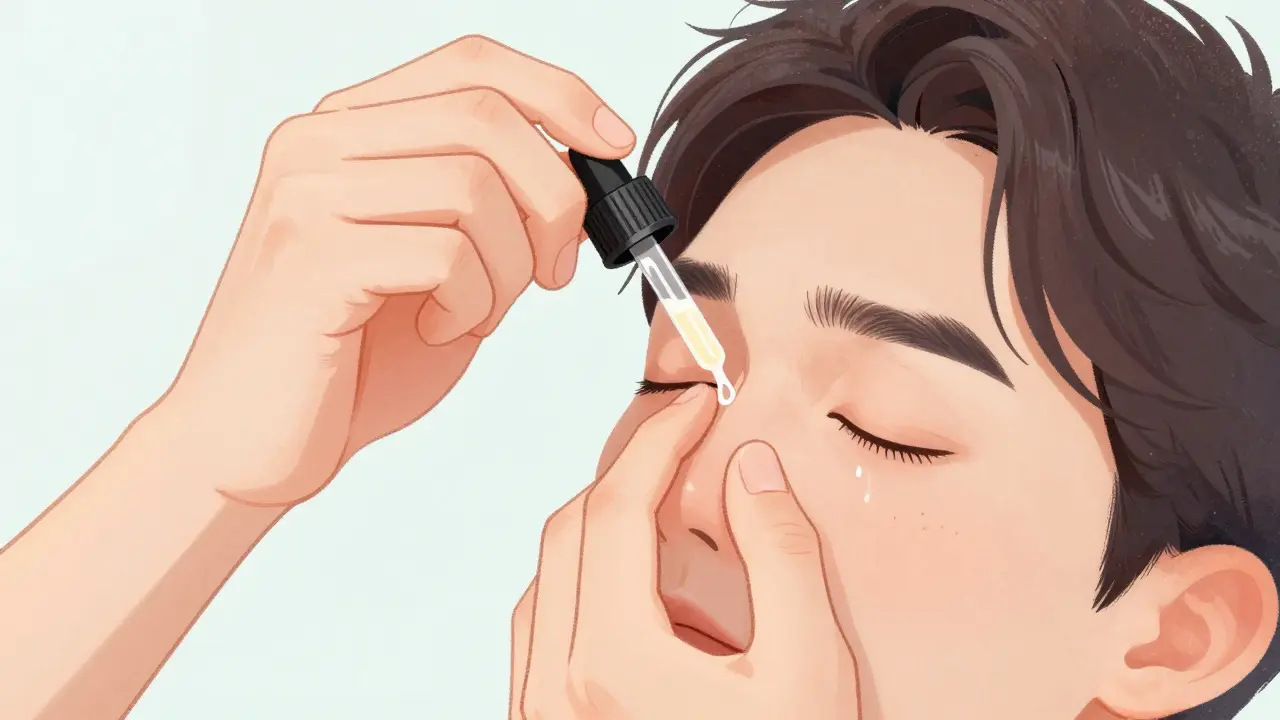
You can buy the best drops in the world, but if you apply them wrong, half the dose will drain out of your nose. Studies show that 68% of first-time users apply drops incorrectly. Here is the correct technique to ensure the medication stays on your eye.
- Wash Hands: Always start with clean hands to avoid introducing bacteria.
- Tilt Head Back: Look up at the ceiling. Tilt your head back about 45 degrees.
- Create a Pocket: Gently pull your lower eyelid down with your index finger to create a small reservoir.
- Apply the Drop: Hold the bottle upside down, keeping it 1-2 inches from your eye. Do not touch the tip of the dropper to your eye or lashes.
- Close Eyes Gently: Close your eyes slowly. Do not blink vigorously. Keep them closed for 30 seconds.
- Press Punctum: Place your thumb on the inner corner of your eye (near the nose) and press gently for 1 minute. This blocks the tear duct, preventing the drop from draining into your nose.
For gel-based drops, expect temporary blurring for 2-3 minutes. Plan your application accordingly-don’t do it right before you need to read fine print or drive.
Common Pitfalls and How to Avoid Them
Even with the right product, usage errors can ruin the results. Here are the most common traps.
- Using Redness Drops for Dry Eye: This is the number one error. Vasoconstrictors reduce blood flow, which is needed for healthy tear production. The American Optometric Association warns that this worsens dry eye in 83% of cases. Stick to lubricants for dryness.
- Overusing Preserved Drops: As mentioned, BAK preservatives damage the cornea with frequent use. If you are using drops every hour, go preservative-free.
- Ignoring Contact Lenses: Some drops are not compatible with soft lenses. Check the label. Generally, wait 15 minutes after applying drops before reinserting contacts to allow the preservatives to dissipate.
- Storage Errors: Most drops should be stored at room temperature. However, some premium formulations like Thealoz Duo require refrigeration after opening. Always check the bottle instructions.
Frequently Asked Questions
Can I use eye drops while wearing contact lenses?
Yes, but check the label. Most artificial tears are safe for contact lens wearers. Wait 15 minutes after applying drops before putting your lenses back in to minimize preservative exposure. Avoid using drops with bismuth subgallate or other drying agents unless specified as contact-lens compatible.
What is the difference between artificial tears and allergy drops?
Artificial tears lubricate the eye and wash away irritants but do not stop allergic reactions. Allergy drops contain antihistamines that block histamine release, stopping itching and swelling at the source. If your main symptom is itching, use allergy drops. If it is grittiness or burning, use artificial tears.
Are preservative-free eye drops worth the extra cost?
If you use drops more than four times a day, yes. Preservatives can cause irritation and corneal damage with frequent use. For occasional use (1-2 times a day), standard multi-dose bottles are fine and cheaper. For chronic dry eye, the investment in single-use vials prevents long-term complications.
Why do my eyes get redder after using Visine?
This is called rebound hyperemia. Vasoconstrictor drops shrink blood vessels temporarily. When the effect wears off, the vessels expand wider than normal, causing increased redness. This is why doctors recommend limiting redness-relief drops to short-term, occasional use.
How long do OTC eye drops last after opening?
Most multi-dose bottles should be discarded 30 days after opening, regardless of the expiration date printed on the box. Single-use vials must be used immediately after opening. Always check the specific instructions on your bottle, as some premium brands may have different guidelines.