
Medication Photosensitivity Checker
Check Your Medications
Enter your medications to see if they cause photosensitivity and get personalized sun safety advice.
How It Works
This tool checks if your medication is known to cause photosensitivity reactions. It uses FDA-approved data on photosensitizing drugs to give you accurate information and personalized sun protection advice.
Enter a medication name and click 'Check Risk' to see your sun sensitivity risk level.
When you start a new medication, your doctor talks about side effects - nausea, dizziness, maybe dry mouth. But how often do they warn you that your skin could burn in minutes, even through clothes, just from walking outside? Photosensitivity from medications is one of the most under-discussed, yet dangerously common side effects. It’s not just a bad sunburn. It’s a chemical reaction inside your skin, triggered by sunlight and your pills, and it can leave lasting damage - or even raise your risk of skin cancer.
What Exactly Is Medication-Induced Photosensitivity?
Photosensitivity means your skin reacts abnormally to sunlight because of a drug you’re taking. It’s not an allergy in the traditional sense. It’s a chemical reaction. When certain medications absorb ultraviolet A (UVA) rays - the kind that penetrate deep into your skin - they turn into reactive molecules that damage your skin cells. This can happen with as little as 15 minutes of sun exposure, even on cloudy days or through windows. There are two main types: phototoxic and photoallergic. Phototoxic reactions make up 95% of cases. They feel like a severe sunburn - red, swollen, stinging skin - and show up within minutes to hours after being in the sun. Photoallergic reactions are rarer, but sneakier. They show up 1 to 3 days later, look like eczema, and can spread to areas that never saw sunlight. Both are serious. The Skin Cancer Foundation says people on these drugs have up to a 60% higher risk of developing non-melanoma skin cancer over time.Which Medications Cause This?
You might be surprised. It’s not just the obvious ones. Common culprits include:- Tetracycline antibiotics - doxycycline causes reactions in 10-20% of users. Many people take this for acne or Lyme disease and have no idea their skin is now a lightning rod for UV rays.
- NSAIDs - especially ketoprofen, found in some pain creams and pills. One user on Reddit said they got burned through their T-shirt during a 10-minute walk.
- Fluoroquinolones - ciprofloxacin and levofloxacin, often prescribed for UTIs or sinus infections.
- Amiodarone - a heart medication. Up to 75% of long-term users develop lasting photosensitivity. Some still react years after stopping it.
- Sulfonamides - used for infections and sometimes in diabetes drugs.
- Diuretics - like hydrochlorothiazide, taken for high blood pressure.
- Retinoids - acne treatments like isotretinoin (Accutane) make skin extremely sensitive.
Women are more likely to get photoallergic reactions - partly because they use more topical products and cosmetics that can act as photosensitizers too. The FDA now requires warning labels on over 200 high-risk medications, but many primary care doctors still don’t mention it at the pharmacy counter.
Why Regular Sunscreen Often Fails
Most people think SPF 30 or 50 is enough. But here’s the problem: many sunscreens focus on UVB rays (the ones that cause sunburn), while the real danger in photosensitivity comes from UVA rays. These are the invisible rays that penetrate deeper, trigger drug reactions, and cause long-term aging and cancer. The Skin Cancer Foundation found that only 35% of SPF 50+ sunscreens on the market actually block enough UVA. That’s why you might still burn - even with sunscreen on. The key is to look for physical blockers: zinc oxide or titanium dioxide. These sit on top of your skin and reflect UVA like a shield. Chemical sunscreens (like those with oxybenzone) can actually make things worse - some are photosensitizers themselves.And don’t forget the amount. Most people apply only 25-50% of the recommended dose. For full-body coverage, you need about one ounce - enough to fill a shot glass. Reapply every two hours, or after sweating or swimming. If you’re on a high-risk medication, dermatologists recommend applying it every 90 minutes, even if you’re just walking to your car.

What Actually Works: Beyond Sunscreen
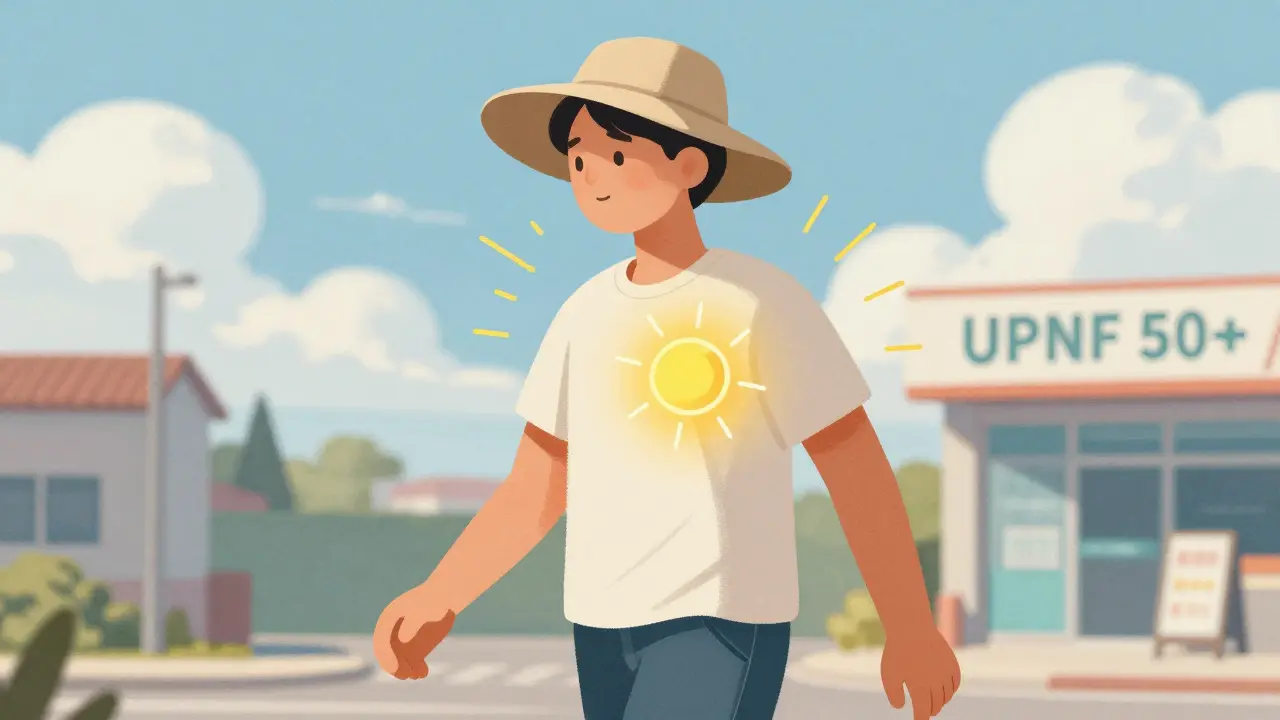
Sunscreen alone isn’t enough. The best defense is layered protection:- UPF 50+ clothing - this isn’t just fashion. Regular cotton T-shirts block only 3-20% of UV. UPF 50+ clothing blocks 98%. Brands like Solbari, Coolibar, and UV Skinz are designed for this. One patient reported a 90% drop in reactions after switching to sun-protective shirts and wide-brimmed hats.
- Timing matters - UV levels peak between 10 a.m. and 4 p.m. Use apps like UVLens to check your local index. If it’s above 3, take extra care. On a cloudy day in Dublin, the index can still hit 5.
- Seek shade - even under a tree or umbrella, UV rays bounce off surfaces like concrete and water. Don’t assume you’re safe just because you’re not in direct sunlight.
- Wear sunglasses - UVA can damage your eyes too. Look for lenses that block 99-100% of UVA and UVB.
Patients who get detailed sun safety advice - including specific SPF numbers, clothing tips, and UV index tracking - report 57% fewer severe reactions, according to the Cleveland Clinic. That’s not a small difference. It’s life-changing.
What to Do If You Get a Reaction
If your skin turns bright red, blisters, or feels like it’s on fire after sun exposure:- Get out of the sun immediately.
- Cool the area with damp cloths - no ice.
- Use aloe vera or hydrocortisone cream (1%) to reduce inflammation.
- Take an antihistamine if it’s itchy or spreading - this helps with photoallergic reactions.
- Don’t pop blisters. They protect the skin underneath.
- Call your doctor. If you’re on a high-risk drug like amiodarone or doxycycline, they may need to adjust your treatment.
Don’t wait for it to get worse. A severe phototoxic reaction can lead to scarring, long-term pigmentation changes, or even hospitalization. And remember: these reactions can last for months - or even years - after you stop the medication. Amiodarone, for example, can linger in your system for up to 20 years.

Are You at Risk? Here’s Your Quick Check
Ask yourself:- Are you taking any antibiotics, heart meds, or anti-inflammatories?
- Have you ever burned badly in the sun, even when you thought you were protected?
- Does your skin react differently now than it did 5 years ago?
- Do you use topical creams or lotions with fragrances or retinoids?
If you answered yes to any of these, you’re at risk. Talk to your pharmacist or dermatologist. Bring your full med list - including supplements and topical products. Many photosensitizing drugs are found in over-the-counter creams, acne treatments, and even some herbal supplements.
The Future: Smart Protection and Personalized Risk
New tools are emerging. In 2023, 23andMe launched a genetic test that identifies variants linked to higher photosensitivity risk. If you have certain MC1R gene mutations - common in people with fair skin and red hair - you’re more vulnerable. Companies are also developing "smart" sunscreens that change color when UV exposure gets dangerous. The FDA approved a new oral photoprotective drug in 2023 called Lumitrex. In trials, it reduced UV-induced skin damage by 70%. It’s not a replacement for sunscreen, but for people on long-term high-risk meds, it’s a game-changer. Still, the biggest gap remains education. A 2022 survey found 68% of patients received no sun safety advice when their photosensitizing drug was prescribed. That’s unacceptable. Your skin is your largest organ. Protecting it shouldn’t be an afterthought.Can I still go outside if I’m on a photosensitizing medication?
Yes - but you need to be smarter about it. Avoid direct sun between 10 a.m. and 4 p.m. Wear UPF 50+ clothing, a wide-brimmed hat, and UV-blocking sunglasses. Use a zinc oxide-based SPF 50+ sunscreen and reapply every 90 minutes. Check your local UV index daily. With these steps, you can safely enjoy outdoor time without triggering a reaction.
Does sunscreen prevent all photosensitivity reactions?
No. Many sunscreens don’t block enough UVA, which is the main trigger. Chemical sunscreens can even worsen reactions in some people. For best protection, use a mineral sunscreen with at least 15% zinc oxide, apply generously, and combine it with clothing and shade. Sunscreen is one layer - not the whole shield.
How long does photosensitivity last after stopping the medication?
It varies. For most drugs, sensitivity fades within days to weeks after stopping. But with amiodarone, it can last up to 20 years. Other long-term offenders include tetracyclines and some NSAIDs. If you’ve had a severe reaction, assume you’re still at risk until your doctor confirms otherwise. Don’t assume you’re safe just because you’re off the drug.
Can I use tanning beds if I’m on a photosensitizing drug?
Absolutely not. Tanning beds emit concentrated UVA radiation - often stronger than natural sunlight. For someone on a photosensitizing medication, this can cause severe burns, blistering, and long-term skin damage in minutes. There is no safe level of tanning bed use if you’re on these drugs.
Are there any natural remedies that help with photosensitivity?
No. While antioxidants like vitamin C or green tea extract may help with general skin health, they don’t stop the chemical reaction between medication and UV light. Relying on natural remedies instead of proven sun protection can lead to serious skin damage. Stick to science-backed methods: sunscreen, clothing, shade, and avoiding peak sun hours.
Should I get tested for photosensitivity?
Photopatch testing can confirm photoallergy, but it’s not always necessary. If you’ve had a clear reaction after starting a new drug and it improved after stopping it, that’s usually enough. Testing is most useful when the cause is unclear or if you’re being evaluated for long-term medication use. Ask your dermatologist - but don’t wait for testing to start protecting your skin.
Final Advice: Don’t Wait for a Burn
If you’re on a medication - even if it’s been months - check if it’s on the list of photosensitizers. Ask your pharmacist. Look up your drug on the FDA’s Sun Safety Medication Database. Wear protective clothing every day, not just when you’re at the beach. Use zinc oxide sunscreen. Check the UV index. These aren’t extreme measures. They’re basic, life-saving habits.Photosensitivity isn’t rare. It’s common, underdiagnosed, and preventable. The sooner you treat it like a real risk - not a minor inconvenience - the better your skin will thank you years from now.
Babe Addict
Okay but let’s be real - if your doctor didn’t warn you about photosensitivity, they’re not doing their job. I’ve seen people on doxycycline get second-degree burns through a cotton shirt at 8 a.m. in November. This isn’t ‘sun safety,’ it’s pharmaceutical negligence. And don’t get me started on how the FDA only mandates labels after 10,000 people get maimed. UVA penetration is a known mechanism since the 90s. Why are we still treating this like a footnote? It’s not ‘rare,’ it’s systematically ignored. And zinc oxide? Yeah, that’s the only thing that works. Chemical filters? They’re basically photosensitizers with marketing budgets.
Satyakki Bhattacharjee
Life is suffering. Sun burns you. Medicine makes it worse. You think you are safe? You are not. You think you are smart? You are not. You think you can control nature? You cannot. The sun does not care if you are on antibiotics. The sun does not care if you are rich or poor. The sun is truth. Wear cloth. Stay in shade. Accept pain. It is the way.
Kishor Raibole
It is with profound regret that I must observe the alarming commodification of dermatological safety in contemporary pharmacological discourse. The systemic failure to disseminate critical photoprotective information constitutes a dereliction of professional duty, bordering on ethical malpractice. One cannot help but note the conspicuous absence of institutional accountability when patients are exposed to UVA-induced cellular degradation under the false assumption of chemical protection. The reliance upon mineral-based barriers - zinc oxide, in particular - is not merely advisable; it is an epistemological imperative grounded in empirical photobiology. One must ask: why are we still debating this in 2025?
John Barron
Just FYI - I’m on amiodarone and I’ve been using a 25% zinc oxide sunscreen since 2020. No burns. No pigmentation. No regrets. 🌞🩹 Also, I just got my 23andMe results - MC1R variant confirmed. So yeah, I’m basically a walking UV target. But I’ve got UPF 50+ hats, UV-blocking sunglasses, and I check the UV index like it’s my job. 📊😎 Also, Lumitrex is coming to my pharmacy next month. I’m pre-ordering. This isn’t ‘being careful,’ it’s being a responsible adult. 🙌
Liz MENDOZA
I just want to say thank you for writing this. I’ve been on hydrochlorothiazide for 7 years and never knew my skin was this vulnerable. I got a bad reaction last summer and thought I was just ‘bad at sunscreen.’ Turns out, I was using the wrong kind. I switched to zinc oxide and started wearing long sleeves even on cloudy days. My dermatologist said I’ve avoided 3 precancerous lesions just by being proactive. I wish someone had told me this when I started the med. Please, if you’re on any of these drugs - talk to your pharmacist. Don’t wait for a burn to learn the hard way. You’re not being dramatic. You’re being smart.
Anna Weitz
So let me get this straight - you’re telling me I can’t go outside without a hazmat suit if I’m on antibiotics? And sunscreen doesn’t even work? And now I need to buy $80 shirts and check some app? Cool. So my entire life is now a sun safety audit. Great. Just great. I’m not a lab rat. I’m just trying to walk my dog. Why does everything have to be so complicated now? 🤷♀️
Jane Lucas
im on doxy for lyme and i thought i was just getting sunburned but it was like a rash that lasted 3 weeks. no one told me. now i wear a hoodie in july. also i use the same sunscreen as my dog. its zinc oxide. it works. i dont care if its gross. my skin is fine now. dont be dumb. just protect yourself.
Caitlin Foster
Okay, so let me get this straight - you’re telling me that the same drug I take for my sinus infection is also secretly turning my skin into a human UV sensor?? 😱 And I’ve been using ‘SPF 50’ like it’s a magic shield?? I feel like I’ve been lied to by Big Pharma AND Sephora. 🤯 I’m going full sun ninja now: UPF shirt, zinc paste, hat like a sunflower, and I’m checking UV index like it’s my daily horoscope. 🌞🕶️✨ If you’re not doing this, you’re not living - you’re just sunbathing with a death wish.