
Are authorized generics really the same as brand-name drugs?
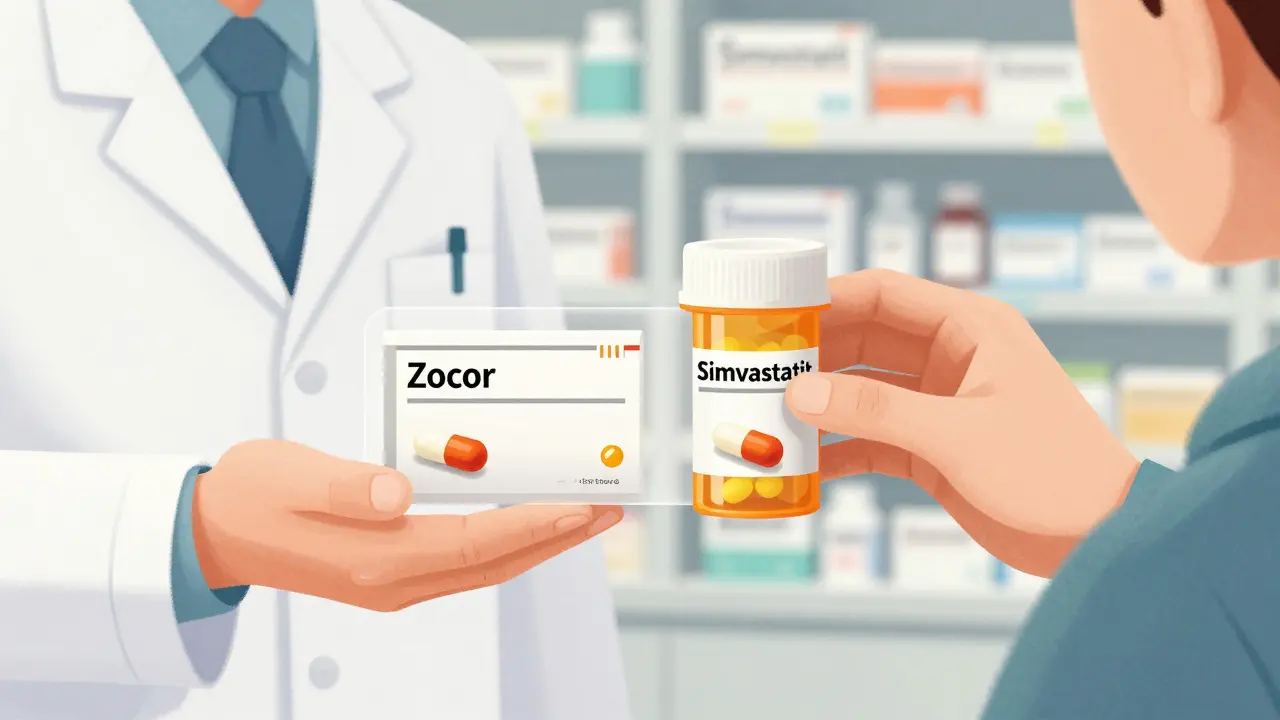
You pick up your prescription and see a different label. The name on the bottle isn’t the one you’ve been taking for years. Your heart skips a beat. Is this the same medicine? Will it still work? You’re not alone. Thousands of people feel this way when they switch to an authorized generic. But here’s the truth: if you’re switching from a brand-name drug to its authorized generic, you’re getting the exact same pill, capsule, or injection - just without the brand name on it.
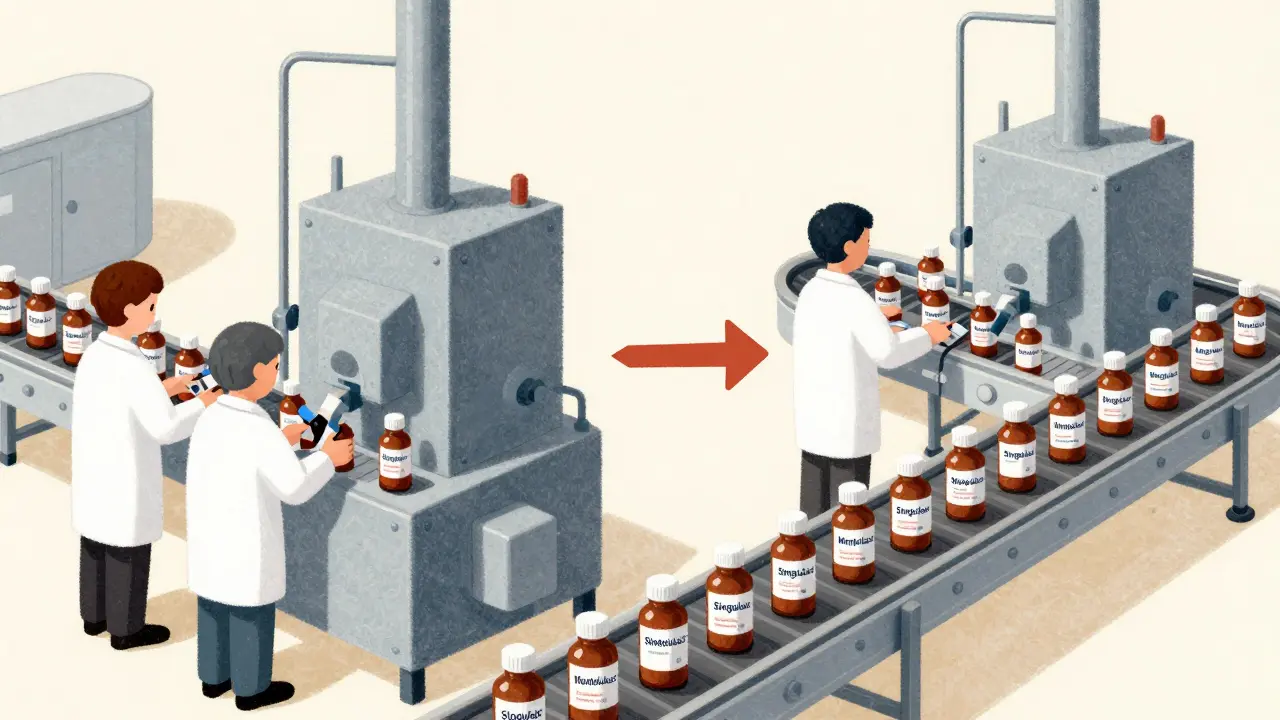
Authorized generics aren’t a different version. They’re not a cheaper copy. They’re not a knockoff. They’re the original drug, made in the same factory, using the same ingredients, under the same quality controls - only sold under a different label. The FDA calls them "the brand product without the brand name on the label." That’s it.
How authorized generics work - no magic, no shortcuts
Most generic drugs go through a process called the ANDA (Abbreviated New Drug Application). That means a company makes a version of a drug and proves it works the same way as the brand. They test how fast it dissolves, how much of it gets into your bloodstream, and whether it produces the same effect. The FDA requires these generics to match the brand within strict limits - usually 80% to 125% of the original drug’s performance.
Authorized generics skip all that. Why? Because they don’t need to. They’re made by the same company that makes the brand-name drug. Same factory. Same equipment. Same batch of active ingredients. Same inactive fillers. Same coating. Same size. Same color. The only difference? The label says "simvastatin" instead of "Zocor," or "montelukast" instead of "Singulair."
The FDA requires the brand company to notify them when they launch an authorized generic, but they don’t need to re-approve it. It’s already approved - it’s the same drug. That’s why authorized generics never show up in the FDA’s Orange Book, which lists traditional generics. They’re not listed because they’re not generics in the traditional sense. They’re the brand, repackaged.
Real-world proof: Do they work just as well?
A 2018 study reviewed over 5,000 patients who switched from brand-name drugs to generics. The researchers wanted to know: did people get sicker? Did they end up in the ER more often? Did they stop taking their meds?
The results were clear. Patients who switched to authorized generics had outcomes almost identical to those who stayed on the brand. Hospital visits, emergency room trips, and medication discontinuation rates were nearly the same. Even when there was a tiny uptick in ER visits for authorized generics, researchers called it "clinically insignificant."
Here’s the kicker: the study used authorized generics as the gold standard to test whether all generics were safe. If even the exact same drug (with no changes) didn’t cause problems, then traditional generics - which meet the same FDA standards - are even less likely to be risky.
Another study from Kaiser Permanente tracked over 8,000 patients. Those taking authorized generics had a 94% adherence rate. The brand-name users? 92%. That’s not a difference. That’s noise.
What about side effects? Could the fillers be different?
This is where people get worried. Traditional generics sometimes use different inactive ingredients - things like dyes, preservatives, or binders. For most people, it doesn’t matter. But for those with allergies or sensitivities, even a tiny change in filler can cause issues.
With authorized generics, that’s not a concern. They use the exact same inactive ingredients as the brand. If your body reacts to the brand, you’ll react the same way to the authorized version - because it’s the same formula. No surprises.
On the Asthma and Allergy Foundation’s forum, 87% of people who switched from Singulair to its authorized generic reported no difference in effectiveness. Only 8% noticed minor changes - and most of those were linked to the pill’s shape or how the inhaler felt in their hand, not the medicine itself.
Price difference: Why pay more for the brand?
Authorized generics cost 15% to 30% less than the brand-name version. That’s a $10 to $30 savings per prescription, depending on the drug. But they’re usually 10% to 20% more expensive than traditional generics. Why? Because they’re not competing with other generics - they’re competing with the brand. The original manufacturer is trying to keep customers from switching to cheaper, unrelated generics by offering their own version at a discount.
Insurance companies love them. Most plans put authorized generics in the same tier as traditional generics. That means your copay is low - often $5 to $10. You’re not paying brand prices, but you’re getting brand quality.
And here’s something most people don’t know: your pharmacist can’t tell the difference between the brand and the authorized generic just by looking at the pill. Same size. Same color. Same markings. The only clue is the label. That’s why so many patients get confused at the pharmacy counter. Pharmacists sometimes mistakenly tell people, "This is a different drug," when it’s not.
Why do drug companies make authorized generics?
It sounds strange. Why would a brand company help kill its own sales? The answer is strategy. When a patent expires, dozens of generic makers jump in. Prices crash. The brand company loses most of its market share.
By launching an authorized generic, they stay in the game. They keep their factory running. They keep profits flowing. And they prevent patients from switching to a competitor’s generic - which might be cheaper, but could have different fillers or inconsistent supply.
Since 2010, the number of authorized generics has grown fast. In 2022, there were 387 available in the U.S. And 68% of top-selling brand drugs launched an authorized version within six months of patent expiration. That’s not luck. That’s business.
What does this mean for you?
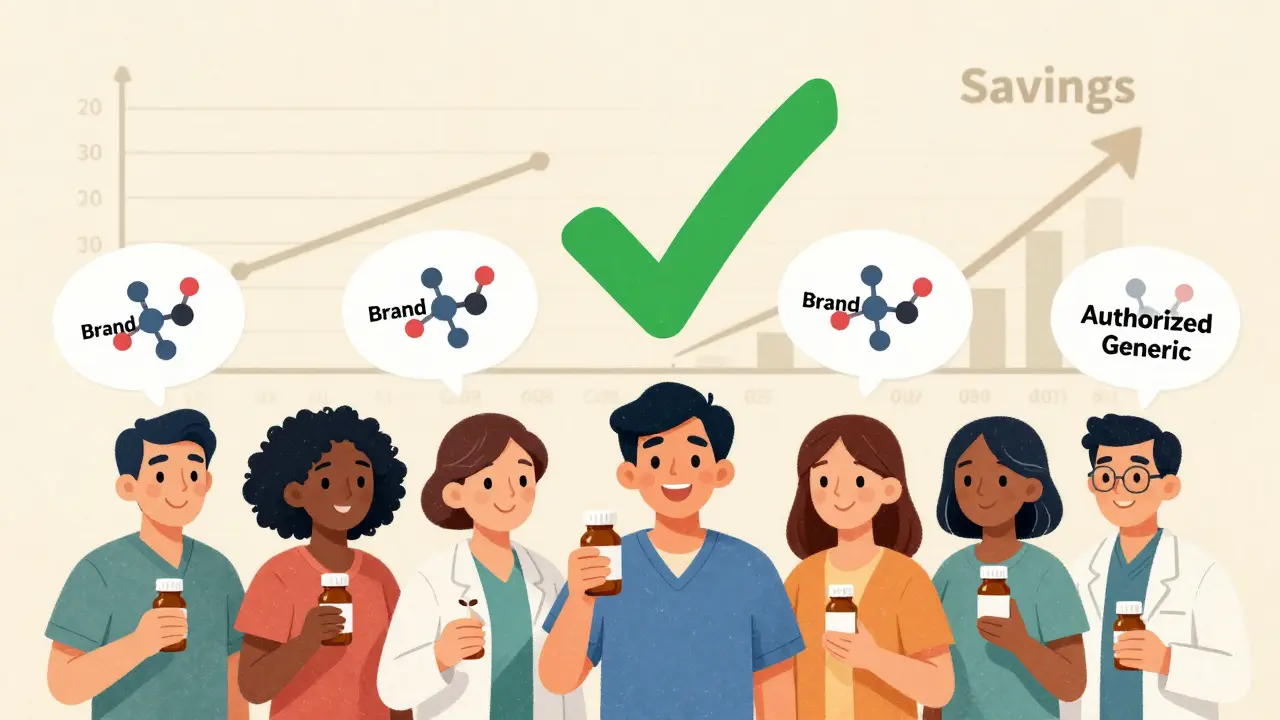
If you’re on a brand-name drug and your pharmacy offers the authorized generic, ask for it. You’ll save money. You’ll get the same medicine. You won’t risk side effects from different fillers. And you won’t have to wonder if it’s working.
Ask your pharmacist: "Is there an authorized generic for this?" If they say no, ask again. Or ask your doctor to write "Dispense as Written" - but only if you’re worried about switching. Most of the time, you’re safe.
And if you’ve already switched and feel fine? Good. You’ve saved money without sacrificing quality. That’s not a compromise. That’s smart.
Why some people still hesitate - and how to get past it
People trust names. Zocor. Singulair. Lipitor. They feel like they’re getting something premium. But the pill in your hand? It’s the same.
Confusion is the real enemy. If you’ve had a bad experience with a traditional generic - maybe it made you feel off, or you had to switch back - that’s not the fault of generics. It’s the fault of different fillers. Authorized generics don’t have that problem.
Don’t let marketing fool you. The brand didn’t become famous because it worked better. It became famous because it was the first. The science didn’t change. The chemistry didn’t change. The FDA didn’t lower its standards. The only thing that changed? The label.
Bottom line: Same drug. Lower price. Zero trade-off.
Authorized generics are not a compromise. They’re not a backup plan. They’re the original drug, offered at a discount. Every study, every expert, every patient survey says the same thing: they work just as well. They’re just as safe. They’re just as effective.
There’s no reason to pay more for the same thing. Unless you’re attached to the packaging - and even then, you can keep the brand for that - there’s no downside to switching. Your wallet will thank you. Your body won’t notice the difference.
Are authorized generics the same as brand-name drugs?
Yes. Authorized generics are made by the same company that makes the brand-name drug, using the exact same ingredients, manufacturing process, and quality controls. The only difference is the label - no brand name, no logo, no marketing. The FDA calls them "the brand product without the brand name on the label."
Do authorized generics work as well as brand-name drugs?
Yes. Multiple studies, including one tracking over 5,000 patients, show no meaningful difference in effectiveness, hospital visits, or medication adherence between authorized generics and their brand-name counterparts. Because they’re identical in formulation, they perform the same in real-world use.
Can authorized generics cause different side effects?
No. Unlike traditional generics, authorized generics use the exact same inactive ingredients (fillers, dyes, binders) as the brand-name version. If you’ve had side effects from the brand, you’ll have the same reaction to the authorized generic - because it’s the same product. The risk of allergic reactions or intolerance doesn’t increase.
Why are authorized generics more expensive than regular generics?
Authorized generics cost more than traditional generics because they’re made by the original brand company, not a competitor. They’re priced to compete with the brand, not with other generics. Typically, they’re 15-30% cheaper than the brand but 10-20% more expensive than other generics - offering a middle ground between cost and certainty.
How do I know if my prescription is an authorized generic?
Check the label. If the drug name matches the brand (e.g., "montelukast" instead of "Singulair") and the manufacturer is the same company that makes the brand (e.g., Merck), it’s likely an authorized generic. You can also ask your pharmacist directly: "Is this an authorized generic?" They can look it up in their system.
Can I ask my doctor to prescribe an authorized generic?
Yes. Your doctor can write the prescription using the generic name and indicate "Dispense as Written" if you want to ensure you get the authorized version. Many insurers automatically substitute authorized generics when available because they’re cost-effective and clinically identical to the brand.
Are authorized generics covered by insurance?
Yes. Most insurance plans treat authorized generics the same as traditional generics - placing them in the lowest cost tier. Your copay will be much lower than for the brand-name version. Some plans even prefer them because they reduce overall drug spending without sacrificing quality.
Why don’t all brand-name drugs have authorized generics?
Not every brand company chooses to launch one. It’s a business decision. Some prefer to let the market be flooded with cheaper generics. Others use authorized generics to retain customers and control quality. About 20-25% of brand-name drugs have an authorized generic available after patent expiry, usually among top-selling medications.
Siobhan K.
I used to be terrified of switching to generics until I found out about authorized ones. My cardiologist explained it like this: it's the same cake, just without the fancy wrapper. I saved $22 a month and haven't felt a difference. Why pay more for branding?
Brian Furnell
The pharmacokinetic equivalence of authorized generics is statistically indistinguishable from originator products, as demonstrated in multiple bioequivalence studies conducted under FDA guidelines-particularly those referencing 21 CFR 320.22. The absence of significant inter-patient variability in Cmax and AUC0–t metrics confirms therapeutic equivalence. Why the public remains skeptical despite this is a fascinating socio-medical phenomenon.
Jerry Peterson
I work in a pharmacy. People freak out when they see a different label. I tell them: 'Same pill, different shirt.' Most of them just nod and walk away. But the ones who ask? They're usually surprised how simple it is. Save your cash. The pill doesn't care what it's called.
Orlando Marquez Jr
It is imperative to clarify that the regulatory framework governing the approval of authorized generics is predicated upon the pre-existing New Drug Application (NDA) of the originator product. Consequently, the absence of an Abbreviated New Drug Application (ANDA) does not signify a reduction in quality assurance standards; rather, it reflects an administrative streamlining grounded in identical manufacturing protocols.
Swapneel Mehta
I switched my dad to the authorized generic for his blood pressure med. He was skeptical too. But after three months, his numbers were better than when he was on the brand. Turns out, he was just stressed about the label. Sometimes the mind plays tricks on us more than the medicine.
Ben Warren
Let me be perfectly clear: the notion that authorized generics are somehow 'better' than traditional generics is a dangerous myth perpetuated by pharmaceutical marketing departments. The FDA's 80–125% bioequivalence window is inherently flawed. Even if the authorized generic is identical, the fact that traditional generics are held to the same standard means there is no legitimate basis for preference. This is just brand loyalty disguised as science.
Sandy Crux
I suppose if you’re the kind of person who believes that a pill’s efficacy is determined by its label... well, then, I suppose you’re also the kind of person who thinks a Picasso is only valuable if it’s signed. The real tragedy? You’re paying for the illusion. The pill? It doesn’t care.
Hannah Taylor
I heard the FDA lets them use the same factory but they secretly swap out the active ingredient and just add more filler. My cousin’s friend’s neighbor’s dog got sick after switching. I’m not saying it’s true… but why would they lie? They’re corporations.
Erika Putri Aldana
I don't trust any of this. Big Pharma is just trying to make you think you're saving money so you'll stop complaining. They're making more profit off these 'authorized' ones because you think you're getting a deal. Wake up. You're being played.
Jon Paramore
Authorized generics are the only generics that eliminate variability in excipients. For patients with rare sensitivities (e.g., lactose intolerance, dye allergies), this is clinically significant. Traditional generics often substitute fillers to reduce cost-authorized ones don’t. This isn’t marketing. It’s pharmacology.
Cameron Hoover
I used to be one of those people who refused to switch. Then my insurance raised my copay from $5 to $50 for the brand. I tried the authorized generic. Felt nothing different. Saved $45. Now I tell everyone. It’s not a compromise-it’s common sense.
Christina Weber
The assertion that authorized generics are 'the same drug' is technically accurate but semantically misleading. While the active pharmaceutical ingredient and manufacturing process are identical, the absence of brand-specific quality control documentation-such as batch-specific stability data published under the NDA-introduces a non-trivial epistemological gap in post-marketing surveillance. One cannot assume equivalence where traceability is obfuscated.
Grace Rehman
We spend so much time worrying about pills and labels and money… but what if the real question is why we’ve let corporations convince us that medicine needs a logo to be trusted? The pill doesn’t know if it’s Zocor or simvastatin. We’re the ones who gave it meaning.
Sarah Williams
I switched to the authorized generic for my antidepressant last year. No side effects. No mood swings. Just saved $30 a month. If your body doesn’t notice, why should you?