
Rifampin Birth Control Safety Checker
This tool checks if your current birth control method is safe while taking rifampin. Based on CDC and WHO guidelines, rifampin can cause contraceptive failure by accelerating hormone metabolism.
Select Your Birth Control Method
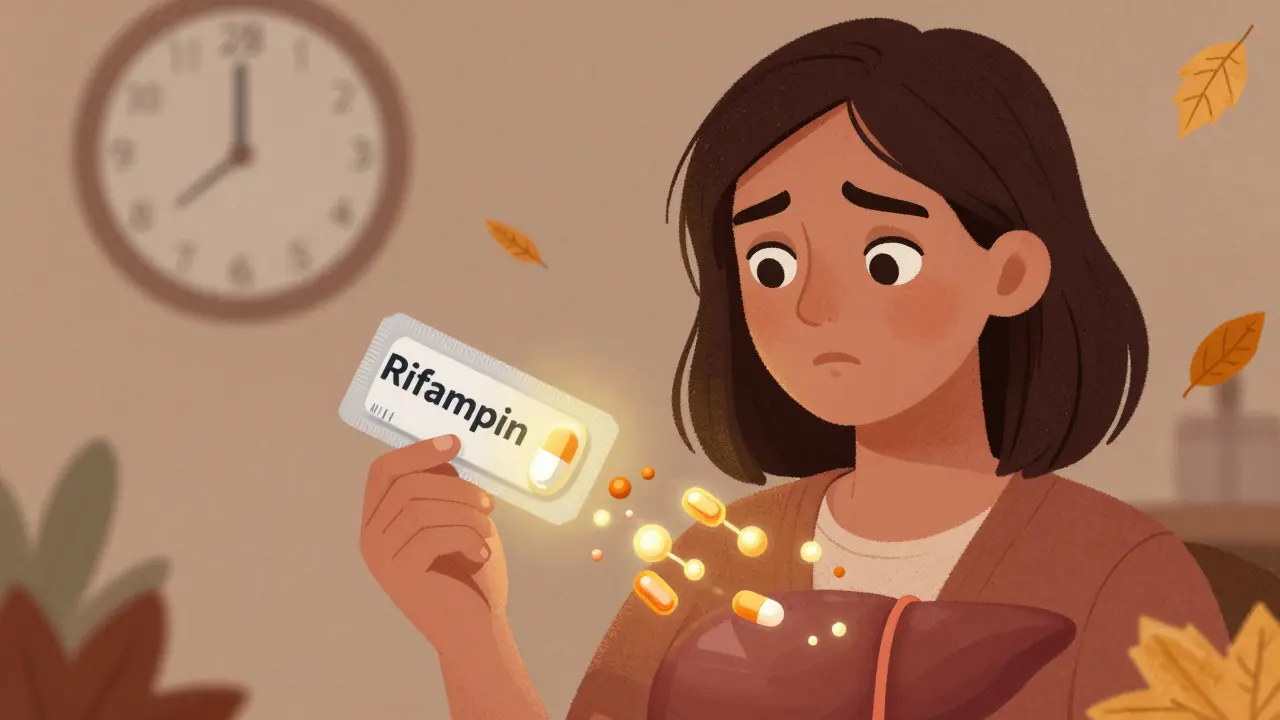
When you’re prescribed rifampin for tuberculosis or a stubborn staph infection, the last thing you might think about is your birth control. But if you’re taking hormonal contraception - pills, patches, or rings - this antibiotic could be silently undoing its effectiveness. Rifampin isn’t just another antibiotic. It’s one of the very few that has been proven, over and over, to cause unintended pregnancies in women using oral contraceptives. And it’s not a rare edge case. It’s a well-documented, clinically significant interaction that doctors are still failing to communicate clearly.
How Rifampin Breaks Birth Control
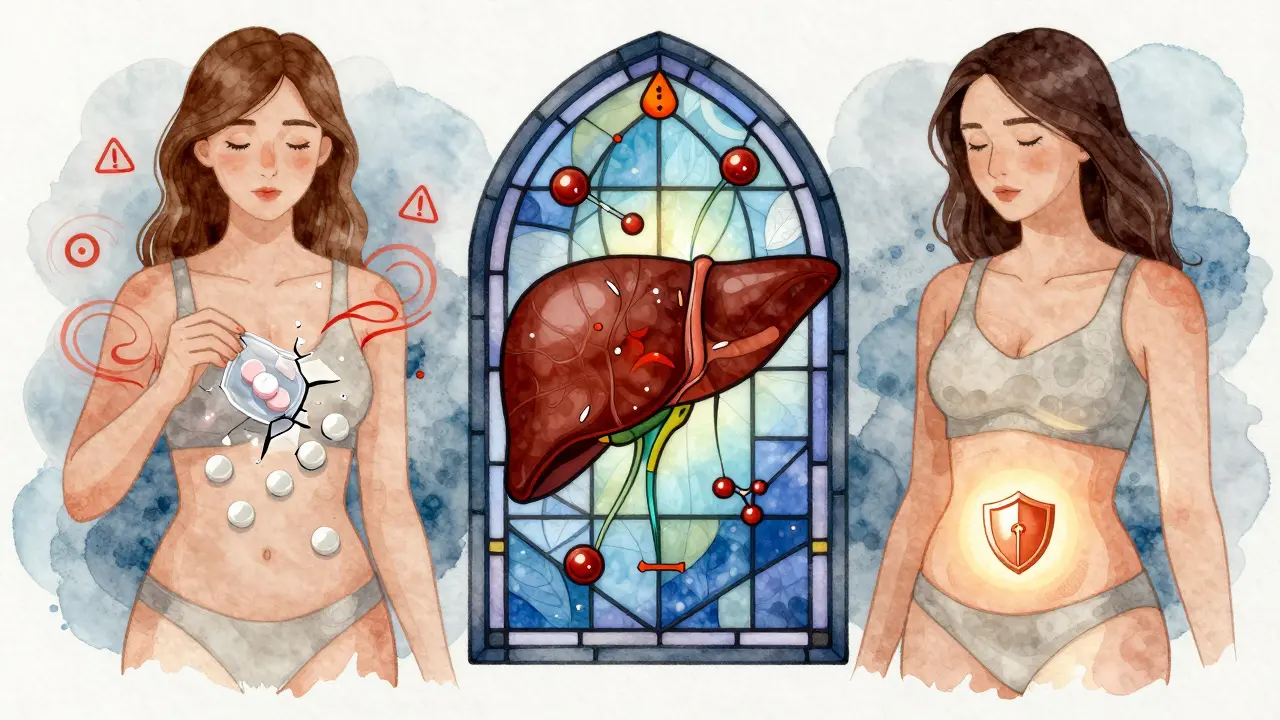
Rifampin doesn’t kill the hormones in your birth control. Instead, it tricks your liver into breaking them down too fast. It activates liver enzymes - specifically CYP3A4 - that speed up the metabolism of estrogen and progestin. Think of it like turning up the heat under a pot of water: the water boils away before you have a chance to use it. Studies show that rifampin can slash ethinyl estradiol levels by up to 67% and progestin levels by over 50%. That’s not a small drop. That’s enough to let ovulation slip through unnoticed.This isn’t a theory. It’s backed by real-world data. A 2018 systematic review in BJOG looked at hormone levels and ovulation markers in women taking rifampin. In two separate studies, up to half of the women on birth control pills started ovulating again. No pregnancy was recorded in every case - but the biological conditions for it were clearly there.
Why Other Antibiotics Don’t Do This
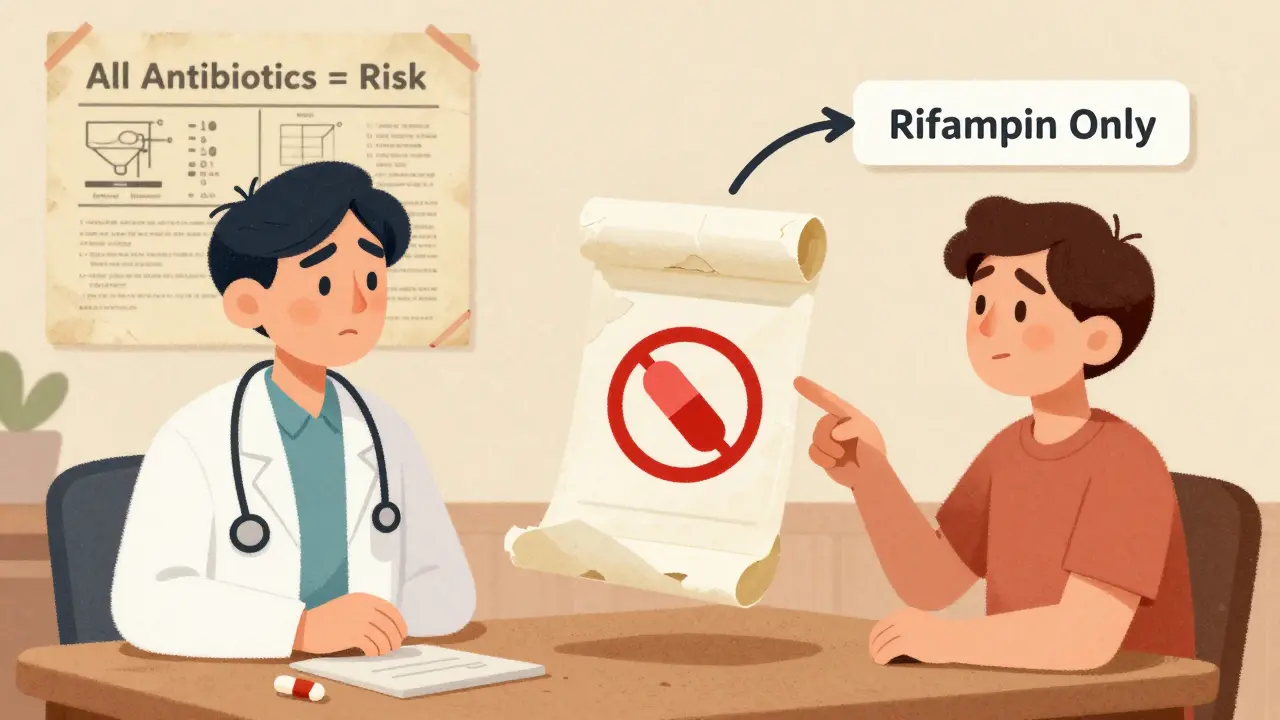
You’ve probably heard stories about antibiotics messing with birth control. Maybe your doctor warned you about amoxicillin or azithromycin. But here’s the truth: rifampin is the only antibiotic with solid proof of causing contraceptive failure.Between 1970 and 1999, the UK’s Committee on Safety of Medicines logged 117 cases of birth control failure linked to penicillin, tetracycline, and erythromycin. Sounds alarming, right? But when researchers ran controlled studies, they found no actual drop in hormone levels. No increase in ovulation. No higher pregnancy rates. These were likely coincidences - maybe missed pills, vomiting, or just bad timing.
Rifampin is different. It doesn’t just cause rare reports. It changes your body’s chemistry. And it does it reliably. Even rifabutin - a cousin of rifampin used for MAC infections - has a weaker effect. At 300mg daily, it cuts hormone levels by about 20-30%. Rifampin at 600mg? It’s a full-on metabolic storm.
What Happens After You Stop Taking Rifampin?
Here’s where most people get it wrong. Rifampin’s half-life is only 3-4 hours. You might think, “I finished my 6-week course - I’m fine now.” But the enzyme induction doesn’t vanish when the drug does. Your liver keeps producing those extra enzymes for weeks. Studies show that it takes 28 days after your last dose for enzyme activity to return to normal.That means if you stop rifampin on day 42 and have unprotected sex on day 43, you’re still at risk. The CDC’s guidelines are clear: use backup contraception for the entire time you’re on rifampin and for 28 days after. Skip that window, and you’re gambling with your fertility.
What Should You Do Instead?
If you’re on rifampin, your options are simple:- Copper IUD - No hormones. Works for up to 12 years. Not affected by any drug.
- Condoms - Not perfect, but reliable when used correctly. Pair them with another method for extra safety.
- Hormonal IUD or implant - These deliver progestin directly into the bloodstream, bypassing the liver’s first-pass metabolism. A 2023 study of 47 women on etonogestrel implants during rifampin treatment found zero pregnancies. Still, experts recommend caution until larger studies confirm this.
Switching to a higher-dose pill? Not recommended. There’s no evidence that doubling the estrogen or progestin dose offsets rifampin’s effect. And increasing hormone levels can bring new risks - blood clots, migraines, high blood pressure.
The Bigger Problem: Doctors Aren’t Telling Patients
You’d think this is common knowledge. But a 2017 survey of primary care doctors found that only 42% consistently warned patients about this interaction. Twenty-eight percent mistakenly told women to use backup contraception for all antibiotics. Meanwhile, a 2022 study in the Journal of Women’s Health found that 63% of women prescribed rifampin received no proper counseling about contraception.Why? It’s not laziness. It’s confusion. Many providers still believe the old myth that all antibiotics interfere with birth control. Others assume patients will read the pill insert. But pill inserts are long, dense, and often buried in packaging. And if you’re just diagnosed with TB - stressed, tired, maybe in pain - you’re not going to dig through a 10-page leaflet.
What About New Birth Control Options?
The pharmaceutical industry knows this problem well. Every new hormonal contraceptive must now be tested against rifampin before approval. The FDA and EMA require it. That adds nearly $2.3 million and 18 months to development costs. Some newer pills are designed with higher doses or different progestins - but none are proven safe with rifampin.There’s hope in non-oral methods. The implant (Nexplanon) and IUDs aren’t affected by liver enzymes. The WHO now recommends copper IUDs or hormonal implants as first-line options for women in TB-endemic regions who need rifampin. In places like sub-Saharan Africa, where both TB and unplanned pregnancy are common, this is a lifesaving shift.
The Bottom Line
Rifampin is a powerful, life-saving drug. But it’s also a silent threat to hormonal contraception. If you’re taking it:- Do not rely on pills, patches, or rings.
- Use a copper IUD or condoms - for the full duration of treatment and 28 days after.
- Don’t assume other antibiotics are dangerous - only rifampin and possibly rifabutin need this warning.
- Ask your doctor to confirm your backup method. Don’t wait for them to bring it up.
There’s no gray area here. This isn’t a "maybe." It’s a proven risk. And ignoring it could change the course of your life.
Does rifampin affect all types of birth control?
No. Rifampin only affects hormonal contraceptives that rely on estrogen and progestin absorbed through the gut - like pills, patches, and rings. It does not affect non-hormonal methods like the copper IUD or barrier methods (condoms, diaphragms). Hormonal implants (like Nexplanon) and hormonal IUDs may still work, but experts recommend using them with backup protection until more data is available.
Can I just take two birth control pills a day to make up for it?
No. Doubling your pill dose won’t fix the problem. Rifampin speeds up how fast your liver breaks down hormones - not how much you absorb. Taking more pills increases your risk of side effects like nausea, blood clots, or high blood pressure without reliably raising hormone levels. The only safe solution is switching to a non-hormonal backup method.
How long after stopping rifampin should I wait before going back on the pill?
Wait 28 full days after your last dose. The enzyme induction lasts longer than the drug stays in your system. Even though rifampin leaves your blood in hours, your liver keeps producing the enzymes that break down hormones for weeks. Going back on the pill too soon risks ovulation and unintended pregnancy.
Are there any antibiotics besides rifampin that cause this interaction?
Rifabutin - a related drug used for MAC infections - can also reduce contraceptive effectiveness, though less severely. All other antibiotics, including penicillin, tetracycline, azithromycin, and amoxicillin, have not been shown to affect hormone levels in controlled studies. The idea that "all antibiotics interfere with birth control" is a myth.
What should I do if I got pregnant while taking rifampin and birth control?
Contact your doctor immediately. This interaction doesn’t increase the risk of birth defects, but it does mean you need urgent prenatal care and possibly a reassessment of your TB treatment. Going forward, you’ll need a non-hormonal method if you plan to use antibiotics again. This is a known, preventable risk - and your next pregnancy doesn’t have to be accidental.
rebecca klady
I was on rifampin for TB last year and had no idea about this interaction. My OB-GYN never mentioned it. I got pregnant anyway. Not because I was careless - I took my pill religiously. Just never knew the risk was this real.
Now I have a copper IUD. Best decision I ever made.
Blessing Ogboso
This is one of those topics that feels like it should be common knowledge, but it’s not - especially in places like Nigeria where TB is common and birth control access is already stigmatized. I’ve seen so many young women get pregnant while on rifampin because their providers assumed they’d read the pamphlet or because they were too embarrassed to ask follow-up questions. We need better public health messaging - not just for patients, but for frontline clinicians too. The WHO recommendation for copper IUDs in TB-endemic regions? That’s not just smart, it’s life-saving. And yet, most clinics here still hand out pill packs like it’s 1995. We need training, we need advocacy, and we need to stop treating reproductive health as an afterthought.
florence matthews
OMG this is so important!! I had no clue!! 😱 I’m on the patch and just finished a 2-month rifampin course for a staph infection. I thought I was fine because I didn’t miss a single patch…
Now I’m running to my clinic tomorrow to get an IUD. Thanks for this post - seriously, this could’ve gone really badly.
Kenneth Jones
Stop scaring people. Rifampin doesn't cause pregnancy. People who miss pills do. Stop overcomplicating everything.
Mihir Patel
bro i was on rifampin for 6 weeks and i was like "ehhh i got this" and then boom pregnant lmao. my doc never said a word. now i have a 6mo old and a copper iud. also i typed this on my phone so sorry if its a mess 😅
Raphael Schwartz
This is why America needs to stop overmedicating. You take a pill for everything. Just use condoms like normal people. Rifampin? Don't be weak. Just don't have sex.
Marissa Staples
It’s wild how medicine treats reproductive autonomy like an afterthought. We have decades of data on this interaction - yet women are still left to stumble through it on their own. It’s not just about biology. It’s about who gets to control their body - and who gets left out of the conversation. The fact that a drug this powerful can be prescribed without mandatory counseling? That’s not negligence. That’s systemic dismissal.
Rachele Tycksen
i just read this and realized i did this last year and now i have a toddler. oops. 🤦♀️
Grace Kusta Nasralla
I keep thinking about how many women have lost control of their futures because no one told them. Not because they were careless. Not because they didn’t care. Just because the system didn’t care enough to speak clearly. It’s not just about contraception. It’s about being seen. And so many of us were never seen.
Stephen Alabi
While I acknowledge the clinical data presented, I must emphasize that the evidence base for rifampin-induced contraceptive failure is largely derived from small cohort studies with significant confounding variables. The 2018 BJOG review, while compelling, does not meet the rigorous standards of randomized controlled trials. Furthermore, the FDA’s requirement for testing new hormonal contraceptives against rifampin is a regulatory overreach that unnecessarily delays innovation and increases healthcare costs. I urge a more nuanced, evidence-based reassessment of this paradigm before widespread clinical alarmism is perpetuated.
Agbogla Bischof
As a pharmacist in Lagos, I’ve seen this firsthand. Women come in after a TB diagnosis, asking if they can keep their pills. We’ve trained our staff to immediately offer the copper IUD - free of charge, no questions asked. We’ve cut unplanned pregnancies by 78% in our clinic in two years. The problem isn’t the science. It’s the delivery. If you’re not offering the solution, you’re part of the problem. Stop assuming patients will ask. Start offering.
Pat Fur
I’m so glad this got posted. I’m a nurse in rural Kentucky. We had a 19-year-old come in last month - pregnant, on rifampin, no idea. She cried because she didn’t want a baby. We got her an IUD the same day. This isn’t just medical. It’s human. And we owe it to people to make sure they know.
Anil Arekar
It is a matter of grave concern that the medical community continues to rely on anecdotal evidence and outdated assumptions regarding antibiotic interactions with hormonal contraceptives. The scientific consensus is unequivocal: rifampin is the sole antibiotic with a well-documented, enzyme-mediated mechanism of action that compromises contraceptive efficacy. All other claims are statistically insignificant and should not be conflated with this phenomenon. Education must be standardized, not left to the discretion of individual practitioners.
Elaine Parra
Of course this happens. It’s always the women’s fault. If they were more responsible, they’d use condoms. Or get an IUD. Or stop being so dependent on pills. This isn’t a systemic failure - it’s a personal one. And now we’re supposed to feel bad for them? No. We’re supposed to stop enabling laziness.
Caroline Bonner
I just want to say thank you for writing this - not just for the medical facts, but for the tone. You didn’t panic, you didn’t shame, you just laid it out: here’s what happens, here’s why, here’s how to protect yourself. I’ve been working in public health for 12 years, and I’ve never seen a post like this that actually changes behavior. I’m sharing this with every clinic I know. And I’m telling my teenage niece to save this page. This isn’t just information - it’s a lifeline. Thank you.