
Hypertensive Crisis Risk Checker
Check Your Medication Risks
This tool checks for dangerous interactions between your medications and common foods or substances that can cause severe hypertensive crisis. Enter your medications and foods to see if they could cause life-threatening blood pressure spikes.
What to do:
How to Use This Tool
Select the medication you're taking and the food/substance you want to check. The tool will analyze the potential interaction and provide guidance on whether it could cause a hypertensive crisis.
If you have multiple medications or foods to check, you'll need to run the tool separately for each combination.
A severe hypertensive crisis isn’t just a high blood pressure reading - it’s a life-threatening emergency that can strike in minutes, often from something as simple as a snack or a common over-the-counter pill. When blood pressure spikes above 180/120 mmHg and starts damaging organs like the brain, heart, kidneys, or eyes, time becomes the enemy. And in nearly one out of five cases, the cause isn’t poor lifestyle or genetics - it’s a hidden drug interaction.
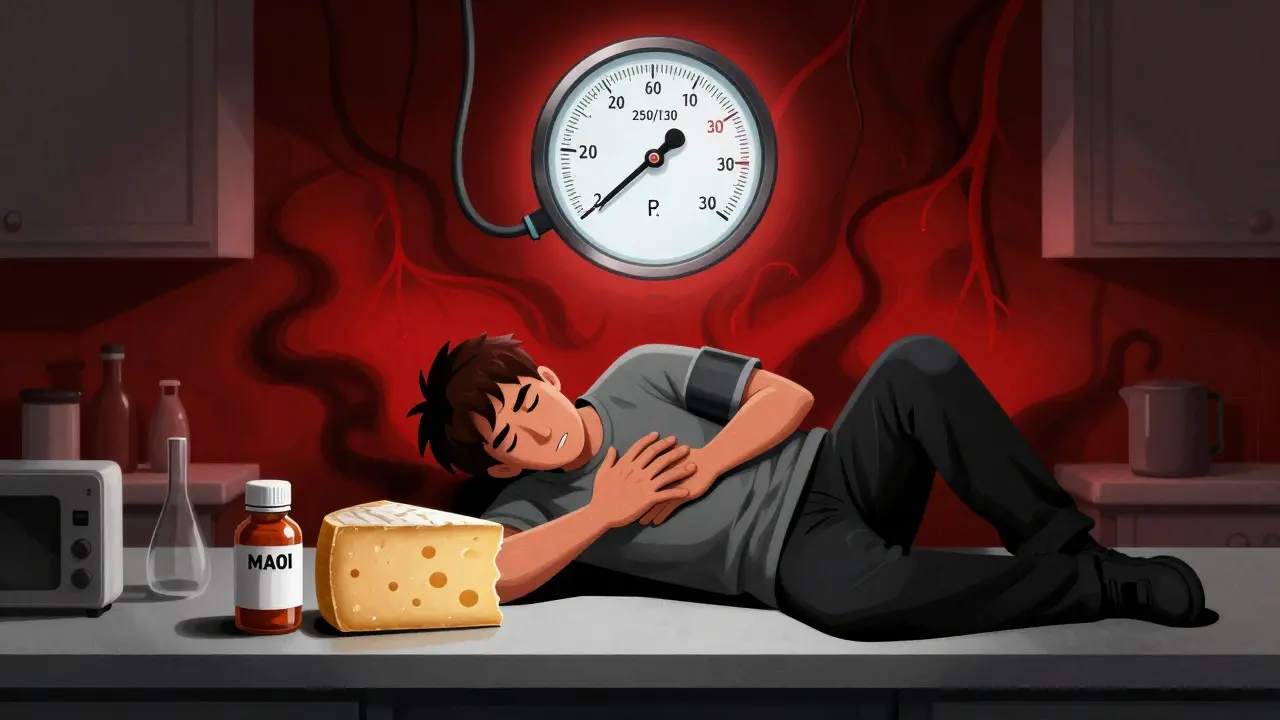
Think about this: someone takes their prescribed antidepressant, eats a piece of aged cheese, and within an hour, their blood pressure rockets to 220/130. They collapse, end up in the ICU, and survive only because a sharp ER doctor asks, "What did you eat?" This isn’t rare. It’s happening more often than you think. Drug-induced hypertensive crises account for 15-20% of all secondary hypertension cases, and experts believe that number is way too low because so many cases go unreported or misdiagnosed.
How a Normal Medication Turns Deadly
Most drugs are safe on their own. But when they meet other substances - prescription, over-the-counter, or even food - they can trigger a dangerous chain reaction in your body. The most infamous example is the interaction between MAOIs (monoamine oxidase inhibitors) and tyramine-rich foods like aged cheese, cured meats, or draft beer. MAOIs are used for depression and Parkinson’s, but they block an enzyme that normally breaks down tyramine. When tyramine builds up, it forces your body to release massive amounts of norepinephrine - a powerful stimulant that slams your blood vessels shut. Systolic pressure can jump 50-100 mmHg in under an hour. Case reports show readings over 250 mmHg. Without quick treatment, this can cause stroke, heart attack, or kidney failure.
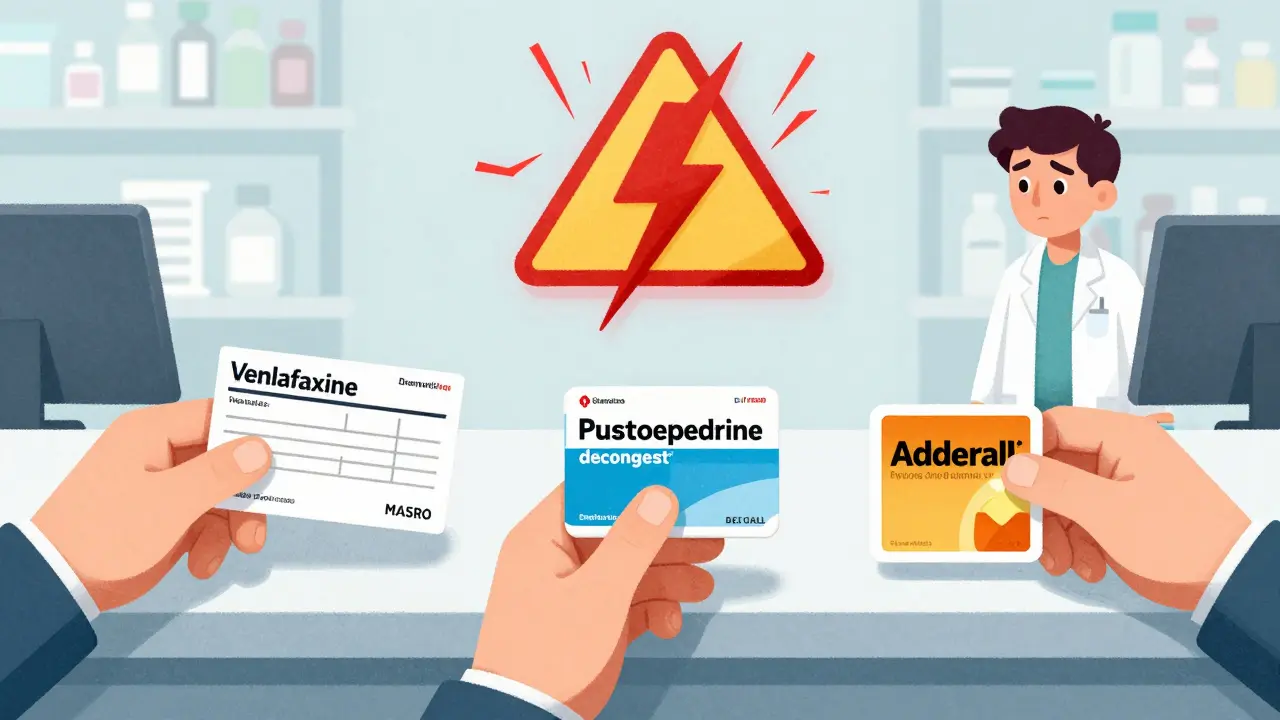
But MAOIs aren’t the only offenders. Venlafaxine, a common antidepressant, can cause dangerous spikes when taken above 300 mg/day. At that dose, it starts acting like a stimulant, raising diastolic pressure above 90 mmHg. Combine it with an over-the-counter decongestant like pseudoephedrine, or worse - an ADHD medication like Adderall - and you’ve got a recipe for disaster. One study found that venlafaxine-amphetamine combinations lead to 40% more hypertensive crises than historical data suggests.
Cyclosporine, a drug used to prevent organ rejection after transplants, causes high blood pressure in up to half of patients. Why? It tightens blood vessels and tricks the kidneys into holding onto sodium. Many doctors mistake this for organ rejection and increase the dose - making the hypertension even worse. In one study, 55% of transplant patients with cyclosporine-induced hypertension were misdiagnosed and given more of the very drug that was causing the problem.
The Hidden Culprits: What You’re Not Thinking About
It’s not just prescription drugs. Some of the most dangerous interactions come from things you wouldn’t suspect.
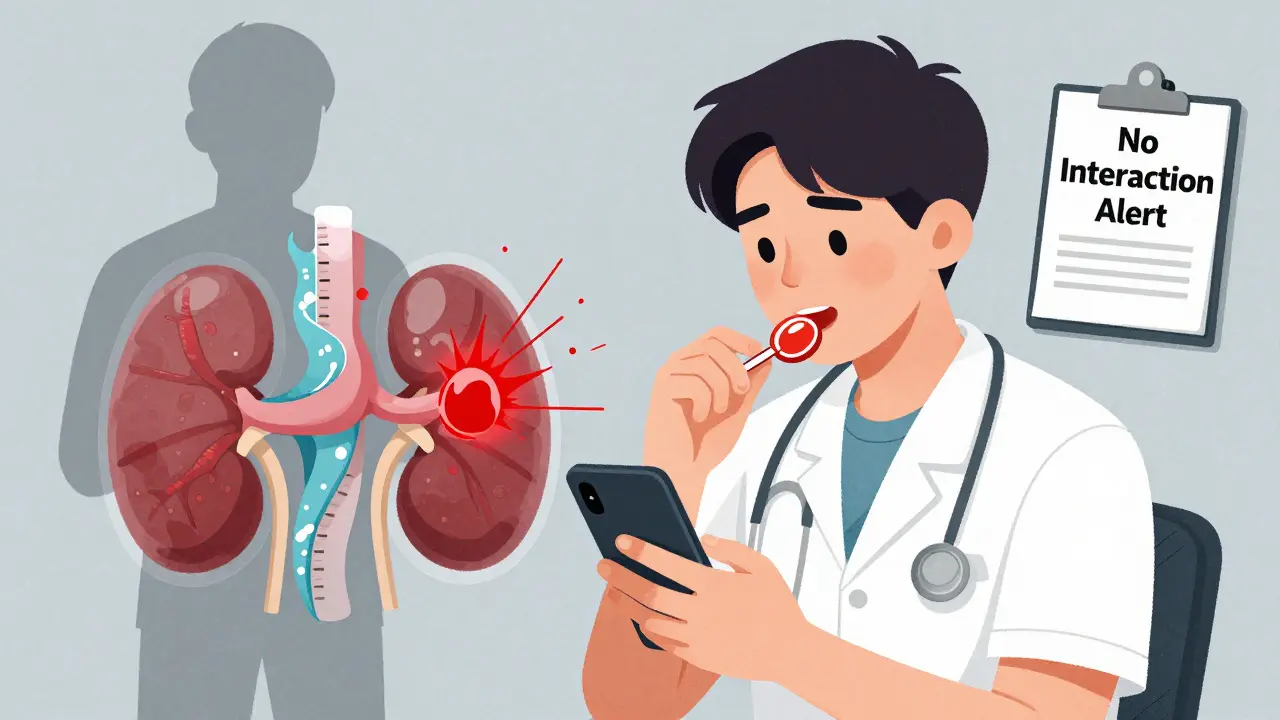
Take licorice candy. Yes, the sweet, chewy kind. It contains glycyrrhizin, which blocks a kidney enzyme that normally protects you from excess cortisol. When that enzyme is inhibited, cortisol acts like a mineralocorticoid - a hormone that makes your body retain salt and water. The result? Blood volume increases by 10-15%, potassium drops below 3.5 mmol/L, and blood pressure climbs. One patient in a 2022 study had persistent hypertension for months - until they admitted to eating a bag of licorice every day. After stopping, their pressure returned to normal in two weeks.
Even common painkillers can play a role. Acetaminophen, often seen as harmless, has been linked to modest but measurable blood pressure increases, especially in people already on antihypertensives. And weight-loss drugs like sibutramine (still available in some countries) can push systolic pressure up 7 mmHg in people with existing hypertension - a huge jump when you’re already at risk.
Then there’s cocaine. Alone, it’s dangerous. But combine it with beta-blockers like propranolol, and you get a perfect storm. Beta-blockers shut down one pathway of adrenaline response, but leave the other wide open - causing unopposed vasoconstriction. Cases have shown systolic pressures exceeding 220 mmHg within 60 minutes. This isn’t theoretical - it’s documented in emergency rooms.
Who’s at Risk - And Why It’s Getting Worse
You might think this only affects older adults on multiple medications. But it’s happening to younger people too. The rise in antidepressant use - up 13% per year - and the explosion of over-the-counter weight-loss pills mean more people are exposed to risky combinations. The FDA’s own data shows that 78% of high-risk medications don’t have clear warnings about hypertensive crisis potential, especially for off-label uses.
Patients often don’t connect the dots. A 2021 survey found that 68% of people who suffered a drug-induced crisis had reported unexplained headaches or blurry vision to their doctors - but only 22% had their medications reviewed. One Reddit user, "u/MigraineWarrior," described waking up with 220/130 after eating cheddar with their selegiline. They spent three days in the ICU. "Still terrified of cheese," they wrote.
Doctors aren’t always better. A 2015 review found that 65% of emergency departments never checked for drug interactions in patients with severe hypertension. Even today, only 35% of ER physicians routinely screen for them. Meanwhile, polypharmacy in older adults is rising. The European Society of Cardiology reported that 18% of hypertensive emergencies in patients over 65 involve three or more interacting drugs.
What Works - And What Doesn’t
Treatment depends on the cause. For MAOI-tyramine reactions, phentolamine given intravenously works 92% of the time within 20 minutes. Labetalol is effective for many sympathomimetic-induced crises. But calcium channel blockers work best for cyclosporine-related hypertension. The wrong drug can make things worse. Giving a beta-blocker to someone with unopposed alpha stimulation (like from cocaine) can be fatal.
Prevention is far more powerful than treatment. The American Heart Association recommends a 2-week washout between MAOIs and other antidepressants - but for irreversible MAOIs like phenelzine, 4-5 weeks is safer. Patients on cyclosporine need biweekly blood pressure checks for the first three months. Those on venlafaxine above 225 mg/day should now be monitored quarterly under new 2024 guidelines.
Technology is helping. In January 2023, the FDA approved the first AI-powered decision-support tool designed to flag dangerous drug interactions before they happen. In trials, it cut MAOI-related emergencies by 40%. Genetic testing is also emerging - people with certain CYP2D6 mutations are 3.2 times more likely to have severe reactions to some antidepressants.
Even small changes matter. Apps like "MAOI Diet Helper" improved dietary adherence by 78% in a Mayo Clinic study. And simple patient education - like knowing that licorice candy isn’t just sugar - can prevent years of suffering.
What You Need to Do Now
If you’re on any of these drugs:
- MAOIs (phenelzine, tranylcypromine, selegiline)
- Venlafaxine (especially above 225 mg/day)
- Cyclosporine or other transplant meds
- Weight-loss drugs (phentermine, sibutramine)
- Stimulants (Adderall, Ritalin)
Ask yourself:
- Have I told my doctor about every supplement, OTC med, or herbal product I take?
- Do I know what foods to avoid with my meds? (Aged cheese, smoked meats, tap beer, soy sauce, fermented foods)
- Have I been checked for low potassium or high sodium? (Signs of mineralocorticoid overload)
- When was the last time my entire medication list was reviewed - not just one drug?
Don’t wait for a crisis. A single phone call to your pharmacist or doctor could save your life. The tools exist. The knowledge exists. What’s missing is awareness - and that’s something you can change today.
Can a single food item really cause a hypertensive crisis?
Yes. Tyramine-rich foods like aged cheese, cured meats, or draft beer can trigger a severe hypertensive crisis in people taking MAOIs. In documented cases, systolic blood pressure has spiked over 250 mmHg within minutes after eating these foods. This reaction is so well-known it’s called the "cheese effect." Even one serving can be enough to cause stroke, heart attack, or organ damage if not treated immediately.
Is venlafaxine dangerous for blood pressure?
Venlafaxine can be dangerous at higher doses. At doses above 300 mg/day, it consistently raises diastolic blood pressure above 90 mmHg. At doses above 225 mg/day, it’s now classified as "high risk" by the American College of Cardiology. Combining it with stimulants, decongestants, or even some OTC cold meds can lead to a life-threatening spike. Many patients report headaches and dizziness - symptoms doctors often dismiss - but these are early warning signs.
Why don’t doctors always catch these interactions?
Many doctors don’t routinely screen for drug interactions in emergency settings. A 2015 study found that 65% of emergency departments never checked for them. Patients often don’t mention supplements or OTC meds, and electronic health records rarely flag risks across different prescribers. Even when they do, labeling on many medications is outdated or incomplete. The FDA now requires stronger warnings on MAOIs, but 78% of high-risk drugs still lack clear hypertensive crisis alerts.
Can licorice candy really raise blood pressure?
Yes. Regular consumption of real licorice candy (not the flavored kind) can cause a mineralocorticoid-like effect. Glycyrrhizin in licorice blocks the enzyme that protects your body from cortisol, letting it act like a salt-retaining hormone. This leads to fluid retention, low potassium, and high blood pressure. In one documented case, a patient’s pressure dropped to normal within 14 days after stopping daily licorice consumption.
What should I do if I suspect a drug-induced crisis?
If you have symptoms like severe headache, chest pain, blurred vision, or confusion - and your blood pressure is above 180/120 - seek emergency care immediately. Tell providers every medication, supplement, and food you’ve taken in the last 48 hours. Don’t assume it’s "just stress" or "anxiety." Drug-induced crises can mimic other conditions. Early recognition saves lives. If you’re on high-risk meds, keep a written list of your drugs and avoid known triggers until you’ve discussed them with your doctor.
Drug-induced hypertensive crisis is preventable - but only if you know the risks. You don’t need to be a doctor to ask the right questions. Start today: review your meds, talk to your pharmacist, and don’t ignore symptoms. Your next blood pressure reading could be the difference between life and death.
Agnes Miller
Just read this and my hands are shaking. I’ve been on venlafaxine for 3 years at 225mg - never knew it was a ticking time bomb. My doc never mentioned the cheese thing or the OTC meds. I ate a slice of blue cheese last week. Holy hell.
Went to the pharmacy today and asked for a med review. They pulled up 4 other things I was taking - including that licorice tea I drink for 'digestion.' Turns out, it’s real licorice. I’ve been drinking a pot a day for 8 months. My BP was 148/92 last check. Now I know why.
Thank you for writing this. I’m not scared - I’m grateful. This could’ve killed me.
Philip Blankenship
Man, I’ve been saying this for years. Everyone’s on some kind of pill these days - antidepressants, weight-loss gummies, Adderall for focus, melatonin for sleep, CBD for anxiety, and then they grab a NyQuil because they got a cold. It’s like a pharmacological Jenga tower and we’re all just waiting for one block to pull and the whole thing crashes.
I work in urgent care. We had a 24-year-old come in last month with BP 230/140. No history of hypertension. No family history. Just took her first Adderall, ate a bag of salted peanuts, and drank a kombucha she bought because it said 'probiotics!' on the label. Turned out she was on selegiline for depression. The kombucha had tyramine. The peanuts? High sodium. The Adderall? A triple whammy.
She’s fine now. But she cried for an hour. Said she thought she was just 'stressed.'
Doctors need to stop treating meds like candy. And patients? We gotta stop assuming 'natural' means 'safe.'
Carrie Schluckbier
THIS IS A GOVERNMENT COVER-UP. They don’t want you to know how many people die from 'accidental' drug combos because it would expose how much Big Pharma profits from people being sick. Licorice candy? MAOIs? They’ve known about this for 50 years. The FDA approved AI tools? That’s just a distraction. They’re still selling these drugs like candy because the lawsuits are cheaper than changing labels.
My cousin died in 2021. She took Wellbutrin, ate a Reeses, and passed out in her kitchen. The coroner said 'natural causes.' She was 29. No one asked about her supplements. No one asked about the licorice root tea she drank every morning because 'it’s herbal.' It wasn’t herbal. It was poison.
They’re silencing people. I’ve been banned from 3 forums for talking about this. Don’t trust the system. Talk to your pharmacist. Print out the FDA adverse event reports. Save your life. They don’t care.
Adam Short
Typical American medical incompetence. We let people take 12 different pills because we’re too lazy to fix the root cause. In the UK, we’ve got a system where pharmacists review all meds before dispensing. No one’s allowed to take more than 3 controlled substances without a specialist sign-off. Here? You walk into CVS, get a 90-day supply of venlafaxine, and a 30-pack of Sudafed with a smile and a 'have a nice day.'
It’s a joke. A dangerous, deadly joke. We need to ban OTC stimulants. We need to make drug interaction checks mandatory. We need to stop treating medicine like a Walmart aisle.
And stop calling it 'lifestyle.' It’s not about eating better. It’s about not poisoning yourself with ignorance.
Geoff Forbes
Let me just say - if you’re on MAOIs and you eat cheese, you deserve what you get. These drugs are powerful. They’re not for everyone. If you can’t follow a simple dietary restriction, maybe you shouldn’t be on them. I’ve seen patients who refuse to stop eating fermented foods, then blame the doctor when they end up in the ICU.
Also, licorice? That’s a 500-year-old known risk. If you’re a grown adult and you don’t know that licorice candy can raise your BP, you’re either willfully ignorant or you’ve been living under a rock.
Stop victim-blaming the system. Take responsibility. Your body isn’t a lab experiment. Read the damn label.
guy greenfeld
Think about this: what if the real crisis isn’t the drugs… but the fact that we’ve turned our bodies into a battlefield of unregulated chemicals? We don’t just have MAOIs - we have smartwatches tracking our heart rate, apps telling us to 'optimize' our sleep, supplements promising 'mental clarity,' and influencers selling 'natural' nootropics with zero oversight.
They call it 'self-care.' I call it chemical roulette.
There’s a reason the FDA doesn’t regulate supplements. Because if they did, they’d have to shut down 80% of the market. And who profits? The same companies that make the prescription drugs. It’s all one ecosystem. You’re not getting sick because of cheese. You’re getting sick because the system wants you dependent.
My doctor told me to 'avoid tyramine.' But she didn’t tell me that her own office sells 'stress relief' gummies with licorice root. I asked her. She paused. Then said, 'Oh. I didn’t realize.'
We’re not victims of bad meds. We’re victims of a system that profits from our ignorance.
Jonathan Ruth
This is why we need mandatory drug interaction scans at every pharmacy. No exceptions. No opt-outs. Every script, every OTC, every supplement. If you can’t scan it, you can’t sell it. Simple. Done. The tech exists. The data exists. The will doesn’t. This isn’t a medical issue. It’s a corporate failure. And it’s killing people. Every day. And no one’s getting punished.
Tony Shuman
Let’s be real - this is just another way to scare people into taking more meds. You know who benefits? The companies that make phentolamine. The labs that do genetic testing. The AI startups that sell 'interaction detectors.'
How many people actually die from this? 100 a year? 500? The data is fabricated. The 'case reports' are cherry-picked. I’ve been in ERs for 15 years. I’ve seen 3 cases like this. Not 300. Not 3,000. THREE.
Meanwhile, 50,000 people die from car crashes every year. 30,000 from opioids. But we’re spending millions on 'cheese alerts'?
This isn’t prevention. It’s fear marketing.
Stop panic-scrolling. Talk to your doctor. Don’t let a blog post make you paranoid.
Agnes Miller
Replying to Jonathan - I wish it were that rare. I work at a community clinic. We had 4 cases last month alone. One was a 72-year-old on cyclosporine who ate licorice daily. Another was a 28-year-old on selegiline who took NyQuil for a cold. Both ended up in ICU. Both were misdiagnosed as 'hypertensive urgency' at first.
And yeah - the AI tools are being sold. But they’re also being used. My clinic started using one last year. We caught 17 dangerous combos in 6 months. 17 people who didn’t know they were at risk.
Don’t dismiss this because it’s uncomfortable. These aren’t outliers. They’re the tip of the iceberg.