
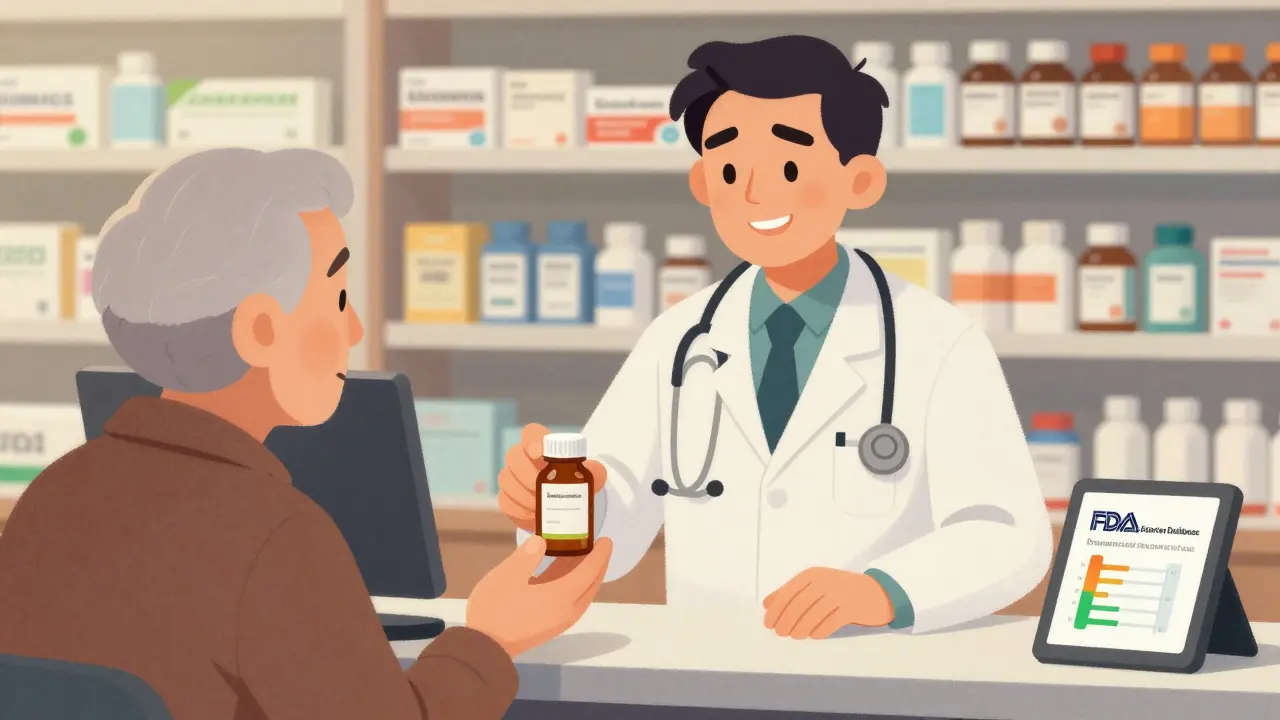
When a pharmacist hands you a pill bottle and says, "This is the same as your brand, just cheaper," they’re not just saving you money-they’re stepping into a minefield of patient doubts, physician skepticism, and regulatory gray areas. Generic substitution isn’t just a routine task. For pharmacists, it’s one of the most emotionally and professionally charged parts of their job.
Why Pharmacists Recommend Generics (And Why Patients Resist)
Most pharmacists push for generic substitution because it works. The FDA requires generics to match brand-name drugs in active ingredients, strength, dosage form, and route of administration. Bioequivalence standards mean the body absorbs the generic drug within 80% to 125% of the brand’s absorption rate. That’s a tiny difference-on average, just 3.5%-and over 2,000 human studies back this up. But here’s the problem: patients don’t trust it. One study found that nearly one-third of patients had negative experiences after switching to generics. Why? Because the pills look different. A blue oval pill becomes a white round one. The packaging changes. The name on the label isn’t the one they’ve seen on TV for years. To many, that’s not a cost-saving measure-it’s a gamble. Pharmacists report that patients often assume cheaper means weaker. One woman in her 60s told her pharmacist, "I’ve been on this brand for 15 years. If it ain’t broke, why change it?" She didn’t know the generic was approved by the same FDA that approved her original prescription. She just knew the new pills didn’t look right.The Real Burden: Educating Patients in 90 Seconds
Pharmacists are expected to explain substitution during the few minutes between filling prescriptions and checking out the next customer. But most patients don’t get the full story. Only 38.5% of patients are told they can refuse a generic substitution. Just over half know the price difference. And a staggering 64% say their doctor never mentioned generics at all. That means pharmacists are stuck being the first-and often only-source of truth. They have to calm fears, correct myths, and explain bioequivalence without sounding like a pharmaceutical rep. Some use the 3.5% absorption difference as a simple anchor. Others show patients the FDA’s generic drug database on their phone. A few even hand out printed fact sheets. It’s exhausting. One pharmacist in Chicago said she spends an extra 3 to 5 minutes per patient on substitution counseling. For a busy urban pharmacy doing 200 prescriptions a day, that’s 10 to 17 extra hours of work each week. And it’s unpaid. No one tracks it. No one reimburses it.When Substitution Gets Dangerous: Narrow Therapeutic Index Drugs
Not all drugs are created equal. For medications with a narrow therapeutic index (NTI)-like warfarin, levothyroxine, phenytoin, and lithium-tiny changes in blood levels can mean the difference between effective treatment and serious harm. A 5% drop in levothyroxine levels might cause fatigue and weight gain. A 5% spike could trigger heart palpitations. Pharmacists are trained to flag these. Many states have laws that prohibit automatic substitution for NTI drugs unless the prescriber explicitly allows it. But confusion still happens. A patient might get a new prescription for levothyroxine. The pharmacy’s system auto-substitutes. The patient doesn’t notice the change. Two weeks later, their TSH levels are off. The doctor blames the patient for noncompliance. The pharmacist gets blamed for not speaking up. Even worse? Biosimilars. These are biologic drugs-complex proteins made from living cells-like insulin or rheumatoid arthritis treatments. They’re not generics. They’re not exact copies. They’re similar, but not identical. The FDA requires extra testing to prove they work like the original. But patients don’t know the difference. Pharmacists have to explain that switching from one biosimilar to another isn’t the same as switching from brand-name Lipitor to generic atorvastatin.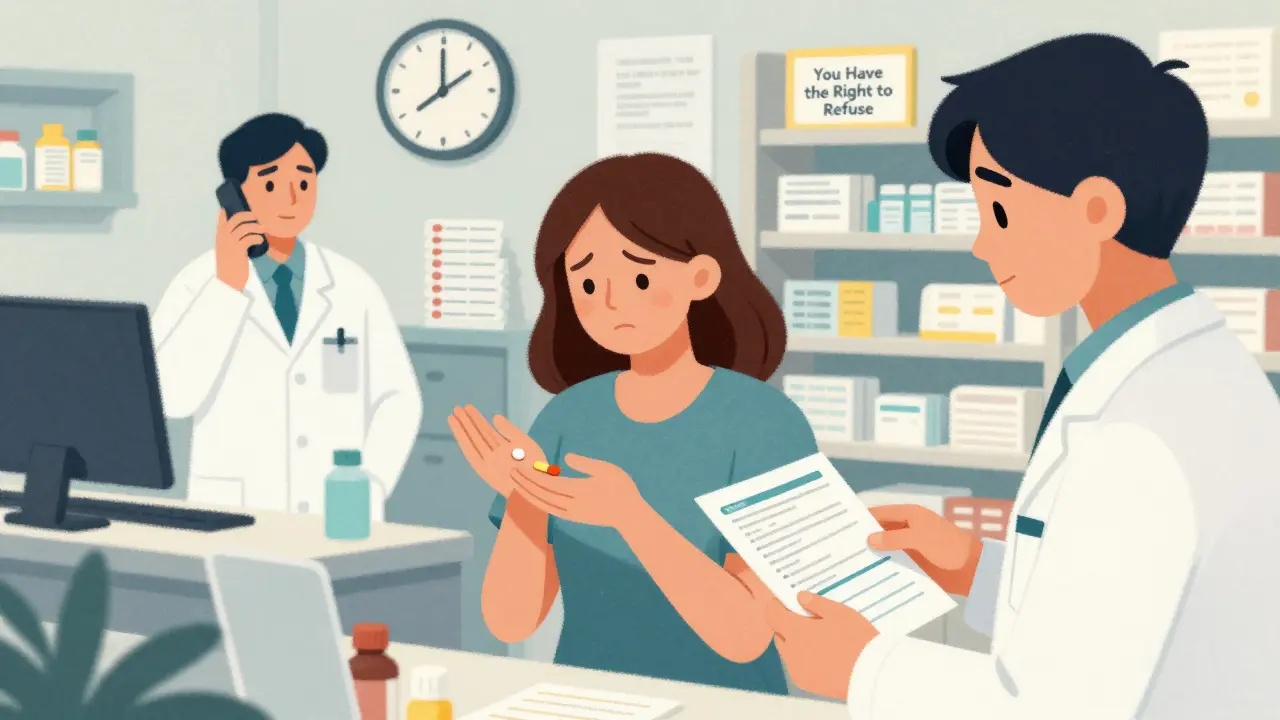
Patients Who Ask for Their Doctor
One of the most frustrating patterns? Patients who say, "I need to talk to my doctor before I take this." In Australia and Italy, about half of patients do this. In the U.S., it’s less common-but still frequent enough to disrupt workflow. Why? Because patients feel betrayed. They trusted their doctor to pick the right drug. Now, someone else is changing it. They don’t understand that pharmacists are licensed to make these substitutions under state law. They think the pharmacist is overstepping. Pharmacists hate this. They know the generic is safe. They know the doctor didn’t write "dispense as written." But they can’t override the patient’s fear. So they call the doctor’s office. They wait on hold. They explain the situation. The doctor says, "Fine, let them take the generic." The patient gets the drug. The pharmacist moves on. But the system is broken. The patient still doesn’t trust the process.Generics Are Not the Enemy-Misinformation Is
The real enemy isn’t generic drugs. It’s the myth that they’re inferior. Studies show generics are just as effective as brands for 90% of medications. The FDA inspects generic manufacturing plants just as often as brand-name ones. Many generics are made by the same companies that make the brand versions. But the stigma sticks. Older patients, those with chronic illnesses, and people with lower health literacy are most likely to resist. Mental health patients report more anxiety after switching. People with epilepsy worry about seizures. Diabetics fear blood sugar swings. These aren’t irrational fears-they’re based on real experiences, even if the cause was something else entirely. Pharmacists know this. That’s why the best ones don’t just hand out generics. They build trust. They ask, "Have you had trouble with generics before?" They listen. They don’t lecture. They say, "I get why you’re nervous. Let me show you what the FDA says."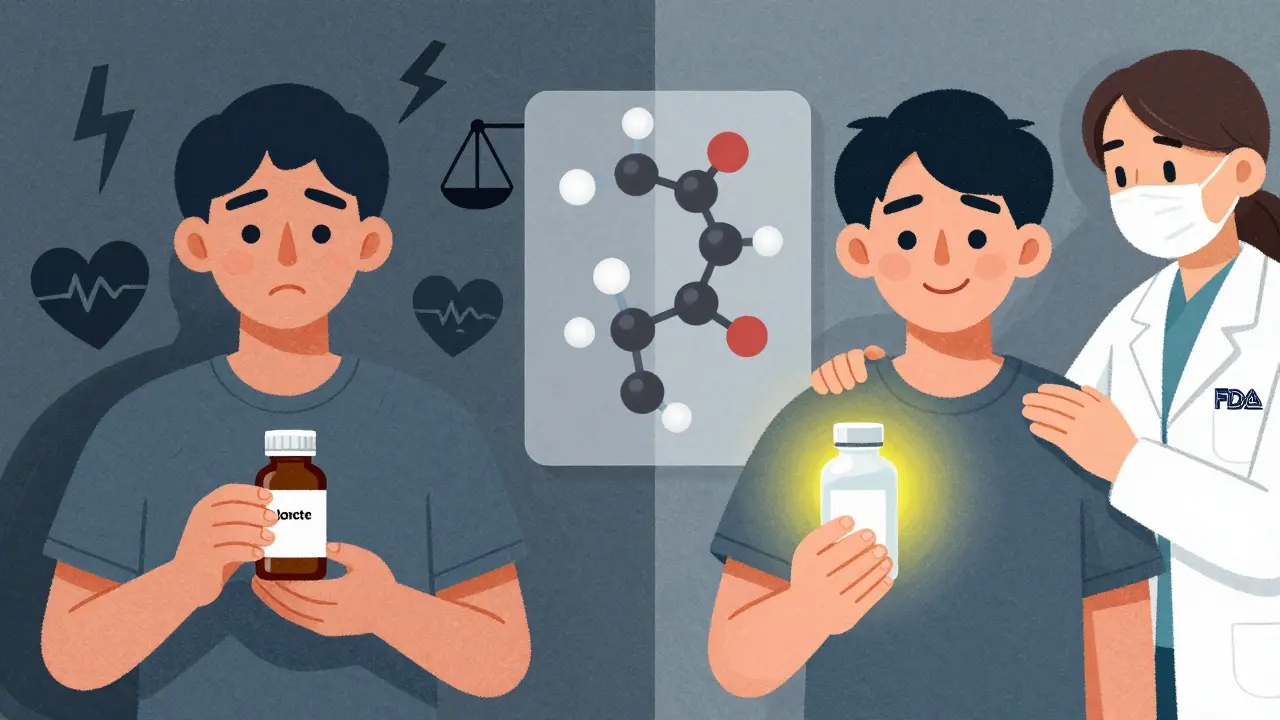
What Needs to Change
The system isn’t broken-it’s unbalanced. Pharmacists are on the front lines, but they’re not supported. Here’s what would help:- Doctors need to talk to patients first. If a physician says, "I’m prescribing a generic because it’s just as good and saves you money," patient acceptance jumps by 40%.
- Pharmacy laws need standardization. Some states require written consent for NTI substitutions. Others don’t. This creates confusion for both pharmacists and patients.
- Insurance companies need to stop pushing substitution. If a patient’s copay is $5 for a brand and $3 for a generic, they’ll take the generic. But if the copay is the same, they won’t feel pressured-and they’re more likely to trust their doctor’s choice.
- Patients need better education. Simple, clear materials in multiple languages. Videos on pharmacy websites. Brochures in waiting rooms. This isn’t extra work-it’s prevention.
Bottom Line: Pharmacists Are Doing the Right Thing
Generic substitution saves patients an average of 21% on medication costs. That’s thousands of dollars a year for people on multiple prescriptions. It’s also what keeps the healthcare system from collapsing under the weight of drug prices. Pharmacists know this. They also know the risks. They’re not just filling bottles-they’re managing fear, correcting misinformation, and protecting patients from harm. And they do it every day, with no fanfare, no bonus, and often no thanks. The next time a pharmacist hands you a generic, remember: they didn’t just save you money. They took on the weight of your trust-and they passed the test.Are generic drugs really as effective as brand-name drugs?
Yes, for the vast majority of medications. The FDA requires generic drugs to have the same active ingredients, strength, dosage form, and route of administration as the brand-name version. They must also prove bioequivalence-meaning the body absorbs them within 80% to 125% of the brand’s rate. Over 2,000 studies confirm this, with an average absorption difference of just 3.5%. For most people, there’s no noticeable difference in effectiveness or side effects.
Why do generic pills look different from brand-name ones?
By law, generic drugs can’t look exactly like the brand-name version. That’s to avoid trademark infringement. So the shape, color, size, or markings may change. But the active ingredient-the part that treats your condition-is identical. The differences are only in inactive ingredients like dyes or fillers, which don’t affect how the drug works.
Can pharmacists substitute any drug with a generic?
No. Pharmacists cannot substitute drugs labeled "dispense as written" by the prescriber. They also can’t substitute certain high-risk medications-like warfarin, levothyroxine, and anti-seizure drugs-unless the doctor specifically allows it. These are called narrow therapeutic index (NTI) drugs, where even small changes in blood levels can cause serious side effects. State laws vary, but most require extra caution or patient consent for these cases.
Why do some patients have bad experiences after switching to generics?
Sometimes, the issue isn’t the drug-it’s the switch itself. Changing from one manufacturer’s version to another-even if both are generic-can cause minor differences in how the body absorbs the medicine. For patients on multiple medications or with complex conditions like epilepsy or thyroid disease, even small changes can feel like side effects. It’s not always the generic’s fault; it’s often the disruption of a stable routine. Pharmacists can help by monitoring symptoms after a switch and advising when to contact the doctor.
Can I refuse a generic substitution?
Yes, you always have the right to refuse a generic and request the brand-name drug instead. But you may have to pay more out of pocket. Pharmacists are required to tell you about your right to decline substitution, but they don’t always do it clearly. If you’re unsure, ask: "Can I get the brand name if I want it?" If they say no, they’re not following the law.
Are biosimilars the same as generics?
No. Generics are exact copies of small-molecule drugs like aspirin or metformin. Biosimilars are similar-but not identical-to complex biologic drugs like insulin or Humira. They’re made from living cells, so small variations are unavoidable. The FDA requires more testing for biosimilars, and they’re not automatically interchangeable. Pharmacists need special training to handle them, and patients should be informed before a switch.
Why don’t doctors tell patients about generic substitution?
Most doctors don’t bring it up because they assume the pharmacist will handle it. Others are pressed for time during appointments. Some don’t know the details themselves. But studies show that when doctors mention generics during the visit-saying something like, "This generic is just as good and will save you money,"-patients are far more likely to accept the switch. It’s not that doctors oppose generics; they just don’t realize how much patients rely on them for reassurance.
Bradford Beardall
Let me tell you something about India’s generic drug industry - we produce over 60% of the world’s vaccines and 20% of its generic pharmaceuticals. The FDA inspects our plants more frequently than some U.S. facilities. You think your brand-name pill is pure? Half of them are made in the same factories, just with a different label. The stigma isn’t about science - it’s about branding. We’ve been doing this right for decades.
Faith Edwards
Oh, how quaint. The noble pharmacist, burdened by the ungrateful masses who dare to question the sanctity of their $5 pill. How dare they prefer the $20 brand they’ve trusted for 15 years? How dare they not instantly embrace the FDA’s 80-125% bioequivalence window as gospel? The real tragedy isn’t the substitution - it’s the delusion that patients are irrational when they refuse to be treated like data points in a cost-cutting algorithm.
Lisa Cozad
I’m a nurse and I’ve seen this firsthand. My mom switched from brand to generic levothyroxine and started feeling like she was dragging through wet cement. We went back to the brand - her TSH normalized in two weeks. It’s not about fear. It’s about individual biology. One size doesn’t fit all, even if the FDA says it does. Pharmacists should screen for prior adverse reactions before swapping.
McCarthy Halverson
NTI drugs need special handling. Period.
Pharmacists should flag them in the system.
Patients should be warned in writing.
Doctors should document if substitution is allowed.
Simple. No drama. Just protocol.
chandra tan
Bro in India we make generics so cheap that even Walmart buys them. Your brand-name Lipitor? Made in the same factory as atorvastatin. The only difference? The logo on the bottle. You think the pharmacist is trying to scam you? Nah. They’re trying to keep you alive without bankruptcy. Chill out.
Mario Bros
My grandma refused her generic blood pressure med for 3 months. Said the pills looked "suspicious." Finally, I showed her the FDA page side-by-side. Same active ingredient. Same dosage. Just a different color. She took it. Still alive. Still on it. 6 months later. 😅
anthony martinez
Of course the pharmacist is the one holding the bag. Doctors write the script, insurance pushes the cheapest option, patients panic, and the pharmacist gets yelled at for not being a miracle worker. Meanwhile, no one tracks the 17 extra hours a week they spend counseling. Unpaid labor. That’s not efficiency - that’s exploitation dressed up as public service.
Dwayne Dickson
The structural failure here is not patient ignorance - it is the fragmentation of the prescriptive ecosystem. The physician, the pharmacist, the insurer, and the patient exist in silos with no shared epistemological framework. The FDA’s bioequivalence parameters, while statistically robust, are epistemologically inert to the phenomenological experience of the patient. The pill’s morphology, the packaging’s chromaticity, the nomenclature’s cultural resonance - these are not trivialities. They are semiotic anchors in a therapeutic narrative. To dismiss patient resistance as irrational is to commit a hermeneutic fallacy. We must reconstruct the communication architecture - not merely educate, but co-construct trust.
Saumya Roy Chaudhuri
Oh please. You think biosimilars are complicated? I worked at a biotech lab in Bangalore. Biosimilars are like trying to clone a Picasso painting with finger paint. The original is made in a clean room with living cells. The copy? Made in a facility that also produces cough syrup. And you think the FDA checks it properly? Ha. They inspect once every three years. Most biosimilars are just generics with a fancy name and a 10x price tag. Don’t be fooled.
Jake Nunez
My cousin’s epileptic son had a seizure after switching generics. Not because the drug was bad - because the filler changed. His body reacted to the new dye. He’s back on brand now. No one warned us. Pharmacists need to ask: "Has this med ever caused a reaction before?" Not just hand it over. That’s not service. That’s negligence.
Christine Milne
Let me be clear: America doesn’t need generics. We need American-made brand-name drugs. The FDA’s standards are being watered down by foreign manufacturers who don’t follow our values. If you want cheap medicine, go to China. But don’t tell me it’s the same. It’s not. Our patients deserve better than third-world pharmaceuticals masquerading as science.
Jay Amparo
My uncle in Kerala takes six generics a day - blood pressure, diabetes, cholesterol, thyroid, arthritis, and depression. He’s 78. Still walks to the temple every morning. His pharmacy? A tiny shop with a handwritten ledger. No fancy apps. No FDA database on phone. Just a pharmacist who remembers his name, his history, his fears. He doesn’t need a 17-minute lecture. He needs someone who listens. That’s the real magic. Not the science. The humanity.