

Sulfonylurea Weight Impact Estimator
1. Select Your Current Medication
2. Adjust Lifestyle Factors
Ready to Calculate
--Select a medication and adjust your lifestyle sliders above to see an estimate of how your weight might change over the next 6 months.
Did you know that for every pound of fat you gain on a sulfonylurea, your insulin resistance gets worse? It’s a frustrating loop that many people with Type 2 Diabetes is a chronic condition characterized by high blood sugar levels due to insulin resistance or deficiency face. You take the pill to lower your glucose, but the side effect makes it harder for your body to process that glucose in the first place. This isn't just a cosmetic issue; it's a metabolic paradox that can undermine years of careful management.
Sulfonylureas have been a staple in diabetes care since the 1950s. They are cheap, effective at lowering blood sugar, and widely available. But as newer medications like GLP-1 agonists become more popular, questions about the long-term cost of staying on these older drugs are growing. If you are currently taking Sulfonylureas is a class of oral hypoglycemic agents that stimulate insulin secretion from pancreatic beta cells, or considering them, understanding the weight dynamics is crucial for making informed decisions about your health.
The Core Problem: Why Do Sulfonylureas Cause Weight Gain?
To understand the weight issue, you have to look at how these drugs work. Sulfonylureas bind to specific receptors on your pancreatic beta cells, forcing them to release more insulin. Insulin is an anabolic hormone, meaning it promotes storage. When your blood insulin levels stay elevated, your body shifts into 'storage mode.' Fat cells, known as adipocytes, express specific sulfonylurea receptors. When activated, these cells increase intracellular calcium levels, which stimulates lipogenesis-the creation of new fat.
It’s not just about eating too much. The drug itself changes your metabolism. A 2016 study published in the Farmacia Journal found that weight gain was a significant barrier to maintaining long-term glycemic control. In their cohort, 25.5% of patients experienced measurable weight gain. While this might sound like a minority, consider that if you are already struggling with excess weight, even a small gain can significantly impact your cardiovascular risk and overall quality of life.
Not All Sulfonylureas Are Created Equal
A common misconception is that all sulfonylureas cause the same amount of weight gain. The data suggests otherwise. There is a distinct difference between second-generation agents like Glimepiride is a potent second-generation sulfonylurea used for treating type 2 diabetes, Glipizide is a second-generation sulfonylurea medication that lowers blood sugar, and Gliclazide is a second-generation sulfonylurea often associated with better weight profiles.
Research indicates that glimepiride has a stronger association with weight gain compared to gliclazide. In the aforementioned Farmacia Journal study, 62.7% of weight gain cases occurred in patients treated with glimepiride, versus only 35.3% in those taking gliclazide. One 1988 study even reported that mean body weight decreased significantly during a three-year trial of gliclazide. This intra-class variation is critical. If you are concerned about weight, asking your doctor about switching from a higher-potency agent like glyburide or glimepiride to gliclazide could be a strategic move.
| Medication Class | Typical Weight Effect (Year 1) | Primary Mechanism | Cost Profile (Monthly US Avg) |
|---|---|---|---|
| Sulfonylureas (e.g., Glimepiride) | +2 to +5 kg (4-11 lbs) | Insulin Secretion | $4 - $50 |
| Metformin | Neutral to -2 to -3 kg | Reduced Glucose Production | $4 - $20 |
| Thiazolidinediones (TZDs) | +1.5 to +4 kg (3-9 lbs) | Increased Insulin Sensitivity | $20 - $100 |
| GLP-1 Receptor Agonists | -3 to -7 kg (6-15 lbs) | Appetite Suppression & Slowed Digestion | $300 - $1,000+ |
The Therapeutic Paradox: Better Numbers, Worse Health?
Dr. John B. Buse, a prominent diabetes researcher, described the situation as a "therapeutic paradox." Your A1C numbers might look great because the sulfonylurea is doing its job effectively. However, the accompanying weight gain can worsen your underlying insulin resistance. This means you might need higher doses of the medication over time to maintain the same blood sugar levels, creating a cycle of dependency.
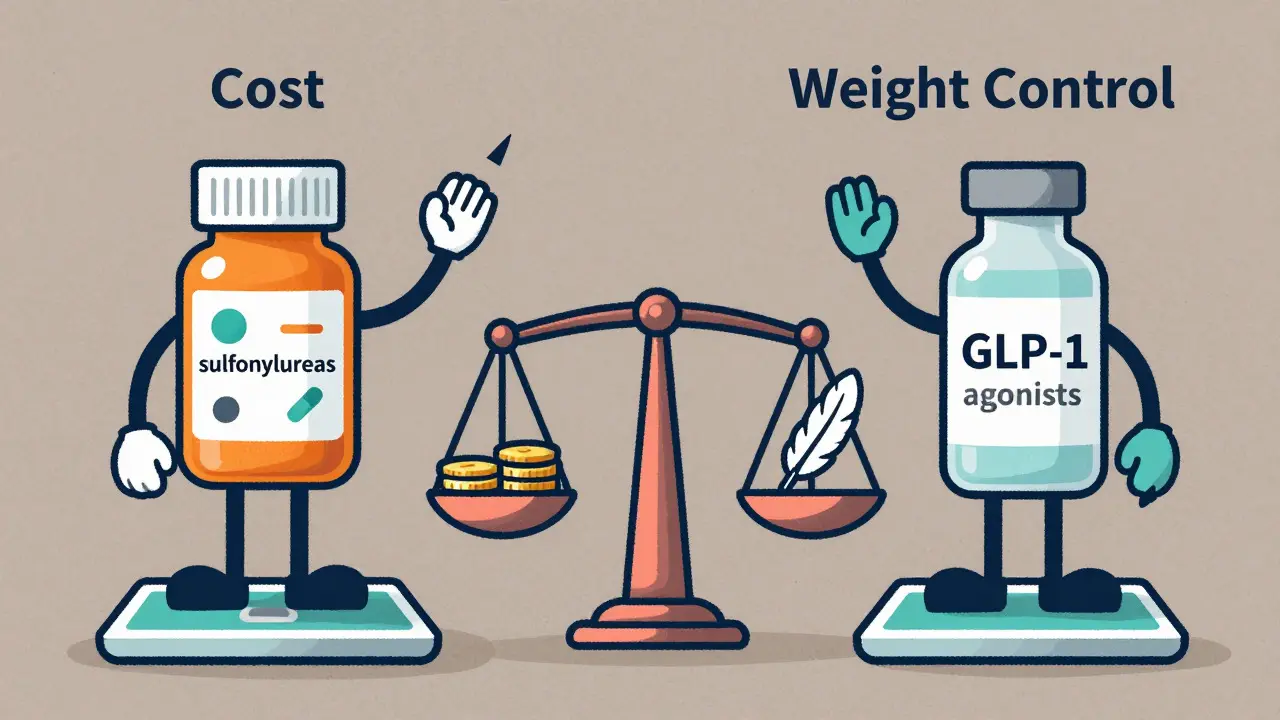
This is particularly concerning for patients with a BMI over 35 kg/m². The American Association of Clinical Endocrinologists specifically cautions against using sulfonylureas in this group due to the compounded risks of obesity and hyperinsulinemia. Yet, for many, the choice isn't always clear-cut. Newer drugs that promote weight loss, like semaglutide, are incredibly expensive. For a patient on a fixed income, the $8 monthly cost of glyburide might be worth the 5-pound gain, simply because it allows them to manage their diabetes affordably.
Real-World Experiences vs. Clinical Trials
Clinical trials often report average weight gains of around 2-4 kg. However, patient communities tell a different story. On the American Diabetes Association Community platform, 68% of sulfonylurea users reported weight gain as a "significant problem," with self-reported increases averaging 4.5 kg over 18 months. One user on Reddit noted gaining 12 pounds in nine months on glipizide despite unchanged diet and exercise habits. After switching to metformin, they lost the weight back within six months.
Why the discrepancy? Clinical trials involve strict monitoring and controlled environments. Real life involves stress, irregular eating patterns, and sedentary periods. Furthermore, online forums may suffer from selection bias, where those with negative experiences are more likely to post. Still, the consistency of complaints suggests that for a subset of patients, the weight impact is severe enough to disrupt treatment adherence.
Strategies to Mitigate Weight Gain
If you are committed to staying on a sulfonylurea, there are practical steps to minimize the weight penalty. First, consider combination therapy. Combining a sulfonylurea with Metformin is a first-line medication for type 2 diabetes that is weight-neutral or promotes modest weight loss can offset the weight gain. Studies show that patients on this combination gained 1.2 kg less than those on sulfonylureas alone over 12 months.
Second, focus on lifestyle interventions. The 2020 Veterans Affairs Diabetes Trial demonstrated that structured lifestyle changes-specifically 150 minutes of moderate exercise per week and a 500 kcal daily deficit-reduced sulfonylurea-associated weight gain by 63%. It’s not about drastic dieting; it’s about consistent, moderate effort. Finally, monitor your weight monthly. If you gain more than 3% of your baseline weight within six months, it’s a signal to talk to your doctor about switching agents or adding a weight-loss promoting medication.

The Future of Sulfonylureas in Treatment Algorithms
The market share of sulfonylureas is declining. From 26% of the oral diabetes market in 2015, it dropped to 18% in 2022. This shift mirrors the rise of GLP-1 receptor agonists and SGLT2 inhibitors, which offer the dual benefit of glucose control and weight loss. Medicare data shows a 34% decrease in sulfonylurea prescriptions between 2017 and 2022, while GLP-1 prescriptions surged by 187%.
However, abandoning sulfonylureas entirely would create access disparities. Dr. Matthew Riddle notes that 85% of low-income diabetes patients globally still rely on these medications. The future likely involves reserving sulfonylureas for patients with low cardiovascular risk and limited financial resources, while steering others toward newer, weight-neutral or weight-loss promoting options. Fixed-dose combinations, like glyburide-metformin XR, aim to bridge this gap by reducing weight gain while maintaining efficacy.
Frequently Asked Questions
Which sulfonylurea causes the least weight gain?
Gliclazide appears to have the best weight profile among sulfonylureas. Some studies have even shown neutral or slight weight loss with long-term use, unlike glimepiride or glyburide, which are more strongly associated with weight gain.
Can I lose weight while taking a sulfonylurea?
Yes, but it requires more effort. Because the drug promotes insulin storage, you may need a larger caloric deficit and more consistent exercise than someone not on the medication. Combining the sulfonylurea with metformin can also help mitigate the weight gain effect.
Is weight gain from sulfonylureas permanent?
The weight gain is generally reversible. Most patients who switch to a weight-neutral medication like metformin or a weight-loss promoting agent like a GLP-1 agonist will see the extra weight come off over several months, provided they maintain healthy lifestyle habits.
Should I switch from a sulfonylurea to a GLP-1 agonist?
If cost is not a barrier and you have significant weight concerns or cardiovascular risk factors, a GLP-1 agonist may be a better option. However, if cost is a primary constraint, sticking with a sulfonylurea (preferably gliclazide) combined with metformin is a viable and affordable strategy.
Do all sulfonylureas carry a black box warning?
Since 2012, the FDA has mandated black box warnings for hypoglycemia (low blood sugar) for all sulfonylureas. Weight gain is listed as a common adverse reaction in prescribing information but does not carry the same level of regulatory warning as hypoglycemia.