
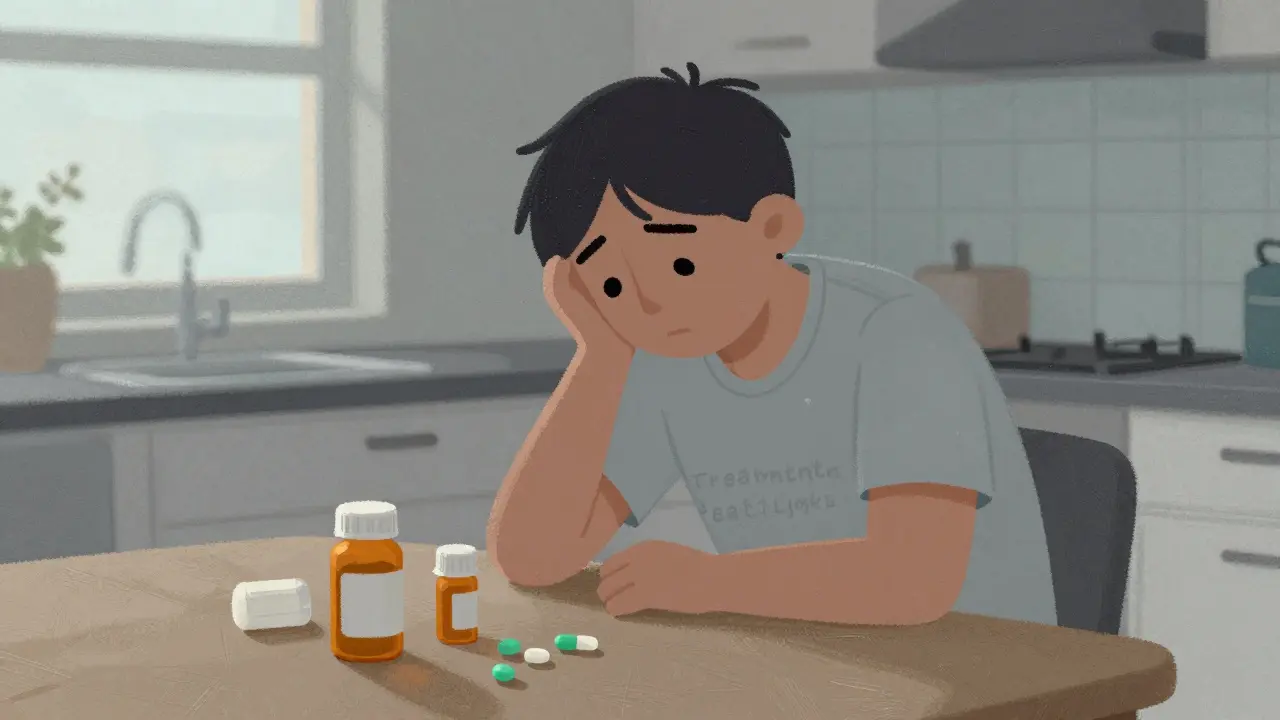
Taking a pill every day for the rest of your life isn't just a medical requirement; it's a mental marathon. When you're dealing with a chronic condition, the struggle isn't always about remembering the dose-it's about the emotional weight of being a "patient" every single morning. Whether it's the fatigue of side effects or the frustration of a complex regimen, staying on track is a psychological battle. The good news is that medication adherence isn't just about willpower; it's about using the right mental tools to make the process sustainable.
The Mental Game of Long-Term Treatment
When you first start a chronic medication, the urgency of the diagnosis usually drives you to follow the rules. But as months turn into years, "treatment fatigue" sets in. This is where Coping Strategies is a set of psychological and behavioral approaches used to manage the emotional and practical challenges of long-term medication use. If you find yourself skipping doses or feeling resentful toward your pharmacy trips, you're not failing; you're just lacking a strategy.
Research shows that how you process the stress of your illness directly impacts whether you take your medicine. For instance, a systematic review by Chatoo et al. found that people who actively solve the problems associated with their meds have much better outcomes than those who try to ignore the problem entirely. It's the difference between saying "I hate this pill" and asking "How can I make taking this pill easier?"
Active Coping: The Gold Standard for Adherence
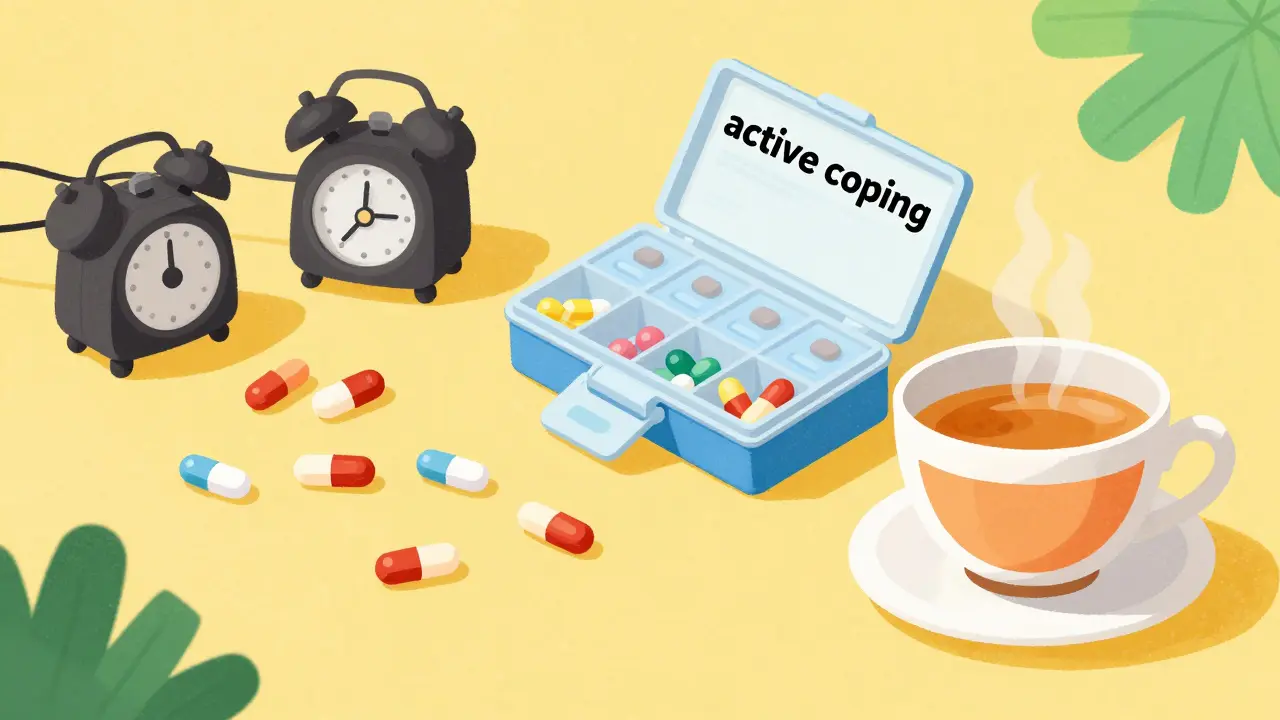
The most effective way to stay consistent is through Problem-Solving Coping, also known as active coping. This isn't about positive thinking; it's about logistics and boundaries. In studies covering various chronic conditions, this approach showed a 78% positive association with staying adherent. It's the most reliable way to keep your health on track.
Practical ways to apply active coping include:
- Audit your routine: If you keep forgetting your midday dose, stop trying to "remember harder." Instead, move the bottle to where you eat lunch or set a recurring alarm on your phone.
- Simplify the chemistry: Talk to your doctor about combination medications. If you can replace three pills with one "poly-pill," you've just removed two opportunities to fail.
- Cost-cutting blueprints: Financial stress is a huge barrier. Use tools like generic substitution or look for assistance programs (such as RxAssist.org) to remove the "can I afford this?" anxiety from your daily routine.
Managing the Emotional Rollercoaster
Not every hurdle is a logistics problem. Sometimes, the barrier is emotional. Emotion-Focused Coping is the process of managing the internal emotional response to the stress of a chronic illness. This strategy is effective for about 69% of patients because it addresses the "why" behind the avoidance.
You might feel angry that you need medication or depressed that your body isn't functioning as it once did. Trying to push these feelings away often leads to "problem avoidance," which is the most dangerous strategy. People who use avoidance-like pretending the medication isn't necessary or ignoring the pharmacy's refill reminders-are far more likely to experience disease progression and higher healthcare costs.
To pivot from avoidance to emotion-focused coping, try these steps:
- Acknowledge the frustration: It is okay to hate the routine. Acknowledging it takes the power away from the emotion.
- Diversion techniques: Use "self-encouragement" or small rewards. Pair your medication with something you enjoy, like a favorite morning tea or a specific podcast, so the habit is linked to a positive experience.
- Seek understanding: Spend time learning exactly how the drug works. When you understand that a medication is preventing a specific complication, the pill becomes a tool for freedom rather than a reminder of illness.
The Power of a Support System
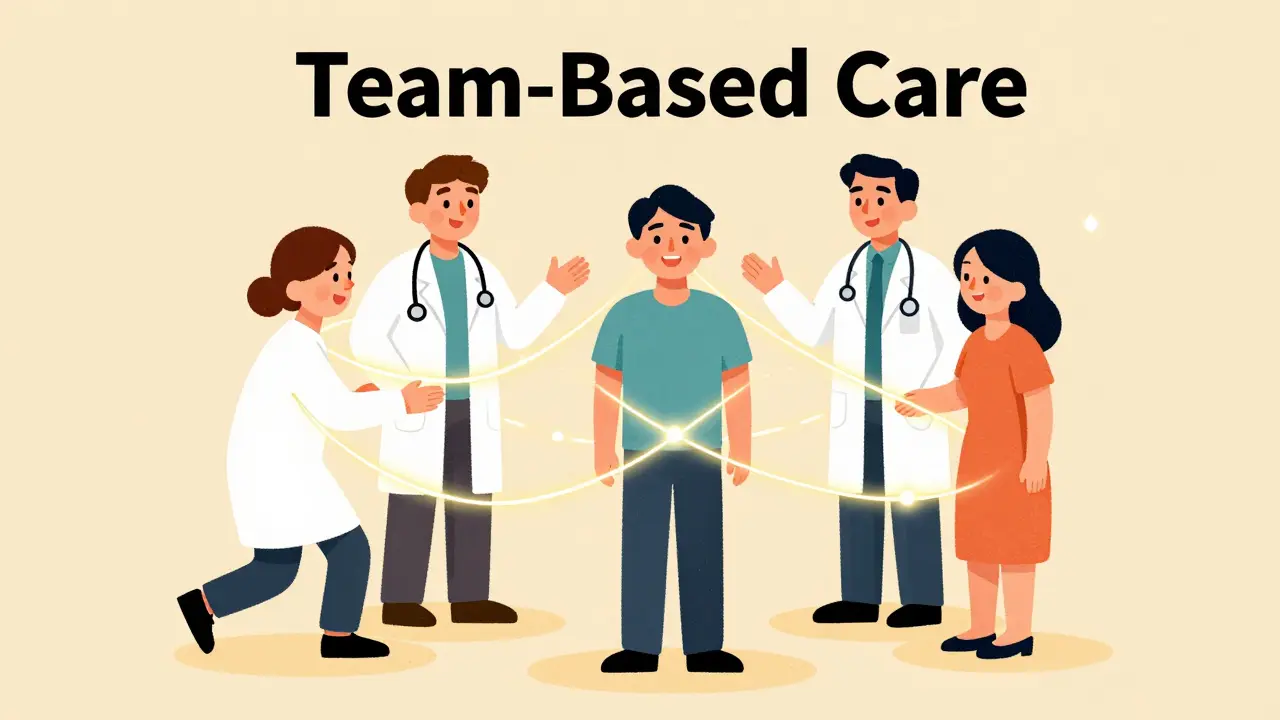
You shouldn't be your own only cheerleader. Support Seeking Coping involves leaning on others-both medical professionals and your social circle-to maintain your regimen. This is where the shift from "solo patient" to "team member" happens.
| Coping Strategy | Primary Focus | Success Rate (Approx.) | Key Outcome |
|---|---|---|---|
| Problem-Solving (Active) | Practical barriers & logistics | 78% Positive | Highest consistency in adherence |
| Emotion-Focused | Mental/emotional response | 69% Positive | Reduced treatment fatigue |
| Support Seeking | External help & validation | High Positive | Improved provider communication |
| Problem Avoidance | Denial or ignoring the issue | 50% Negative | Increased risk of relapse |
One of the most successful models for this is Team-Based Care. This isn't just having a doctor; it's having a coordinated circle that includes a primary care physician, a pharmacist, and perhaps a social worker. According to CDC data, patients in team-based care showed adherence rates of 89% twelve months after hospital discharge, compared to only 74% for those managing on their own.
If you aren't in a team-based model, you can build your own. Ask your pharmacist to do a "medication reconciliation"-a fancy term for reviewing all your meds to find overlaps or conflicts. This one conversation can simplify your life and reduce the mental load of managing multiple prescriptions.
Navigating the Pitfalls: What to Avoid
It's easy to fall into the trap of "intuitive
Brigid Prosser
The part about 'treatment fatigue' is spot on. It's an absolute grind when your morning ritual feels more like a chore than a choice. I've found that getting a high-quality pill organizer-not those cheap plastic ones, but a sturdy, locking one-actually makes a massive difference in the mental load. Just seeing the week laid out takes the guesswork out of it and stops that nagging feeling of "did I actually take that?"
Shalika Jain
Honestly, the obsession with "active coping" is just another way to make patients feel like they're failing if they don't have a color-coded spreadsheet of their life. It's such a privileged take on chronic illness. Some of us just have to exist with the fatigue without turning it into a corporate productivity project.
And these statistics? Please. A 78% association doesn't mean anything in the real world where pharmacies actually lose your prescriptions.
William Young
I can relate to the feeling of being a "patient" first and a person second. Small shifts in routine really do help keep the illness from defining the entire day.
Tokunbo Elegbe
The mention of pharmacist reconciliation is an underrated tip!!! Many people don't realize how much a pharmacist can streamline a regimen... it really is a game changer for anyone with complex needs...!!!
Wendy Ajurín
Regarding the cost-cutting blueprints, it is also worth mentioning that many pharmaceutical companies offer patient assistance programs (PAPs) for those who do not qualify for government subsidies but still struggle with high copays. These programs can often reduce the monthly cost to near zero, provided the patient meets specific income criteria. It is a formal process, but the financial relief significantly reduces the emotional stress associated with medication adherence.
Grace Grace
OH MY GOODNESS, the emotionall weight is just too much sometimes!!! I totaly agree that we need to be gentl with ourselvs. It's so easy to let the frustation take over and just skip a dose because you're so tired of the whole thing. But we can do this, one day at a time, with lots of love and patiance!!
The idea of pairing a pill with a tea is just lovely and I will definitely try to implement that into my routine right away because we deserve those little moments of joy amidst the struggle!
Truman Media
Life is a journey and our health is the vessel that carries us through it. It is beautiful to see how a small pill can be a key to a larger freedom. :) Let us all be kind to our bodies and minds as we navigate these challenges together. Peace and health to everyone here! ☀️
julya tassi
I've tried the phone alarm method but sometimes I just swipe it away and forget! 😅 I wonder if there are better apps for this?
Lucy Kuo
It is truly a profound realization that we must transform our perception of medicine from a burden into a liberating tool. The emotional labor involved in chronic care is often invisible to the outside world, yet it requires a fortitude that is nothing short of heroic. We must foster a community of compassion where no one feels isolated in their struggle. By bridging the gap between clinical requirement and human emotion, we elevate the standard of care for everyone. It is an absolute necessity that we embrace these psychological strategies to preserve our dignity and vitality amidst the onslaught of chronic illness. Such a comprehensive approach ensures that the spirit remains unbroken even when the body is frail. Let us advocate for a world where support is not just a strategy, but a fundamental right for every patient. The integration of social support and medical adherence is the only path toward true holistic wellness. We must recognize that the mental marathon is just as grueling as the physical one. Every single dose taken is a victory of the will over the ailment. This is a testament to human resilience in its purest form. May we all find the strength to continue this journey with grace and unwavering determination. It is an honor to witness the shared strength of those who fight these silent battles every day. Together, we can redefine what it means to live with a chronic condition.